What Does the Number 925 Mean on Jewelry? Metal Properties Guide
Discover what the number 925 means on jewelry. We compare sterling, fine, and argentium silver properties, tarnish rates, and authenticity tests.

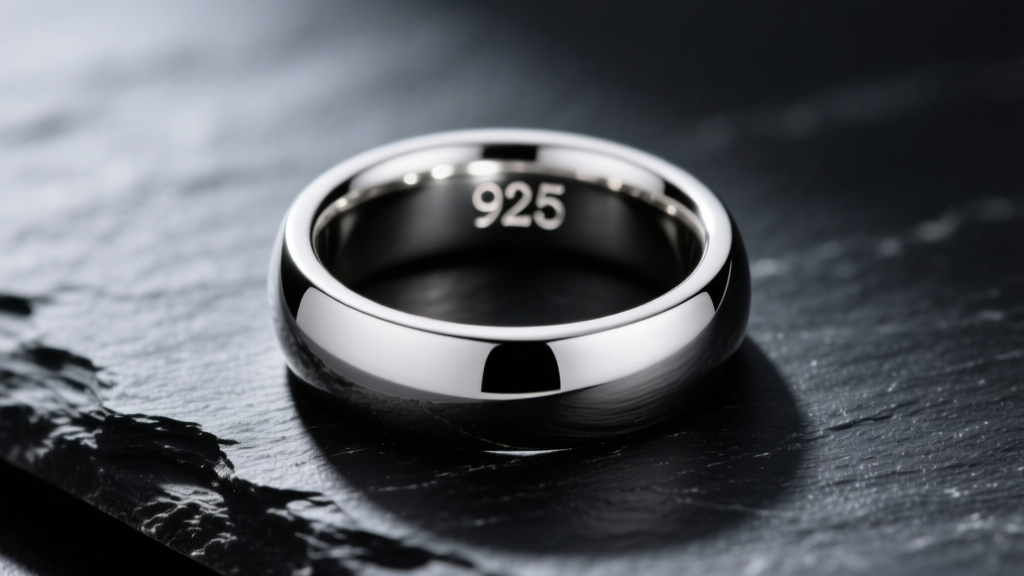
When navigating the precious metals market, both collectors and everyday wearers eventually ask: what does the number 925 mean on jewelry? At its core, the 925 stamp is a metallurgical guarantee. It signifies that the piece is composed of 92.5% pure silver and 7.5% alloy metals—most commonly copper. This specific ratio, known globally as sterling silver, represents the optimal intersection of malleability, structural integrity, and luster required for durable jewelry making.
Understanding this hallmark goes far beyond a simple percentage. It requires a deep dive into material science, comparing how 925 sterling behaves against fine silver, modern argentium alloys, and deceptive silver-plated alternatives. This guide explores the exact physical properties, chemical vulnerabilities, and professional testing methods associated with 925 silver.
The Metallurgical Truth: Why 92.5% is the Industry Standard
Pure silver, often referred to as fine silver or 999 silver, is exceptionally soft. On the Vickers Hardness (HV) scale, fine silver measures a mere 25 HV. While this makes it highly workable for intricate wire-wrapping or bezel setting, it is entirely unsuitable for structural jewelry components like ring bands, prongs, or clasps. A pure silver ring will bend out of shape under the normal pressure of a handshake or a tight grip on a steering wheel.
By alloying 92.5% silver with 7.5% copper, metallurgists increase the hardness to approximately 65–75 HV. This nearly triples the tensile strength of the metal without sacrificing the brilliant white reflectivity that makes silver so desirable. According to the Gemological Institute of America (GIA), this specific copper-silver matrix has been the standard for coinage and jewelry since the 12th century, originating from the 'Easterling' coins of Germany.
Material Comparison: 925 Sterling vs. Fine and Argentium Silver
To truly understand the value of the 925 stamp, we must compare its physical properties to other common silver alloys used in modern jewelry manufacturing. The table below outlines the critical metallurgical differences.
| Material Grade | Purity | Vickers Hardness (HV) | Tarnish Resistance | Best Jewelry Application |
|---|---|---|---|---|
| Fine Silver (999) | 99.9% Ag | 25 HV (Soft) | Excellent (No Copper) | Bezel wire, metal clay, investment casting |
| 925 Sterling Silver | 92.5% Ag, 7.5% Cu | 65-75 HV (Medium) | Moderate (Prone to Sulfur) | Everyday rings, chains, structural pendants |
| Argentium Silver | 93.5% or 96% Ag, Ge, Cu | 80-90 HV (Hard) | Superior (Germanium Oxide Layer) | High-end bridal, low-maintenance chains |
| Silver Plated (Base) | ~0.5% Ag over Brass | Depends on base core | Poor (Wears off to expose base) | Costume jewelry, temporary fashion pieces |
As noted by The Silver Institute, the introduction of Argentium silver (which replaces some copper with germanium) has disrupted the traditional 925 market by offering a harder, highly tarnish-resistant alternative. However, 925 remains the dominant force due to its lower cost and widespread availability in the casting and soldering supply chain.
The Copper Conundrum: Tarnish Chemistry and Prevention
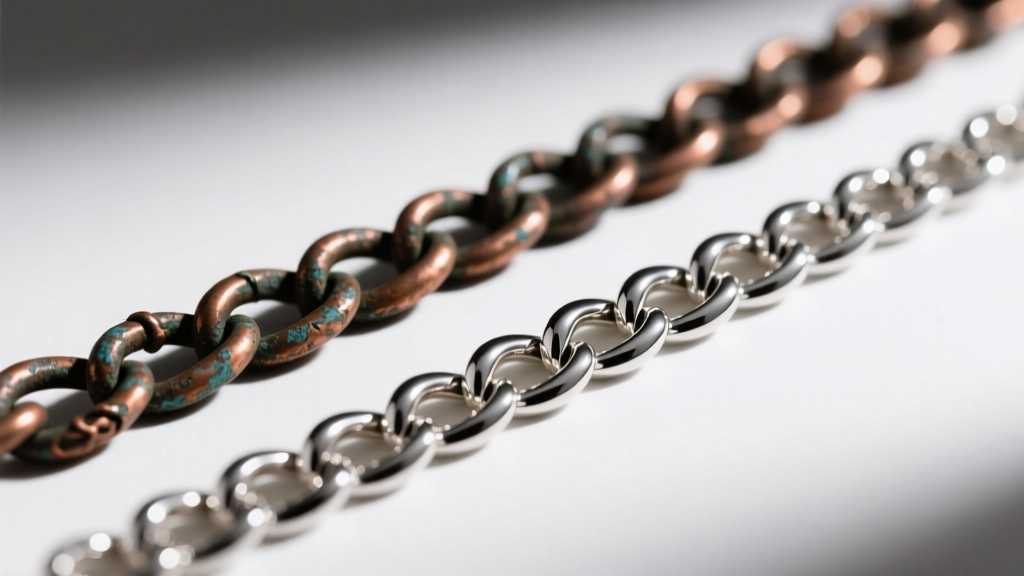
The very element that gives 925 silver its strength—copper—is also responsible for its greatest weakness: tarnish. Pure silver does not react with oxygen at room temperature. However, the 7.5% copper in the 925 alloy readily reacts with hydrogen sulfide (H2S) and sulfur dioxide (SO2) present in the atmosphere, as well as sulfur compounds found in human sweat, cosmetics, and household foods like eggs and onions.
This reaction forms copper sulfide (CuS), which manifests as a dull yellow, then brown, and eventually a black layer on the surface of the jewelry. To combat this, modern jewelers utilize two primary defense mechanisms:
- Rhodium Plating: A microscopically thin layer of rhodium (a platinum group metal) is electroplated onto the 925 silver. For high-quality jewelry, this plating should be between 0.1 and 0.5 microns thick. It provides a brilliant, chrome-like white finish and completely seals the copper away from atmospheric sulfur.
- E-Coating (Electrophoretic Coating):strong> A nano-ceramic or polymer resin is applied via an electrical current, creating an invisible, flexible barrier that is significantly cheaper than rhodium but highly effective at preventing oxidation.
Authenticity Testing: Verifying the 925 Stamp
Because the 925 hallmark commands a premium price, it is frequently counterfeited. Base metals like brass, nickel, or cupronickel are often stamped with '925' and coated in a thin flash of silver. Professional jewelers rely on specific diagnostic frameworks to verify authenticity.
The Acid Test (Schwerter's Solution)
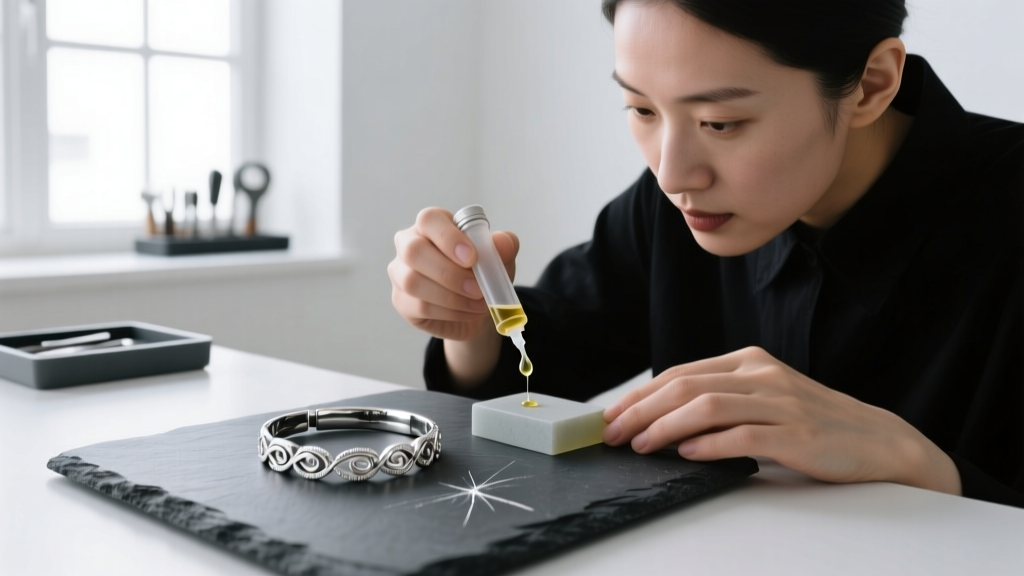
The most accessible chemical test involves Schwerter's solution, a mixture of potassium dichromate and nitric acid. A jeweler will file a tiny, inconspicuous notch into the piece (to bypass any surface plating) and apply a drop of the acid. The color reaction dictates the metal content:
- Bright Blood Red: Fine Silver (999)
- Dark Red / Crimson: Genuine 925 Sterling Silver
- Brown: 800 Silver (80% purity, common in antique European flatware)
- Green: Base metal (Brass, Copper, or Nickel alloy)
X-Ray Fluorescence (XRF) Spectrometry
For non-destructive testing, especially on high-value antique or gemstone-set pieces, XRF spectrometry is the gold standard. An XRF scanner bombards the jewelry with X-rays and measures the fluorescent X-rays emitted back. This provides an exact elemental breakdown to the decimal point (e.g., 92.6% Ag, 7.2% Cu, 0.2% Zn). While XRF machines cost upwards of $15,000, they are standard equipment in certified appraisal labs recognized by Jewelers of America.
The Magnet Test: A Limited Diagnostic
A common DIY myth suggests that if a piece of jewelry sticks to a magnet, it is fake. While it is true that pure silver and copper are diamagnetic (non-magnetic), a piece stamped 925 might still exhibit slight magnetic attraction if the internal clasp mechanism contains a steel spring. Conversely, counterfeiters can use non-magnetic base metals like brass or lead, which will pass the magnet test despite being entirely fake. Therefore, the magnet test should only be used to rule out ferrous metals, never to confirm genuine 925 silver.
Common Hallmark Variations and Counterfeit Red Flags
The 925 stamp is not the only legal hallmark used to denote sterling silver. Depending on the country of origin and the era of manufacture, you may encounter several variations. Legitimate alternative stamps include:
- .925 (Standard international decimal format)
- STER or STERLING (Common in vintage American jewelry)
- STG (Frequently used by mid-century silversmiths)
- Lion Passant (The traditional British assay mark for sterling silver)
Red Flags to Avoid: Be highly suspicious of pieces marketed as 'Tibetan Silver', 'Alpaca Silver', or 'Mexican Silver' that feature a 925 stamp. These terms are frequently used in fast-fashion markets to describe copper-nickel-zinc alloys that contain zero elemental silver. Additionally, if a heavily textured or cast piece has a perfectly crisp, laser-sharp '925' stamp in an area that shows heavy wear, the stamp was likely applied post-casting via a hardened steel punch, a common tactic in overseas counterfeit manufacturing.
Expert Verdict: When to Choose 925 Over Alternatives
Understanding what the number 925 means on jewelry empowers you to make metallurgically sound purchasing decisions. For everyday wear items subjected to mechanical stress—such as wedding bands, heavy curb chains, and prong-set gemstone rings—925 sterling silver remains the undisputed champion of durability and affordability. For intricate, static pieces like delicate filigree earrings or investment-cast pendants that require maximum malleability during fabrication, fine 999 silver is preferable. By combining this material knowledge with rigorous authenticity testing, you can confidently navigate the silver market and build a lasting, high-quality collection.


