Can Stainless Steel Jewelry Get Wet? The Technical Truth
Discover if your stainless steel jewelry can get wet. We analyze 316L vs 304 grades, chlorine exposure, and the chromium oxide passivation layer.

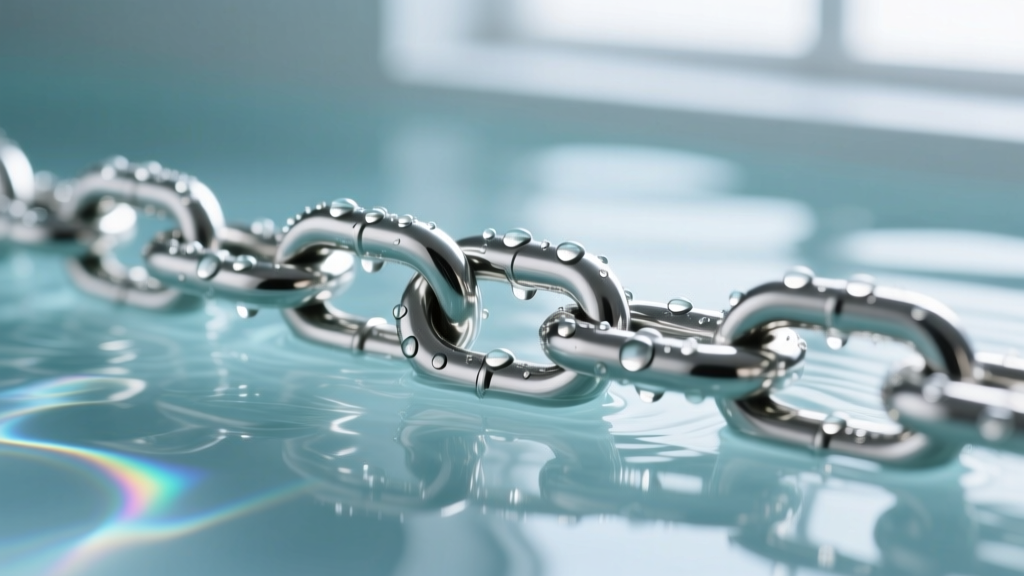
The Short Answer: Yes, But Metallurgy Dictates the Limits
When consumers and collectors ask, 'can stainless steel jewelry get wet,' the simplistic answer is yes. However, from a metallurgical perspective, the reality is far more nuanced. Stainless steel is not a single, impervious metal; it is a family of iron-based alloys that rely on a delicate, microscopic surface reaction to resist degradation. Whether your jewelry survives daily showers, ocean swims, or chlorinated pools depends entirely on its specific alloy grade, the chemical composition of the water, and the mechanical integrity of its surface.
In the jewelry industry, you will predominantly encounter two grades: 304 (commercial grade) and 316L (surgical grade). While both can handle brief exposure to pure H2O, their reactions to the dissolved ions found in real-world aquatic environments differ drastically. To understand why, we must look beneath the polish and examine the electrochemical dynamics of the alloy.
The Science of the Passivation Layer
The secret to stainless steel's resistance is not the iron itself, but the chromium. By definition, stainless steel must contain at least 10.5% chromium. In high-quality 316L surgical steel, this chromium content is elevated to 16-18%. When exposed to oxygen, the chromium reacts to form a microscopic, invisible, and self-healing layer of chromium oxide (Cr2O3) on the surface. This passivation layer is only a few nanometers thick, yet it acts as an impenetrable shield, blocking water and oxygen from reaching the underlying iron matrix.
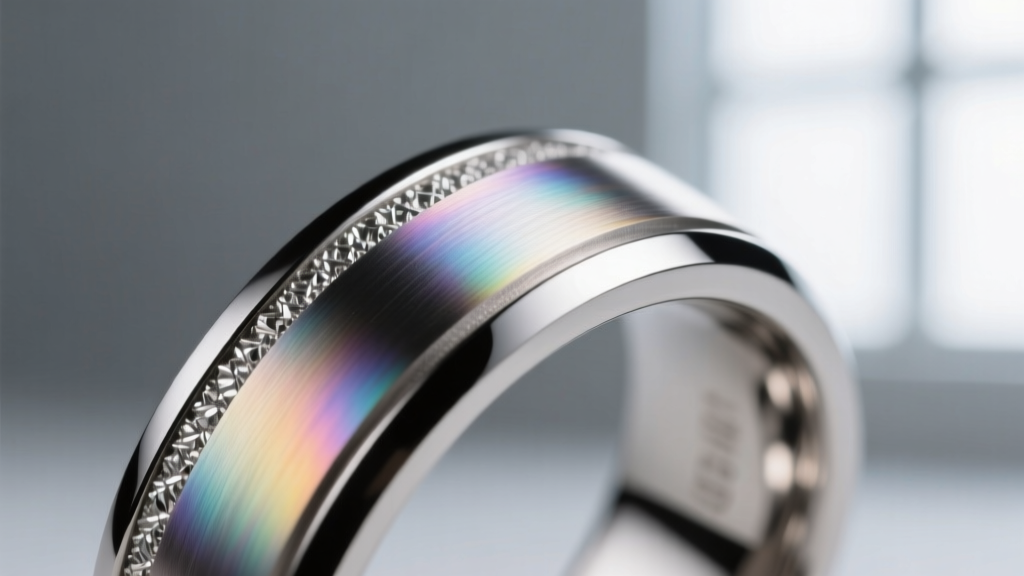
According to data published by the Australian Stainless Steel Development Association (ASSDA), this passive layer requires oxygen to maintain and repair itself. If the jewelry is submerged in an oxygen-depleted environment, or if the layer is chemically dissolved by aggressive ions, the underlying iron becomes vulnerable to rapid oxidation (rust). Furthermore, the 'L' in 316L stands for 'Low Carbon' (less than 0.03%), which prevents carbide precipitation during manufacturing, ensuring the chromium remains available to form this vital protective shield rather than being trapped in the alloy's core.
Aqueous Environments: A Corrosion Matrix
Water is rarely just H2O. It is a solvent carrying dissolved minerals, gases, and chemicals. The impact of these aqueous environments on 316L versus 304 stainless steel can be mapped through their chemical aggressiveness.
| Environment | Primary Aggressor | Effect on 304 SS | Effect on 316L SS |
|---|---|---|---|
| Tap Water / Rain | Low mineral content | No effect; passive layer stable | No effect; passive layer stable |
| Hard Water Shower | Calcium / Magnesium | Limescale buildup; no corrosion | Limescale buildup; no corrosion |
| Chlorinated Pool | Chloride Ions (1-5 ppm) | High risk of pitting corrosion | Highly resistant; Mo stabilizes layer |
| Ocean Saltwater | Chloride Ions (~19,000 ppm) | Rapid pitting and crevice corrosion | Moderate resistance; requires rinsing |
| Hot Tub / Spa | Heat + Chlorine/Bromine | Severe degradation; thermal acceleration | Vulnerable over time; heat accelerates ion attack |
Showering and Hard Water: The Calcium Carbonate Issue
Showering with 316L stainless steel jewelry is entirely safe from a corrosion standpoint. The pH of most body washes and shampoos (typically between 5.5 and 7.0) is well within the safe operating range for the chromium oxide layer. The primary issue in the shower is not chemical degradation, but mechanical and aesthetic interference. Hard water contains high levels of dissolved calcium and magnesium. When the water evaporates on the surface of your jewelry, it leaves behind calcium carbonate (limescale). Over months of daily showering, this microscopic mineral buildup will scatter light, making a mirror-polished finish appear dull or cloudy. This is not rust; it is a surface deposit that can be easily removed with a mild acidic solution like diluted white vinegar.
Chlorinated Pools: The Chloride Ion Attack
This is where the distinction between 304 and 316L becomes critical. Chlorine in swimming pools dissociates into chloride ions. According to metallurgical studies referenced by Corrosion Doctors, chloride ions are small enough to penetrate and locally dissolve the chromium oxide passivation layer, leading to 'pitting corrosion'—tiny, microscopic craters of rust that compromise the metal's structural integrity.
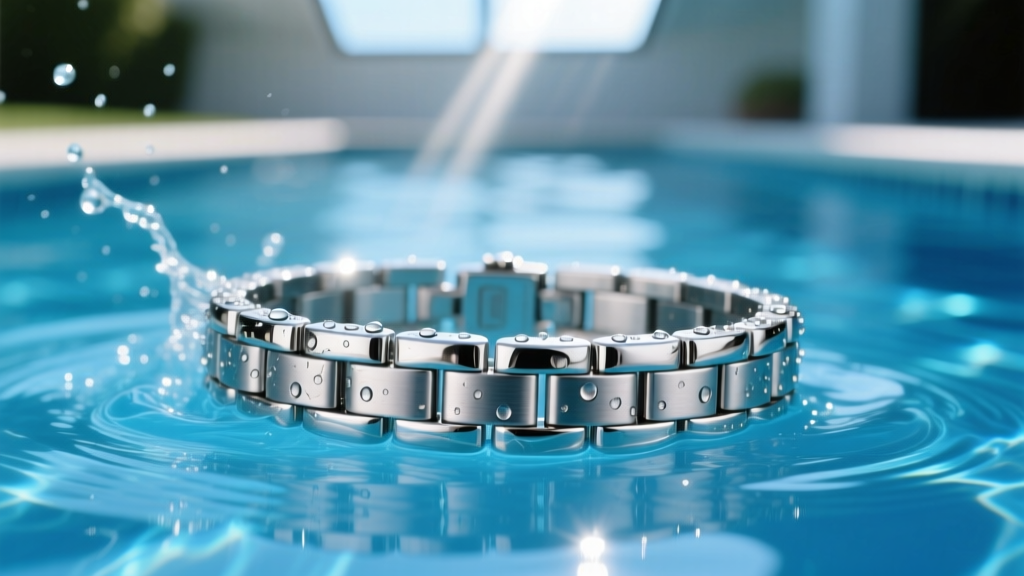
Why does 316L survive where 304 fails? The answer is Molybdenum. 316L contains 2-3% Molybdenum, an alloying element specifically added to stabilize the passive film against localized breakdown by aggressive anions like chlorides. While 304 stainless steel will quickly pit and stain in a standard chlorinated pool (1-3 ppm chlorine), 316L surgical steel will easily withstand prolonged exposure without structural compromise. However, hot tubs present a unique threat. The Arrhenius equation dictates that chemical reaction rates double for every 10°C increase in temperature. The combination of 104°F (40°C) water and concentrated halogens can eventually overwhelm even the Molybdenum-stabilized passivation layer of 316L over extended, repeated exposures.
Saltwater and the Ocean: Crevice Corrosion Risks
Ocean water contains approximately 19,000 ppm of chloride ions. While 316L is the marine standard for boat hardware, jewelry presents a unique geometric vulnerability: crevice corrosion. This occurs in areas where water becomes trapped and oxygen is depleted, such as under gemstone settings, inside the hollow cores of tube hoops, or where a clasp mechanism tightly interfaces. Without fresh oxygen to repair the Cr2O3 layer, the trapped saltwater becomes highly acidic and aggressively attacks the iron matrix. If you wear 316L jewelry in the ocean, it is imperative to rinse it in fresh water immediately afterward to displace the salt from these microscopic crevices.
Mechanical Wear vs. Chemical Degradation
It is vital to separate chemical corrosion from mechanical wear. If your stainless steel ring is deeply scratched, the passive layer is physically removed. In normal atmospheric conditions, the chromium instantly reacts with oxygen to heal the scratch in milliseconds. However, if that deep scratch is submerged in chloride-rich water before the healing process completes, or if dirt and oils block oxygen from reaching the bare iron, a localized rust spot will form. This is why heavily worn, deeply scratched vintage stainless steel pieces are more susceptible to water damage than pristine, newly polished items.
Expert Maintenance Protocol for Wet Exposure
To maintain the metallurgical integrity and aesthetic brilliance of your stainless steel jewelry after exposure to harsh aqueous environments, follow this expert protocol:
- Immediate Freshwater Rinse: After ocean or pool exposure, rinse the piece under warm, running tap water to flush chloride ions out of crevices and clasps.
- Ultrasonic Cleaning: For jewelry with intricate links or settings, use an ultrasonic cleaner with a mild, pH-neutral surfactant. The cavitation bubbles will physically dislodge limescale and trapped salts without abrading the passive layer.
- Citric Acid Passivation: If the metal appears dull or shows microscopic surface oxidation, do not use harsh abrasive polishes. Instead, utilize a citric acid passivation bath (following ASTM A967 standards for surgical steel). Citric acid gently strips free iron from the surface while promoting the rapid formation of a thick, uniform chromium oxide layer, effectively 'rebooting' the metal's natural defenses.
- Thorough Drying: Use compressed air or a microfiber cloth to ensure no moisture remains trapped in mechanical hinges or spring-ring clasps.
Conclusion
So, can stainless steel jewelry get wet? If your piece is crafted from genuine 316L surgical steel, it possesses the metallurgical fortitude to handle showers, rain, and even chlorinated pools with ease, thanks to its chromium and molybdenum content. However, treating it as completely invincible ignores the electrochemical realities of crevice corrosion and thermal acceleration in hot tubs. By understanding the science of the passivation layer and implementing proper post-exposure maintenance, you can ensure your stainless steel pieces remain structurally sound and brilliantly polished for a lifetime of wear.


