Why Does Stainless Steel Jewelry Tarnish? Expert Cleaning Guide
Discover why stainless steel jewelry tarnish occurs and learn expert 316L cleaning methods to restore your surgical steel pieces to a mirror finish.

The Science of 316L: Can Stainless Steel Jewelry Tarnish?
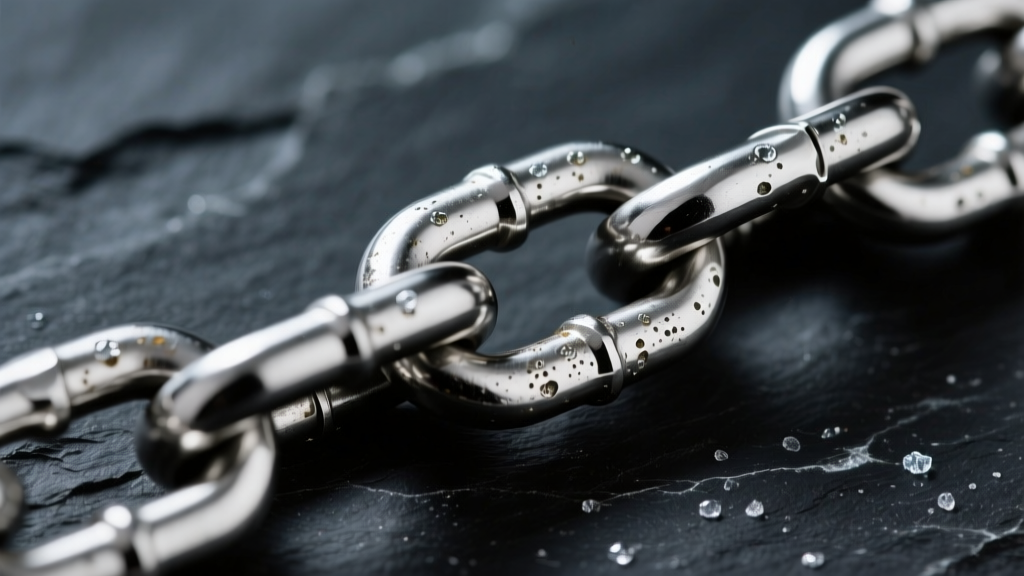
When consumers search for reasons behind stainless steel jewelry tarnish, they are usually observing a metallurgical misunderstanding. Unlike sterling silver, which chemically reacts with sulfur in the air to form black silver sulfide (true tarnish), stainless steel does not tarnish in the traditional sense. Instead, what appears as tarnish is actually surface oxidation, pitting, or the accumulation of microscopic debris that compromises the metal's passive layer.
Surgical stainless steel, specifically the 316L grade used in high-quality body jewelry and premium accessories, is an austenitic chromium-nickel alloy. It contains 16-18% chromium, 10-14% nickel, and crucially, 2-3% molybdenum. The chromium reacts with oxygen to form an invisible, self-healing layer of chromium oxide on the surface. This layer requires at least 10.5% chromium in the base alloy to form, and it is what makes the metal "stainless." However, when this passive layer is breached by harsh chemicals or physical abrasion, the underlying iron can oxidize, leading to dullness, dark spots, or superficial rusting.
According to the British Stainless Steel Association (BSSA), the addition of molybdenum in 316L significantly enhances its resistance to chlorides and industrial solvents compared to the more common 304 grade. Yet, even 316L is not entirely invincible against prolonged environmental exposure.
Environmental Triggers: What Actually Breaches the Passive Layer?
To effectively maintain your jewelry, you must understand what degrades the chromium oxide layer. The most common culprits include:
- Halides and Chlorides: Swimming pool chlorine, hot tub bromine, and even the sodium chloride in human sweat can cause "pitting corrosion." This manifests as tiny, dark, rough spots on the metal surface that cannot be wiped away.
- Hard Water Deposits: Calcium and magnesium in tap water leave behind microscopic mineral scales. These deposits trap moisture against the steel, creating an environment for "crevice corrosion," which looks like cloudy, stubborn white or gray tarnish.
- Sulfur-Rich Environments: While steel doesn't tarnish from sulfur like silver does, prolonged exposure to sulfur-rich hot springs or industrial pollution can degrade certain alloy inclusions, leading to a dull, matte appearance.
The PVD Coating Factor: A Special Case
In modern jewelry design, 316L stainless steel is frequently coated using Physical Vapor Deposition (PVD) to achieve gold, rose gold, or black finishes. If your PVD-coated jewelry is "tarnishing," it is likely that the microscopic titanium nitride or zirconium coating is wearing thin, revealing the base steel, or the coating itself is accumulating oils and lotions. PVD requires vastly different care than bare surgical steel, as harsh polishes will strip the color entirely.
The 3-Step Deep Cleaning Framework for Surgical Steel
For bare, uncoated 316L stainless steel, restoring the mirror finish requires a systematic approach that cleans without damaging the passive layer. Follow this expert framework for optimal results.
Step 1: The Surfactant Soak
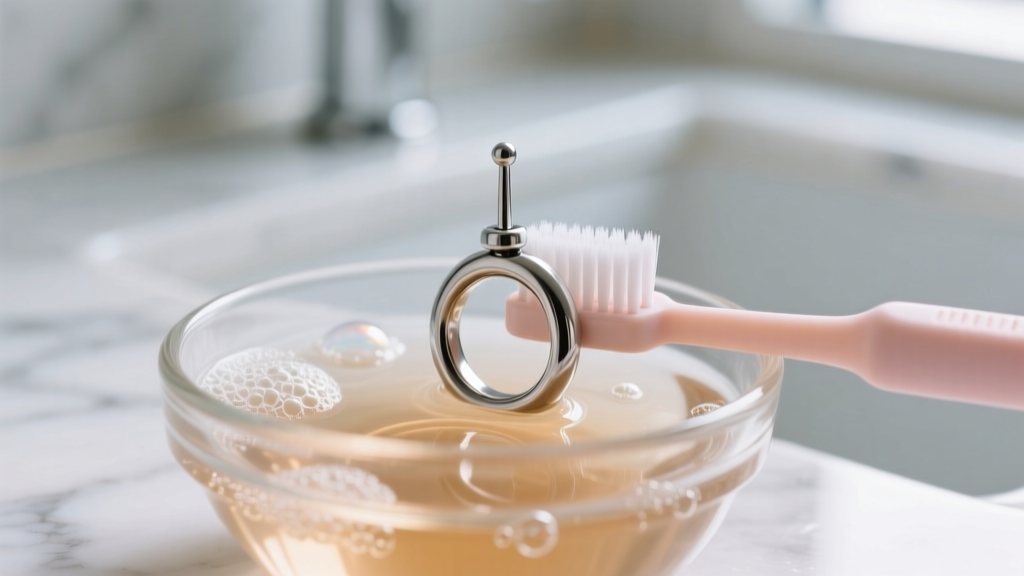
Fill a glass or ceramic bowl with warm water (approximately 40°C or 104°F). Avoid boiling water, as extreme thermal shock can weaken prong settings on gemstone pieces. Add three drops of a pH-neutral, non-lotion dish soap. Submerge the jewelry and let it soak for 10 to 15 minutes. The surfactant will break down the surface tension of sebum, dead skin cells, and cosmetic residues trapped in chain links or clasp mechanisms.
Step 2: Precision Agitation
Remove the piece from the soak and use a baby toothbrush with ultra-soft nylon bristles (0.1mm diameter). Gently agitate the crevices, focusing on the back of pendants and the interior of rings. Note on Ultrasonic Cleaners: While a 40kHz ultrasonic cleaner is highly effective for plain 316L chains and bands, never use it for jewelry with glued gemstones, opals, or PVD coatings, as the cavitation bubbles can fracture stones and delaminate thin coatings.
Step 3: The Passivation Rinse
Rinsing with tap water is a critical mistake that leads to hard water spotting. Always perform the final rinse using distilled or deionized water. This removes any remaining soap residue and prevents calcium deposits from forming as the piece dries. Pat dry immediately with a lint-free microfiber cloth; air drying almost guarantees water spots.
Chemicals to Avoid: The "Never Use" List
Many consumers inadvertently destroy their jewelry by applying cleaning agents meant for other metals. The Australian Stainless Steel Development Association (ASSDA) warns against using harsh chlorinated or highly abrasive cleaners. Below is a breakdown of common household chemicals and their effects on 316L steel.
| Chemical Agent | Common Use | Effect on 316L Stainless Steel |
|---|---|---|
| Household Bleach | Disinfecting | Severe Damage: Sodium hypochlorite rapidly destroys the chromium oxide layer, causing irreversible pitting and rust. |
| Silver Dip | Silver Tarnish Removal | Ineffective: Thiourea-based dips do not react with steel and leave a toxic, difficult-to-remove chemical film. |
| Baking Soda Paste | General Cleaning | Mild Risk: While chemically safe, the physical abrasion of sodium bicarbonate crystals will permanently scratch mirror finishes. |
| Ammonia | Glass Cleaning | Safe for Bare Steel: Will not harm 316L, but will instantly strip PVD gold/black coatings and damage porous gems. |
Restoring the Mirror Finish: Polishing Micro-Scratches
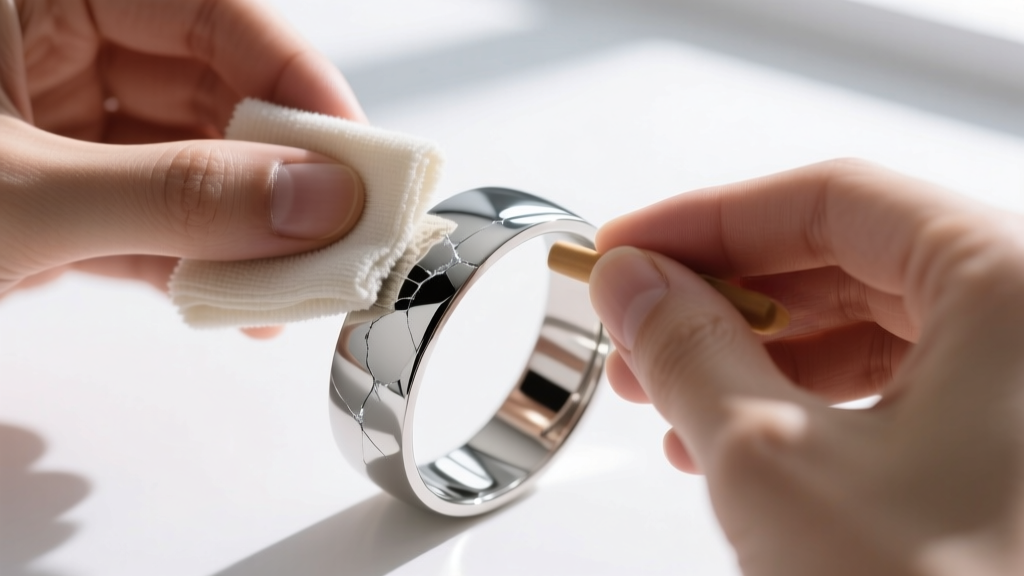
If your cleaning reveals a dull surface covered in micro-scratches rather than chemical oxidation, the metal requires mechanical polishing. Over time, contact with keys, zippers, and other metals creates a web of fine abrasions that scatter light, making the steel look gray and cloudy.
Expert Warning: Never use steel wool or wire brushes on stainless steel jewelry. These tools shed microscopic iron particles that embed into the surface of the 316L alloy. These embedded iron particles will quickly rust, creating orange spots that appear as though the jewelry itself is rusting from the inside out.
To safely restore a mirror finish, use graduated Micro-Mesh abrasive pads, starting at 1500 grit and working up to 12,000 grit. For deeper scratches, apply a small amount of jeweler's rouge (aluminum oxide compound) to a soft cotton buffing wheel or a high-density felt pad. Polish in a single, consistent direction rather than in circles to maintain a uniform grain if the piece has a satin finish.
Long-Term Storage Protocols
Proper storage is the final pillar of stainless steel maintenance. While 316L will not tarnish in a jewelry box, it can suffer from "bimetallic corrosion" if stored in direct contact with lower-grade metals like brass or carbon steel. Always store your stainless steel pieces individually in soft flannel pouches or ziplock bags.
Include a small packet of silica gel in your storage container to control ambient humidity. In coastal or high-humidity environments, moisture can condense in the microscopic crevices of clasps and hinges, initiating slow crevice corrosion over months of neglect. By combining the 3-step cleaning framework with intelligent storage, your 316L surgical steel jewelry will maintain its structural integrity and brilliant luster for a lifetime.


