Will Stainless Steel Jewelry Tarnish? The Ultimate Care Guide
Wondering if stainless steel jewelry tarnishes? Discover the science behind 316L steel, why it resists corrosion, and expert cleaning tips.

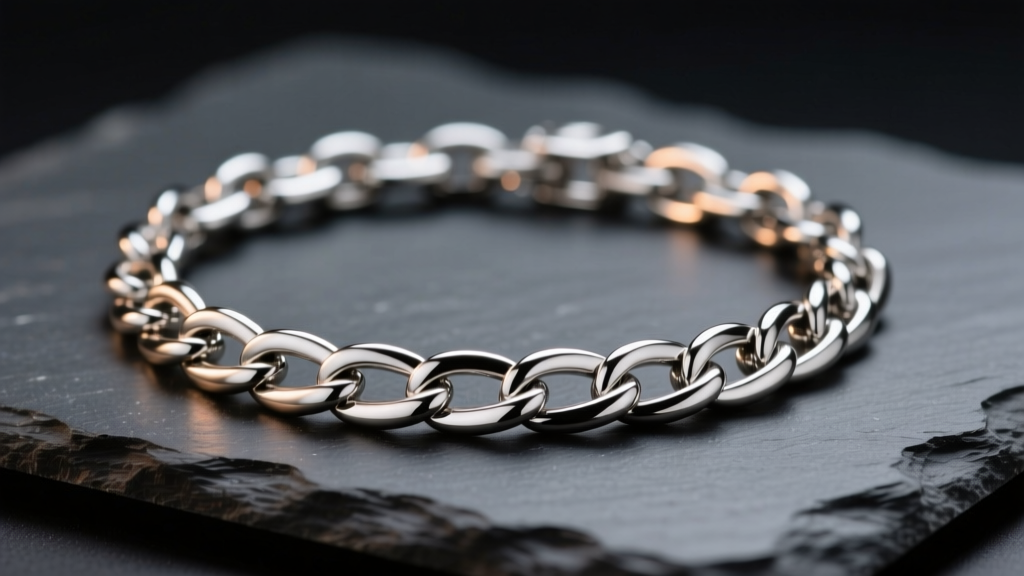
The Short Answer: Will Stainless Steel Jewelry Tarnish?
If you have ever found yourself asking, "will stainless steel jewelry tarnish?" the short answer is no, not in the traditional sense. Unlike sterling silver, which reacts with sulfur in the air to form black silver sulfide, or copper, which oxidizes into a green patina, high-quality stainless steel does not tarnish. However, this does not mean it is entirely immune to environmental degradation. While the metal itself will not chemically tarnish, it can accumulate stubborn surface grime, hard water spots, and microscopic debris that mimic the dull appearance of tarnish. Furthermore, under extreme and specific conditions, lower-grade stainless steel or poorly maintained pieces can experience surface corrosion or pitting.
To keep your jewelry looking pristine, it is crucial to understand the metallurgical properties of the steel you are wearing, the environmental factors that threaten its finish, and the precise cleaning protocols required to maintain its structural integrity and aesthetic brilliance. As of 2026, advancements in jewelry manufacturing have made 316L surgical steel the undisputed industry standard, but proper care remains essential.
The Science of 316L Surgical Steel and Chromium Oxide
To understand why stainless steel resists tarnish, we must look at its elemental composition. Jewelry-grade stainless steel is typically 316L, an alloy containing iron, carbon, 16-18% chromium, 10-14% nickel, and 2-3% molybdenum. The "L" stands for low carbon, which prevents carbide precipitation during welding and ensures maximum corrosion resistance.
The secret to its tarnish-proof nature lies in the chromium. When exposed to oxygen, the chromium in the alloy instantly forms a microscopic, invisible layer of chromium oxide on the surface. According to the Britannica metallurgical archives, this passive layer is only a few nanometers thick but is incredibly dense and self-repairing. If the surface is scratched, the chromium immediately reacts with ambient oxygen to rebuild the shield. The addition of molybdenum in 316L specifically enhances resistance to pitting corrosion from chlorides, making it vastly superior to 304 stainless steel for jewelry that comes into contact with human sweat and coastal environments.
Common Culprits That Cause Tarnish-Like Dullness
While the chromium oxide layer protects against traditional tarnish, several environmental factors can compromise the surface luster or cause localized corrosion if the jewelry is neglected.
Crevice Corrosion in Intricate Designs
Crevice corrosion occurs in microscopic gaps where oxygen cannot easily reach to replenish the chromium oxide layer. In jewelry, this happens under gemstone bezels, inside the threading of body jewelry screws, or where chain links tightly interlock. If sweat, dead skin cells, and soap scum accumulate in these crevices, they create a localized acidic environment that can eventually lead to microscopic pitting. This is particularly common in 14-gauge and 12-gauge threaded body jewelry where the ball closure meets the barbell.
Chlorine and Halogen Exposure
While 316L steel is highly resistant to chlorides, prolonged, repeated exposure to heavily chlorinated swimming pools or harsh household bleach can eventually break down the passive layer, leading to localized pitting. This is not tarnish, but rather physical degradation of the metal surface, which appears as tiny, dull, rough spots that cannot be polished out at home.
Galvanic Corrosion from Improper Storage
Storing your 316L stainless steel jewelry in direct, prolonged contact with lower-grade metals (like carbon steel findings or cheap brass clasps) in a humid environment can trigger galvanic corrosion. The stainless steel will act as a cathode, forcing the lesser metal to corrode rapidly, which can leave stubborn, rust-colored transfer marks on your steel pieces that require aggressive polishing to remove.
Step-by-Step Cleaning Protocol for 316L Steel
When your jewelry loses its mirror finish, it is usually due to a buildup of sebum, lotions, and environmental dust. Follow this exact protocol to restore the shine without damaging the metal or any PVD (Physical Vapor Deposition) coatings that are increasingly popular in 2026 for gold and rose-gold finishes.
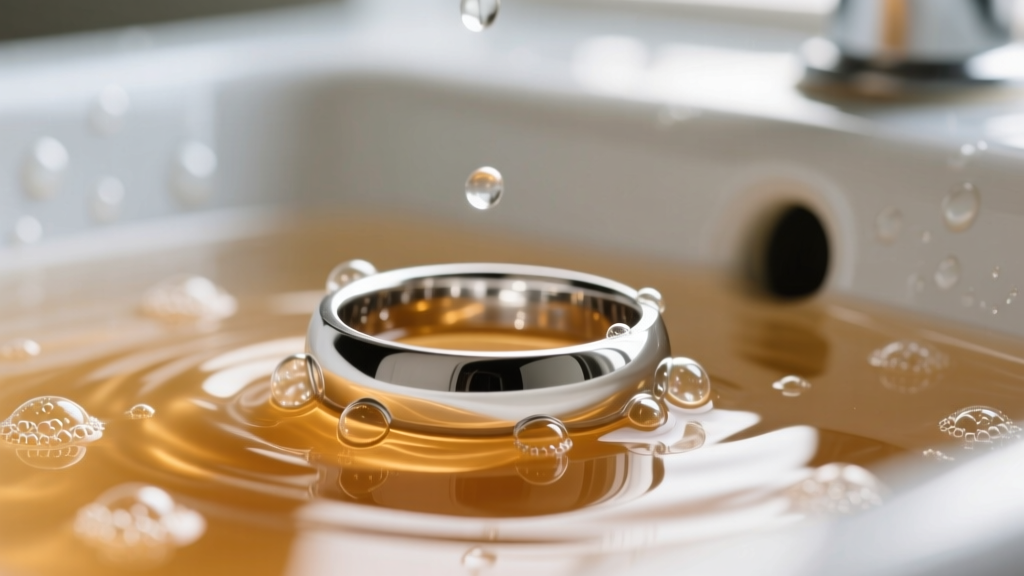
- The Soak: Fill a small glass bowl with warm (not hot) distilled water and add three drops of pH-neutral, fragrance-free dish soap. Submerge the jewelry for exactly 3 to 5 minutes. This softens sebum and cosmetic buildup without attacking the metal.
- The Agitation: Using a brand-new, extra-soft baby toothbrush (bristle diameter of 0.1mm or less), gently brush the jewelry. Pay special attention to the back of settings, chain clasps, and threaded areas. Never use stiff-bristled brushes, as they can inflict micro-scratches on high-polish finishes.
- The Rinse: Rinse the piece thoroughly under a stream of distilled water. Avoid tap water, as the dissolved calcium and magnesium in hard water will leave mineral deposits that dry into dull, white spots.
- The Dry: Immediately pat the jewelry dry with a clean, lint-free microfiber cloth. Do not allow it to air dry. For intricate chainmaille or mesh, use a hairdryer on the "cool" setting to blow moisture out of the crevices.
Cleaning Agents: What to Use vs. What to Avoid
The internet is full of DIY jewelry cleaning hacks that can permanently damage stainless steel. Below is a definitive guide on which chemical agents are safe for 316L steel.
| Cleaning Agent | Verdict | Scientific Reasoning |
|---|---|---|
| Mild Dish Soap | Highly Recommended | pH-neutral surfactants lift oils without reacting with the chromium oxide layer. |
| Isopropyl Alcohol (70%) | Safe for Sanitizing | Excellent for killing bacteria on body jewelry, but does not remove oily grime or sebum. |
| Baking Soda Paste | Avoid | Baking soda is a mild abrasive (Mohs hardness 2.5) that will inflict micro-scratches on mirror finishes and degrade PVD coatings. |
| Chlorine Bleach | Strictly Prohibited | Chlorides aggressively attack the passive layer, causing irreversible pitting and structural weakening. |
| Silver Dip Cleaners | Strictly Prohibited | Contains thiourea and strong acids designed to strip silver sulfide; will chemically etch and dull stainless steel. |
Long-Term Storage and Maintenance Framework
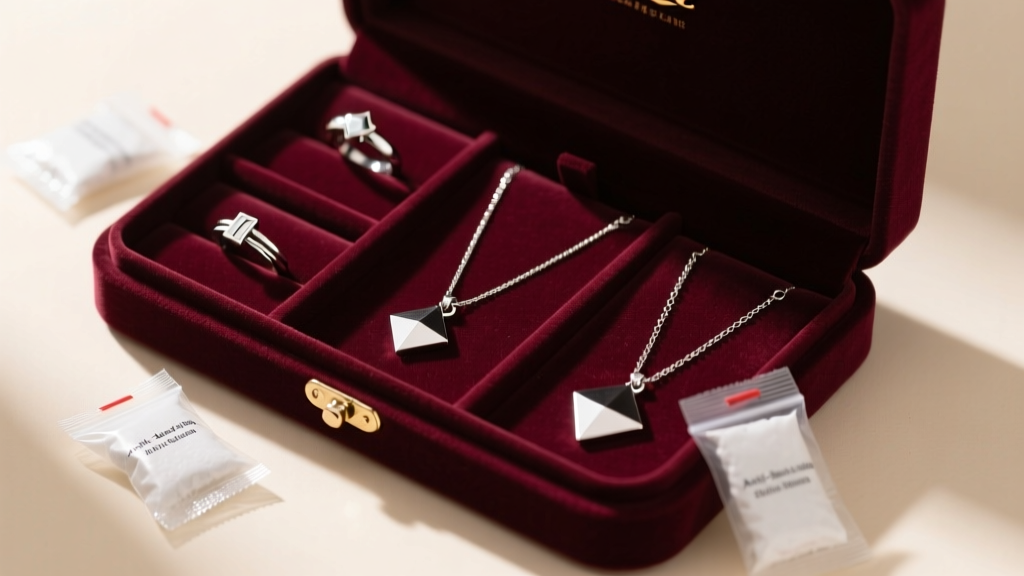
Proper storage is the final pillar of stainless steel maintenance. While you do not need anti-tarnish strips (which are designed to absorb sulfur for silver), you do need to control humidity and prevent physical abrasion.
- Individual Compartments: Store pieces in separate soft pouches or individual velvet-lined slots. Stainless steel is harder than silver and gold (ranking around 5.5 to 6.5 on the Mohs scale) and will easily scratch softer metals if stored together in a communal bin.
- Moisture Control: If you live in a high-humidity coastal environment, place a few silica gel desiccant packets in your jewelry box. This prevents the moisture buildup that facilitates crevice corrosion in complex pieces.
- PVD Coated Care: If your stainless steel jewelry features a PVD gold or black titanium nitride coating, store it away from direct UV light and extreme heat, which can cause the microscopic coating layers to delaminate over time.
When to Seek Professional Ultrasonic Cleaning
For heavily soiled pieces, particularly intricate chainmaille, mesh bands, or jewelry with numerous pave-set stones, home cleaning may not suffice. Professional jewelers use ultrasonic cleaners that operate at a 40 kHz frequency. The high-frequency sound waves create microscopic cavitation bubbles in the cleaning solution that implode against the metal, blasting away debris from crevices that a brush cannot reach.
However, a word of caution: ultrasonic cleaning is perfectly safe for plain 316L stainless steel and securely bezel-set stones, but it should never be used on jewelry with tension settings, glued-in gemstones (like opaque cabochons), or delicate PVD coatings, as the intense vibrations can loosen adhesives and fracture fragile gems. For standard, solid stainless steel bands and chains, an annual ultrasonic cleaning will restore the piece to its exact factory-floor brilliance, ensuring it remains a lifelong staple in your wardrobe.
"The longevity of 316L stainless steel jewelry is entirely dependent on respecting its passive oxide layer. Avoid harsh chlorides, embrace pH-neutral cleaning, and the metal will outlast almost any other material in your collection." — Australasian Stainless Steel Development Association (ASSDA)


