How to Clean Stainless Steel Jewelry: The Ultimate Expert Guide
Learn exactly how to clean stainless steel jewelry safely. Discover expert methods for 316L surgical steel, chemicals to avoid, and daily care tips.

Introduction: The Reality of "Stainless" Steel
Stainless steel jewelry, particularly pieces crafted from 316L surgical steel, has dominated the accessories market due to its remarkable durability, hypoallergenic properties, and sleek aesthetic. However, the term "stainless" is somewhat of a misnomer. While highly resistant to rust and corrosion, these pieces are not entirely impervious to environmental factors, body oils, and cosmetic buildup. Understanding how to clean stainless steel jewelry properly is essential to maintaining its mirror-like finish and structural integrity over decades of wear.
In this comprehensive guide, we move beyond generic internet hacks. We will explore the metallurgical science behind 316L steel, outline precise cleaning protocols for different finishes (including PVD coatings), and identify the specific chemicals that cause catastrophic pitting corrosion.
The Metallurgical Science: The Chromium Oxide Layer
To understand how to care for your jewelry, you must first understand what protects it. Stainless steel owes its corrosion resistance to a passive, invisible layer of chromium oxide that forms on its surface. According to the British Stainless Steel Association, this layer requires a minimum of 10.5% chromium in the alloy to form. When the surface is scratched or exposed to oxygen, this layer instantly self-repairs.
Grade 316L, the standard for high-quality body jewelry and premium accessories, contains an additional 2-3% molybdenum. This specific addition drastically increases resistance to chlorides and industrial solvents. However, when body oils, dead skin cells, lotions, and environmental pollutants accumulate on the surface, they create a physical barrier. This barrier blocks oxygen from reaching the steel, which can locally deplete the chromium oxide layer and lead to crevice corrosion or dull, stubborn smudges.
Step-by-Step: How to Clean Stainless Steel Jewelry at Home
Different levels of tarnish and grime require different approaches. Here are the three most effective, metallurgist-approved methods for restoring your pieces.
Method 1: The Mild Soap & Microfiber Technique (For Daily/Weekly Care)
This is the safest method for routine maintenance and is suitable for all stainless steel pieces, including those with PVD (Physical Vapor Deposition) coatings or delicate gemstone settings.
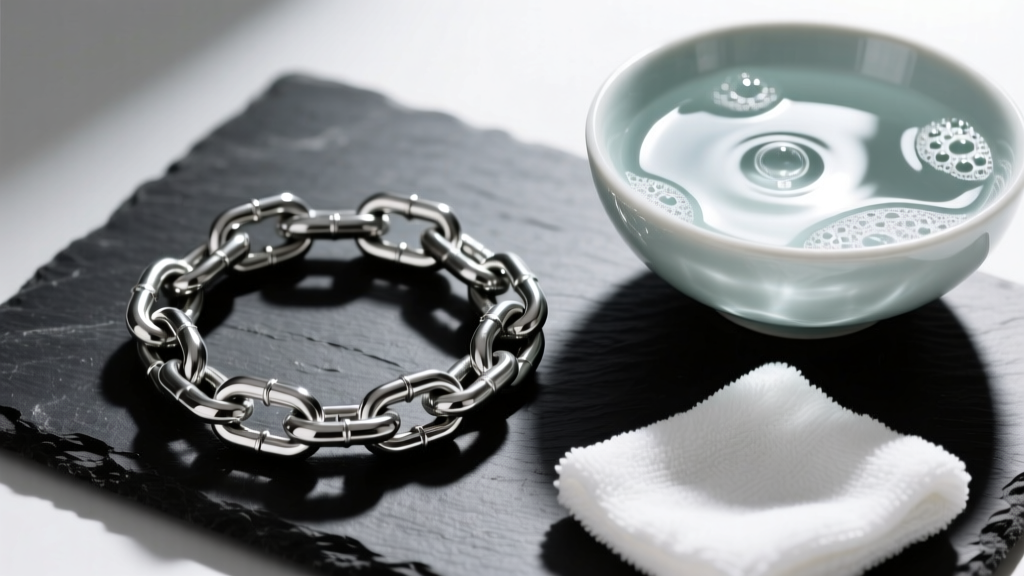
- Preparation: Fill a small glass bowl with warm (not hot) distilled water. Add two drops of a mild, pH-neutral dish soap (avoid soaps with added moisturizers or harsh degreasers).
- Soaking: Submerge your jewelry for 3 to 5 minutes. This softens sebum and cosmetic residue without stressing the metal.
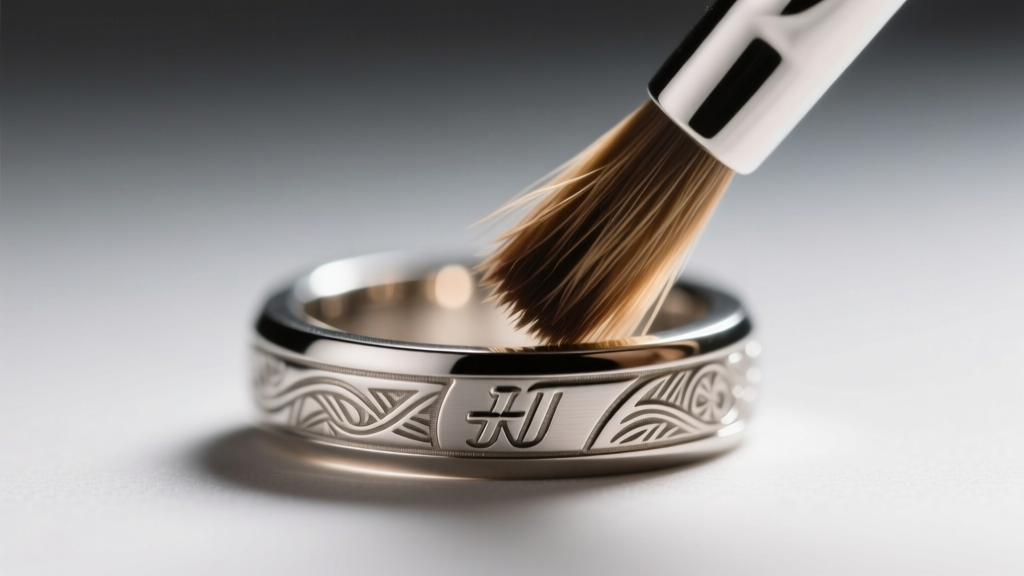
- Agitation: Use a clean, ultra-soft baby toothbrush or a dedicated jewelry brush to gently agitate the crevices. For chain links (like Cuban or Figaro chains), brush in the direction of the links to avoid snagging.
- Rinsing & Drying: Rinse thoroughly under distilled water to prevent hard water spots. Pat dry immediately with a lint-free microfiber cloth. Never air dry, as water spots will ruin the polished finish.
Method 2: Baking Soda Paste for Stubborn Grime (For Monthly Deep Cleans)
If your plain, uncoated stainless steel jewelry has accumulated heavy grime or slight surface oxidation, a mild abrasive is necessary. Note: Do not use this method on brushed, matte, or PVD-coated finishes, as it will alter the surface texture.
- The Mixture: Combine three parts baking soda (sodium bicarbonate) with one part distilled water to form a thick, spreadable paste.
- Application: Apply the paste using a soft, damp cloth or a cotton swab for intricate areas. Rub gently in circular motions.
- Neutralization: Baking soda is mildly alkaline. After cleaning, you must rinse the piece thoroughly with warm water and a drop of mild dish soap to neutralize any residual alkalinity, then dry completely with a microfiber cloth.
Method 3: Ultrasonic Cleaning (For Intricate, Unset Designs)
Ultrasonic cleaners use high-frequency sound waves (typically 40-45 kHz) to create microscopic cavitation bubbles in a liquid solution. When these bubbles collapse against the jewelry, they blast away microscopic debris from areas a brush cannot reach.
Crucial Warning: According to the Gemological Institute of America (GIA), ultrasonic cleaners can severely damage porous gemstones (like opals, pearls, or turquoise) and can loosen fractured stones. Only use ultrasonic cleaners for plain stainless steel chains, bands, and intricate metal-only designs. Use a specialized ultrasonic jewelry cleaning solution rather than tap water for optimal cavitation.
Chemicals to Avoid: Protecting the Passive Layer
Knowing what not to use is just as critical as knowing how to clean stainless steel jewelry. Certain household chemicals will aggressively attack the molybdenum and chromium in 316L steel, leading to irreversible pitting corrosion.
- Chlorine and Bleach (Sodium Hypochlorite): Chlorides are the natural enemy of stainless steel. Never clean your jewelry with bleach, and always remove it before swimming in heavily chlorinated pools.
- Harsh Abrasives (Toothpaste, Silver Polish): Toothpaste contains silica abrasives with a Mohs hardness that can micro-scratch high-polish stainless steel, leaving it looking perpetually cloudy. Silver dips contain thiourea, which is unnecessary and potentially reactive.
- Ammonia: While excellent for gold and diamonds, ammonia can degrade the protective coatings on some treated steels and is generally too harsh for routine stainless steel care.
Comparison Chart: Matching the Method to Your Jewelry
Not all stainless steel jewelry is finished the same way. Use this matrix to determine the safest cleaning protocol for your specific pieces.
| Jewelry Type / Finish | Recommended Method | Methods to Avoid | Frequency |
|---|---|---|---|
| High-Polish Plain 316L | Mild Soap, Baking Soda Paste, Ultrasonic | Chlorine, Toothpaste | Weekly / Monthly |
| Brushed / Matte Finish | Mild Soap & Soft Cloth | Baking Soda, Ultrasonic, Hard Brushes | Bi-Weekly |
| PVD Coated (Gold/Black) | Mild Soap & Microfiber Only | Baking Soda, Ultrasonic, Silver Dips | Weekly |
| Gemstone-Set (CZ, Diamonds) | Mild Soap & Soft Brush | Ultrasonic (if stones are fractured) | Bi-Weekly |
| Intricate Metal-Only Chains | Ultrasonic, Mild Soap | Thick Pastes (hard to rinse out) | Monthly |
Pro Tips for Long-Term Maintenance and Storage
How you store your jewelry dictates how often you need to clean it. Stainless steel is highly durable, but it can still suffer from surface scratching if stored improperly.
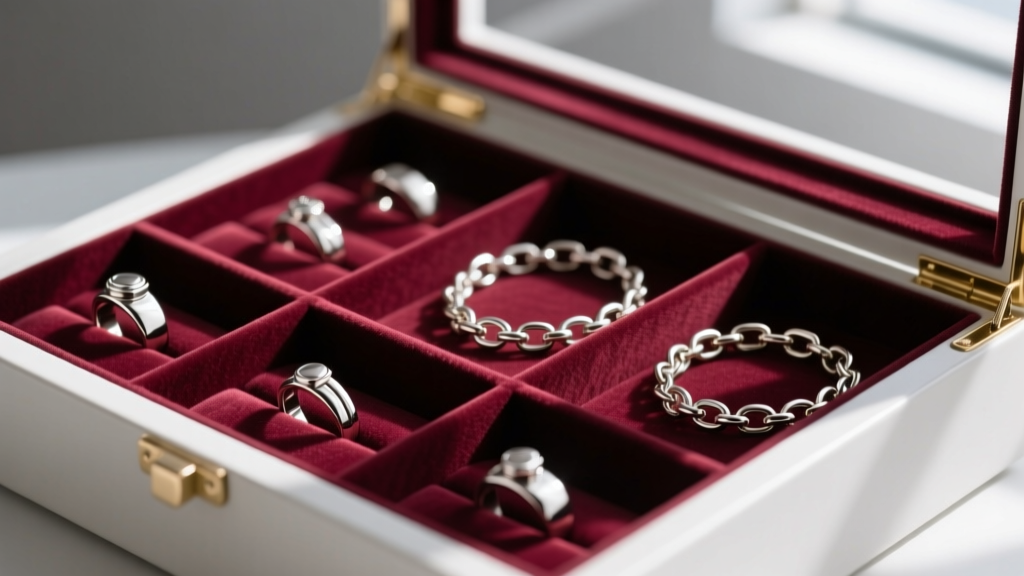
- Individual Compartments: Store pieces in a jewelry box with individual velvet or soft-cloth compartments. While 316L steel is hard (Mohs 5.5-6.3), diamond-set pieces or tungsten carbide rings stored nearby will easily scratch its surface.
- Anti-Tarnish Strips: Although stainless steel does not tarnish like sterling silver, storing it with anti-tarnish strips (which absorb sulfur compounds and moisture) helps keep the environment dry, preventing water spots and maintaining the brilliance of any set gemstones.
- The "Last On, First Off" Rule: Always put your jewelry on after applying cosmetics, perfumes, and hairsprays. Remove it first when showering or doing household chores to minimize chemical exposure.
Frequently Asked Questions
Can I wear my stainless steel jewelry in the shower?
Yes, 316L surgical steel is highly resistant to water and will not rust in the shower. However, repeated exposure to hard water and harsh body washes will leave a cloudy soap scum buildup over time, requiring more frequent cleaning to maintain its shine.
Will stainless steel turn my skin green?
No. The green discoloration associated with cheap jewelry is caused by copper or brass alloys reacting with sweat and acids. High-quality 316L stainless steel contains no copper and is completely hypoallergenic, making it safe for sensitive skin.
How do I remove tiny scratches from my polished steel ring?
Cleaning will not remove physical scratches. For minor surface marring on plain, high-polish bands, you can use a specialized jeweler's rouge cloth or a Cape Cod polishing cloth. Rub gently in one direction. Do not use polishing cloths on brushed or PVD-coated finishes.


