Does Stainless Steel Jewelry Tarnish? A Metallurgical Deep Dive
Does stainless steel jewelry tarnish? We explore the metallurgy of 316L surgical steel, the chromium oxide layer, and real-world corrosion limits.

The Short Answer: Tarnish vs. Corrosion
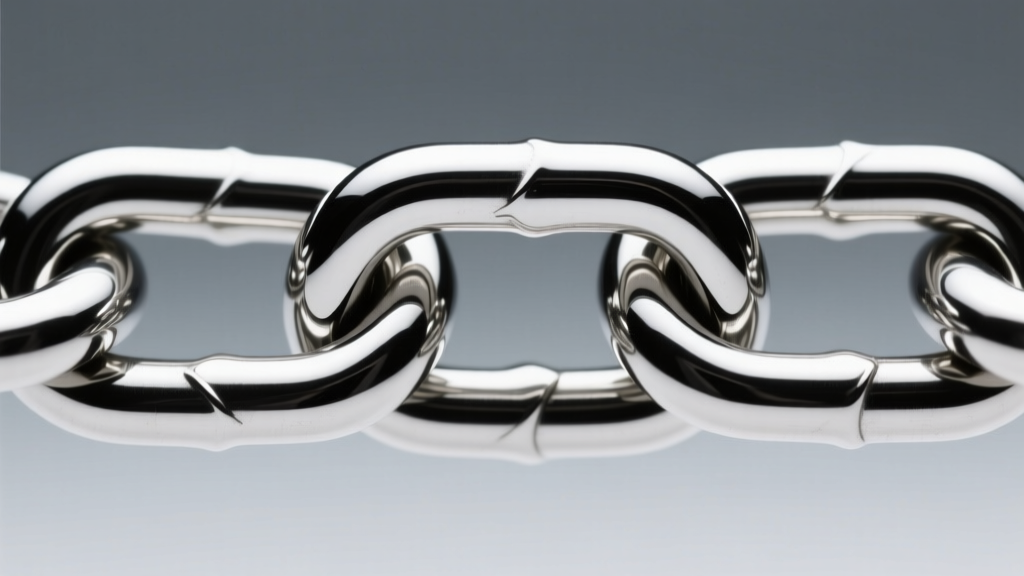
When collectors and jewelers ask, "does stainless steel jewelry tarnish?", the answer requires a precise metallurgical distinction between tarnish and corrosion. Tarnish is a specific type of surface corrosion that occurs when metals like sterling silver or copper react with sulfur compounds in the air, forming a dark, dull layer of silver sulfide or copper oxide. Stainless steel does not contain the reactive elements that form these traditional sulfide tarnishes. Therefore, in the strictest chemical sense, stainless steel jewelry does not tarnish.
However, stainless steel is not entirely impervious to environmental degradation. Instead of tarnishing, it can experience pitting corrosion, crevice corrosion, or surface staining if its protective passive layer is compromised. Understanding the boundary between a maintenance-free metal and a degraded one requires a deep dive into the alloy's atomic structure and environmental triggers.
The Metallurgy of 316L Surgical Steel
To understand how stainless steel reacts to the environment, we must look at its elemental composition. The jewelry industry predominantly uses 316L stainless steel, often marketed as "surgical steel." According to materials science data published by AZoM, 316L is an austenitic chromium-nickel alloy with a very specific elemental breakdown:
- Iron (Fe): ~65-70% (The base structural matrix)
- Chromium (Cr): 16-18% (The primary corrosion-resistant element)
- Nickel (Ni): 10-14% (Stabilizes the austenitic crystal structure for malleability)
- Molybdenum (Mo): 2-3% (The secret weapon against chloride pitting)
- Carbon (C): <0.03% (The "L" stands for Low carbon, preventing carbide precipitation during welding or casting)
The addition of molybdenum is what separates 316L from the cheaper 304-grade stainless steel often found in hardware stores. Molybdenum drastically increases the alloy's resistance to localized pitting caused by chlorides, which are abundant in human sweat, seawater, and swimming pools.
The Chromium Oxide Passive Layer
The true genius of stainless steel lies in its passivity. When chromium is exposed to oxygen, it instantly forms a microscopic, invisible layer of chromium oxide (Cr2O3) on the surface. As noted in Britannica's metallurgical overview, this passive layer is only a few nanometers thick but is incredibly dense and adherent. It acts as a physical barrier that prevents oxygen and moisture from reaching the underlying iron matrix. If the surface is scratched, the chromium immediately reacts with ambient oxygen to "heal" the layer, provided there is sufficient oxygen in the environment.

Environmental Threats: When Stainless Steel Actually Fails
While 316L is highly resilient, it is not indestructible. The passive layer can be breached by specific chemical aggressors, leading to localized rust spots that consumers often mistake for "tarnish." Below is a technical breakdown of environmental threats and their impact on 316L jewelry.
| Environmental Trigger | Chemical Mechanism | Impact on 316L Jewelry |
|---|---|---|
| Chlorine (Bleach, Pools) | Chloride ions penetrate and break down the Cr2O3 layer, causing pitting. | Microscopic rust pits that trap dirt, appearing as dark, stubborn spots. |
| Prolonged Sweat Exposure | Lactic acid and sodium chloride lower surface pH and introduce chlorides. | Surface dulling and potential localized pitting in high-friction areas. |
| Iodine & Bromine | Halogen displacement reactions that aggressively strip the passive layer. | Rapid surface staining and structural weakening if not rinsed immediately. |
| Abrasive Polishing Compounds | Mechanical removal of the passive layer faster than it can reform. | Temporary vulnerability to oxidation until re-passivation occurs. |
The Hidden Danger: Crevice Corrosion in Jewelry Settings
One of the most overlooked failure modes in stainless steel jewelry is crevice corrosion. This occurs in confined spaces where oxygen is depleted, preventing the chromium oxide layer from healing. In jewelry, crevices are found under gemstone prongs, inside tight chain links, or at the junction of a clasp mechanism.
When sweat or saltwater enters these microscopic gaps and becomes trapped, the oxygen inside the crevice is quickly consumed by initial oxidation. Without fresh oxygen to replenish the passive layer, the localized pH drops drastically due to the accumulation of metal chlorides. The area becomes highly acidic, leading to aggressive, localized rusting beneath a gemstone setting—even while the rest of the ring remains perfectly polished. Jewelers must ensure that settings are designed with adequate clearance for cleaning and oxygen flow to mitigate this risk.
316L vs. 304 vs. Sterling Silver: A Technical Comparison
To contextualize the performance of 316L, it is helpful to compare it against other common jewelry metals across specific technical vectors:
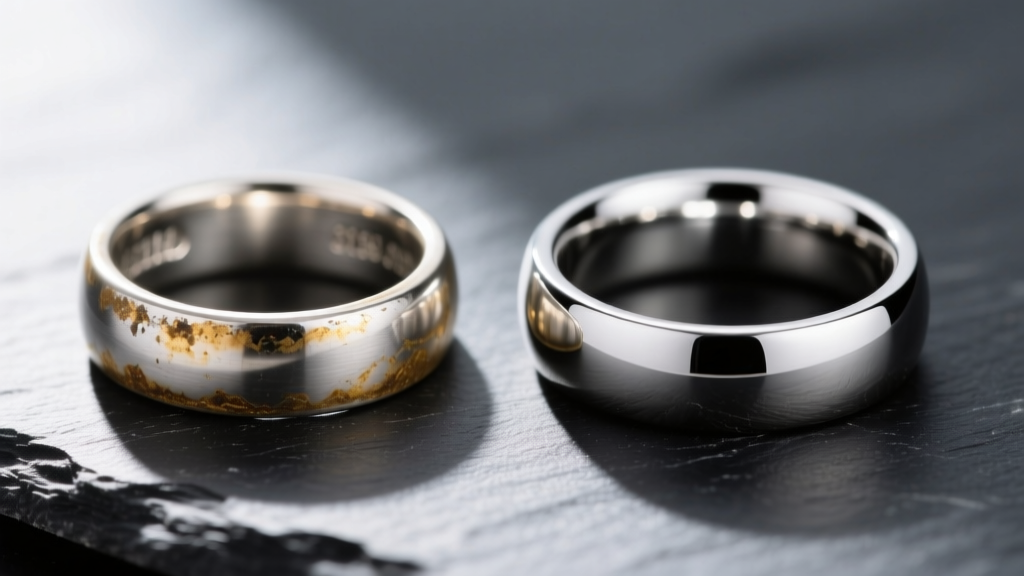
- 316L Stainless Steel: Superior chloride resistance (thanks to molybdenum), highly scratch-resistant, zero sulfide tarnish, but heavier and harder to resize.
- 304 Stainless Steel: Lacks molybdenum. Highly susceptible to pitting from saltwater and heavy sweat. Acceptable for occasional-wear fashion jewelry, but not recommended for body piercings or daily-wear rings.
- 925 Sterling Silver: Prone to rapid sulfide tarnishing, requires frequent chemical or mechanical polishing, highly malleable, excellent for intricate castings but poor for high-impact daily wear.
Nickel Sensitization and Long-Term Wear
A common concern regarding stainless steel is nickel allergy. 316L contains 10-14% nickel. However, the nickel is tightly bound within the austenitic crystal matrix and the chromium oxide barrier. According to dermatological studies indexed by the National Institutes of Health (NIH), intact 316L stainless steel generally does not release enough nickel to trigger contact dermatitis in most sensitized individuals. However, if the jewelry is subjected to severe corrosion or constant friction that perpetually grinds away the passive layer, nickel ions can leach into the skin. This is another critical reason to avoid wearing stainless steel in highly chlorinated environments.
Expert Maintenance and Passivation Protocols
"Stainless steel relies on oxygen to maintain its passivity. Storing it in airtight, oxygen-depleted environments while contaminated with salt residues is a guaranteed recipe for crevice corrosion."
For jewelers and serious collectors, maintaining 316L goes beyond wiping it with a cloth. If a piece has been exposed to harsh chemicals or shows early signs of surface staining, it can be chemically passivated. In industrial settings, nitric acid is used, but for jewelry, a citric acid bath is the safest and most effective method.
- Clean the jewelry ultrasonically to remove all organic debris and oils.
- Submerge the piece in a 4-10% citric acid solution at room temperature for 20-30 minutes.
- The citric acid selectively dissolves free iron particles on the surface without attacking the chromium.
- Rinse thoroughly with distilled water and allow it to air dry in an oxygen-rich environment to promote a uniform, thick Cr2O3 layer.
Final Verdict for Jewelers and Collectors
So, does stainless steel jewelry tarnish? No. It will never develop the dark, sulfide patina associated with silver or copper. However, it is not a magical, indestructible metal. 316L surgical steel is a highly engineered alloy that requires respect for its chemical boundaries. By understanding the vital role of molybdenum, protecting the passive layer from halogen-rich chemicals, and designing settings that avoid oxygen-starved crevices, jewelers can guarantee that their stainless steel pieces will remain brilliantly polished for generations.


