Will Stainless Steel Jewelry Rust? A Budget & Value Guide
Discover if stainless steel jewelry rusts. We break down 316L vs 304 grades, cost-per-wear, and how to budget for rust-free surgical steel.

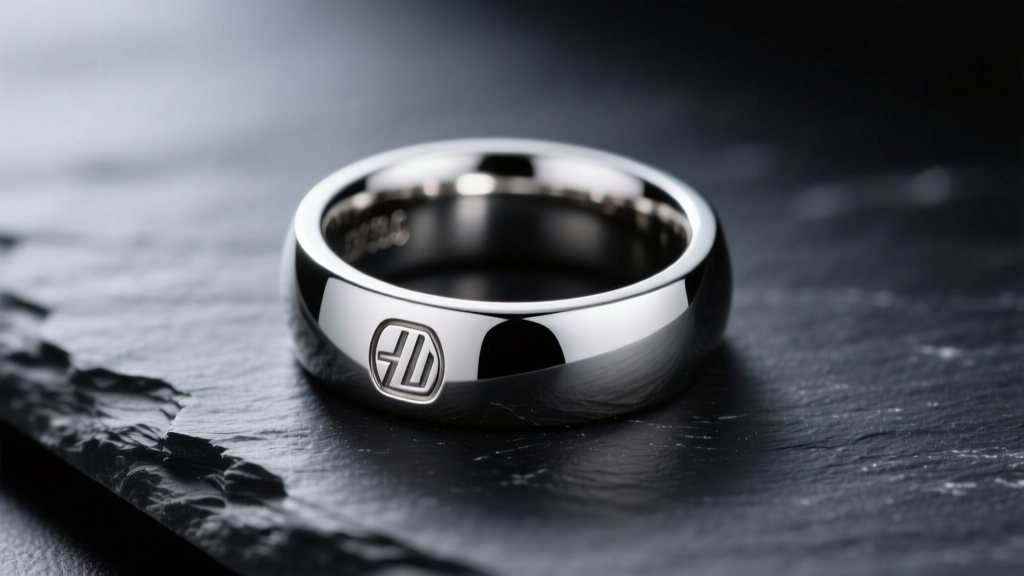
When building a jewelry collection on a budget, stainless steel is frequently championed as the ultimate affordable alternative to precious metals. But a critical question remains for value-conscious buyers: will stainless steel jewelry rust? The short answer is that it depends entirely on the metallurgical grade of the steel and the environment it is exposed to. While high-quality surgical steel can last a lifetime without oxidizing, ultra-cheap alternatives marketed as 'stainless' can develop rust spots and degrade within months.
From a budget and value assessment perspective, understanding the difference between these grades is the key to maximizing your cost-per-wear. In this guide, we will deconstruct the metallurgy of stainless steel, analyze the real-world failure modes of budget alloys, and provide a concrete framework for auditing your jewelry purchases to ensure you are getting genuine, rust-free value.
The Metallurgy of Rust: Why Alloy Grades Dictate Value
To understand rust resistance, we must look at the elemental composition of the metal. Stainless steel owes its 'stainless' reputation to a passive, nanometer-thick layer of chromium oxide that forms when chromium (present at 10.5% or higher) reacts with oxygen. This layer self-repairs when scratched, protecting the iron beneath from oxidizing (rusting). However, not all stainless steel is created equal.
According to the International Stainless Steel Forum, the addition of specific alloying elements drastically alters corrosion resistance. Here is how the three most common jewelry grades compare:
- 316L (Surgical Steel): The gold standard for jewelry. It contains 16-18% chromium, 10-14% nickel, and crucially, 2-3% molybdenum. Molybdenum specifically protects against chloride-induced pitting and crevice corrosion, making it highly resistant to sweat, seawater, and pool chemicals. The 'L' denotes low carbon, which prevents carbide precipitation during welding or high-heat manufacturing.
- 304 Stainless Steel: Contains similar chromium and nickel levels but lacks molybdenum. While highly resistant to standard atmospheric oxidation, it is vulnerable to chlorides. It is a mid-tier budget option that will resist rust in dry conditions but may pit if worn daily in the ocean or gym.
- 201 Stainless Steel: The budget trap. Manufacturers replace expensive nickel with manganese and nitrogen. It has significantly lower corrosion resistance and is highly prone to rusting when exposed to the acidic pH of human sweat and sebum.
Budget Breakdown: Initial Cost vs. Lifetime Value
When assessing value, the initial price tag is only half the equation. The true metric for budget jewelry is the Cost Per Wear (CPW), factoring in the item's functional lifespan before it degrades, rusts, or causes skin irritation. Below is a value assessment matrix based on current market averages for standard men's and women's bands and chains.
| Alloy Grade | Typical Price Range | Molybdenum Content | Expected Lifespan (Daily Wear) | Rust & Pitting Risk |
|---|---|---|---|---|
| 316L Surgical | $20 - $65 | 2.0% - 3.0% | 10+ Years / Lifetime | Extremely Low |
| 304 Standard | $10 - $25 | 0.0% | 2 - 4 Years | Moderate (Chlorides) |
| 201 Budget | $2 - $8 | 0.0% | 3 - 6 Months | High (Sweat/Acids) |
| Zinc Alloy (Misrepresented) | $1 - $5 | N/A | 1 - 2 Months | Certain |
As the data illustrates, a $35 316L ring worn daily for five years yields a CPW of $0.001. Conversely, a $4 201-grade ring that rusts and turns your skin green after two months yields a CPW of $0.006, while also carrying the hidden cost of replacing the item repeatedly. Investing in 316L is mathematically the superior budget strategy.
Real-World Failure Modes: When Does It Actually Rust?
Even premium 316L stainless steel is not entirely invincible; it is 'stainless,' not 'stain-proof.' However, for 316L to rust under normal conditions, the passive chromium oxide layer must be repeatedly compromised faster than it can self-repair. Here are the specific failure modes you need to budget around.
The Sweat, Sebum, and pH Factor
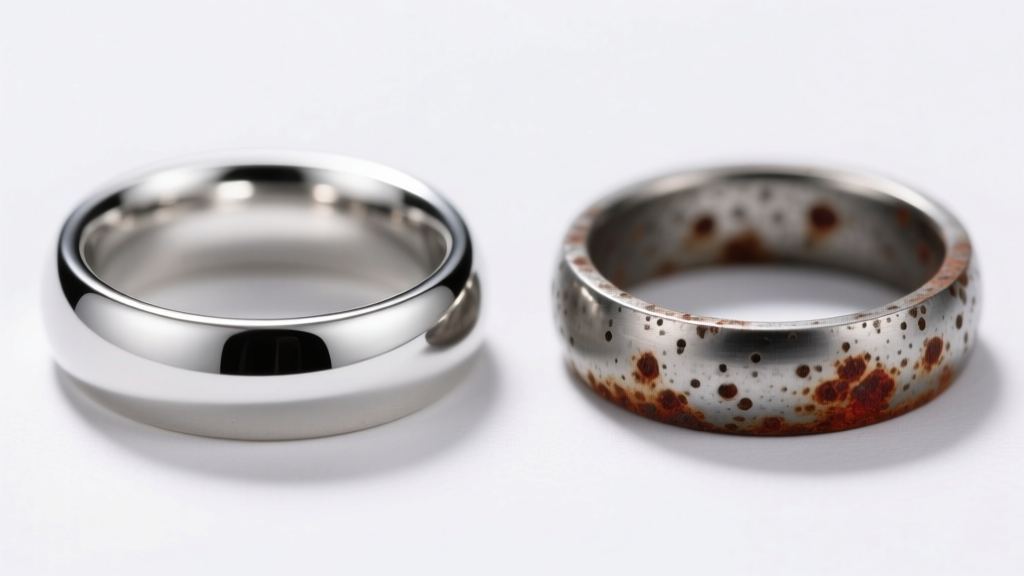
Human sweat is mildly acidic (pH 4.5 to 7.0) and contains chlorides and lactic acid. While 316L easily withstands this, lower-grade 201 or 304 steels can suffer from micro-pitting. Over time, these microscopic pits trap dead skin cells, soap residue, and bacteria, creating a localized acidic environment that accelerates galvanic corrosion. This is why cheap stainless steel rings often develop a rust ring on the inside band, eventually transferring iron oxide onto your skin.
Pool Chemicals and Ocean Exposure
Chlorine is the natural enemy of standard stainless steel. If you frequently swim in chlorinated pools or the ocean, 304 steel will eventually succumb to crevice corrosion, particularly in the microscopic gaps beneath gemstone settings or chain links. Only 316L, with its molybdenum reinforcement, provides a reliable buffer against halogen-induced oxidation. If your lifestyle involves heavy water exposure, budgeting strictly for 316L is non-negotiable.
Galvanic Corrosion from Mixed Metals
If a stainless steel chain is paired with a clasp or jump ring made of a dissimilar, less noble metal (like raw brass or cheap zinc alloy), the presence of moisture creates a galvanic cell. The less noble metal will corrode rapidly, and the resulting oxidation can spread to the steel. Always ensure every component of your jewelry, including clasps and earring posts, is verified 316L.
The Hidden Costs of 'Cheap' Stainless Steel
Budgeting for jewelry isn't just about the metal's structural integrity; it is also about dermatological health. The American Academy of Dermatology frequently notes that metal allergies and contact dermatitis are often triggered by nickel leaching from corroding alloys. While 316L contains nickel, it is tightly bound within the alloy matrix and trapped beneath the passive oxide layer, making it generally hypoallergenic for most wearers. However, when inferior grades rust and degrade, they release free nickel ions directly into the skin.
The resulting allergic contact dermatitis can require topical corticosteroids and dermatologist visits, entirely wiping out any initial savings from buying a $3 necklace. Furthermore, the 'green skin' effect often attributed to cheap steel is actually the result of metallic salts forming when copper or zinc impurities in low-grade alloys react with skin acids. True 316L contains no copper and will never turn your skin green.
How to Audit Your Stainless Steel Purchases
To protect your budget and ensure you are acquiring rust-proof value, implement this auditing checklist before completing any stainless steel jewelry purchase:
- Demand Grade Transparency: If a product listing simply says 'Stainless Steel' without specifying '316L' or 'Surgical Steel,' assume it is 201 or 304 grade. Reputable brands proudly advertise 316L because it is a selling point.
- The Weight and Density Test: 316L stainless steel is remarkably dense (approx. 8.0 g/cm³). If a thick chain or heavy signet ring feels suspiciously light or 'hollow' for its size, it is likely a zinc alloy plated with a thin layer of steel that will eventually flake and rust.
- Inspect the Clasp and Jump Rings: Many brands cut costs by using 316L for the main chain but using cheap, magnetic alloys for the clasps. Bring a small neodymium magnet when shopping in person; while 316L can be very slightly magnetic if heavily cold-worked, a clasp that aggressively snaps to a magnet is likely high-carbon steel or a cheaper alloy prone to rust.
- Check for PVD Coating Warranties: If you are buying black or gold-toned stainless steel, ensure it uses PVD (Physical Vapor Deposition) rather than cheap electroplating. PVD bonds at a molecular level and prevents the underlying steel from being exposed to moisture.
For those with known, severe nickel sensitivities, even 316L may occasionally cause reactions due to individual biological variances. In such cases, consulting resources like the National Library of Medicine's guidelines on nickel allergy can help you determine if you need to pivot your budget toward solid titanium or niobium instead.
Final Verdict: Is the Investment Worth It?
So, will stainless steel jewelry rust? If you buy blind based on the lowest possible price, the answer is almost certainly yes. Ultra-budget 201-grade alloys and misrepresented zinc metals will oxidize, pit, and degrade rapidly when exposed to the realities of daily wear, sweat, and water.
However, if you strategically allocate your budget toward verified 316L surgical steel, you are acquiring a material that rivals precious metals in its longevity and corrosion resistance. By paying a modest premium upfront—typically an extra $15 to $30 per piece—you secure a lifetime of rust-free wear, eliminate the risk of skin-staining oxidation, and drastically lower your long-term cost-per-wear. In the realm of budget jewelry, 316L stainless steel isn't just a purchase; it is a permanent, high-value asset.


