Tarnished Stainless Steel Jewelry: Causes, Fixes & Myths
Discover why tarnished stainless steel jewelry is usually a myth, identify the real causes of discoloration, and learn expert restoration techniques.
The Myth of Tarnished Stainless Steel Jewelry
If you have ever searched for solutions to fix tarnished stainless steel jewelry, you have likely stumbled into a metallurgical paradox. True stainless steel—specifically the 316L and 304 grades used in high-quality accessories and body jewelry—does not tarnish in the traditional sense. Tarnish is a specific chemical reaction, most commonly associated with sterling silver reacting with sulfur in the air to form black silver sulfide. Stainless steel, however, relies on a passive chromium oxide layer that prevents this type of atmospheric corrosion.
So, why does your favorite steel necklace or 14-gauge septum clicker suddenly look dull, gray, or rusted? The phenomenon of "tarnished stainless steel jewelry" is almost always a case of mistaken identity. It is either surface contamination, localized pitting corrosion from harsh chemicals, or the unfortunate reality that you were sold a lower-grade alloy masquerading as surgical steel. In this comprehensive guide, we break down the exact material science behind steel discoloration, compare it to other jewelry metals, and provide a professional restoration protocol.
Material Grade Breakdown: Why Some "Steel" Fails
Not all stainless steel is created equal. The jewelry market is flooded with varying grades of steel, and understanding the difference is crucial for diagnosing discoloration. According to the British Stainless Steel Association, the corrosion resistance of steel is entirely dependent on its alloying elements—primarily chromium, nickel, and molybdenum.
| Alloy Grade | Key Composition | Discoloration / Rust Risk | Typical Price (18" Chain) |
|---|---|---|---|
| 316L (Surgical/Marine) | 16-18% Cr, 10-14% Ni, 2-3% Mo | Extremely Low (Resists chlorides & pitting) | $45 - $120 |
| 304 (Standard) | 18-20% Cr, 8-12% Ni, 0% Mo | Low (Can pit with prolonged sweat/chlorine exposure) | $20 - $50 |
| 200-Series (Budget) | High Manganese, Low Nickel, No Mo | High (Prone to rust and severe surface oxidation) | $5 - $15 |
| Brass/Copper Base | Zinc/Copper core with steel plating | Guaranteed (Plating wears, base metal tarnishes green) | $8 - $25 |
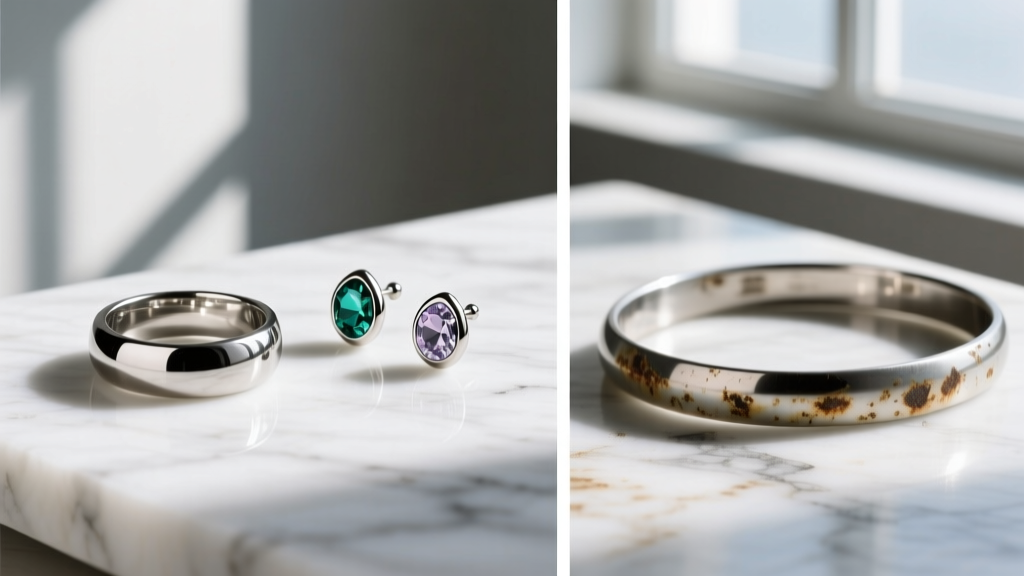
If your jewelry is turning your skin green or developing deep orange rust spots, you are likely dealing with 200-series steel or a plated base metal. Genuine 316L contains molybdenum, an element specifically added to prevent chloride pitting—the exact type of damage caused by human sweat and swimming pools.
The Real Culprits Behind Discoloration
When genuine 316L stainless steel loses its luster, it is not tarnishing; it is suffering from environmental abuse. The passive chromium oxide layer that protects the steel is only 2 to 5 nanometers thick. While it is self-healing in the presence of oxygen, certain environments will overwhelm it.
- Chloride Attack: Frequent exposure to chlorinated pool water or harsh household bleach breaks down the passive layer, leading to micro-pitting. This makes the surface porous, dull, and susceptible to trapping dirt.
- Galvanic Contamination: If your steel jewelry is stored in a workshop or a cheap display case where carbon steel dust is present, those microscopic iron particles can embed into the stainless surface and rust, creating the illusion that the jewelry itself is rusting.
- Hard Water & Soap Scum: Daily wear in the shower leads to a buildup of calcium carbonate and stearates from bar soap. This creates a cloudy, grayish film that mimics tarnish but is actually just calcified residue.
The Plating Deception: PVD vs. Flash Plating
Many consumers experience "tarnished" gold or rose-gold stainless steel jewelry. True 316L steel cannot be gold; it must be plated. High-end brands use PVD (Physical Vapor Deposition) coating, which bonds at a molecular level and lasts for years. Fast-fashion brands use electroplated flash coatings over a brass underlayer. When that micro-thin gold layer wears away from friction, the brass underneath reacts with your skin's acidity, creating a dark, tarnished look that consumers mistakenly blame on the steel core.
316L Steel vs. Sterling Silver: A Tarnish Comparison
To truly understand the low-maintenance nature of surgical steel, we must compare it to the industry standard for white metals: 925 Sterling Silver. According to metallurgical studies referenced by the National Institutes of Health regarding implant-grade metals, 316L exhibits vastly superior biocompatibility and environmental stability compared to silver alloys.
The Metallurgy Rule of Thumb: Sterling silver requires atmospheric sulfur to tarnish. Stainless steel requires a severe lack of oxygen or aggressive halogens (like chlorine) to corrode. In a standard jewelry box, silver will blacken in months; 316L steel will remain unchanged for decades.
While 925 silver requires routine polishing with abrasive compounds to remove silver sulfide, 316L steel only requires simple degreasing to restore its original mirror finish. Furthermore, for body jewelry applications like 16G (1.2mm) or 14G (1.6mm) barbells, 316L's non-porous surface prevents the harboring of bacteria, a common issue with oxidized silver.
Step-by-Step Restoration Protocol
If your 316L jewelry looks dull, cloudy, or lightly discolored from environmental contaminants, do not use silver dip or harsh chemical tarnish removers. These are designed for sulfur removal and can actually stain steel. Follow this expert restoration protocol:
- The Degreasing Soak: Mix warm distilled water with a few drops of pH-neutral dish soap (like Dawn). Submerge the jewelry for 15 minutes to break down sebum, lotions, and soap scum.
- Mechanical Agitation: Use an ultra-soft baby toothbrush to gently agitate crevices, chain links, and gemstone settings. Never use stiff bristles, which can inflict micro-scratches on the polished steel.
- Ultrasonic Cleaning (For heavy buildup): For solid steel pieces without fragile gemstones, an ultrasonic jewelry cleaner operating at 40kHz will safely blast away calcified hard water deposits via cavitation.
- Polishing Pitted Steel: If the steel has suffered mild chloride pitting from pool water, apply a specialized metal polish like Flitz or Simichrome using a microfiber cloth. Buff in a single direction until the mirror finish returns, then wash thoroughly to remove polishing compounds.
How to Verify Your Steel Before Buying
Avoiding the frustration of tarnished stainless steel jewelry begins at the point of purchase. Because visual inspection cannot differentiate between 316L, 304, and cheap 200-series alloys, you must rely on secondary indicators. First, check the price point; genuine 316L requires more expensive raw materials and precise CNC machining, meaning a heavy Cuban link chain selling for $12 is almost certainly a brass core with a steel-colored rhodium flash plate.
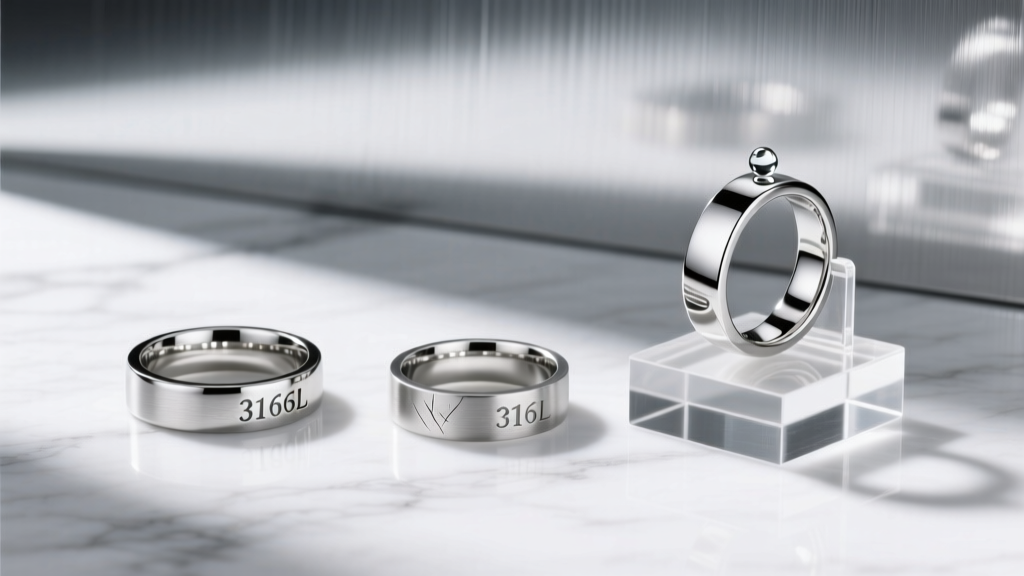
Second, look for specific hallmarks. While "925" denotes silver, high-quality steel manufacturers often stamp "316L" or "S. Steel" on the back of clasps or the interior of rings. Finally, buy from specialized body jewelry brands or dedicated steel fabricators rather than generic fast-fashion marketplaces. Brands that cater to the piercing community are legally and ethically bound to use ASTM-compliant or verified 316L surgical steel, ensuring your jewelry remains bright, hypoallergenic, and entirely tarnish-free for a lifetime of wear.