Is Stainless Steel Good for Jewelry? A Metallurgist's Deep Dive
Is stainless steel good for jewelry? We analyze 316L vs 304 grades, nickel leaching rates, tensile strength, and real-world wear for piercings.

The Short Answer: Metallurgical Reality vs. Marketing
When consumers and collectors ask, 'is stainless steel good for jewelry,' the answer requires separating internet marketing hype from materials science. Stainless steel is not a single elemental metal; it is a complex family of iron-based alloys defined by a minimum of 10.5% chromium content. This chromium reacts with oxygen to form a microscopic, self-healing passive layer of chromium oxide that prevents rust. However, whether it is 'good' for jewelry depends entirely on the specific alloy grade, the manufacturing process, and the intended application on the human body.
From a metallurgical standpoint, high-grade stainless steel (specifically 316L) is an exceptional material for everyday jewelry. It offers superior tensile strength, remarkable scratch resistance, and zero tarnish compared to traditional precious metals like sterling silver or low-karat gold. Yet, it is not a universal panacea. Its limitations in resizing, specific failure modes in chlorinated environments, and nuanced relationship with nickel allergies require a deeper technical understanding before you invest in it for permanent wear or fresh piercings.
Decoding the Alloys: 316L vs. 304 vs. 430
The jewelry market frequently throws around terms like 'surgical steel' or 'titanium steel' (a misleading marketing term for stainless steel). To truly evaluate quality, you must look at the SAE (Society of Automotive Engineers) steel grades.
The 304 Grade (18/8 Stainless)
Composed of 18% chromium and 8% nickel, 304 stainless steel is the most common commercial alloy. It is highly resistant to standard oxidation and is frequently used in fashion jewelry, watch cases, and inexpensive chainmaille. However, it lacks the chemical resistance required for prolonged exposure to human sweat and acidic skin pH levels, making it prone to pitting over time.
The 316L Grade (Surgical / Marine Steel)
This is the gold standard for stainless steel jewelry. The 'L' stands for low carbon (maximum 0.03%), which prevents carbide precipitation during the high-heat welding processes used to solder chain links and ring shanks. More importantly, 316L contains 2-3% molybdenum. This addition drastically increases its resistance to chloride corrosion, meaning it can withstand the salt in human sweat and marine environments without degrading.
The 430 Grade (Ferritic Steel)
Often found in ultra-cheap, mass-produced magnetic jewelry, 430 contains high chromium but virtually zero nickel. While it is highly magnetic and less expensive, it lacks the austenitic crystalline structure that gives 300-series steels their ductility and superior corrosion resistance. It is generally not recommended for fine or body jewelry.
The Nickel Dilemma: Hypoallergenic Claims Under the Microscope
The most controversial aspect of stainless steel jewelry is its nickel content. 316L stainless steel contains between 10% and 14% nickel, an element notorious for causing allergic contact dermatitis in roughly 10-15% of the global population. So, how can it be marketed as hypoallergenic?
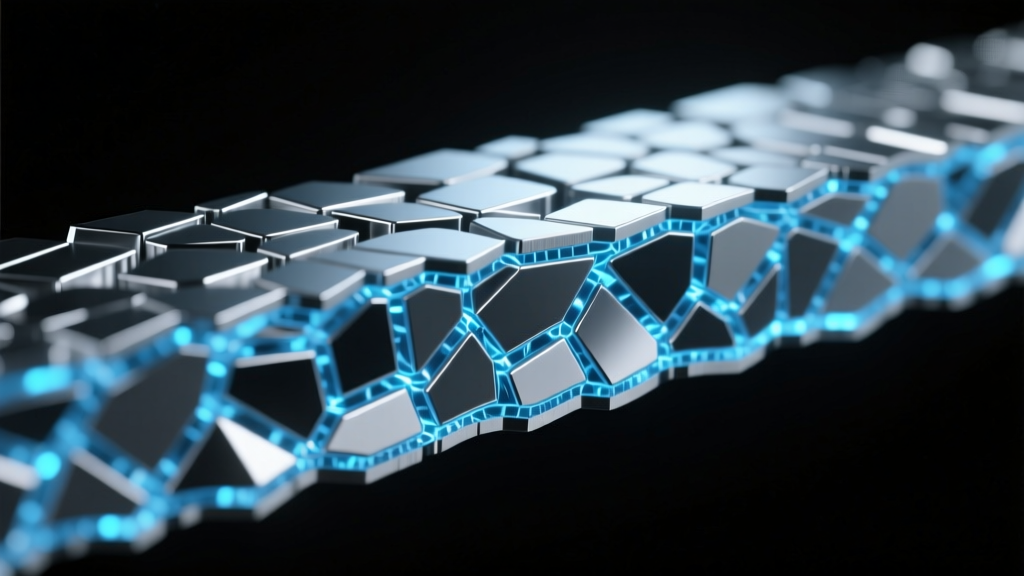
The answer lies in the austenitic crystal lattice. In properly milled 316L, the nickel atoms are tightly bound within the iron-chromium crystalline structure. Under normal conditions, the passive chromium oxide layer prevents the nickel from leaching out. To quantify this, the European Union enforces the EN 1811 standard (The Nickel Directive), which mandates that jewelry worn directly against the skin must release less than 0.5 µg/cm²/week of nickel. High-quality, polished 316L easily passes this threshold.
| Material Grade | Nickel Content | EN 1811 Migration Rate | Safe for Fresh Piercings? |
|---|---|---|---|
| 304 Stainless | 8 - 10.5% | Variable (often fails) | No |
| 316L Stainless | 10 - 14% | < 0.5 µg/cm²/week | No (Healed only) |
| ASTM F138 Implant Steel | 10 - 14% | Negligible | Yes (with mirror polish) |
| ASTM F136 Titanium | 0% | 0 µg/cm²/week | Yes (Gold Standard) |
However, if the jewelry is scratched, poorly polished, or exposed to harsh chemicals that break down the oxide layer, nickel ions can escape. For individuals with severe, clinically diagnosed nickel allergies, even 316L is a risk, and commercially pure titanium (Grade 2 or 4) or ASTM F136 Ti-6Al-4V ELI remains the only safe alternative.
Mechanical Properties: Why It Outperforms Precious Metals
When evaluating if stainless steel is good for jewelry, we must look at mechanical durability. Precious metals are inherently soft; stainless steel is an industrial workhorse.
- Vickers Hardness (HV): 316L stainless steel registers between 150 and 190 HV on the Vickers scale. Compare this to 925 Sterling Silver (~65 HV) or 14k Yellow Gold (~130 HV). This means a stainless steel ring will resist surface scratching and denting significantly better than its precious metal counterparts.
- Yield Strength: The yield strength of 316L is approximately 170 MPa (megapascals) in its annealed state, but can exceed 700 MPa when cold-worked (such as in drawn wire for chains). This makes stainless steel chains virtually impossible to snap under normal human tension.
- Prong Security: In gemstone settings, stainless steel prongs do not suffer from metal fatigue or bending over time. Once a stone is set and the prongs are pushed, they will not loosen from daily impacts, unlike silver or gold prongs which require annual re-tipping.
- Tarnish Threshold: Unlike silver, which reacts with atmospheric sulfur to form black silver sulfide, the chromium oxide layer on stainless steel is chemically inert to sulfur, guaranteeing it will never tarnish or turn your skin green.
Application-Specific Verdicts
Fresh Piercings vs. Healed Tissue
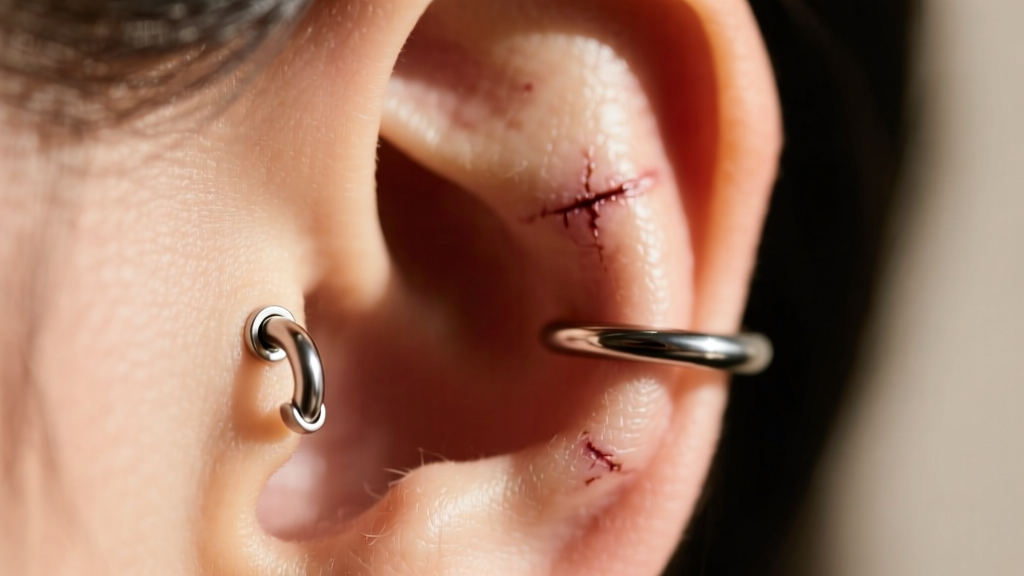
For body jewelry, the term 'surgical steel' is largely unregulated. True implant-grade steel must meet the ASTM F138 standard, which dictates strict limits on impurities and requires a specific mirror finish to prevent bacterial harboring. Standard 316L fashion jewelry is perfectly safe for fully healed earlobes, cartilage, and body piercings. However, for fresh, unhealed piercings, the saline environment of an open wound can accelerate nickel ion release. Professional piercers overwhelmingly recommend ASTM F136 titanium for initial jewelry, transitioning to 316L only after the fistula has fully matured (usually 6-12 months).
Everyday Rings and Resizing Limitations
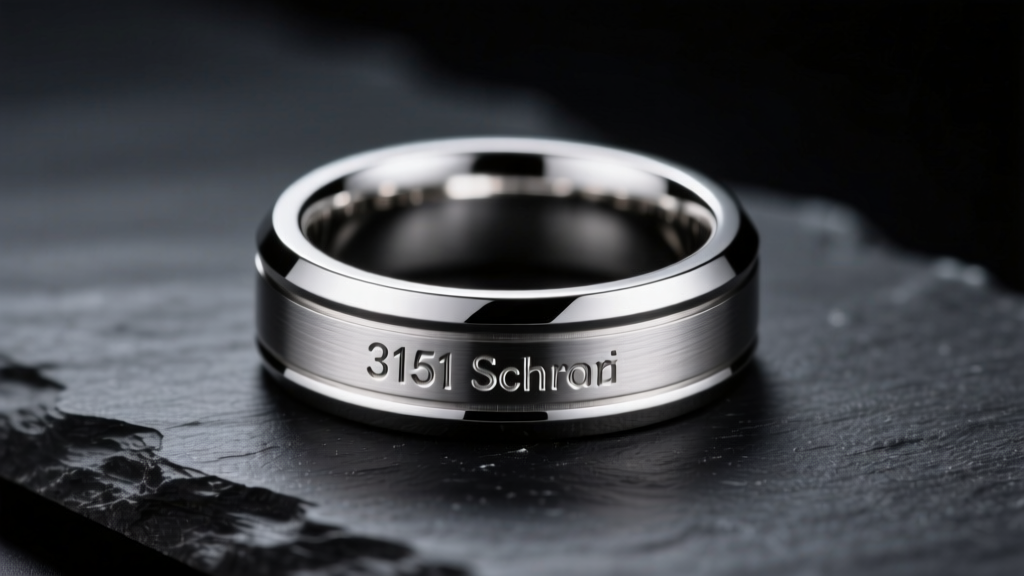
Stainless steel makes an incredible material for men's wedding bands, signet rings, and fashion rings due to its weight, luster, and scratch resistance. However, its high melting point (~1400°C) and thermal conductivity make traditional torch soldering impossible without destroying the temper of the metal and causing severe oxidation. If your finger size changes, a stainless steel ring generally cannot be resized by a traditional bench jeweler; it must be cut off and replaced, or resized using specialized laser welding equipment, which is rare and expensive.
Maintenance and Failure Modes: What Actually Breaks?
While stainless steel is highly durable, it is not indestructible. Understanding its specific failure modes is crucial for long-term wear.
Crevice Corrosion: The passive oxide layer requires oxygen to maintain itself. In tight, oxygen-deprived crevices—such as the inside of a poorly fitted clasp or under a heavy buildup of dead skin and lotion—localized acidic environments can form, leading to microscopic pitting. Regular cleaning with warm water and mild dish soap prevents this.
Chlorine Attack: While 316L is resistant to salt water, it is highly vulnerable to concentrated chlorine. Wearing stainless steel jewelry in heavily chlorinated swimming pools or hot tubs can degrade the molybdenum bonds, leading to irreversible surface etching and dulling. Always remove stainless steel rings and chains before entering chemically treated water.
Shear Snapping in Thin Gauges: While stainless steel has massive tensile strength (resistance to pulling), it has lower shear flexibility. Ultra-thin stainless steel chains (under 1.2mm) subjected to sudden, sharp lateral jerks can snap at the soldered links because the metal does not stretch or deform to absorb the shock; it simply fractures.
Conclusion: The Final Grade
So, is stainless steel good for jewelry? From a technical and economic standpoint, 316L stainless steel is arguably the most practical, durable, and cost-effective metal available for modern jewelry. It outperforms silver and gold in almost every metric of physical durability and requires virtually zero maintenance. As long as you understand its limitations regarding resizing, avoid exposing it to concentrated chlorine, and opt for implant-grade titanium for fresh piercings or severe nickel allergies, stainless steel remains an exceptional choice for lifelong wear.


