Troubleshooting 304 Stainless Steel Jewelry: Rust & Allergy Fixes
Is your 304 stainless steel jewelry turning green or causing rashes? Learn how to troubleshoot rust, nickel allergies, and mislabeled metals.

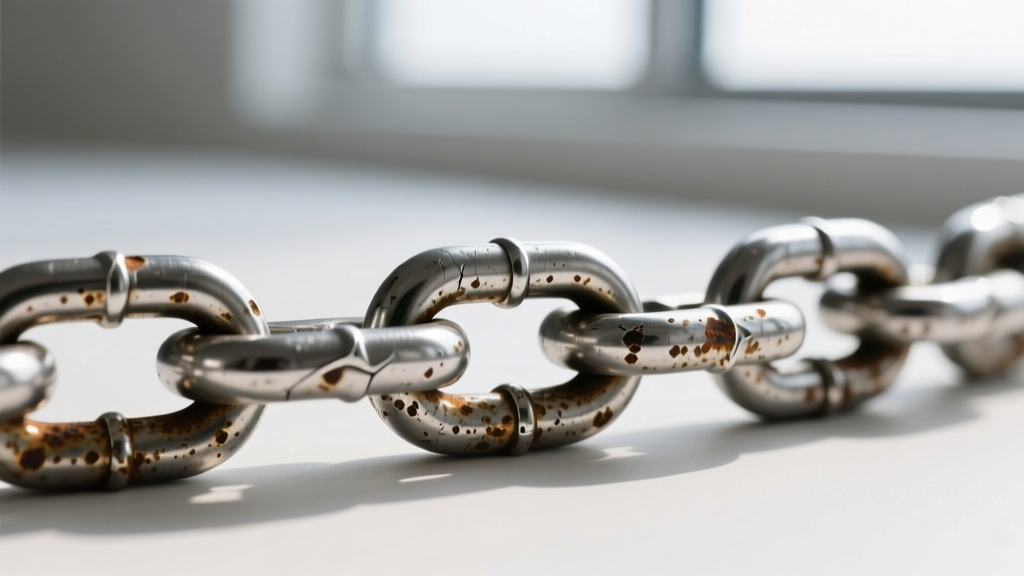
You bought a piece of jewelry marketed as 'surgical steel,' but after a few weeks of daily wear, you are noticing rust spots on the links, a greenish tint on your skin, or an itchy red rash. Welcome to the most common metallurgical bait-and-switch in the accessories market: 304 stainless steel jewelry. While 304-grade steel is an excellent, durable material for kitchen sinks and architectural fixtures, it is fundamentally flawed for prolonged contact with human sweat and high-chloride environments.
In this comprehensive troubleshooting guide, we will dissect exactly why your jewelry is failing, how to differentiate it from implant-grade 316L steel, and the actionable steps you can take to salvage your collection or safely retire it.
The Metallurgical Root Cause: Why 304 Fails on Skin
To troubleshoot the problem, we must first understand the alloy. 304 stainless steel (often called 18/8 steel) consists of roughly 18% chromium and 8% nickel. The chromium reacts with oxygen to form a microscopic passive layer that prevents rust. However, this layer is highly vulnerable to chlorides—specifically the sodium chloride found in human sweat, ocean water, and hot tubs.
Unlike 316L surgical steel, which contains 2-3% molybdenum to reinforce the oxide layer against chloride attacks, 304 stainless steel jewelry has zero molybdenum. When the passive layer breaks down, the underlying iron oxidizes (rusts), and the trapped nickel leaches directly into your skin.
Troubleshooting Issue 1: Chloride Pitting and Rust Stains
If you notice tiny, dark brown or orange pinpricks on the surface of your chain, ring, or bracelet, you are looking at pitting corrosion. This is not surface dirt; it is localized structural failure of the metal.
How to Clean and Halt Pitting
Once pitting begins, it creates microscopic craters that trap more sweat and dead skin, accelerating the corrosion cycle. Here is the expert protocol to halt the damage:
- The Baking Soda Paste Method: Mix sodium bicarbonate (baking soda) with a few drops of distilled water to form a thick paste. Apply it to the affected areas with a soft-bristled toothbrush. The mild alkalinity neutralizes acidic sweat residue and gently lifts surface oxidation without scratching the surrounding polish.
- Ultrasonic Cleaning: For intricate chains where pitting hides between jump rings, a 3-minute cycle in an ultrasonic cleaner using a mild, ammonia-free jewelry solution will dislodge trapped chlorides.
- The Chlorine Ban: Never clean 304 stainless steel with bleach, chlorine-based cleaners, or harsh bathroom mold removers. Chlorine will instantly destroy the chromium oxide layer, causing catastrophic, irreversible rusting within hours.
Troubleshooting Issue 2: Nickel Leaching and Contact Dermatitis
It is a common misconception that 304 steel is hypoallergenic. According to the American Academy of Dermatology, nickel is the most frequent cause of allergic contact dermatitis. 304 steel contains between 8% and 10.5% nickel. While 316L actually contains slightly more nickel (10-14%), the molybdenum in 316L locks the nickel inside the crystalline structure. In 304 steel, the breakdown of the surface layer allows acidic sweat to dissolve the nickel, depositing it directly into your epidermis.
Barrier Methods and Mitigation
If you have a beloved 304 piece that is causing a rash, you must create a physical barrier between the alloy and your skin:
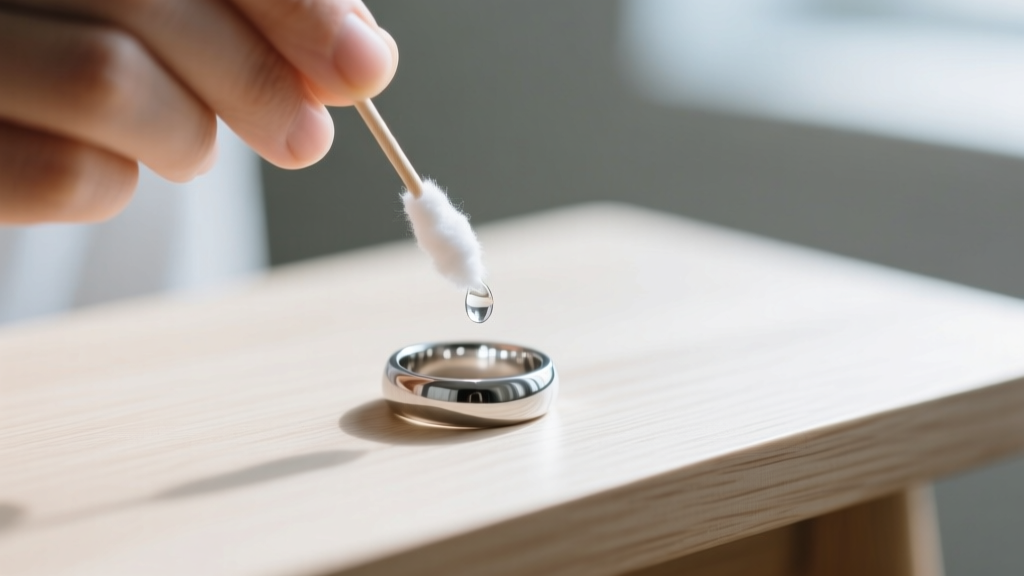
- Dimethylglyoxime (DMG) Testing: Purchase a nickel spot-test kit. Swab the inside of the ring or the clasp of the necklace. If the cotton swab turns pink, the jewelry is actively leaching nickel.
- Polyurethane Coating: Apply a thin layer of clear, skin-safe polyurethane or specialized jewelry barrier resin to the interior band of rings or the posts of earrings. Reapply every 3-4 weeks, as friction will wear the coating down.
- Wear-Time Limits: Restrict 304 stainless steel jewelry to 'occasional wear' over clothing, or remove it immediately before exercising, swimming, or showering.
Expert Note: If you are experiencing weeping, blistering, or severe itching, remove the jewelry immediately and consult a medical professional. The UK National Health Service (NHS) recommends topical corticosteroids for severe allergic contact dermatitis flare-ups caused by metal alloys.
Diagnostic Matrix: Is Your Jewelry 304 or 316L?
Many manufacturers deceptively stamp 'Surgical Steel' on 304 alloys because it is roughly 30% cheaper to produce. Use this diagnostic framework to verify your metal grade.
| Diagnostic Test | 304 Stainless Steel (18/8) | 316L Surgical Steel |
|---|---|---|
| Molybdenum Content | 0% (Vulnerable to sweat/salt) | 2-3% (Highly resistant to chlorides) |
| Cold-Work Magnetism | Slightly magnetic at bends/stamps | Strictly non-magnetic |
| Salt Water Reaction | Develops rust spots within 48 hours | Remains untarnished |
| Typical Price Point | $5 - $25 (Mass market) | $25 - $80+ (Specialty/Body jewelry) |
The Magnetism Myth and Cold-Working Reality
A pervasive myth in jewelry troubleshooting is that 'real stainless steel is non-magnetic.' Both 304 and 316L are austenitic steels, meaning they are non-magnetic in their annealed (soft) state. However, when 304 steel is cold-worked—meaning it is bent into jump rings, stamped with brand logos, or drawn into wire—its crystal structure partially transforms into martensite. This makes the bent areas of 304 jewelry slightly magnetic. If a strong neodymium magnet lightly pulls on the clasp or the stamped tags of your chain, you are likely holding 304 steel.
The 24-Hour Salt Water Stress Test
If the magnet test is inconclusive, you can perform an accelerated corrosion stress test to definitively identify 304 stainless steel jewelry.
The Protocol:
- Dissolve 5 grams of standard table salt (sodium chloride) into 100ml of warm distilled water, creating a 5% saline solution.
- Submerge a small, inconspicuous section of the jewelry (like a single chain link or the inside of a clasp) into the solution.
- Leave it undisturbed for 24 hours at room temperature.
- Remove, rinse with fresh water, and examine under a bright LED light.
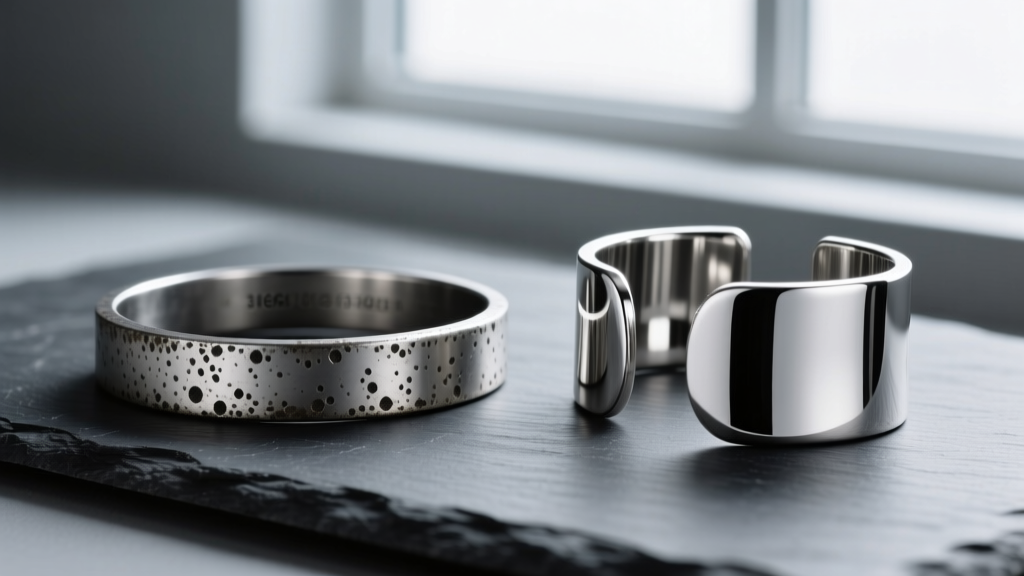
The Verdict: If you see tiny brown or orange freckles (pitting), the jewelry is definitively 304-grade or lower. 316L surgical steel will emerge completely unblemished from this test, as the molybdenum actively repels the chloride ions.
When to Salvage vs. Retire 304 Stainless Steel Jewelry
Not all 304 jewelry belongs in the trash, but you must be strategic about its application. Use this decision matrix to manage your collection:
- Retire Immediately: Any 304 body jewelry (belly button rings, tongue barbells, unhealed piercing studs). The internal environment of a piercing is highly acidic and saline; 304 steel will cause severe tissue irritation and rejection. Always demand ASTM F138 certified 316L or implant-grade titanium for piercings.
- Salvage with Precautions: Outer ear cuffs, over-clothing pendant chains, and brooches. These pieces do not sit directly against sweat-prone skin and are easily wiped down after wear.
- Coat and Keep: Rings and bangles that you wish to wear daily. Apply a jeweler-grade epoxy resin or clear nail polish to the interior skin-contact surfaces, and commit to reapplying the barrier monthly.
By understanding the metallurgical limitations of 304 stainless steel jewelry, you can stop blaming your skin chemistry and start making informed, scientifically backed decisions about your accessory collection. When in doubt, test the metal, block the chlorides, and upgrade to molybdenum-rich 316L for true, worry-free daily wear.


