Does Stainless Steel Jewelry Turn Skin Green? Care & Cleaning Guide
Discover if stainless steel jewelry turns skin green. Learn expert cleaning protocols, maintenance tips, and how to care for 316L steel.

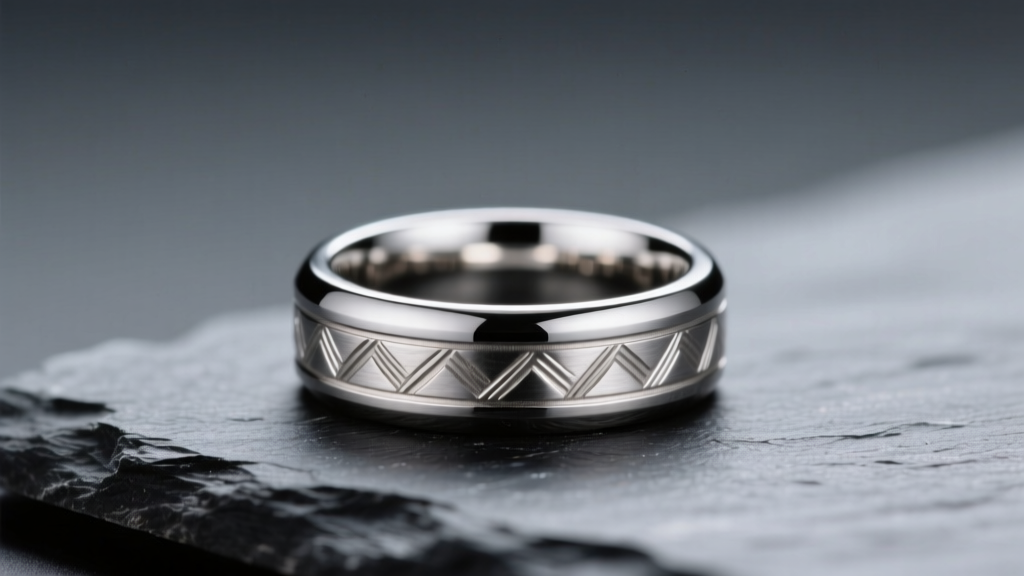
The jewelry market is saturated with claims about hypoallergenic, tarnish-free metals, but a persistent myth continues to circulate among consumers: the fear of skin discoloration. If you have ever asked, 'does stainless steel jewelry turn skin green?' the short answer is no—provided you are wearing genuine, high-grade surgical steel. However, the reality of jewelry wear involves complex interactions between metallurgy, human biology, and environmental chemicals. When skin turns green or black beneath a metal accessory, it is usually a sign of a chemical reaction involving base metals, degraded plating, or extreme environmental exposure.
As a leading authority on jewelry materials, Jewel Style Radar breaks down the exact science behind metal-skin reactions and provides a comprehensive, professional-grade maintenance protocol to keep your 316L stainless steel pieces pristine for a lifetime.
The Metallurgical Truth: Why Genuine 316L Steel Will Not Stain
To understand why stainless steel is generally safe for your skin, you must look at its elemental composition. The green stain commonly associated with cheap jewelry is caused by copper oxidation. When copper alloys (like brass or low-grade bronze) react with the acids in your sweat, they produce copper chloride or copper carbonate—both of which are green salts that transfer directly to the epidermis.
Genuine 316L surgical stainless steel contains absolutely zero copper. Its primary alloying elements are:
- Iron (Fe): The base metal (approx. 65-70%)
- Chromium (Cr): 16-18% (Creates the invisible, self-repairing oxide layer that prevents rust)
- Nickel (Ni): 10-14% (Adds structural strength and luster)
- Molybdenum (Mo): 2-3% (Crucial for resisting pitting from chlorides and salt)
- Carbon (C): Kept 'Low' (the 'L' in 316L) to prevent carbide precipitation and corrosion
Because there is no copper or brass in 316L steel, it is chemically impossible for genuine surgical steel to produce a green copper-salt reaction on your skin. If your 'stainless steel' ring is leaving a green mark, you are likely dealing with a misrepresented material.
Why Your 'Stainless Steel' Might Be Causing Reactions
If genuine 316L does not turn skin green, why do so many consumers report this exact issue? The culprit usually falls into one of three categories:
1. Deceptive Base Metals and Flash Plating
Many fast-fashion brands sell zinc alloy, brass, or copper-core jewelry that has been electroplated with a microscopic layer of stainless steel or silver-colored rhodium. Once this flash plating wears away through friction and sweat exposure, the underlying copper-rich base metal is exposed to your skin's natural acids, resulting in immediate green discoloration.
2. Gold-Plated Stainless Steel Degradation
If you are wearing 18k gold-plated stainless steel, the steel core will not turn your skin green. However, if the gold plating wears off and the jewelry was actually a cheaper brass core mislabeled as steel, the green stain will appear. Always purchase from vendors who provide material certifications or X-ray fluorescence (XRF) testing data.
3. Extreme Chemical Exposure and Pitting
While 316L is highly resistant to corrosion, it is not entirely invincible. Prolonged exposure to harsh chlorides (like swimming pool chlorine or hot tub bromine) can breach the chromium oxide layer, leading to micro-pitting. While this typically manifests as localized rust spots rather than green skin, degraded, pitted steel can trap dead skin cells, lotions, and bacteria, leading to contact dermatitis which can sometimes appear as a dark or bruised mark on the skin.
The Ultimate 316L Stainless Steel Cleaning Protocol
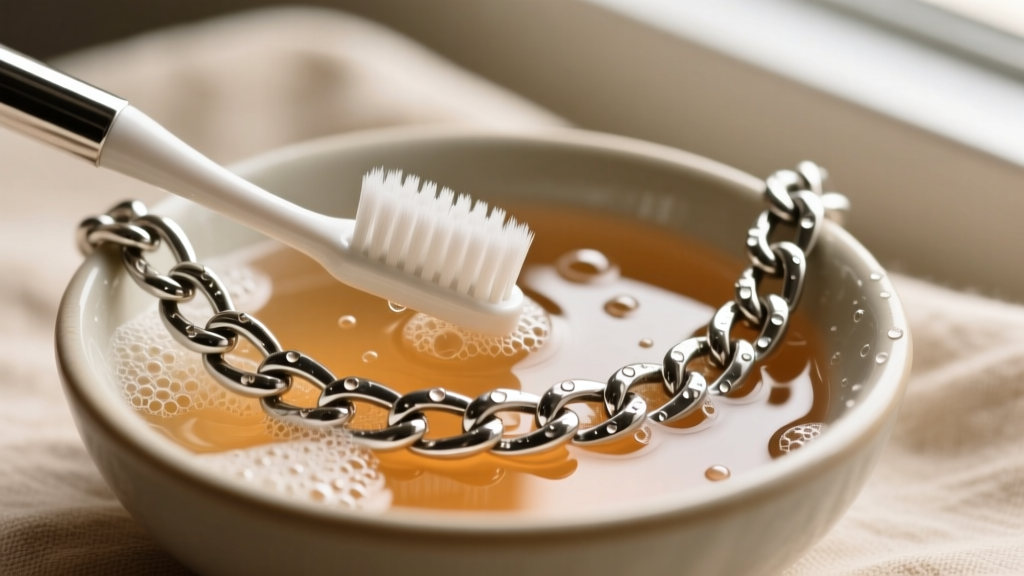
To maintain the integrity of the chromium oxide layer and prevent the buildup of acidic sebum, dead skin, and environmental pollutants, you must adopt a rigorous cleaning routine. Proper maintenance ensures your jewelry remains hypoallergenic and visually flawless.
Routine Weekly Cleaning (The Soap Soak)
- Prepare the Solution: Fill a small glass bowl with warm (not hot) water and add three drops of a pH-neutral, phosphate-free dish detergent (like Dawn Free & Clear).
- Soak: Submerge your stainless steel chains, rings, or bracelets for 5 to 10 minutes. This softens hardened sebum and lotion residue trapped in link gaps or beneath gemstone settings.
- Agitate: Using a dedicated, ultra-soft baby toothbrush, gently scrub the jewelry, paying special attention to the interior of rings and the clasps of chains.
- Rinse and Dry: Rinse thoroughly under distilled or filtered water to avoid hard water mineral deposits. Dry immediately with a lint-free microfiber cloth.
Deep Restoration (Ultrasonic Cleaning)
For heavily soiled pieces or intricate Cuban link chains, a 40kHz ultrasonic jewelry cleaner is highly effective. The cavitation bubbles generated by the high-frequency sound waves safely blast microscopic debris out of crevices without scratching the steel. Note: Never use ultrasonic cleaners for stainless steel jewelry set with porous gemstones like opals, pearls, or turquoise, as the vibrations can fracture the stones.
Chemical Compatibility: What to Avoid
Using the wrong cleaning agents can permanently damage the passivation layer of your stainless steel. Refer to the table below to ensure you are using safe maintenance products.
| Cleaning Agent | Safety for 316L Steel | Reasoning |
|---|---|---|
| Mild Dish Soap | Highly Safe | pH-neutral, effectively removes oils without degrading the oxide layer. |
| Baking Soda Paste | Use with Caution | Mildly abrasive; can cause micro-scratches on mirror-polished finishes. |
| Chlorine Bleach | Strictly Avoid | Chlorides aggressively attack molybdenum, causing irreversible pitting and rust. |
| Ammonia | Strictly Avoid | Can degrade the structural integrity of the alloy over prolonged exposure. |
| Jeweler's Rouge | Safe (For Polish) | Iron oxide compound designed specifically to buff out light scratches on steel. |
Preventative Maintenance & Daily Wear Rules
Preventing chemical reactions before they start is the cornerstone of jewelry care. While 316L steel can technically survive a trip to the gym or the beach, adopting a few preventative habits will drastically extend its lifespan and keep your skin clear.
- The 'Last On, First Off' Rule: Always put your jewelry on after applying lotions, perfumes, and hairsprays. Cosmetic chemicals often contain alcohols and sulfates that can leave a dull film on the steel, trapping moisture against your skin.
- Gym and Sweat Management: Human sweat contains lactic acid, urea, and ammonia. While 316L resists this well, heavy, prolonged sweating in a humid environment can lower the skin's pH, creating a harsh micro-environment beneath tight rings or watch bands. Remove heavy steel pieces during intense cardio.
- Chlorine and Saltwater: Always remove stainless steel jewelry before entering a chlorinated pool or the ocean. Saltwater and bromine are highly corrosive to all metals, and prolonged exposure will eventually compromise the chromium layer.
How to Safely Remove Green Stains from Your Skin
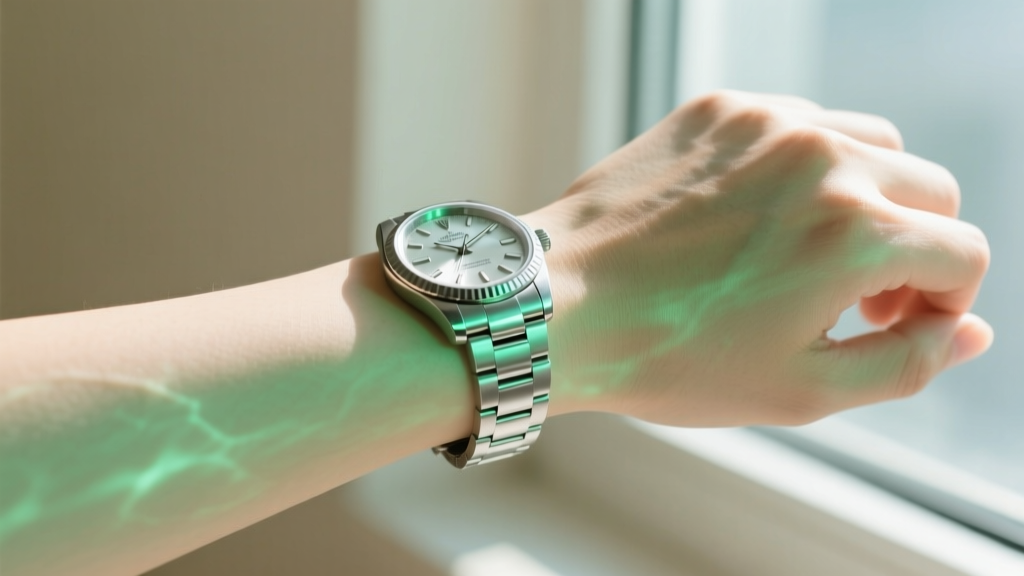
If you have discovered that a piece of jewelry has indeed left a green or black mark on your skin (indicating it is likely a copper alloy disguised as steel), do not panic. The stain is entirely superficial and harmless, though unsightly. Here is how to remove it safely without irritating your epidermis:
- Micellar Water or Makeup Remover: For light stains, saturate a cotton pad with oil-based makeup remover or micellar water and gently wipe the area. The oils help lift the metal salts from the skin's texture.
- Lemon Juice and Baking Soda: For stubborn stains, create a mild paste using a few drops of lemon juice (the citric acid breaks down the copper salts) and a pinch of baking soda. Rub gently for 30 seconds, then wash with mild soap and water.
- Rubbing Alcohol: Isopropyl alcohol (70%) is highly effective at dissolving metal oxidation on the skin. Apply with a cotton swab, but follow up immediately with a moisturizing lotion, as alcohol is highly drying.
For more information on metal allergies and skin reactions, consult the Mayo Clinic's guide to nickel allergies, as some reactions are not stains, but actual contact dermatitis caused by nickel sensitivity.
When to Retire or Replate Your Pieces
Stainless steel is remarkably durable, but it is not immortal. Over years of daily wear, you must inspect your pieces for signs of structural failure. If you notice deep, jagged scratches that catch on clothing, localized rust spots that do not buff out with a microfiber cloth, or a persistent metallic odor (which indicates the breakdown of the alloy's surface), it is time to retire the piece.
Unlike precious metals like gold or platinum, stainless steel cannot be easily melted down and recast, nor is it cost-effective to replate. When a 316L piece reaches the end of its aesthetic life, recycle it responsibly and invest in a higher-quality replacement. For comprehensive guidelines on long-term jewelry preservation, refer to the Gemological Institute of America's (GIA) jewelry care resources.
Final Verdict
So, does stainless steel jewelry turn skin green? Genuine 316L surgical steel never will. If you experience green discoloration, you are dealing with a counterfeit material, a degraded plated core, or severe environmental contamination. By verifying your metal grades, adhering to a strict pH-neutral cleaning protocol, and removing your jewelry in high-chloride environments, you can enjoy the brilliant, hypoallergenic benefits of stainless steel without ever worrying about stained skin.


