Jewelry Titanium Trends 2026: Grade 5 Minimalist Styles
Discover how jewelry titanium is shaping 2026 minimalist trends. Explore Grade 5 alloys, architectural designs, and styling tips for modern wear.

The Shift: From Utilitarian to High-Fashion Minimalism
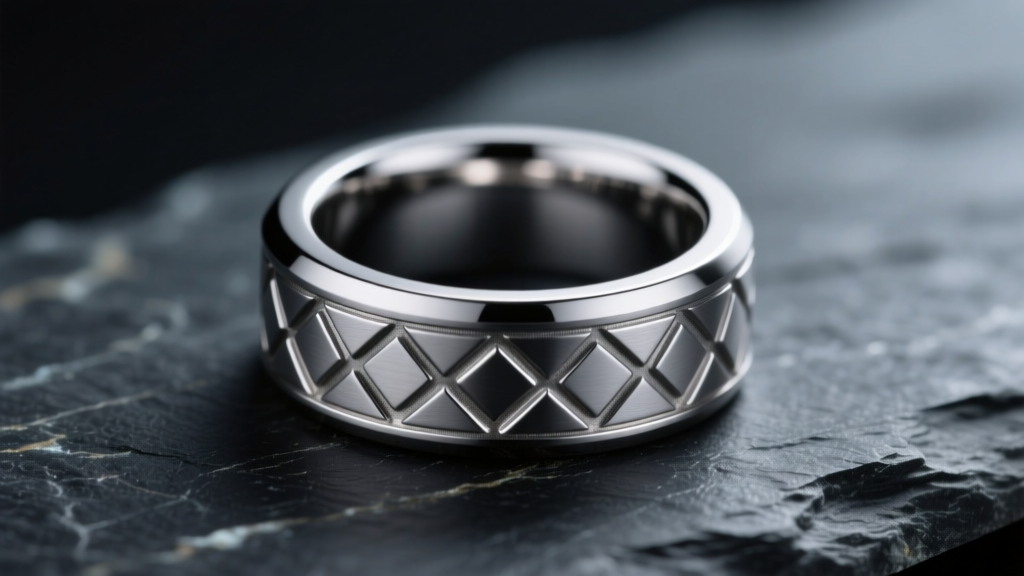
For decades, titanium was relegated to the status of a utilitarian novelty in the accessories market—prized primarily for its lightweight nature and hypoallergenic properties in basic wedding bands and medical alert bracelets. However, as we navigate the style landscape of 2026, the narrative surrounding jewelry titanium has undergone a radical transformation. Driven by a cultural pivot toward 'industrial minimalism' and 'architectural brutalism' in fashion, contemporary designers are pushing titanium out of the mall kiosk and onto the runways of high-end indie artisans and luxury houses alike.
The modern consumer is no longer satisfied with simple, polished domes. Today's trend analysis reveals a massive surge in demand for matte-finished, geometrically complex, and structurally daring pieces. This evolution is not merely aesthetic; it is deeply rooted in metallurgical advancements. The widespread adoption of Grade 5 titanium (Ti-6Al-4V) by independent jewelers has unlocked design possibilities that softer, commercially pure titanium simply cannot support. According to industry insights reported by JCK Online, titanium has transitioned from an alternative metal to a primary medium for avant-garde expression, particularly among younger demographics seeking durable, non-traditional luxury.
Material Deep Dive: Grade 2 vs. Grade 5 Jewelry Titanium
To understand the 2026 design trends, one must first understand the material constraints that previously held titanium back. Most mass-market titanium jewelry is crafted from Grade 2 Commercially Pure (CP) titanium. While highly corrosion-resistant and hypoallergenic, Grade 2 is relatively soft (around 150 on the Vickers hardness scale), making it prone to scratching and incapable of holding complex, sharp CNC-milled edges or securing gemstones without traditional prong settings.
Enter Grade 5 titanium. Alloyed with 6% aluminum and 4% vanadium, Grade 5 boasts a tensile strength nearly three times that of Grade 2 and a Vickers hardness of roughly 340 HV. This aerospace-grade alloy allows jewelers to execute the razor-sharp fluting, cantilevered bridges, and ultra-thin tension settings that define the current brutalist jewelry movement. As detailed in the Ti-6Al-4V Metallurgical Profile, the addition of aluminum and vanadium stabilizes the alpha and beta phases of the metal, granting it the unique ability to be polished to a mirror finish or sandblasted to a deep, light-absorbing matte that resists daily wear-and-tear far better than traditional sterling silver or 14k gold.
| Property | Grade 2 (CP Titanium) | Grade 5 (Ti-6Al-4V) |
|---|---|---|
| Vickers Hardness | ~150 HV | ~340 HV |
| Tensile Strength | 345 MPa | 950+ MPa |
| Machinability | High (softer, gummy) | Moderate (requires precise CNC) |
| Primary 2026 Use | Basic bands, wire wrapping | Tension settings, CNC brutalism |
2026 Design Trends: Architectural and Brutalist Profiles
The aesthetic hallmark of 2026 is 'structural honesty'—jewelry that looks engineered rather than merely cast. Titanium’s high yield strength (approximately 120 ksi for annealed Grade 5) is the secret weapon enabling this trend. Designers are leveraging 5-axis CNC milling to carve deep, negative-space voids into solid titanium blocks, creating rings and cuffs that appear impossibly heavy but remain remarkably lightweight on the body.
The Fluted Signet Ring
Moving away from the smooth, rounded signets of the early 2020s, the 2026 fluted signet features deep, vertical micro-channels milled into the sides of the ring. These flutes catch ambient light and create dramatic shadows, giving the piece a monolithic, architectural presence. Because Grade 5 titanium does not burr or warp easily under high-speed carbide end mills, these flutes remain razor-sharp to the touch, a detail that mass-produced cast metals fail to replicate.
Tension-Set Geometric Bands
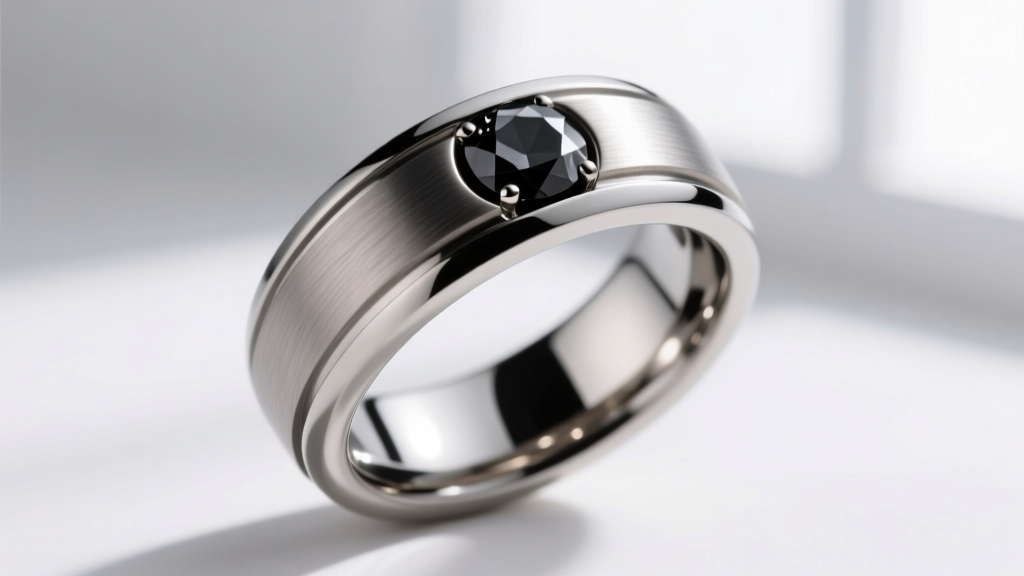
Prongs are becoming obsolete in minimalist titanium design. Utilizing the metal's natural 'spring back' and high tensile memory, jewelers are compressing the metal to grip gemstones with thousands of pounds of lateral force. The Gemological Institute of America (GIA) notes that tension settings require precise calibration of the metal's hardness; too soft, and the stone falls out; too hard, and the stone shatters during setting. Grade 5 titanium, when heat-treated to specific Rockwell hardness levels, provides the exact clamping force needed to securely hold a 2mm to 4mm diamond or moissanite in a seamless, floating gap.
The Electrochemistry of Anodized Finishes
Beyond structural design, color plays a pivotal role in 2026's titanium trends. Unlike gold or silver, titanium is not plated or painted; it is anodized. By submerging the titanium piece in an electrolytic bath and applying a specific DC voltage, the oxide layer on the surface thickens. This transparent oxide layer refracts light, producing vivid, permanent colors without the use of dyes or chemicals that can chip or fade.
This year, the trend has moved away from the hyper-vibrant, iridescent 'oil slick' looks of the past decade, favoring deep, muted, and highly controlled single-tone anodizations. Master jewelers use precise voltage regulators to achieve specific hues that complement modern neutral wardrobes.
The 2026 Anodization Color Map
- 18V - 22V (Champagne & Bronze): Dominating the 'quiet luxury' segment, these low-voltage tones mimic the warmth of oxidized brass or pale gold, allowing titanium to blend seamlessly with traditional precious metals.
- 45V - 55V (Cobalt & Sapphire): Used primarily for high-contrast inlays and interior ring linings, providing a hidden pop of color that appeals to the minimalist ethos.
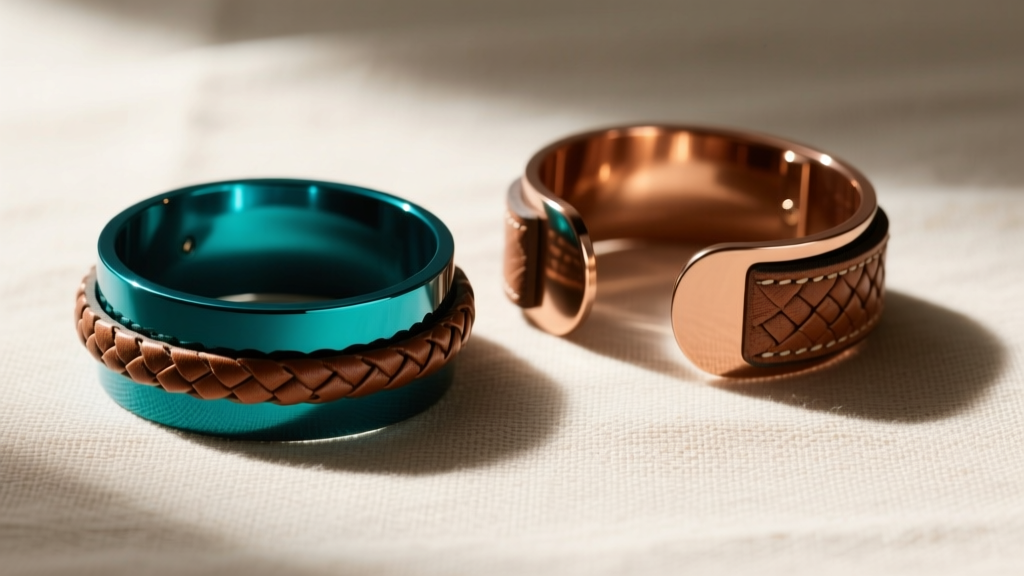
- 90V - 105V (Emerald & Teal): The breakout color of 2026. Deep, forest-level teals are being used on matte-finished brutalist cuffs to evoke a sense of organic industrialism.
Styling Framework: Integrating Titanium into Modern Wardrobes
Styling titanium in 2026 requires an understanding of contrast and texture. Because titanium naturally possesses a cool, grey undertone (even when polished), it pairs exceptionally well with organic, warm, or distressed materials. The current trend among fashion stylists is 'mixed-media stacking'—pairing a heavy, matte Grade 5 titanium cuff with woven leather, oxidized sterling silver chains, or even raw, uncut gemstone beads.
For ring stacking, the rule of thumb is to alternate finishes. A sandblasted titanium band acts as a visual 'palate cleanser' between high-polish 18k yellow gold or platinum rings. The extreme durability of titanium also makes it the ultimate 'anchor' ring for the bottom of a stack, protecting softer gold bands from taking the brunt of daily impact against desks and steering wheels.
Market Pricing and Value Proposition
Understanding the pricing tiers of jewelry titanium is essential for stylists and collectors navigating the 2026 market. The value proposition of titanium is no longer just about affordability; it is about the ratio of engineering complexity to material cost.
- Entry-Level (Grade 2 CP): $35 - $90. Mass-produced, stamped, or simply lathed bands. Excellent for basic hypoallergenic needs but lacking in structural innovation.
- Mid-Tier Artisan (Grade 5 CNC): $180 - $450. Independent jewelers utilizing 5-axis CNC milling and hand-finished sandblasting. This is the sweet spot for trend-conscious buyers seeking architectural brutalism.
- Haute Minimalist (Mixed-Metal & Tension): $500 - $1,500+. Pieces integrating 18k gold mokume-gane inlays, complex kinetic hinges, or precision tension-set gemstones. At this tier, you are paying for the artisan's engineering time and mastery of titanium's metallurgical quirks.
Final Verdict for Collectors and Stylists
The elevation of jewelry titanium from a niche alternative to a cornerstone of 2026 minimalist fashion is a testament to material innovation meeting shifting cultural aesthetics. Grade 5 titanium offers a unique canvas that bridges the gap between aerospace engineering and high fashion. For the modern collector, investing in CNC-milled, anodized, or tension-set titanium pieces is not just a stylistic choice; it is an embrace of functional art that will outlast traditional soft metals in both durability and enduring design relevance.


