Is Titanium Jewelry Good for Daily Wear? Cleaning & Care Guide
Discover if titanium jewelry is good for daily wear. Learn expert cleaning, maintenance, and scratch removal tips for Grade 2 and Grade 5 titanium.

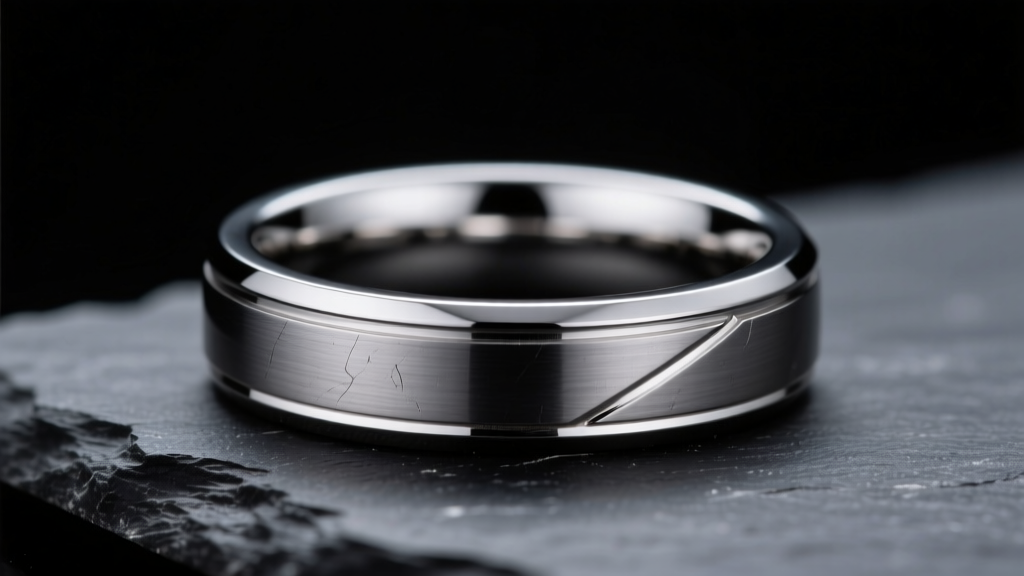
The Verdict: Is Titanium Jewelry Good for Everyday Wear?
When consumers ask, "is titanium jewelry good" for daily wear, they are usually weighing its lightweight comfort and modern aesthetic against traditional heavy metals like gold, platinum, or sterling silver. The short answer from a metallurgical standpoint is an absolute yes. However, the longevity of your pieces depends entirely on understanding the specific alloy you own and how it interacts with your environment. Titanium is not a monolith; the care required for a Grade 2 commercially pure (CP) titanium fashion ring differs vastly from an ASTM F136 Grade 5 (Ti-6Al-4V ELI) body jewelry barbell. In this comprehensive guide, we break down the exact maintenance protocols, chemical compatibilities, and polishing realities of titanium jewelry in 2026.
The Science of the Passive Oxide Layer
To understand how to clean titanium, you must first understand why it resists tarnish. Unlike silver, which reacts with sulfur in the air to create black silver sulfide, titanium instantly forms a passive, nanometer-thin layer of titanium dioxide (TiO2) when exposed to oxygen. According to the ASTM International metallurgical standards, this oxide layer is what makes titanium highly biocompatible and corrosion-resistant. This layer is self-healing; if scratched, it reforms in milliseconds in the presence of air. Therefore, your cleaning goal is not to "remove tarnish" but to safely remove sebum, dead skin cells, lotions, and environmental debris without compromising any applied surface treatments.
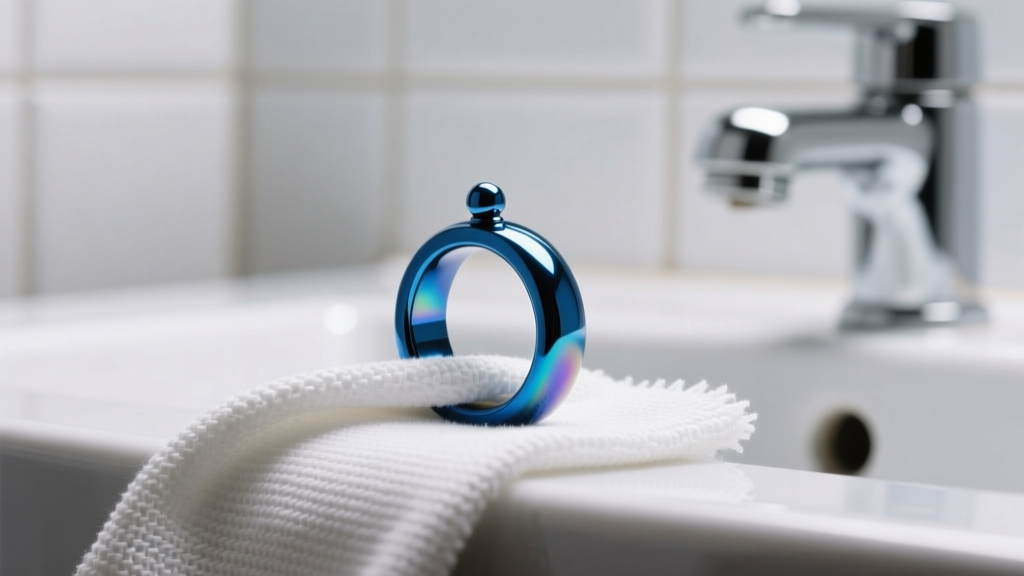
Step-by-Step Cleaning Protocol for Grade 2 and Grade 5 Titanium
Whether you are cleaning a Grade 2 titanium men's wedding band or a Grade 5 titanium dermal anchor, the baseline hygiene protocol remains consistent. The Association of Professional Piercers recommends gentle, non-abrasive methods to preserve both the metal and any gemstone settings.
The Standard Soap Soak Method
- Preparation: Fill a small glass bowl with warm (not boiling) water and add three drops of mild, fragrance-free dish soap (e.g., Dawn or a specialized jewelry wash).
- Soaking: Submerge the titanium jewelry for 5 to 10 minutes. This softens hardened sebum and lotion buildup, particularly in the crevices of chain links or gemstone prongs.
- Agitation: Use a baby-soft toothbrush (never a medium or hard bristle brush, as trapped silica dust can act as an abrasive) to gently sweep the crevices.
- Rinsing & Drying: Rinse thoroughly under distilled water to prevent hard water spot deposits. Pat dry with a lint-free microfiber cloth.
Ultrasonic Cleaning: Proceed with Caution
Ultrasonic cleaners operating at 40kHz to 45kHz are highly effective for plain titanium bands. The cavitation bubbles easily blast debris out of laser-engraved grooves. However, if your titanium jewelry features fracture-filled gemstones (like emeralds or opals) or uses epoxy-based adhesive settings, the high-frequency vibrations can shatter the stones or loosen the glue. Always check your gemstone hardness and setting type before utilizing ultrasonic waves.
Chemical Compatibility Chart
Not all household chemicals are safe for titanium. While the metal itself is incredibly resilient, harsh chemicals can degrade alloy inclusions, ruin gemstones, or destroy surface finishes. Below is a definitive compatibility guide:
| Cleaning Agent | Safety for Plain Titanium | Effect on Anodized Titanium | Effect on Gemstones |
|---|---|---|---|
| Mild Dish Soap | Completely Safe | Completely Safe | Generally Safe |
| Isopropyl Alcohol (70%) | Safe | Safe (Good for sanitizing) | Risk to porous stones |
| Chlorine Bleach | Prolonged Pitting Risk | Destroys Oxide Color | Highly Corrosive |
| Hydrofluoric Acid | Corrosive (Avoid) | Corrosive (Avoid) | Destroys all materials |
| Commercial Silver Dip | Safe (but unnecessary) | May alter surface tension | Highly Dangerous |
Special Care for Anodized Titanium Body Jewelry
Anodized titanium is a staple in the body modification community. It is crucial to understand that anodizing is not a paint or a plating; it is an electrochemical process that thickens the natural TiO2 oxide layer. The specific voltage applied dictates the thickness of the layer, which in turn refracts light to produce vibrant colors without the use of dyes or nickel-heavy alloys.
The Voltage-Color Spectrum
- 15-20 Volts: Copper / Bronze
- 20-30 Volts: Purple / Deep Blue
- 30-50 Volts: Gold / Rose / Teal
- 50-80 Volts: Bright Green / Seafoam
- 80-110 Volts: Gray / Green-Yellow
To maintain these voltage-induced colors, avoid abrasive polishing cloths (like treated silver polishing cloths), as they will physically wear down the microscopic oxide layer, reverting the jewelry to its natural gunmetal gray. Clean anodized pieces using only warm water, mild antibacterial soap, and your fingertips. For sanitizing between wears, a quick wipe with 70% isopropyl alcohol is safe for the anodized layer, provided the piece does not feature delicate opals or pearls.
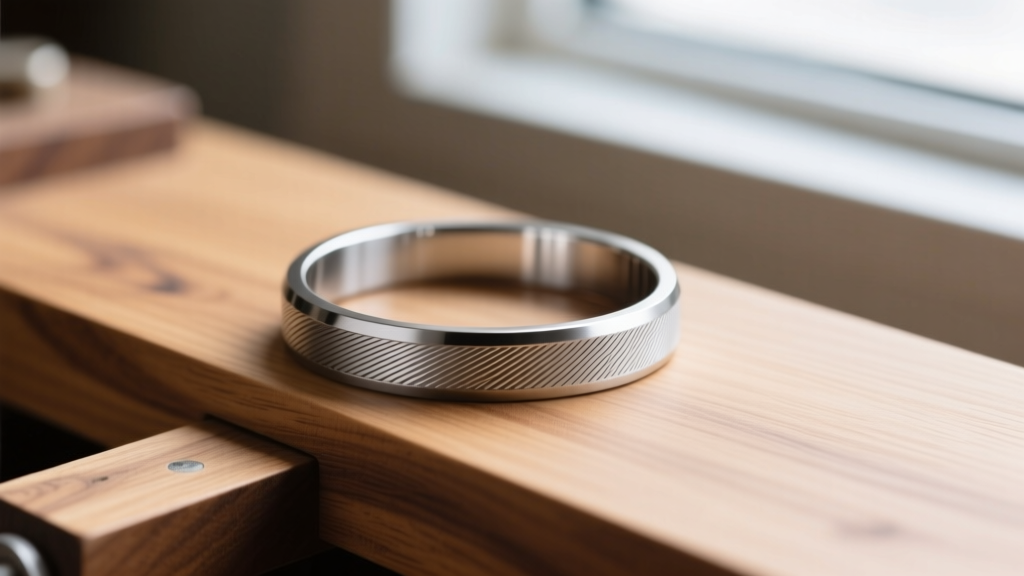
Scratch Removal and Polishing Realities
Titanium registers between 6 and 6.5 on the Mohs hardness scale. While this makes it harder than steel and highly resistant to bending, it is not impervious to surface marring. Over years of daily wear, micro-scratches will accumulate. How you address these scratches depends entirely on the original finish of the jewelry.
Restoring a Brushed (Matte) Finish
If your titanium ring or bracelet features a brushed or satin finish, you can easily restore it at home. Purchase a standard green Scotch-Brite pad or a specialized jeweler's abrasive sponge. Lay the pad flat on a table and pull the titanium piece across it in one continuous, unidirectional motion. Do not rub in circles. Repeat this motion 10 to 15 times until the micro-scratches are replaced by a uniform, factory-style brushed grain.
Polishing a Mirror Finish
Mirror-polished titanium is significantly more difficult to restore. Standard jeweler's rouge (iron oxide) used for gold and silver is largely ineffective on titanium due to its low cutting speed. Professional jewelers must use specialized diamond compounds or aluminum oxide buffing wheels to achieve a true mirror shine. If your mirror-finish titanium wedding band is heavily scratched, the Gemological Institute of America advises sending it back to the manufacturer or a specialized metalsmith equipped with high-speed buffing lathes and diamond pastes. Attempting to hand-polish a mirror titanium ring with generic metal polishes will likely result in a cloudy, uneven surface.
Long-Term Storage and Galvanic Isolation
Finally, proper storage is a critical, often overlooked component of titanium jewelry maintenance. Titanium is a highly noble metal in the galvanic series. If you store your titanium jewelry in a humid environment while it is physically touching less noble metals (like sterling silver, copper, or brass), a micro-galvanic cell can form. While the titanium itself will not corrode, it will act as a cathode and aggressively accelerate the oxidation and tarnishing of the adjacent silver or copper pieces. Always store your titanium items in individual soft cloth pouches or separate compartments in your jewelry box to prevent cross-metal galvanic reactions and physical scratching from harder gemstones like diamonds or sapphires.
Conclusion
So, is titanium jewelry good for your lifestyle? If you value hypoallergenic properties, lightweight comfort, and a metal that will never rust or turn your skin green, titanium is arguably the best modern jewelry metal available. By adhering to gentle cleaning protocols, respecting the delicate nature of anodized oxide layers, and understanding the limitations of home-polishing, your titanium pieces will easily outlast traditional precious metals, maintaining their structural integrity and aesthetic appeal for a lifetime.


