Titanium Jewelry Grades: Grade 2 vs Grade 5 Alloys Compared
Discover the real differences between Grade 2 and Grade 5 titanium jewelry. Compare strength, biocompatibility, and best uses for piercings.

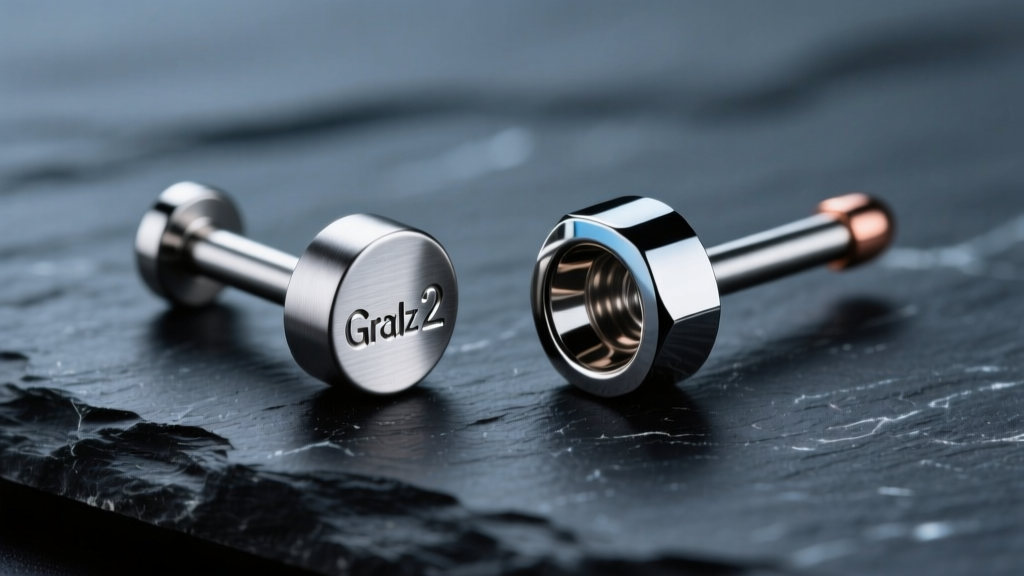
The term 'titanium jewelry' has become synonymous with safety, biocompatibility, and longevity in the body modification and fine jewelry communities. However, treating all titanium as a single, uniform metal is a critical mistake that can lead to suboptimal healing, structural failure, or disappointing anodizing results. In the professional piercing and metallurgy sectors, titanium is strictly categorized by its alloy composition and mechanical properties. The two most prominent standards you will encounter are Commercially Pure (CP) Grade 2 and the Ti-6Al-4V alloy known as Grade 5. Understanding the metallurgical differences between these two grades is essential for selecting the right jewelry for your specific anatomy, piercing stage, and aesthetic goals.
The Metallurgy of Titanium Jewelry
To understand why grade matters, we must look at the elemental composition of the metal. Pure titanium is remarkably strong, lightweight, and corrosion-resistant, but it is also relatively soft compared to steel alloys. To enhance specific physical properties—such as tensile strength, machinability, or malleability—metallurgists either leave the titanium commercially pure or introduce alloying elements like aluminum and vanadium. The Association of Professional Piercers (APP) strictly regulates which grades are acceptable for initial piercings, drawing heavily on standards established by ASTM International. Both Grade 2 and Grade 5 are considered 'implant-grade' when manufactured to these specific ASTM tolerances, but they behave vastly differently in real-world applications.
Grade 2 Titanium: The Biocompatibility Standard
Grade 2 titanium, governed by the ASTM F67 standard, is a Commercially Pure (CP) titanium. It contains a minimum of 99.2% pure titanium, with trace amounts of iron, oxygen, carbon, and nitrogen. Because it lacks alloying metals, Grade 2 is the undisputed champion of biocompatibility. It is completely inert in the human body, making it the absolute gold standard for fresh, unhealed piercings and for individuals with severe metal hypersensitivities.
Mechanical Properties and Workability
The yield strength of Grade 2 titanium sits at approximately 275 MPa (megapascals). While this is exceptionally strong for a non-ferrous metal, it is notably softer than surgical steel or Grade 5 titanium. This malleability is actually a distinct advantage in the piercing studio. Professional piercers frequently use Grade 2 titanium for custom-bent curved barbells or seamless rings because it can be adjusted with nylon-jaw pliers without the risk of the metal snapping or developing micro-fractures. A standard 14-gauge Grade 2 titanium labret stud typically retails between $15 and $30, making it an accessible and safe baseline for initial jewelry.
Grade 5 Titanium: The Aerospace Alloy in Your Piercing
Grade 5 titanium, governed by the ASTM F136 standard, is an alloy composed of roughly 90% titanium, 6% aluminum, and 4% vanadium (Ti-6Al-4V). Originally developed for aerospace and medical orthopedic implants (like hip and knee replacements), this alloy is engineered for extreme structural integrity. While the addition of aluminum and vanadium slightly reduces the absolute biocompatibility compared to CP Grade 2, ASTM F136 Grade 5 is still universally recognized as safe for long-term wear in healed piercings.
Mechanical Properties and Machining
The yield strength of Grade 5 titanium skyrockets to approximately 830 MPa—roughly three times stronger than Grade 2. This immense structural rigidity makes Grade 5 the mandatory choice for complex jewelry designs. If you are purchasing a threadless end with a microscopic CNC-milled gemstone setting, or a heavy-duty clicker ring with intricate internal hinges, it will almost certainly be machined from Grade 5. The metal holds ultra-fine threads and tension pins without stripping. Because it requires advanced CNC machining and longer tooling times, Grade 5 jewelry commands a premium, with intricate ends often ranging from $45 to over $120.
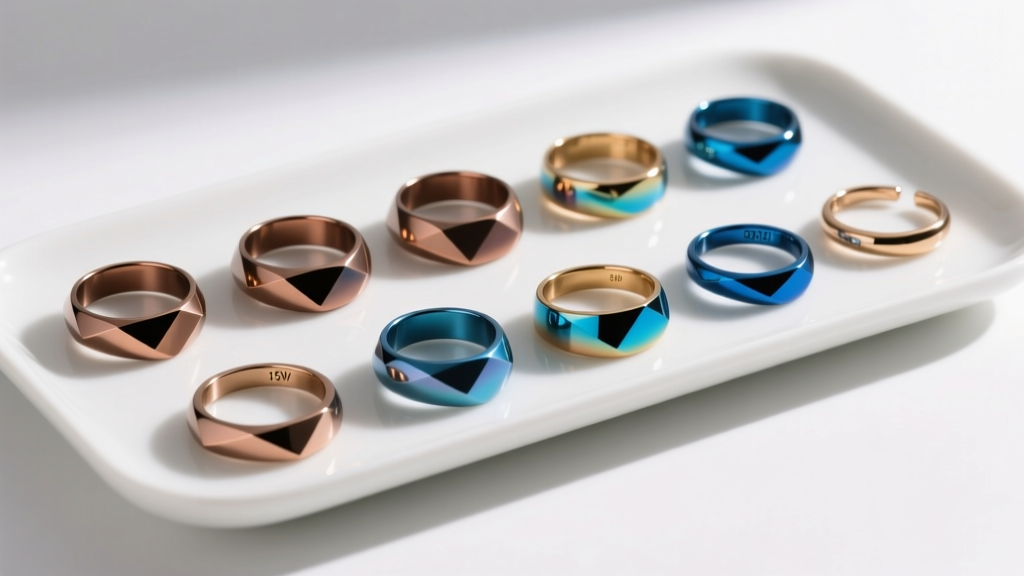
Material Comparison Chart: Grade 2 vs. Grade 5
The following table breaks down the critical technical specifications to help you differentiate between the two alloys at a glance.
| Property | Grade 2 (ASTM F67) | Grade 5 (ASTM F136) |
|---|---|---|
| Composition | 99.2%+ Pure Titanium | 90% Ti, 6% Al, 4% V |
| Yield Strength | ~275 MPa | ~830 MPa |
| Malleability | High (Easily bent/customized) | Low (Rigid, holds complex shapes) |
| Best Use Case | Initial piercings, seamless rings | Threadless ends, CNC-milled designs |
| Anodizing Reactivity | High (Bright, pastel colors) | Moderate (Deeper, metallic hues) |
| Average Price (Basic) | $15 - $30 | $35 - $120+ |
The Anodizing Factor: Voltage and Color Shifts
One of the most celebrated properties of titanium jewelry is its ability to be anodized—a process that uses an electrical current to thicken the natural oxide layer on the metal's surface, creating vibrant colors without the use of dyes or plating. However, the alloy composition drastically alters the anodizing outcome.
Grade 2 titanium is highly reactive to anodizing. Because it is commercially pure, the oxide layer forms evenly and predictably at lower voltages. This results in incredibly bright, vivid, and pastel color shifts. For example, achieving a bright rose gold requires roughly 15 volts, while a vivid teal requires about 45 volts.
Grade 5 titanium, due to the presence of aluminum and vanadium, requires higher voltages to achieve the same oxide thickness. The resulting colors tend to be slightly darker, more metallic, and less 'pastel' than Grade 2. Furthermore, if a jeweler attempts to anodize a piece that features both Grade 2 and Grade 5 components (such as a Grade 5 threadless end pressed into a Grade 2 shaft), the two pieces will often shift to slightly different hues when exposed to the exact same voltage, creating a subtle but noticeable color mismatch.
Decision Framework: Which Grade Fits Your Anatomy?
Choosing between Grade 2 and Grade 5 should not be a matter of 'which is better overall,' but rather 'which is engineered for this specific application.' Use this framework to make your selection:
- Fresh, Unhealed Piercings: Always opt for Grade 2 (ASTM F67). The absolute purity minimizes the risk of allergic contact dermatitis during the vulnerable inflammatory phase of healing.
- Surface Piercings and Curved Barbells: Choose Grade 2. Surface anchors and custom-curved bars require a metal that can be slightly adjusted by your piercer to match the exact topography of your tissue. Grade 5 is too rigid and may cause rejection if the angle is imperfect.
- Healed Cartilage and Threadless Setups: Grade 5 (ASTM F136) is ideal. The rigid shaft of a Grade 5 threadless pin provides the structural tension necessary to keep the decorative end securely locked in place for years without loosening.
- Oral Piercings (Smiley, Tongue): Grade 5 is highly recommended for the decorative ends or heavy-duty barbells due to its superior resistance to bite-force deformation and scratching from teeth.
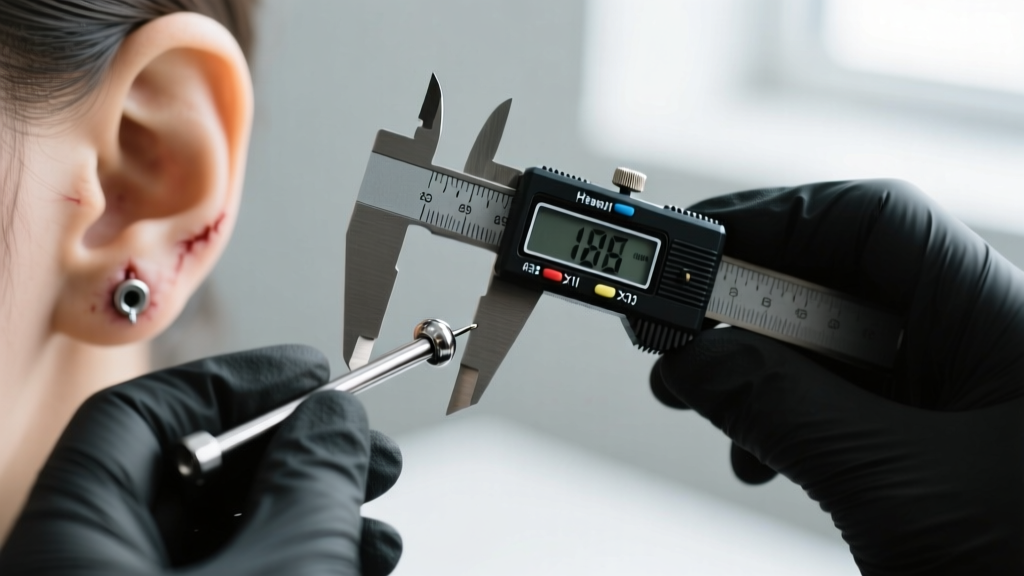
Verifying Authenticity: Mill Certificates and MTRs
The market is currently flooded with cheap, mass-produced jewelry falsely labeled as 'implant-grade titanium.' Many of these pieces are actually Grade 1 (which is too soft and prone to pitting) or unregulated alloys that contain dangerous levels of nickel. The magnet test is useless here, as neither Grade 2 nor Grade 5 titanium is magnetic, but neither is 316L surgical steel.
To verify the authenticity of high-end titanium jewelry, you must request a Material Test Report (MTR) or Mill Certificate from the manufacturer or the piercing studio. An MTR is a serialized document provided by the foundry that details the exact elemental breakdown of the specific batch of metal used to machine your jewelry. Reputable brands like Industrial Strength, BVLA, and Maria Tasha maintain extensive MTR archives. If a vendor cannot provide documentation proving their jewelry meets ASTM F67 or F136 standards, the metal is not verified implant-grade, and you should avoid placing it in your body.
Final Thoughts on Titanium Selection
Ultimately, both Grade 2 and Grade 5 titanium jewelry represent the pinnacle of safe, durable body adornment. By understanding the metallurgical trade-offs between the malleable purity of Grade 2 and the structural supremacy of Grade 5, you can curate a collection that not only heals flawlessly but also stands up to the mechanical demands of your daily life. Always prioritize verified ASTM standards over marketing buzzwords, and consult with an APP-certified professional to ensure your chosen alloy matches your unique anatomical needs.