How to Clean and Polish Tungsten Jewelry: Step-by-Step Guide
Learn how to safely clean, polish, and restore your tungsten jewelry. Follow our step-by-step guide to remove grime, metal transfer, and restore shine.
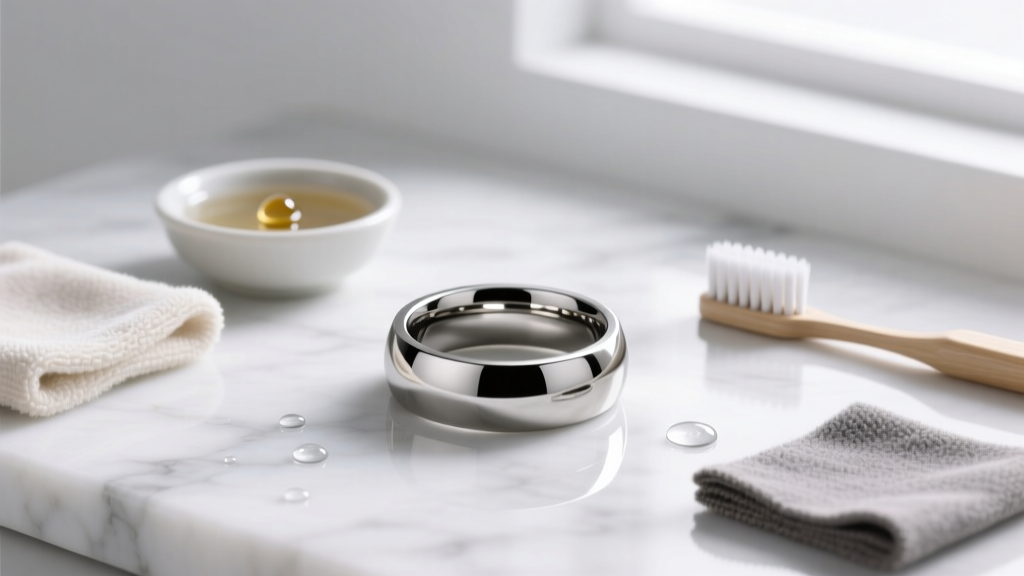
Understanding Tungsten Carbide Maintenance
Tungsten carbide is famously durable, ranking between 8.5 and 9 on the Mohs hardness scale. This makes it nearly impervious to everyday scratches, bending, or warping. However, durability does not equate to being maintenance-free. Over time, skin oils, lotions, hard water minerals, and environmental dust can accumulate on the surface, dulling its signature luster. Furthermore, the microscopic pores in brushed or sandblasted finishes can trap debris that requires specific cleaning techniques to remove.
Before beginning any cleaning regimen, it is vital to know the binder used in your specific piece. High-quality tungsten jewelry uses a nickel binder, which is hypoallergenic, highly stable, and resistant to oxidation. Cheaper alternatives use a cobalt binder, which can react with chlorine, sweat, and harsh chemicals, leading to unsightly oxidation spots and potential skin irritation. The steps below are optimized for premium nickel-binder tungsten carbide, with specific caveats for alternative finishes and inlays.
Step 1: The Standard Deep Clean (Solid Tungsten)
For solid tungsten rings without delicate inlays, a simple soak and scrub is the most effective way to break down sebum and environmental grime.
Tools You Will Need
- A small glass or ceramic bowl (avoid metal bowls that could cause friction marks)
- Warm water (approximately 90°F to 100°F; never use boiling water)
- pH-neutral liquid dish soap (avoid soaps with heavy moisturizers or citric acids)
- A clean, lint-free microfiber cloth
- A soft-bristled baby toothbrush
The Cleaning Process
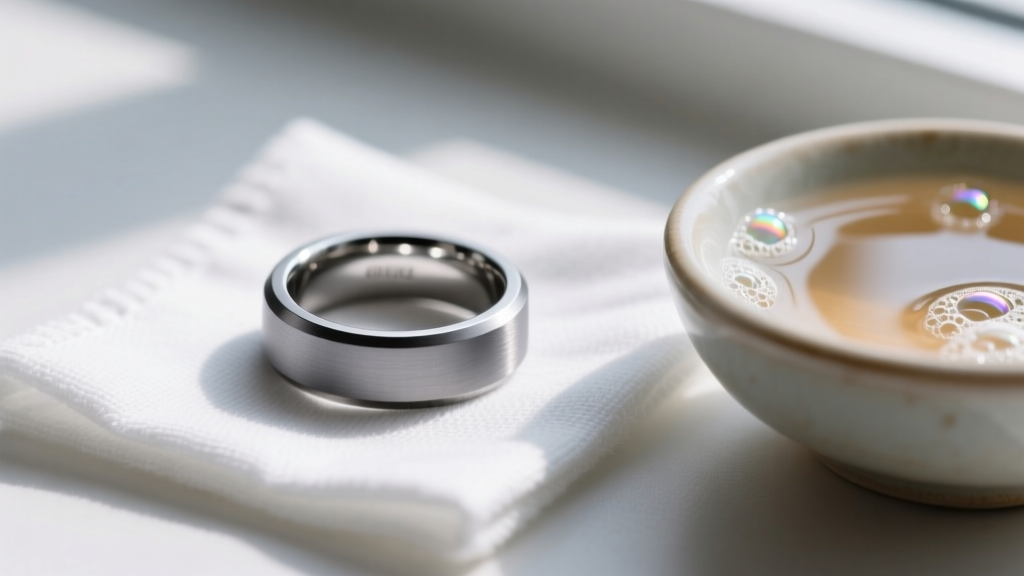
- Prepare the Solution: Fill the bowl with warm water and add three to four drops of pH-neutral dish soap. Swirl gently to create a mild lather.
- Soak: Submerge your tungsten ring or pendant in the solution for 10 to 15 minutes. This softens hardened oils and lotions trapped in brushed grooves or beveled edges.
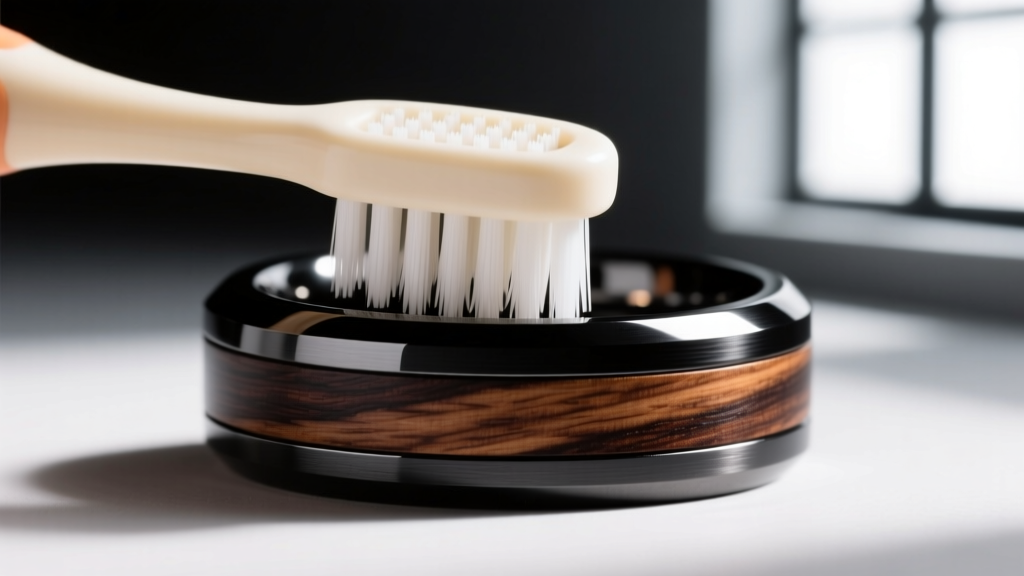
- Agitate: Using the soft-bristled baby toothbrush, gently scrub the jewelry. Pay special attention to the inner band and any beveled edges where dead skin cells and soap scum accumulate.
- Rinse and Dry: Rinse thoroughly under warm running water to remove all soap residue. Immediately dry with a microfiber cloth to prevent hard water spots from forming on the polished surfaces.
Step 2: Cleaning Inlays and Textured Finishes
Many modern tungsten rings feature inlays of wood, carbon fiber, meteorite, or crushed opal. These materials drastically change the cleaning protocol.
The Ultrasonic Cleaner Warning
While ultrasonic cleaners are excellent for solid metals and diamonds, they are highly destructive to organic or porous inlays. The high-frequency vibrations and localized heat can cause wood inlays to splinter, carbon fiber to delaminate, and crushed opal to fracture or detach from its epoxy resin bed. According to the Blue Nile Jewelry Care Guide, porous materials should never be subjected to ultrasonic waves or harsh chemical dips.
How to clean inlays safely: Dampen a cotton swab in a mixture of warm water and a single drop of mild soap. Gently trace the edges of the inlay where it meets the tungsten carbide channel. Wipe away the suds immediately with a separate, damp cotton swab, and dry instantly with a soft cloth. Never submerge a wood or meteorite inlay ring in water for more than a few seconds.
Step 3: Polishing vs. Refinishing (The Hard Truth)
A common misconception is that tungsten can be polished at home using standard jeweler's rouge or metal polishes like Brasso. This is metallurgically incorrect.
Why Traditional Polishing Fails on Tungsten
Because tungsten carbide is significantly harder than the abrasives found in commercial metal polishes, rubbing these compounds on the ring will do absolutely nothing to the metal itself. The polish will simply glide over the surface. Furthermore, attempting to use a motorized buffing wheel at home can generate excessive friction heat, which may damage the structural integrity of the ring's polish or cause severe burns to your fingers.
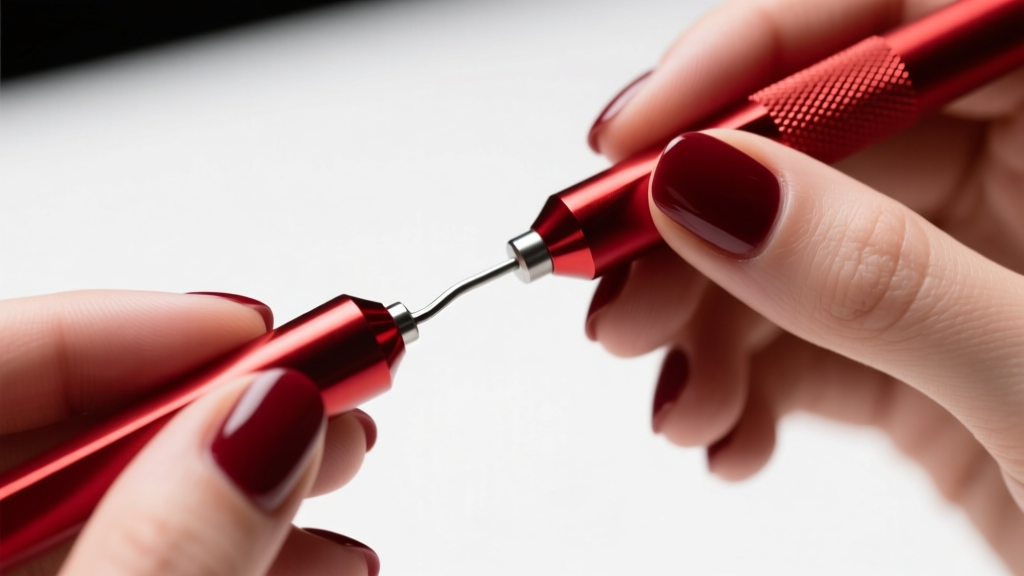
If a tungsten ring has lost its mirror shine due to years of micro-abrasions, it requires professional refinishing. Jewelers must use specialized lapping equipment embedded with diamond-paste compounds ranging from 14,000 to 50,000 grit to restore a true mirror finish. For minor surface dullness at home, a specialized, mildly abrasive jewelry polishing cloth (often impregnated with microscopic diamond dust) is your only safe option.
Maintenance Matrix: Cleaning by Ring Type
Use the table below to determine the safest cleaning protocol for your specific style of tungsten jewelry.
| Ring Type / Finish | Safe Cleaning Method | Unsafe Methods | Est. Time |
|---|---|---|---|
| Solid Polished Tungsten | Warm soapy soak, microfiber buff | Harsh abrasives, bleach | 15 mins |
| Brushed / Sandblasted | Soapy soak, soft toothbrush scrub | Polishing cloths (will ruin matte finish) | 20 mins |
| Wood / Meteorite Inlay | Damp microfiber wipe, cotton swabs | Submersion, ultrasonic cleaners | 5 mins |
| Crushed Opal Inlay | Mild soap, soft cloth, quick rinse | Ultrasonic, ammonia, hot water | 5 mins |
| Gold / Rose Gold Plated | Lukewarm water, gentle cloth wipe | Toothbrushes, polishing cloths, chemicals | 3 mins |
Step 4: Diagnosing and Removing "Metal Transfer"
Many owners panic, believing their tungsten ring has suffered a deep, dark scratch after working with tools, handling copper wire, or gripping aluminum bicycle handlebars. In 95% of these cases, the tungsten is entirely unharmed. You are witnessing metal transfer.
Because tungsten carbide is harder than most everyday metals, it acts like a file. When it rubs against softer metals, it shaves off microscopic particles of the softer metal, which then smear across the surface of the tungsten. To the naked eye, this looks exactly like a dark grey or metallic scratch.
How to Remove Metal Transfer
- The Eraser Method: Take a clean, white vinyl eraser and rub it firmly over the "scratch." The friction will often lift the softer metal particles right off the tungsten surface.
- Baking Soda Paste: If the eraser fails, mix baking soda and water into a thick paste. Apply it to the mark and rub gently with your thumb or a soft cloth. The ultra-mild abrasive nature of baking soda is just enough to remove the transferred metal without harming the tungsten.
- Jewelry Polishing Cloth: Use a high-quality polishing cloth designed for hard metals to buff away the remaining residue.
Daily Habits to Prevent Buildup and Damage
While tungsten is incredibly tough, adopting proactive habits will keep your jewelry looking pristine for decades. The Federal Trade Commission's Jewelry Guides emphasize that consumer care directly impacts the longevity of specialized metal finishes.
- Remove Before Swimming: Chlorine in pools and hot tubs can degrade the cobalt binders in lower-quality rings and dull the polish on premium nickel-binder rings over time.
- Avoid Hard Impacts: Tungsten is hard, but it lacks malleability. This means it has low tensile strength and can shatter or crack if struck with extreme force against a hard surface like a steel anvil or concrete.
- Store Separately: While tungsten won't scratch your other jewelry, a diamond (Mohs 10) can scratch tungsten. Store your tungsten pieces in individual soft pouches to prevent them from knocking against diamond rings or each other.
Frequently Asked Questions
Can I use rubbing alcohol or hand sanitizer to clean my tungsten ring?
Yes, for solid tungsten rings, isopropyl alcohol (70% or higher) is an excellent degreaser that will remove stubborn oils and hand sanitizer buildup without damaging the metal. However, avoid using alcohol on rings with wood, opal, or epoxy-based inlays, as it can dry out the wood or cloud the resin.
My brushed tungsten ring has a shiny scratch. Can I fix it at home?
If a brushed tungsten ring gets a true, deep scratch (which is rare and usually caused by diamonds or corundum), you cannot fix it at home. Attempting to sand it will ruin the uniform directional grain of the brush finish. It must be sent back to the manufacturer or a specialized jeweler to be re-sandblasted or re-brushed with industrial equipment.
Is it safe to wear tungsten jewelry in the ocean?
Saltwater will not corrode or rust high-quality nickel-binder tungsten carbide. However, the microscopic sand and quartz particles in ocean water (which rank around 7 on the Mohs scale) can become trapped under the ring, causing friction against your skin, not the ring. Always rinse your ring with fresh water after ocean exposure to remove salt and sand crystals.


