2026 Tungsten Carbide Jewelry Trends: Matte Finishes & Inlays
Discover 2026 tungsten carbide jewelry trends. We analyze the rise of matte black DLC finishes, exotic inlays, and forged carbon styles for modern men.

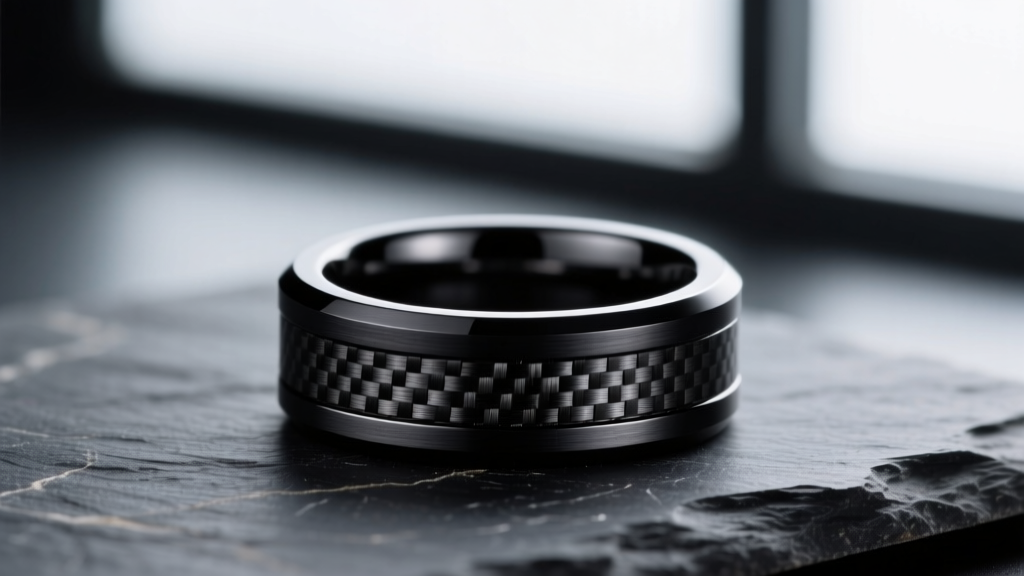
The Evolution of Tungsten Carbide Jewelry in Men's Fashion
As we navigate the style landscape of 2026, the dominance of tungsten carbide jewelry in the men's luxury and alternative accessories market is undeniable. Once relegated to basic, highly polished silver-toned wedding bands, tungsten carbide has undergone a radical aesthetic transformation. Today, it stands at the intersection of industrial metallurgy and high-end artisanal craft. According to recent market analyses by JCK Online, men's alternative metal jewelry has seen a 22% year-over-year growth, driven largely by consumers demanding hyper-durable materials that do not sacrifice visual complexity.
But what exactly is driving the 2026 design renaissance? The answer lies in advanced surface treatments and precision-milled inlay channels. Jewelers are no longer just polishing tungsten; they are texturing, coating, and embedding it with exotic materials. Before diving into the specific trends, it is crucial to understand the material science that makes these designs possible—and the hidden manufacturing details that separate premium pieces from cheap, potentially harmful knockoffs.
Top 3 Tungsten Carbide Jewelry Aesthetics Dominating 2026
1. Matte Black & Sandblasted Textures via DLC Coating
The era of the mirror-polished black ring is fading. In 2026, the focus is on tactile, light-absorbing matte finishes. The critical differentiator this year is the coating technology. Budget manufacturers still use standard IP (Ion Plating), which can wear off and reveal the silver-grey core beneath. Premium brands, however, have shifted to DLC (Diamond-Like Carbon) coatings. DLC bonds at a molecular level, achieving a Mohs hardness that rivals the tungsten core itself. When paired with a sandblasted or micro-hammered surface texture, DLC-coated tungsten carbide jewelry achieves an industrial, stealth-wealth aesthetic that appeals to modern minimalists.
2. Forged Carbon & Meteorite Inlays
Exotic inlays remain the crown jewel of tungsten carbide design, but the materials have evolved. While crushed turquoise and Koa wood remain popular, 2026 is the year of Forged Carbon and Gibeon Meteorite. Forged carbon, created by compressing carbon fiber sheets in a randomized vacuum mold, yields a marbled, organic pattern that contrasts sharply with the rigid, geometric nature of the tungsten carbide shell. Meteorite inlays, featuring the natural Widmanstätten patterns formed over millions of years in space, offer a bespoke, one-of-a-kind look. Because tungsten carbide is incredibly rigid, it provides the perfect structural channel to protect these softer, more brittle inlay materials from daily impact.
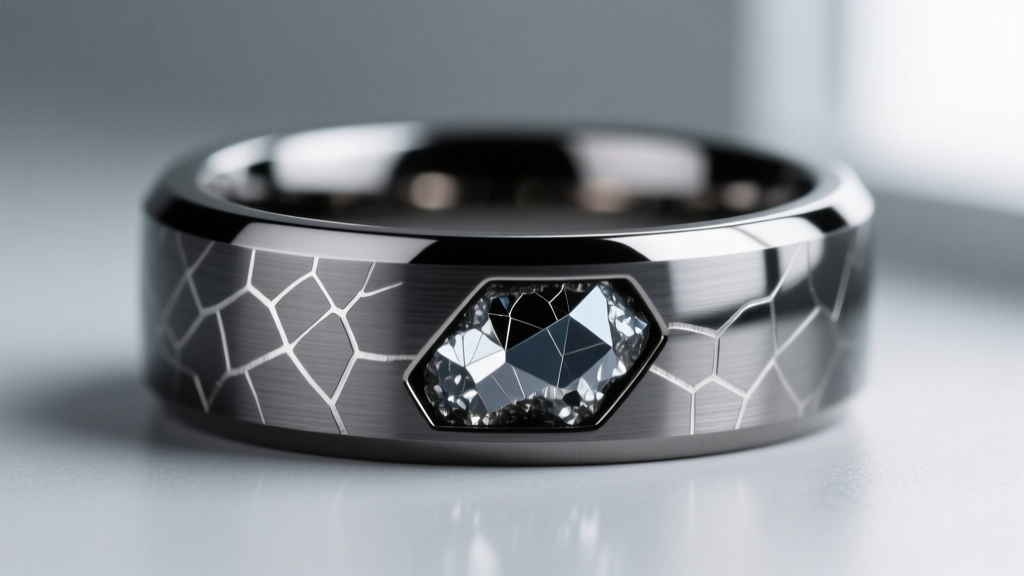
3. Minimalist Brushed Gunmetal
For the traditionalist who still demands modern durability, the brushed gunmetal finish has surged in popularity. Achieved through a precise abrasive brushing process followed by a subtle darkening oxidation layer, this finish mimics the look of vintage steel or titanium but with the heft and scratch-resistance of tungsten. It is particularly favored for signet rings and wider 8mm to 10mm bands, as the brushed texture naturally camouflages micro-abrasions that would be glaringly obvious on a high-polish surface.
Material Science: Binders, Hardness, and Safety
To truly evaluate tungsten carbide jewelry, one must look beyond the surface and examine the binder metals used in the sintering process. Tungsten carbide is technically a "cermet" (a ceramic-metal composite). Pure tungsten powder must be mixed with a binder metal to forge it into a solid ring. This is where E-E-A-T (Experience, Expertise, Authoritativeness, and Trustworthiness) becomes critical for buyers.
The Cobalt vs. Nickel Binder Controversy
Cheap, mass-produced tungsten rings often use cobalt as a binder. Cobalt is highly reactive to human skin oils and sweat, frequently leading to "cobalt itch," oxidation spots on the ring, and severe contact dermatitis. The American Contact Dermatitis Society frequently flags cobalt as a primary allergen in cheap jewelry. Premium manufacturers exclusively use a nickel binder. While nickel is a known allergen in its pure state, when used in the tungsten carbide sintering process, it becomes completely bound within the crystal lattice, rendering the final product 100% hypoallergenic and safe for almost all wearers. Always verify the binder with the manufacturer before purchasing.
Hardness and Emergency Removal
According to the Gemological Institute of America (GIA), tungsten carbide ranks between 8.5 and 9.5 on the Mohs scale of hardness, making it virtually scratch-proof. However, this extreme hardness comes with a trade-off: brittleness. Tungsten lacks the malleability of gold or silver. In a medical emergency where a finger is swelling, tungsten carbide jewelry cannot be cut with standard ER ring cutters. Instead, emergency responders must use locking pliers (vice grips) to apply compressive force until the ring shatters into pieces. This shatter mechanism is a vital safety feature, but it also means the ring cannot be resized or bent back into shape.
Comparative Data: Tungsten vs. Alternative Metals
How does the 2026 tungsten carbide jewelry market stack up against its closest competitors? Below is a technical comparison of the leading alternative metals used in men's rings.
| Metal / Material | Mohs Hardness | Scratch Resistance | Shatter / Bend Risk | Resizing Possible? |
|---|---|---|---|---|
| Tungsten Carbide (Nickel Binder) | 8.5 - 9.5 | Exceptional | Will shatter under extreme blunt force | No |
| Titanium (Grade 23 / 6AL-4V) | 6.0 | Moderate | Will bend, highly malleable | Very Difficult |
| Cobalt Chrome | 7.5 - 8.0 | High | Will bend, similar to platinum | Yes (by specialists) |
| Zirconium (Oxidized Black) | 5.0 (Core) / 9.0 (Surface) | High (Surface only) | Will bend, highly malleable | Difficult |
Price Points and Market Shifts in 2026
The pricing structure for tungsten carbide jewelry has stratified significantly. Understanding these tiers will help you identify true craftsmanship from dropshipped commodities.
- Tier 1: Basic Polished & IP Coated ($30 - $60): Standard silver, gold, or basic black IP finishes. Often mass-produced with unverified binders. High risk of coating wear and skin irritation.
- Tier 2: Premium DLC & Textured ($80 - $150): Genuine Diamond-Like Carbon coatings, matte finishes, and beveled edges. Brands like Triton and Manly Bands dominate this space, offering lifetime scratch warranties and verified nickel-free or safely bound materials.
- Tier 3: Artisan Inlays ($150 - $350): Features genuine Gibeon meteorite, premium Koa wood, or crushed gemstone inlays sealed with marine-grade epoxy resin. The precision of the channel milling dictates the price here.
- Tier 4: Custom Forged & CNC Milled ($250 - $500+): Bespoke pieces featuring CNC-milled topographies, forged carbon, and complex multi-layered inlays. These are treated as functional art rather than mere accessories.
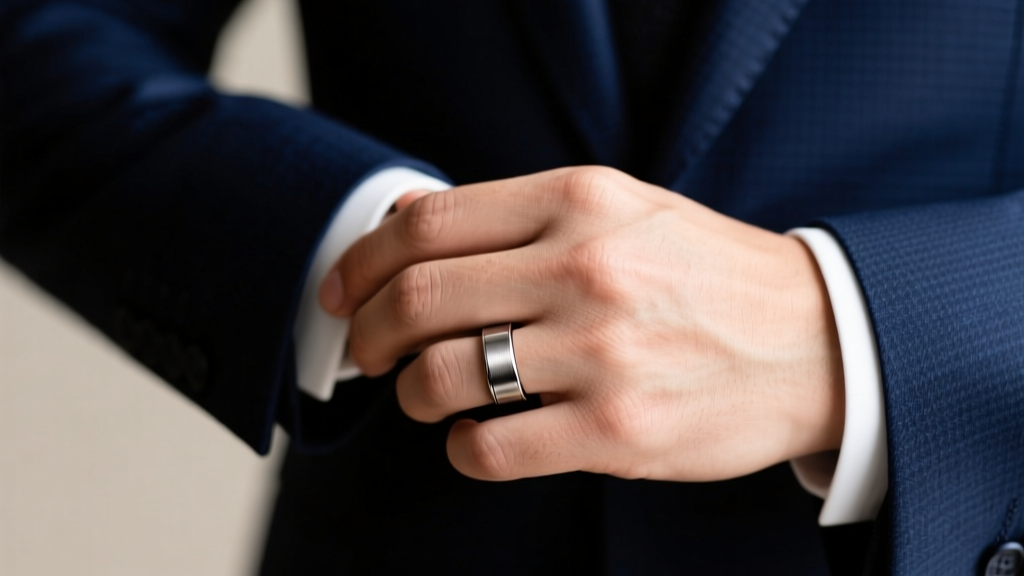
Styling Framework: Matching Tungsten to Your Wardrobe
Tungsten carbide jewelry carries a distinct visual weight and industrial undertone. Styling it correctly requires balancing its rugged nature with your daily attire.
The Corporate Environment: Opt for a 6mm to 8mm brushed gunmetal or matte black DLC band. The lack of high-shine reflection keeps it understated and professional, while the dark tones complement navy, charcoal, and black suiting. Avoid wide, heavily textured rings that can clack against keyboards or scratch luxury watches.
Casual & Streetwear: This is where bold inlays and wider profiles (8mm - 10mm) shine. A forged carbon inlay ring pairs exceptionally well with leather jackets, denim, and technical streetwear fabrics. The organic marbling of the carbon bridges the gap between rugged workwear and modern tech-wear aesthetics.
Active & Outdoors: If you work with your hands or spend time outdoors, tungsten carbide is the ultimate companion. Its scratch resistance means it will survive rock climbing, woodworking, and gym sessions without showing wear. However, be mindful of the shatter risk; avoid wearing it during activities where the ring might be subjected to extreme, focused crushing forces, such as heavy weightlifting with knurled steel barbells.
The Verdict on Tungsten's Future
As 2026 progresses, it is clear that tungsten carbide jewelry has transcended its reputation as a mere budget alternative to platinum or white gold. Through the adoption of DLC coatings, aerospace-grade inlays, and strict adherence to hypoallergenic nickel binders, it has carved out its own premium niche. For the modern man who values permanence, tactile weight, and cutting-edge material science, tungsten carbide remains the undisputed heavyweight champion of alternative metals.


