Titanium Jewelry Pros and Cons: The Ultimate Care & Cleaning Guide
Explore the real titanium jewelry pros and cons through a maintenance lens. Learn expert cleaning protocols for Grade 2, Grade 5, and anodized pieces.

The Metallurgy of Maintenance: Understanding Your Titanium
When evaluating modern alternative metals, enthusiasts and jewelers alike frequently debate the titanium jewelry pros and cons. While its aerospace-grade durability and hypoallergenic nature are legendary, the practical realities of maintaining, cleaning, and repairing titanium are often misunderstood. To master titanium care, you must first understand the specific alloy you own. Commercially pure titanium (Grades 1 through 4) is softer and highly malleable, making it prone to surface scratching but easier for jewelers to work with. Conversely, Grade 5 (Ti-6Al-4V) and Grade 23 (Ti-6Al-4V ELI, also known as implant-grade) are alloyed with aluminum and vanadium, yielding a vastly superior strength-to-weight ratio and a higher Mohs hardness of around 6. According to the ASTM F136 Standard, Grade 23's extra-low interstitial (ELI) composition makes it the gold standard for body jewelry, requiring highly specific, non-reactive cleaning protocols to maintain its biocompatibility.
Titanium Jewelry Pros and Cons: How They Dictate Your Cleaning Routine
The very properties that make titanium an attractive choice for wedding bands and body jewelry directly influence how you should care for it. Below is a breakdown of how the material's inherent traits impact long-term maintenance.
| Material Trait | The Pro (Benefit) | The Con (Maintenance Impact) |
|---|---|---|
| Oxide Layer | 100% tarnish and rust-proof; no polishing compounds needed. | Traditional silver/gold polishing cloths are useless and can dull matte finishes. |
| Tensile Strength | Resists bending, warping, and losing its structural shape. | Cannot be resized using traditional soldering; requires specialized laser welding. |
| Thermal Conductivity | Does not easily transfer heat, protecting the skin during steam cleaning. | Requires specialized diamond-coated saw blades for emergency medical removal. |
| Hypoallergenic Nature | No copper or nickel to cause green skin or contact dermatitis. | Dirt and sebum buildup can still cause localized irritation if not cleaned regularly. |
Step-by-Step Cleaning Protocols for Grade 2 and Grade 5 Titanium
Unlike sterling silver, which requires chemical dip solutions, or white gold, which needs periodic rhodium replating, titanium thrives on simplicity. The Jewelers of America recommends avoiding harsh chemical baths for alternative metals. Here is the definitive protocol for restoring your titanium's factory finish.
The Everyday Wash (Safe for All Finishes)
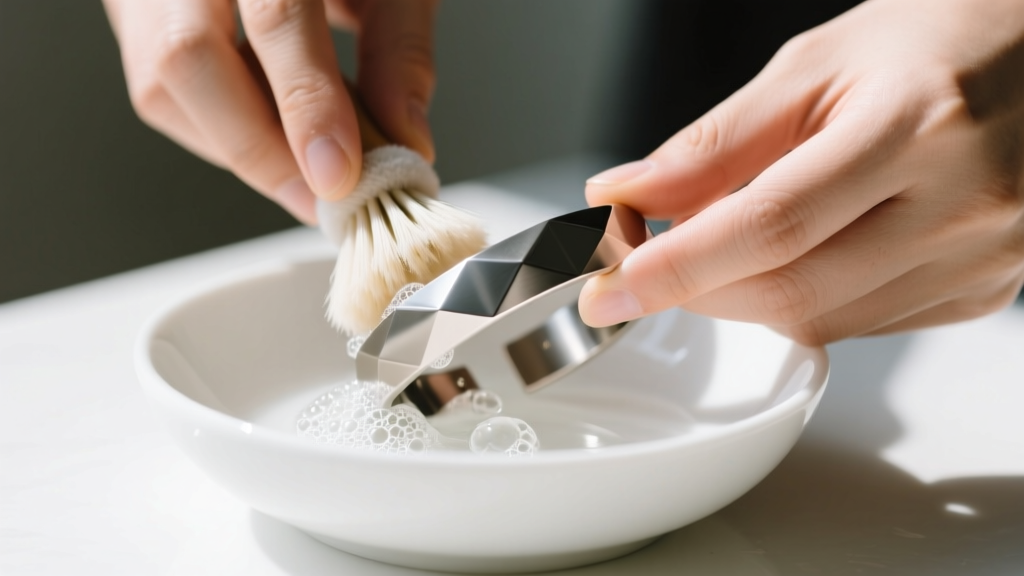
- The Solution: Mix three drops of pH-neutral dish soap (like original Dawn) into a bowl of lukewarm distilled water. Avoid tap water if you live in a hard-water area, as calcium deposits can leave microscopic water spots on high-polish titanium.
- The Agitation: Submerge the jewelry for 5 to 10 minutes to loosen sebum and dead skin cells, especially crucial for threaded body jewelry or tension-set rings.
- The Scrub: Use a brand-new, extra-soft baby toothbrush or a dedicated nylon jewelry brush. Gently work the bristles into any knurling, milgrain edges, or gemstone settings.
- The Dry: Rinse under distilled water and immediately pat dry with a clean, lint-free microfiber cloth. Air-drying will result in water spots.
Deep Cleaning Anodized Titanium
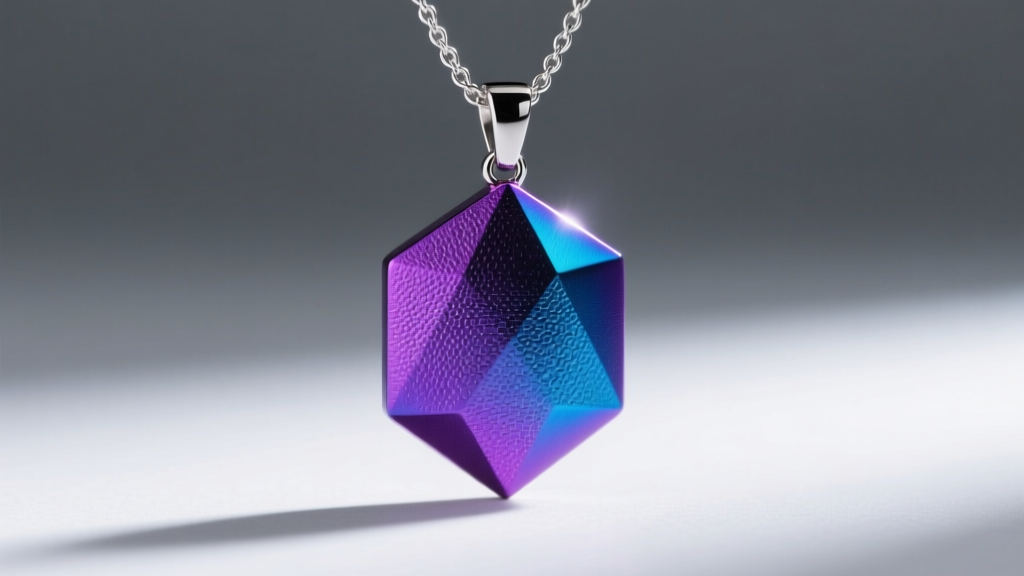
Anodized titanium achieves its vibrant colors not through dyes, but through an electrochemical process that thickens the metal's natural oxide layer. The thickness of this layer, controlled by voltage (e.g., 15V for purple, 90V for green), dictates the color. Because the color is a structural property of the surface, it is highly susceptible to mechanical abrasion.
Expert Warning: Never use ultrasonic cleaners on anodized titanium. The high-frequency cavitation bubbles (typically operating at 40kHz) can literally blast the microscopic oxide layer off the metal, resulting in patchy, faded colors that cannot be reversed at home.
What to Avoid: The Hidden Cons of Titanium Maintenance
While titanium is incredibly resilient against corrosion, it is not invincible. Understanding the limitations of the metal will save you from permanently ruining your jewelry's finish.
1. Chlorine and Bleach Exposure
Although solid titanium will not corrode or dissolve in household bleach or pool chlorine, prolonged exposure to halogens can degrade the surface polish over time, leaving a cloudy, etched appearance. More importantly, if your titanium ring features secondary inlays (like carbon fiber, wood, or precious metals), chlorine will rapidly destroy those adjacent materials.
2. Abrasive Polishing Compounds
If your Grade 5 titanium ring accumulates micro-scratches, do not attempt to buff it out with standard jeweler's rouge or titanium-specific polishing pastes unless you are prepared to alter the finish. Polishing a matte or brushed titanium band with an abrasive compound will inadvertently create a high-polish spot, ruining the uniform texture. To restore a brushed finish, professionals use a specific grit of Scotch-Brite pad (usually maroon or grey) drawn across the metal in a single, unidirectional motion.
3. Hard Impact and Gemstone Settings
Titanium's rigidity is a double-edged sword. Because the metal does not bend or yield easily upon impact, the shock of a hard strike is transferred directly to any gemstones set within it. A titanium ring dropped on concrete is more likely to shatter a diamond or sapphire than a gold ring, which would simply dent and absorb the kinetic energy.
Emergency Maintenance: Dealing with Scratches and Removal
The most frequently cited entry among the titanium jewelry pros and cons is the difficulty of emergency removal. In medical emergencies where a finger is swelling, standard steel ring cutters used by hospitals will fail against Grade 5 titanium, often resulting in severe friction burns to the patient's skin. Emergency responders must use specialized manual ring cutters equipped with diamond-coated blades or high-speed rotary tools. If you work in heavy machinery or manual labor, it is highly advised to wear a silicone band instead of titanium to bypass this severe safety con.
For minor surface scratches on polished titanium, you can purchase a specialized titanium polishing kit from suppliers like Rio Grande, which includes diamond-impregnated polishing papers. However, for deep gouges, the piece must be sent back to the manufacturer for a complete CNC re-machining or professional laser polishing.
Final Verdict on Titanium Upkeep
Ultimately, the maintenance profile of titanium is a trade-off between chemical invincibility and mechanical rigidity. You will never have to worry about your titanium jewelry tarnishing, turning your skin green, or losing its structural integrity. However, you must accept that resizing is virtually impossible, anodized colors require delicate handling, and emergency removal requires specialized tools. By adhering to gentle, non-abrasive cleaning protocols and respecting the metal's unyielding nature, your titanium pieces will easily outlast traditional precious metals, maintaining their cool, modern luster for a lifetime.