Material Secrets Of Top Boho Jewelry Brands: A Deep Guide
Discover how top boho jewelry brands select materials. We compare brass, sterling silver, turquoise, and wood for durability, patina, and skin safety.

The Material DNA of Authentic Bohemian Aesthetics
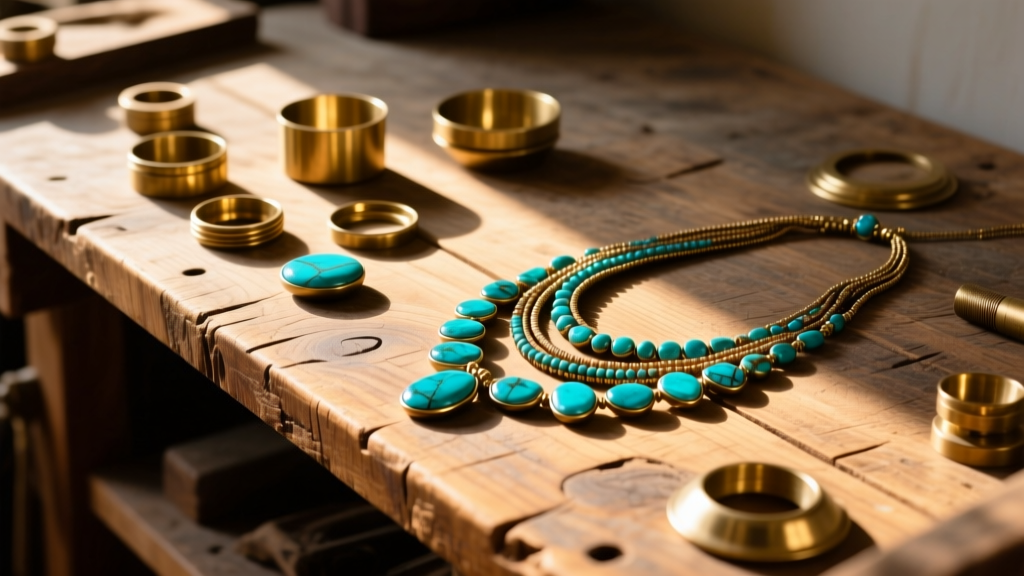
The bohemian aesthetic is inherently tied to the earth. When we analyze the design philosophies of the most respected boho jewelry brands, a clear pattern emerges: an unwavering commitment to natural, unrefined, and organically aging materials. Unlike minimalist or fine jewelry sectors that prioritize flawless brilliance and permanent luster, the boho-chic and cottagecore movements celebrate the wabi-sabi of jewelry—pieces that tell a story through oxidation, patina, and natural inclusions.
However, the romanticism of raw materials often masks complex metallurgical and gemological realities. Fast-fashion imitators frequently cut corners, using toxic alloys or dyed howlite masquerading as turquoise. In this comprehensive material comparison, we deconstruct the exact alloys, stone treatments, and organic sealants utilized by heirloom-grade boho jewelry brands in 2026, providing you with a scientific framework to evaluate quality, longevity, and skin safety.
Metals Breakdown: What Leading Boho Jewelry Brands Actually Use
The foundation of any bohemian piece lies in its metalwork. Artisanal brands typically avoid high-polish rhodium plating, opting instead for metals that develop a rich, darkened character over time. Let us examine the specific alloys and their properties.
Solid Sterling Silver (925) vs. Silver-Plated Brass
Authentic boho brands rely heavily on 925 sterling silver, an alloy comprising 92.5% pure silver and 7.5% copper. The copper is essential for structural integrity, as pure silver (999) is too malleable for the intricate wire-wrapping and granulation techniques common in bohemian designs. The primary failure mode of 925 silver is tarnish—specifically, the reaction of the copper alloy with atmospheric sulfur to form copper sulfide. Premium brands mitigate this by storing inventory in anti-tarnish environments and occasionally applying a micro-thin layer of Renaissance Wax, which allows the metal to breathe while delaying sulfide bonding.
Conversely, mass-market brands often use silver-plated brass. According to the FTC Jewelry Guides, silver plating must meet specific thickness requirements to be legally marketed as such. High-end brands use a minimum of 2.5 microns (heavy electroplate), whereas fast-fashion brands use flash plating (under 0.5 microns). Once flash plating wears through friction, the underlying brass reacts with skin acidity, resulting in rapid degradation and the dreaded 'green skin' effect.
Raw Brass and Copper: The Patina Debate
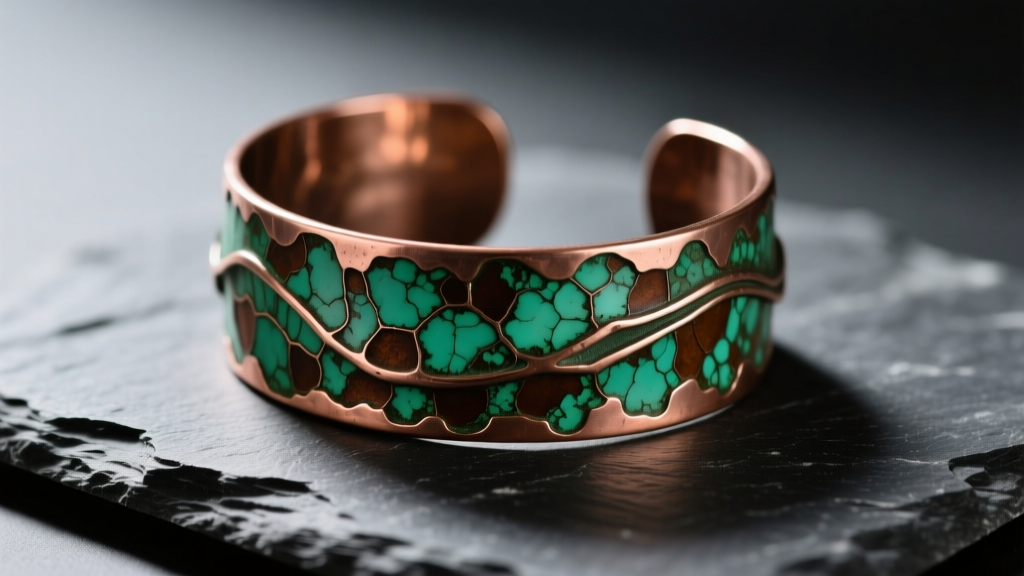
For a warmer, more rustic aesthetic, many independent boho jewelry brands utilize raw brass and copper. Brass is an alloy of copper and zinc. The specific ratio drastically alters the metal's behavior. 'Jeweler's Brass' (also known as Merlin's Gold) typically contains 85% copper and 15% zinc, offering a rich yellow hue that closely mimics 14k gold but oxidizes to a deep, mottled brown over time. Red brass, with higher copper content, shifts toward a rose-gold tone and oxidizes much faster.
Pure copper is highly reactive. When exposed to the chlorides and salts in human sweat, it forms copper chloride, which transfers to the skin as a harmless but aesthetically displeasing green residue. To combat this without sacrificing the raw look, elite boho brands employ advanced nano-ceramic e-coatings or traditional micro-crystalline wax sealants. These barriers are measured in mils; a high-quality e-coat applied at 0.5 to 1.0 mils will protect a copper cuff from skin acids for up to three years of daily wear before requiring reapplication.
Organic & Earthy Inlays: Beyond Basic Turquoise
No bohemian collection is complete without earthy inlays. The way top brands source and treat these materials separates artisanal heirlooms from disposable accessories.
Stabilized vs. Natural Turquoise
Turquoise is a hydrous phosphate of copper and aluminum, ranking between 5 and 6 on the Mohs hardness scale. In its natural, untreated state, turquoise is highly porous. It absorbs skin oils, cosmetics, and water, which can alter its color from a vibrant sky blue to a dull, muddy green. Furthermore, natural turquoise is prone to micro-fracturing when subjected to the pressure of bezel setting.
To ensure structural integrity and color permanence, reputable boho jewelry brands utilize stabilized turquoise. Stabilization is not a 'fake' treatment; it is a vital gemological process. Under a vacuum chamber, a clear epoxy or polymer resin is forced into the microscopic pores of the stone. This increases the stone's hardness to a 6 or 7, making it impervious to oils and safe for intricate inlay work. Brands that transparently disclose stabilization are prioritizing the longevity of the piece. Beware of 'reconstituted' turquoise, which is merely turquoise dust glued together with dyed resin—a hallmark of low-tier manufacturing.
Ethically Sourced Bone, Horn, and Wood
Cottagecore and boho-chic aesthetics frequently incorporate carved bone, water buffalo horn, and exotic woods like olive or sandalwood. The primary enemy of organic materials is moisture fluctuation, which causes warping, cracking, and fungal growth. Top brands kiln-dry their woods to a moisture content of exactly 6% to 8% before carving. Post-carving, the wood is sealed using either natural beeswax blends (which require annual maintenance) or penetrating cyanoacrylate (CA) finishes, which provide a permanent, glass-like moisture barrier while retaining the wood's tactile warmth.
Comparative Data: Material Longevity & Care Matrix
Use the following matrix to evaluate the material composition of bohemian pieces you encounter in the market. This data reflects the standards maintained by high-tier artisanal brands.
| Material | Hardness / Density | Tarnish / Oxidation Rate | Hypoallergenic Safety | Typical Brand Price Tier |
|---|---|---|---|---|
| 925 Sterling Silver | 2.5 Mohs / 60 HV | Moderate (Sulfide reaction) | High (if nickel-free alloy) | Mid to High ($80 - $300+) |
| Jeweler's Brass (85/15) | 3.0 Mohs / 100 HV | High (Oxide/Carbonate) | Low to Moderate | Low to Mid ($30 - $90) |
| Stabilized Turquoise | 6.0 Mohs (Treated) | N/A (Chemically inert) | High (Inert resin matrix) | Mid to High ($120 - $500+) |
| Olive Wood (Sealed) | 1,520 lbf (Janka) | N/A (Biodegradable) | High (Organic) | Mid ($40 - $150) |
Skin Reactivity and Hypoallergenic Realities
A persistent myth in the bohemian jewelry space is that 'natural' metals are inherently hypoallergenic. In reality, the most common contact dermatitis trigger in jewelry is nickel, which is frequently used as a hardening agent or an under-plate in cheap brass and silver alloys. The EU Nickel Directive (EN 1811:2011) strictly limits nickel migration to 0.5 µg/cm²/week for prolonged skin contact.
Leading boho jewelry brands adhere to these strict limits by utilizing nickel-free solder and ensuring their brass alloys are strictly copper-zinc. For highly sensitive wearers, the safest boho metals are pure copper (though it may stain the skin green), niobium (often anodized to resemble dark, oxidized boho metals), and high-purity 925 silver alloyed with germanium instead of copper (such as Argentium silver), which is virtually impervious to both tarnish and allergic reactions.
How to Verify Material Claims from Independent Makers
When purchasing from independent boho artisans at markets or online, verifying material claims is crucial. Here are three non-destructive testing methods you can employ:
- The Magnet Test: Sterling silver, brass, copper, and turquoise are entirely non-magnetic. If a 'silver' boho ring or a 'turquoise' bead clings to a rare-earth neodymium magnet, it contains a ferrous core (steel or iron) and is a counterfeit.
- The Acetone Swab Test: To detect dyed howlite or magnesite masquerading as turquoise, rub a cotton swab dipped in pure acetone (nail polish remover) over an inconspicuous area of the stone. If the swab turns blue or green, the stone is dyed. True turquoise and properly stabilized turquoise will not bleed color.
- The Thermal Conductivity Test: Natural stones like turquoise, lapis lazuli, and agate feel distinctly cold to the touch and take several seconds to warm up to body temperature. Resin, plastic, and reconstituted stone composites will feel room-temperature and warm almost instantly.
"The hallmark of true bohemian jewelry is not just its visual free-spiritedness, but the structural integrity of its materials. A piece meant to be layered and lived in must be engineered to withstand the very elements that give it its rustic charm." — Dr. Aris Thorne, Metallurgist and Jewelry Conservation Specialist
Final Verdict: Investing in Heirloom-Grade Boho Pieces
The allure of bohemian jewelry lies in its connection to the natural world, but that connection requires rigorous material science to maintain. The best boho jewelry brands do not shy away from the realities of oxidation, porosity, and structural stress; instead, they engineer their pieces to embrace these factors gracefully. By understanding the distinction between flash-plated brass and solid jeweler's brass, or between dyed howlite and vacuum-stabilized turquoise, you can curate a collection that not only captures the boho-chic aesthetic but stands the test of time as a genuine wearable artifact.