How to Authenticate and Preserve Victorian Mourning Hair Jewelry
Learn how to authenticate, date, and preserve Victorian mourning hair jewelry with our step-by-step collector's guide on weaves, clasps, and care.

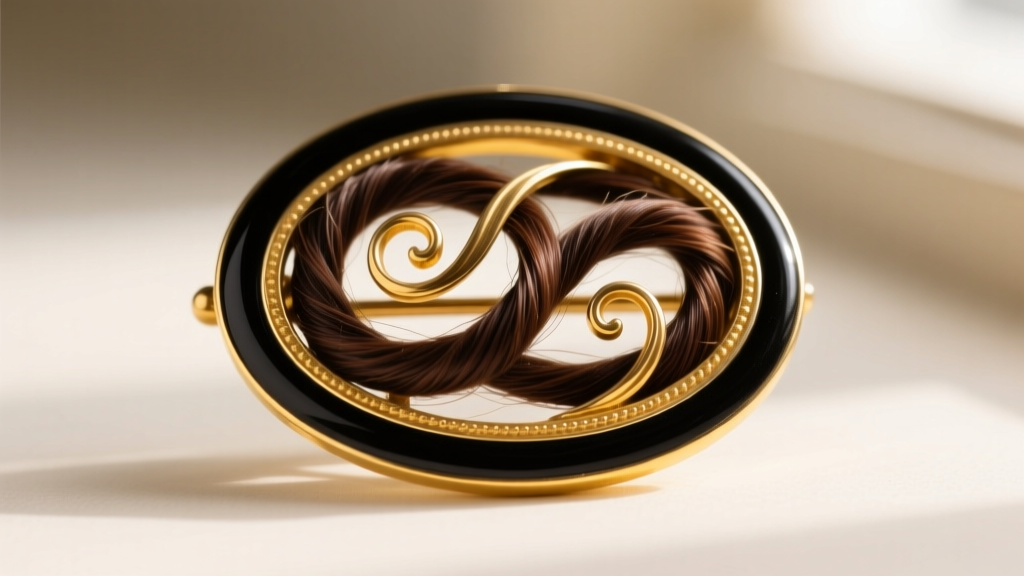
The Victorian era (1837–1901) birthed one of the most intimate and technically complex forms of memorial adornment in history. Following the death of Prince Albert in 1861, Queen Victoria’s prolonged grief sparked a cultural phenomenon where mourning became a highly codified social practice. At the heart of this movement was hairwork—jewelry crafted from the woven locks of the deceased. Today, authentic Victorian mourning hair jewelry is highly sought after by collectors and historians. However, the market is flooded with modern reproductions and misidentified pieces.
Whether you are a seasoned collector or have inherited a family heirloom, accurately dating and preserving these fragile artifacts requires a deep understanding of 19th-century metallurgy, textile techniques, and material degradation. This step-by-step guide will walk you through the exact methodologies used by appraisers to authenticate and conserve Victorian mourning hair jewelry.
Step 1: Analyzing the Hair Weave and Palette
The most critical component of authentication is the hair itself. Victorian hairworkers utilized specialized braiding tables equipped with bobbins and lead weights to create incredibly tight, uniform weaves. Modern reproductions often feature looser, machine-assisted braids or synthetic fibers that lack the microscopic cuticle structure of 19th-century human hair.
Identifying Authentic Victorian Weaves
Authentic pieces typically feature specific, named patterns that were popularized in manuals like Mark Campbell’s 1867 book, The Art of Hair Work. Identifying the weave can help narrow down the piece's origin and intended use.
| Weave Pattern | Strand Count | Structural Characteristics | Common Applications |
|---|---|---|---|
| Prince of Wales | 4 to 8 | Flat, tightly interlocking diagonal braid; highly flexible. | Watch chains, men's fobs |
| Featheredge | 12 to 16 | Woven over a fine wire core; lightweight with a soft, fringed edge. | Earrings, delicate pendants |
| Square Chain | 8 to 24 | Tubular, dense, and highly durable; requires heavy tensioning. | Thick bracelets, heavy necklaces |
| Double Flat Chain | 16+ | Two parallel flat braids joined at the edges; complex geometry. | Brooches, memorial wreaths |
Human Hair vs. Horsehair
While human hair was the premium standard for high-end memorial pieces, horsehair was frequently used in cheaper, mass-produced mourning jewelry or earlier 19th-century work. Under a jeweler's loupe (10x magnification), horsehair will appear significantly thicker (approx. 0.08–0.12mm in diameter), stiffer, and more uniform in color. Human hair is finer (0.04–0.07mm), exhibits natural tapering, and shows slight color variations along the strand. According to the Lang Antiques Antique Jewelry University, the presence of horsehair in a piece marketed as 'intimate mourning' is often a red flag for a lower-tier commercial reproduction.
Step 2: Inspecting the Hardware and Clasps
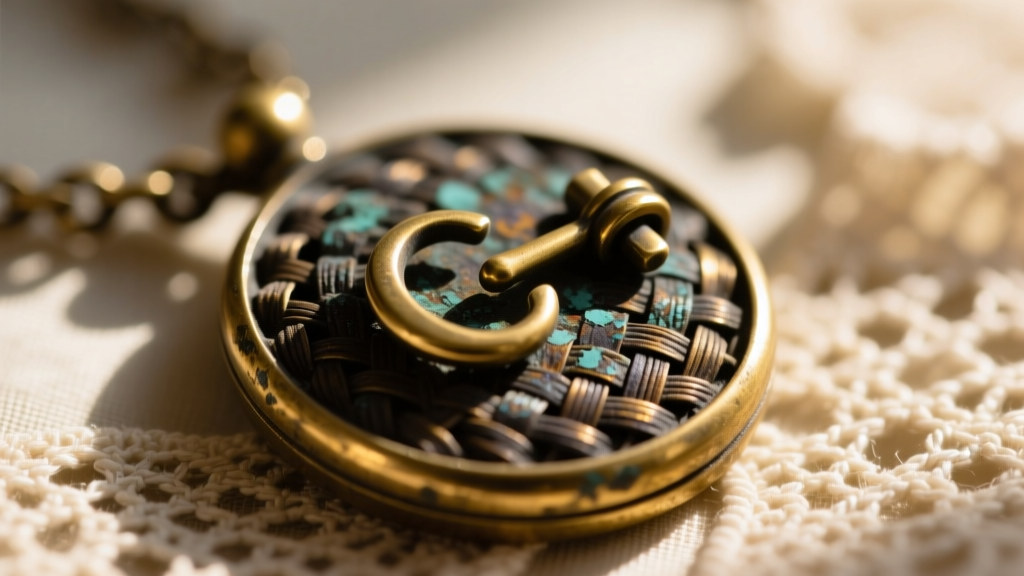
The metalwork housing the hair provides the most reliable chronological markers for dating Victorian mourning jewelry. The transition of clasp mechanisms and gold purity standards during Queen Victoria's reign offers a precise timeline for authentication.
Clasp and Hinge Mechanics
- The C-Clasp (Pre-1890s): Early Victorian brooches almost exclusively feature a simple 'C' shaped catch without a rolling safety mechanism. The pin stem will typically extend slightly past the edge of the clasp.
- T-Bar Hinges: Authentic mid-to-late 19th-century pins use a T-bar hinge (three distinct cylindrical knuckles) rather than the single, rounded ball hinge introduced in the early 20th century.
- Safety Catches (Post-1890s): If the piece features a locking safety catch over the C-clasp, it likely dates to the very end of the Victorian era or the subsequent Edwardian period.
Gold Purity and Enamel Codes
In the UK, 15-karat gold was the standard for fine jewelry until 1932, when it was replaced by 14-karat gold. Finding a 15k hallmark on a hairwork piece is a strong indicator of British Victorian origin. Furthermore, the use of enamel strictly followed the rigid stages of Victorian mourning etiquette.
The Mourning Stages: First-stage mourning (deep mourning) required the use of black materials. Jewelry from this period heavily features black enamel, jet, or vulcanite. Second-stage mourning allowed for white enamel, pearls, and plain gold. A piece featuring woven hair encased in white enamel and seed pearls indicates a later stage of grief or a memorial piece created years after the initial passing.
For a broader historical context on these social customs, the Victoria and Albert Museum offers extensive archives detailing how strict sumptuary laws influenced jewelry design and material choices during the 19th century.
Step 3: Evaluating the Glazing and Bezels
Victorian hair jewelry often incorporated flat, woven hair palettes (sometimes called 'hair tables') sealed beneath a transparent cover. Evaluating this glazing is crucial for spotting modern alterations.
Authentic pieces typically utilize rock crystal or early lead glass. Over 150 years, early glass will often exhibit a phenomenon known as 'crizzling'—a network of fine, internal fractures caused by chemical instability. Modern reproductions use pristine, synthetic sapphire glass or cheap acrylic, which will lack these microscopic age markers. Additionally, inspect the foil backing behind the hair. Victorian artisans often placed gold or silver foil behind the hair to reflect light and enhance the weave's texture. If this foil shows signs of oxidation, tarnishing, or water spotting beneath the glass, it is a strong indicator of age. A perfectly pristine, brightly stamped modern foil is an immediate sign of a 20th or 21st-century replica.
Step 4: Proper Preservation and Storage Protocols
Once authenticated, Victorian mourning hair jewelry requires highly specific conservation efforts. Hair is a protein fiber (keratin) that is incredibly susceptible to environmental degradation. Improper storage can lead to irreversible snapping, mold growth, or severe fading.
The Archival Storage Checklist
Follow this strict protocol to ensure the longevity of your collection:
- Humidity Control (40-50% RH): Keratin becomes brittle and snaps when the Relative Humidity (RH) drops below 30%. Conversely, RH levels above 60% invite mold growth and accelerate the corrosion of the surrounding metal hardware. Store pieces in a room with a dedicated dehumidifier/humidifier system, or use sealed archival boxes with conditioned silica gel packets.
- UV Protection: Ultraviolet light permanently bleaches human hair, destroying the natural color palette that gives mourning jewelry its emotional resonance. Never display hairwork in direct sunlight or under unfiltered halogen lighting. Use UV-filtering museum glass if displaying in shadowboxes.
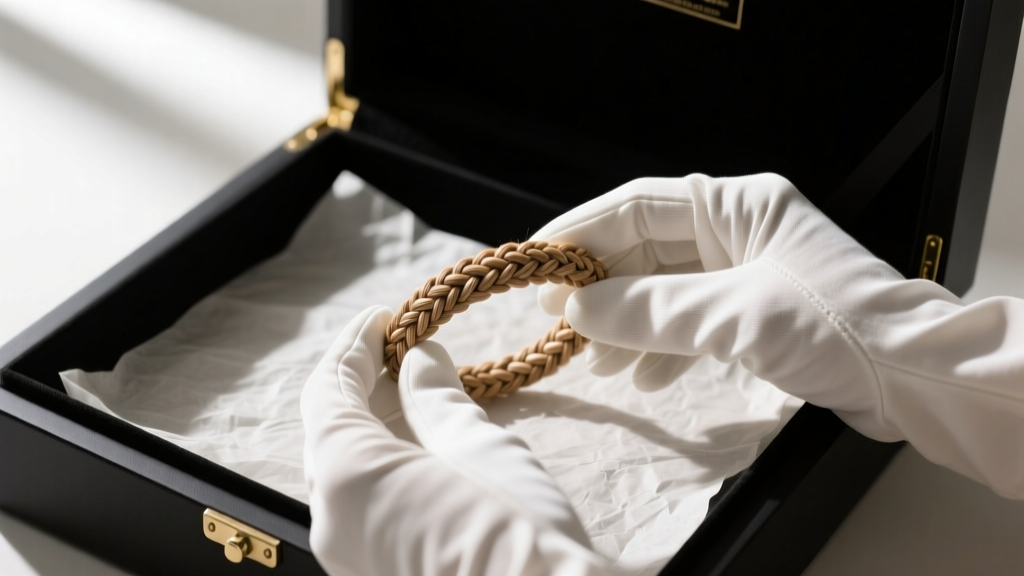
- Acid-Free Isolation: Never store hair jewelry in standard cardboard boxes or plastic PVC sleeves, which off-gas acidic compounds that degrade both the hair and the metal. Wrap each piece individually in unbuffered, acid-free tissue paper.
- Skin Oil Avoidance: The natural sebum and acids from human hands will transfer to the hair, causing it to become gummy and attract dust. Always handle authenticated pieces with clean, lint-free cotton or nitrile gloves.
- Tension Relief: For woven hair bracelets and watch chains, store them unclasped and laid completely flat. Hanging them or keeping them tightly clasped in a circle places continuous stress on the 150-year-old fibers, eventually leading to structural failure at the metal crimps.
Conclusion
Collecting and preserving Victorian mourning hair jewelry is an exercise in both historical empathy and material science. By closely examining the microscopic structure of the weave, decoding the metallurgical hallmarks of the hardware, and implementing rigorous archival storage protocols, you ensure that these deeply personal artifacts survive for future generations. Whether it is a simple Prince of Wales watch chain or an elaborate black enamel brooch, each piece is a tangible thread connecting us to the intricate mourning rituals of the 19th century.


