60s Fashion Jewelry Value Guide: 2026 Budget & Pricing
Discover how to evaluate 60s fashion jewelry in 2026. Learn pricing tiers, authenticate vintage Trifari and Coro, and assess costume piece investment value.

The Resurgence of Mid-Century Costume Pieces
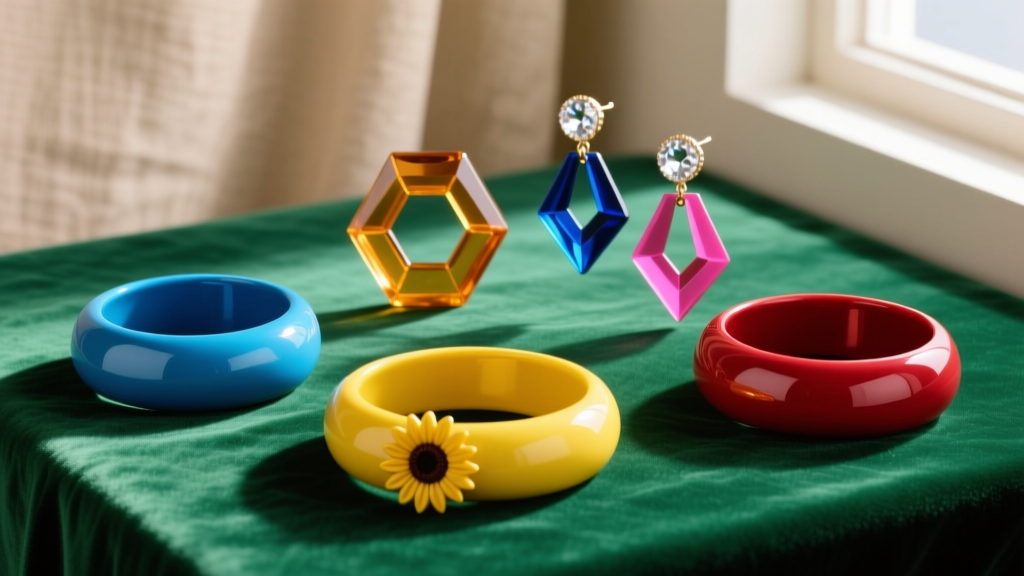
In the current 2026 vintage market, 60s fashion jewelry has transcended its status as mere nostalgic accessory to become a highly calculated asset class for collectors and style archivists. Unlike the delicate, fine-jewelry aesthetics of the early 20th century, the 1960s introduced a radical era of bold self-expression. Designers embraced oversized geometric resins, vibrant guilloché enamel, and space-age metallics. For the budget-conscious collector, understanding the intersection of historical significance, material degradation, and brand prestige is the only way to accurately assess value and avoid overpaying for damaged or reproduced pieces.
Evaluating these items requires a shift in perspective. You are not paying for intrinsic metal weight or diamond clarity; you are paying for design provenance, structural integrity, and the survival of fragile mid-century manufacturing techniques. Below, we break down the exact metrics you need to appraise, authenticate, and budget for vintage 1960s costume jewelry.
Decoding 60s Fashion Jewelry Makers and Marks
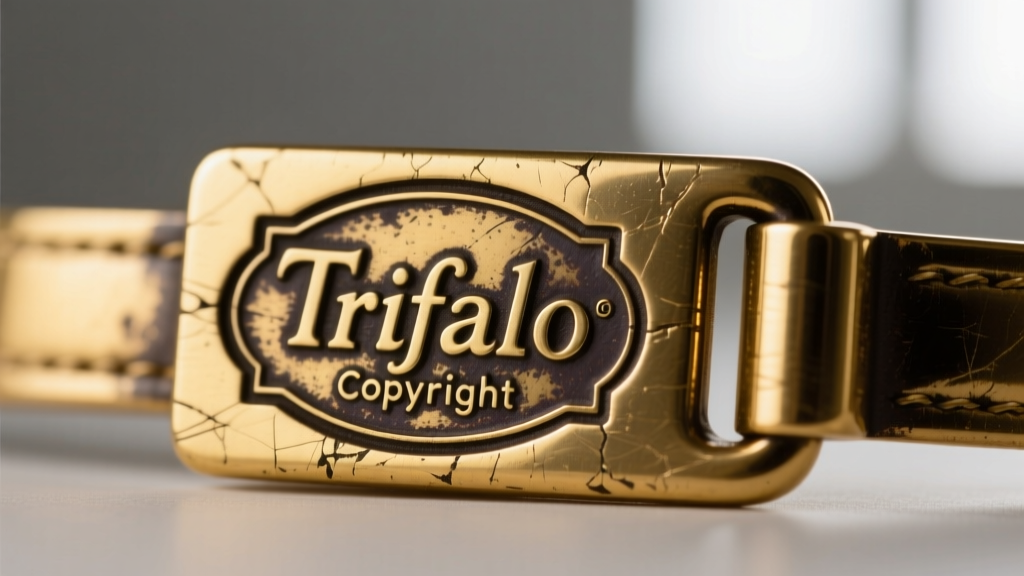
The foundation of any value assessment begins with identifying the maker. The 1960s was the golden era of the 'signed' costume piece. According to the Vintage Fashion Guild, the presence of a clear, correctly stamped copyright mark (©) is a primary indicator of post-1955 production, firmly placing a piece in the 60s or later.
Trifari, Coro, and Napier: The Big Three
- Trifari: Pieces designed under Alfred Philippe's later tenure or featuring the patented 'Trifanium' gold-tone plating command premium prices. Look for the 'TRIFARI' stamp with a superimposed crown, often accompanied by a hangtag on necklaces.
- Coro & Vendome: Coro's high-end line, Vendome, produced exceptional aurora borealis (AB) rhinestone parures in the 60s. Value hinges on the completeness of the set (necklace, clip-back earrings, and bracelet).
- Napier: Known for heavy, architectural gold-tone link bracelets and bold hoop earrings. Napier pieces from the 60s are highly durable, making them excellent entry-level investments for daily wear.
2026 Market Pricing Tiers for 60s Costume Jewelry
Budgeting for 60s fashion jewelry requires a realistic understanding of current market tiers. Prices have stabilized in 2026 after a post-pandemic surge, creating distinct buying brackets based on brand, condition, and rarity.
| Value Tier | Condition & Attributes | Brand Examples | 2026 Price Range (USD) |
|---|---|---|---|
| Tier 1: Archival | Mint, rare design, complete parure, documented runway provenance | Miriam Haskell, Early Dior, Paco Rabanne | $450 - $2,500+ |
| Tier 2: Premium | Excellent, signed, vibrant stones, minor clasp wear | Trifari, Coro Craft, Vendome, Schiaparelli | $120 - $400 |
| Tier 3: Accessible | Very Good, signed, standard designs, slight enamel wear | Napier, Monet, Kramer, Sarah Coventry | $35 - $110 |
| Tier 4: Project | Missing stones, foil rot, base metal pitting, broken clasps | Unsigned mass-market, Avon, Tupperware | $5 - $25 |
Condition Assessment: Spotting Fatal Flaws vs. Patina
When evaluating a piece in person or via high-resolution macro photography, you must differentiate between acceptable vintage patina and fatal structural flaws. The materials used in the 1960s were experimental and often inherently unstable.
1. Rhinestone Foil Rot
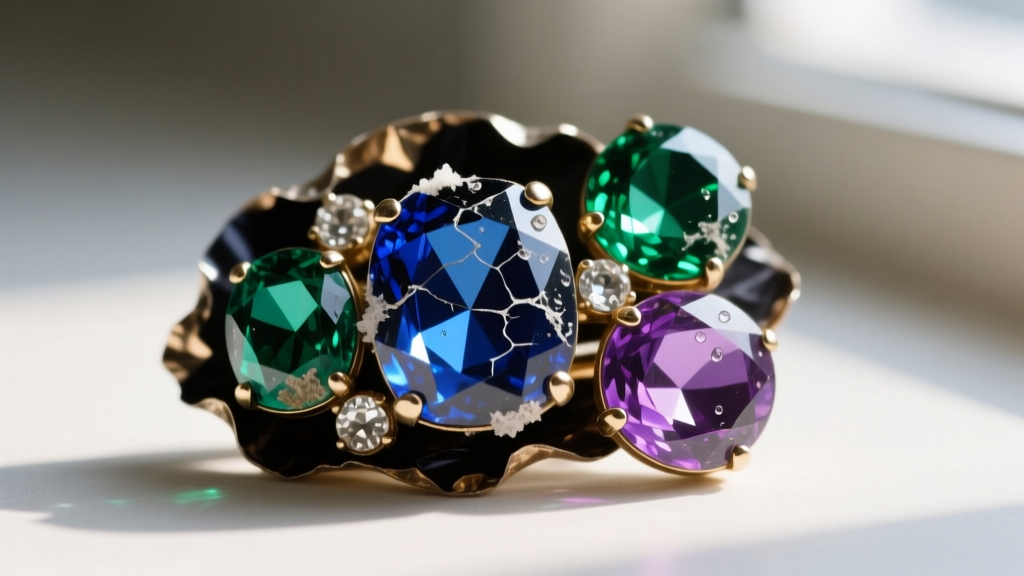
Most 60s rhinestones were glass with a delicate metallic foil glued to the back to reflect light. If moisture penetrates the prong setting, the foil oxidizes and turns black—a condition known as 'foil rot.' Lang Antiques University notes that once foil rot sets in, the stone appears dead and gray. Because the stones are often glued into the setting, replacing them without damaging the surrounding 60s enamel or plating is nearly impossible. Budget Rule: Deduct at least 40% of the value for any piece exhibiting foil rot.
2. Pot Metal Degradation (Zinc Pest)
Many affordable 60s brooches and pendants were cast from 'pot metal,' a zinc-heavy alloy. Over decades, impurities in the zinc can cause micro-fractures, swelling, and eventual crumbling, known as zinc pest. Inspect the reverse of heavy cast pieces for hairline cracks or a powdery white residue. If the base metal is fracturing, the piece is a Tier 4 liability, regardless of the brand stamp.
3. Aurora Borealis Coating Wear
Swarovski’s AB finish was massively popular in the 60s. However, early AB coatings were applied via vaporization and can wear off on high-contact areas (like the top of a bangle or the clasp of a necklace). Check the stones under direct LED light; if they look like plain clear glass rather than iridescent rainbows, the coating has been rubbed away by decades of skin oils and friction.
Budgeting Strategy: Building a Curated 60s Collection
If you are allocating a $500 budget to start a high-quality 60s fashion jewelry collection, avoid blowing it all on a single Tier 2 necklace. Instead, use a diversified acquisition strategy:
The 50/30/20 Vintage Allocation Model:
Spend 50% ($250) on one 'anchor' piece—a signed, mint-condition Trifari or Coro parure that serves as your collection's centerpiece. Allocate 30% ($150) across three to four Tier 3 Napier or Monet bangles and link bracelets, which offer high durability for daily modern styling. Reserve the final 20% ($100) for 'project' pieces or rare, unsigned mod-era plastics that require professional ultrasonic cleaning or clasp replacement.
Authenticating 60s Pieces vs. Modern Retro Reproductions
The market is currently flooded with 2020s reproductions mimicking 60s daisy motifs and mod geometrics. To protect your budget, rely on tactile and structural authentication rather than just visual design.
- Weight and Temperature: Authentic 60s Lucite and Bakelite resins have a distinct, dense weight and warm up quickly to the touch. Modern acrylic reproductions feel hollow, lightweight, and remain cold.
- Clasp Mechanics: The 1960s relied heavily on fold-over clasps, box clasps with figure-eight safety catches, and simple hook-and-eye closures. If a vintage-looking 60s necklace features a modern, lightweight lobster claw clasp with a soldered jump ring, it has either been heavily altered (reducing its archival value) or is a modern reproduction.
- Stone Setting: Examine the prongs holding the rhinestones. Authentic mid-century pieces feature hand-set, raised metal prongs that are folded over the stone's girdle. Mass-market reproductions often use 'glue-set' stones or stamped, fake prongs that do not actually grip the glass.
Final Verdict on 60s Costume Investment
Assessing the value of 60s fashion jewelry in 2026 is an exercise in historical preservation as much as it is in fashion curation. The most valuable pieces are those that have survived the inherent chemical flaws of their era—pieces where the gold-tone plating remains unbroken, the rhinestone foil is sealed tight against moisture, and the kinetic energy of the mod movement is perfectly captured in metal and glass. By focusing on signed provenance, rigorous condition grading, and strategic budget allocation, collectors can build portfolios of mid-century costume jewelry that offer both immense stylistic impact and enduring market value.