Bold Jewelry Value Guide: 2026 Budget & Quality Tiers
Discover how to evaluate bold jewelry in 2026. Compare pricing, materials, and quality tiers from fashion costume to demi-fine statement pieces.

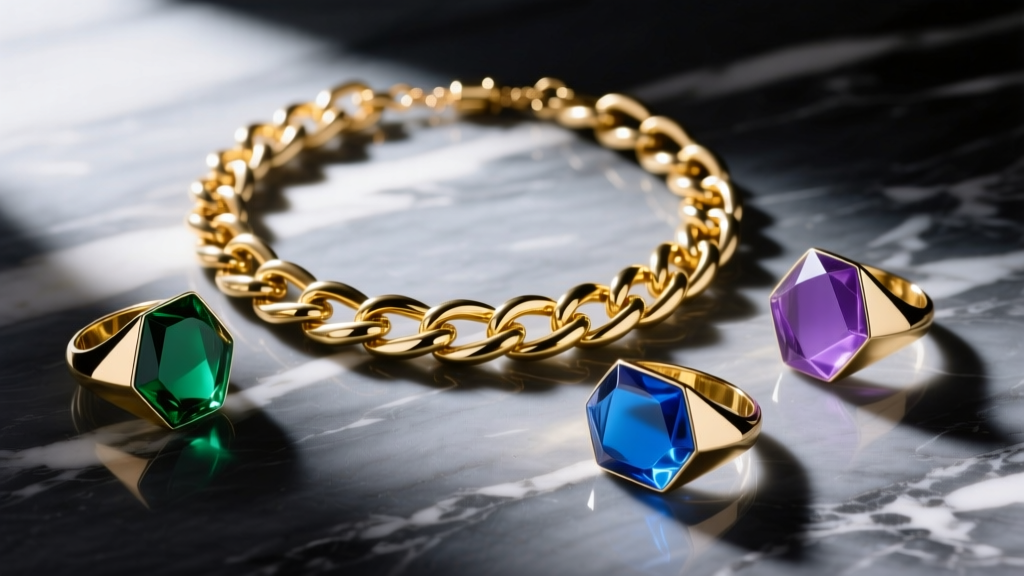
In 2026, the pendulum of style has swung decisively away from whisper-thin minimalism. Bold jewelry—characterized by heavy curb chains, oversized geometric drops, and massive cocktail rings—dominates both runways and everyday street style. However, the maximalist trend presents a unique financial trap for consumers. When you buy a delicate 2-gram chain, the base metal matters less. When you purchase a 60-gram statement collar necklace, the metallurgy, structural integrity, and plating thickness dictate whether the piece becomes a lifelong staple or a tarnished paperweight within three months.
As a budget and value assessment guide, this article breaks down the true cost of bold jewelry. We will evaluate the material tiers, expose common failure modes in heavy fashion pieces, and provide a concrete framework for calculating cost-per-wear (CPW) on statement items.
The Metallurgy of Mass: Why Heavy Fashion Pieces Fail
The primary challenge with bold jewelry is physical weight. To keep costs under $100, mass-market brands must use inexpensive base metals. Understanding these alloys is the first step in assessing value.
Zamak vs. Brass vs. Bronze
- Zamak (Zinc Alloy): Often used in fast-fashion statement rings and heavy pendants. It is cheap to cast and feels dense, but it is highly brittle. A Zamak cuff bracelet dropped on a tile floor is likely to snap. Furthermore, it cannot be easily replated once the thin gold flash wears off.
- Brass (Copper & Zinc): The industry standard for mid-tier bold jewelry. It casts beautifully and holds intricate details. The drawback? Copper reacts with lactic acid in human sweat, leading to the dreaded 'green skin' effect and rapid galvanic corrosion if the plating is compromised.
- Bronze (Copper & Tin): A favorite among independent artisans. Bronze is heavier, highly durable, and develops a rich patina over time. Unplated bronze bold cuffs offer exceptional value, often retailing between $80 and $150, outlasting $200 plated brass pieces by decades.
According to the Federal Trade Commission's Jewelry Guides, manufacturers must accurately disclose base metals and plating thickness. Yet, many 'bold gold chains' sold on social media omit this data entirely, masking cheap pot metal under a 0.1-micron flash plating.
2026 Material & Pricing Matrix for Statement Pieces
To assess value, we must compare apples to apples. The table below illustrates the 2026 market pricing for a standard bold piece: a 50-gram, 5mm Cuban link chain.
| Quality Tier | Base Material | Plating / Finish | 2026 Price Range | Estimated Lifespan (Daily Wear) |
|---|---|---|---|---|
| Fast Fashion | Zamak / Pot Metal | Flash Plated (< 0.5 microns) | $35 - $65 | 1 - 3 Months |
| Mid-Tier Fashion | Brass | Standard Gold Plate (1 - 2 microns) | $70 - $120 | 6 - 12 Months |
| Demi-Fine | Sterling Silver (925) | Heavy Vermeil (2.5+ microns) | $180 - $350 | 2 - 5 Years (with care) |
| Artisan Alternative | Solid Bronze | Unplated / Polished | $120 - $250 | Lifetime (requires polishing) |
| Fine Jewelry | Solid 14k Gold | Solid Alloy (No plating) | $3,800 - $5,500 | Lifetime / Heirloom |
Value Sweet Spot: For buyers who want the visual weight of a 50-gram chain without the $4,000 fine jewelry price tag, heavy sterling silver vermeil or solid bronze offer the highest return on investment. The Gemological Institute of America (GIA) notes that true vermeil requires a sterling silver base and a minimum of 2.5 microns of gold plating, ensuring the piece can withstand the friction of daily wear far better than brass alternatives.
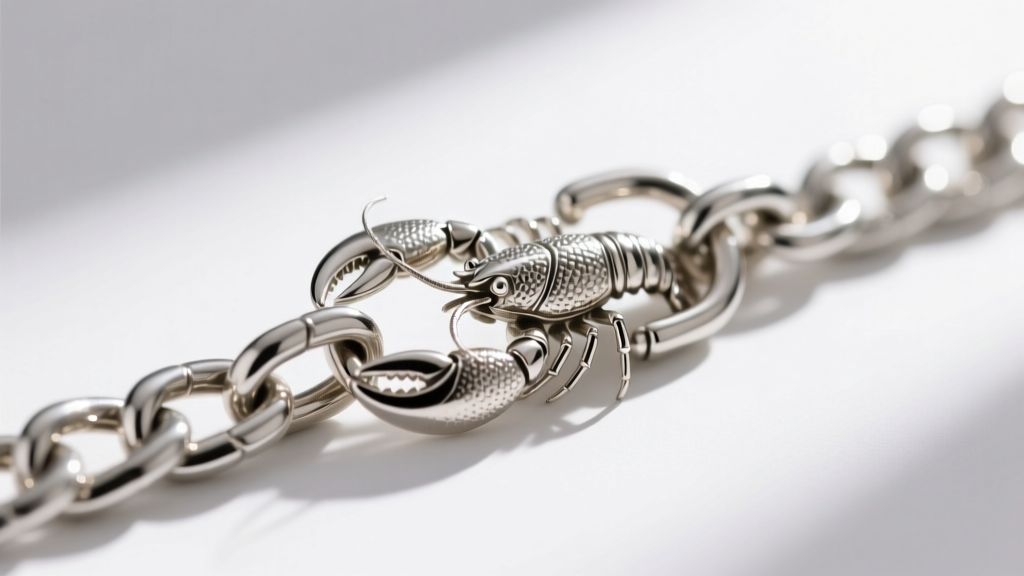
Structural Integrity: The Weight-to-Clasp & Gauge Rules
A massive failure point in bold jewelry is mechanical stress. Designers often focus on the visual impact of a heavy pendant or oversized earring but neglect the hardware required to support it.
The Clasp Weight Limit
If you are buying a bold chain necklace, inspect the clasp. The hardware must scale with the gram weight of the piece.
- Spring Ring Clasps: Only suitable for pieces under 15 grams. The internal spring mechanism will easily warp or snap under the pendulum swing of a heavy pendant.
- Standard Lobster Clasps: Ideal for pieces weighing 15 to 40 grams. Ensure the jump ring connecting the clasp to the chain is soldered shut; unsoldered rings will pull apart under the weight of bold links.
- Box Locks / Tongue Clasps: Mandatory for statement collars and heavy chains exceeding 40 grams. These provide a secure, flush mechanical lock that prevents catastrophic drops.
Earring Post Gauges for Oversized Drops
Bold earrings carry significant physical mass. A standard 20-gauge (0.81mm) earring post will slowly bend downward under the weight of a large geometric drop, causing the earring to face the floor rather than sit flush against the lobe. When evaluating bold earrings, look for 18-gauge (1.02mm) or 16-gauge (1.29mm) posts, ideally crafted from surgical steel or titanium for rigidity, even if the decorative face is gold vermeil.
The 'Gold-Filled' Mirage in Heavy Hoops
Gold-filled jewelry is heavily marketed as a budget-friendly alternative to solid gold. By FTC definition, gold-filled items must contain at least 5% gold by weight, mechanically bonded to a brass core. For thin wire hoops, this is an excellent value.
However, in bold, thick-tubing hoop earrings or heavy bangles, gold-filled materials present a hidden risk. The mechanical bonding process only covers the exterior surface. The hollow or solid brass core inside the tube is exposed at the end-caps. When sweat and moisture enter these unsealed ends, the internal brass corrodes from the inside out, leading to structural blistering and a metallic odor that cannot be polished away. For thick, bold hoops, solid bronze or heavy vermeil over sealed sterling silver is a vastly superior budget choice.

The Cost-Per-Wear (CPW) Framework for Maximalism
To truly assess the budget value of bold jewelry, you must move beyond the initial price tag and calculate the Cost-Per-Wear (CPW). Statement pieces are often rotated less frequently than delicate staples, which impacts their long-term value.
"A $45 fast-fashion chain worn three times before the plating rubs off on your collarbone costs $15 per wear. A $250 demi-fine vermeil chain worn twice a week for three years costs less than $0.80 per wear. True budget value is measured in longevity, not just the checkout total."
When allocating your 2026 jewelry budget, apply the 80/20 Maximalist Rule: Spend 80% of your bold jewelry budget on one or two high-quality demi-fine or artisan bronze anchor pieces (like a heavy signet ring or a thick curb chain). Use the remaining 20% for ultra-trendy, disposable fashion pieces (like oversized neon resin earrings) that you only intend to wear for a single season.
Final Verdict: Navigating the Bold Market
Bold jewelry requires a higher degree of scrutiny than delicate fine jewelry. The physical mass of these pieces accelerates plating wear, tests the limits of clasps, and exposes poor metallurgical choices. By avoiding unsealed gold-filled tubes, demanding 2.5-micron vermeil or solid alternative metals, and matching clasp hardware to the gram weight of the piece, you can build a striking, maximalist collection that respects both your personal style and your financial boundaries.


