The Ultimate Guide to Buying Authentic 50s Costume Jewelry
Discover what to look for when buying authentic 50s costume jewelry. Learn to identify hallmarks, aurora borealis rhinestones, and top makers.

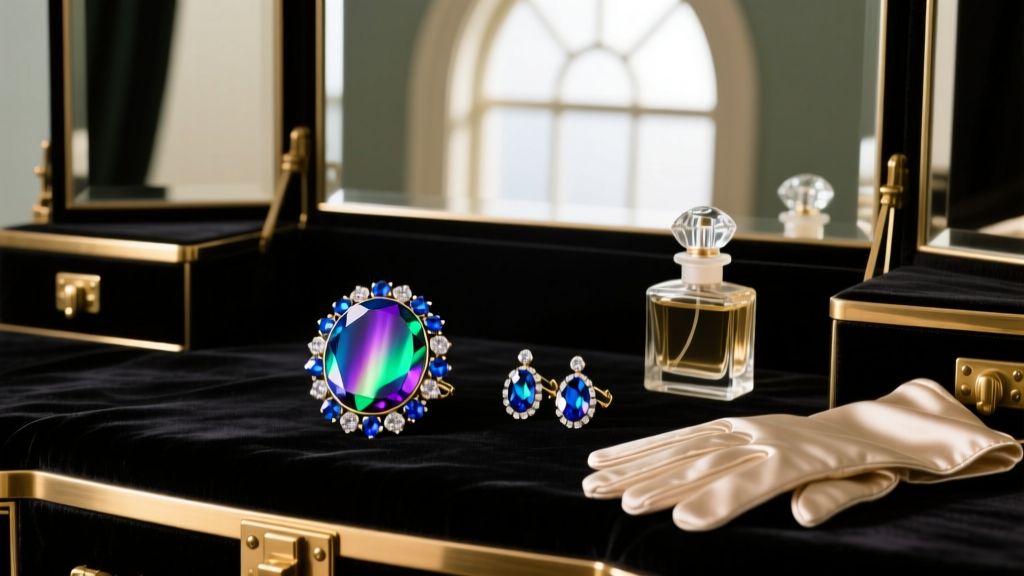
The 1950s marked a golden era for costume jewelry. Emerging from the utilitarian restrictions of World War II, the mid-century jewelry market exploded with opulence, innovation, and Hollywood-inspired glamour. Driven by Christian Dior's 'New Look' and a booming post-war economy, designers utilized new materials and advanced manufacturing techniques to create breathtaking parures (matching sets) that rivaled fine jewelry in visual impact. Today, collecting vintage pieces from this decade remains a thrilling pursuit, but the market is flooded with modern reproductions. To build a genuine collection, you must understand the specific materials, maker's marks, and structural hallmarks that define authentic 50s costume jewelry.
The Shift in Mid-Century Silhouettes and Construction
Unlike the bold, geometric Art Deco pieces of the 1920s or the patriotic, base-metal designs of the 1940s, 1950s jewelry was characterized by fluid elegance and lavish stone coverage. The decade saw a massive surge in the popularity of the 'parure'—a matched set comprising a necklace, bracelet, brooch, and clip-on earrings. According to the Metropolitan Museum of Art's Costume Institute, mid-century fashion demanded accessories that complemented the structured bodices and full skirts of the era, leading to the creation of oversized, multi-strand bib necklaces and wide, flexible link bracelets.
Construction quality in the 1950s was exceptionally high. Prong-setting was the industry standard for rhinestones, ensuring maximum light refraction. Glue-set stones were generally reserved for the lowest-tier novelty items. When inspecting a piece, flip it over. High-end 50s pieces will feature closed-back settings or meticulously finished open-back settings with smooth, snag-free prongs.
Decoding 1950s Materials: Aurora Borealis, Lucite, and Rhodium
The true value of mid-century costume jewelry lies in its innovative materials. Identifying these specific components is crucial for authentication and valuation.
The Aurora Borealis (AB) Revolution
In 1956, Manfred Swarovski collaborated with Christian Dior to create the Aurora Borealis (AB) rhinestone. By applying a micro-thin metallic vapor coating to glass stones, they achieved an iridescent, oil-slick rainbow effect. If a piece features AB stones, it was definitively manufactured in 1956 or later. Early AB stones have a distinct, highly reflective blue-green-pink shift, whereas modern reproductions often look overly uniform or artificially purple.
Lucite and 'Jelly Belly' Designs
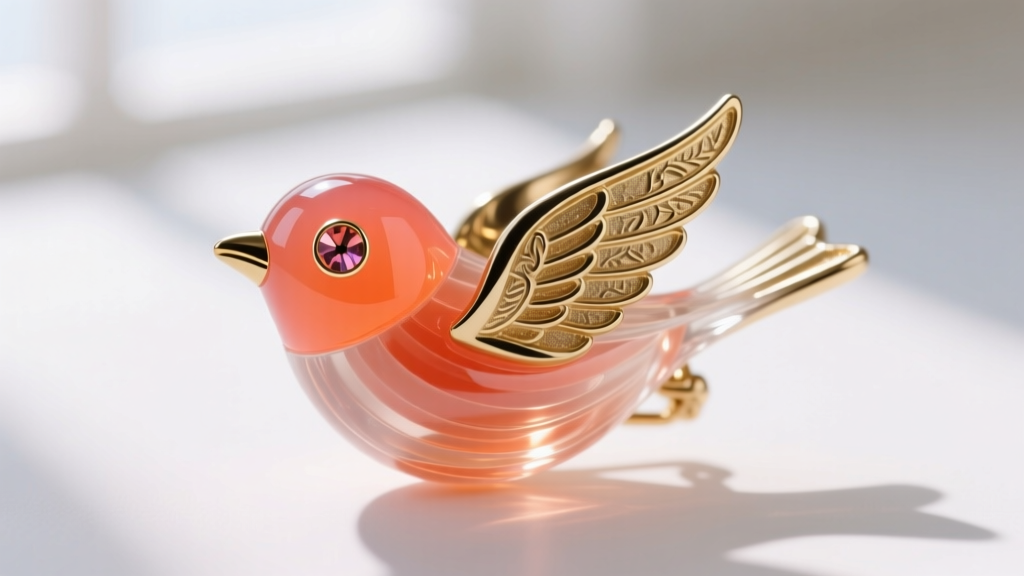
While Bakelite dominated the 1930s, the 1950s belonged to Lucite and thermoset plastics. Designers at Coro and Trifari famously utilized carved, clear Lucite for the bodies of animal brooches, rimming them with gold-tone metal and pavé rhinestones. These highly coveted 'Jelly Belly' pieces are among the most valuable in the vintage market. Authentic 1950s Lucite should feel dense and heavy; it will not have the mold seams commonly found on modern, injection-molded acrylics.
Rhodium and Gold-Tone Plating
To mimic the look of fine platinum and diamond jewelry, top makers heavily utilized rhodium plating over white metal. Rhodium is a precious metal that resists tarnish. If a silver-toned vintage piece remains remarkably bright and un-tarnished despite decades of wear, it is likely rhodium-plated. Gold-tone pieces of the era often featured a warm, brassy 14k or 18k hue, sometimes textured with 'florentine' or 'brushed' finishes to add depth.
The Titans of 50s Costume Jewelry and Maker's Marks
Knowing the major manufacturers and their specific hallmarking practices is your best defense against fakes. The 1950s was a transitional period for jewelry copyright, which provides a vital clue for dating pieces.
The 1955 Copyright Act: A Crucial Dating Tool
Before 1955, jewelry designs could not be copyrighted in the United States; they could only be protected by design patents. Therefore, pieces from the early 50s often bear marks like 'Pat. Pend.' or 'Des. Pat.' Following the 1955 Copyright Act, manufacturers began stamping the copyright symbol (©) alongside their signatures. A piece featuring a known 1950s design but lacking the © symbol (and lacking a patent number) is either an early 50s original or a later, unmarked reproduction.
Key Makers to Hunt
- Trifari: Look for the 'Crown' mark, which was introduced in the late 1940s but became the standard stamp throughout the 1950s. Alfred Philippe's 'Fruit Salad' and 'Alphabet' pins are highly collectible.
- Coro & Vendome: Coro's high-end line, Vendome, launched in the late 40s and peaked in the 50s, featuring premium aurora borealis stones and intricate floral motifs.
- Miriam Haskell: Known for elaborate, hand-wired designs using 'Russian Gold' plating and baroque faux pearls. Early 50s pieces are often unsigned or feature a small, horseshoe-shaped hang tag, while later 50s pieces bear a stamped oval plaque.
- Eisenberg Original: Famous for massive, heavy brooches featuring oversized, prong-set Swarovski or Czech glass stones. Look for the block-letter 'EISENBERG ORIGINAL' stamp.
Evaluating Condition and Market Pricing
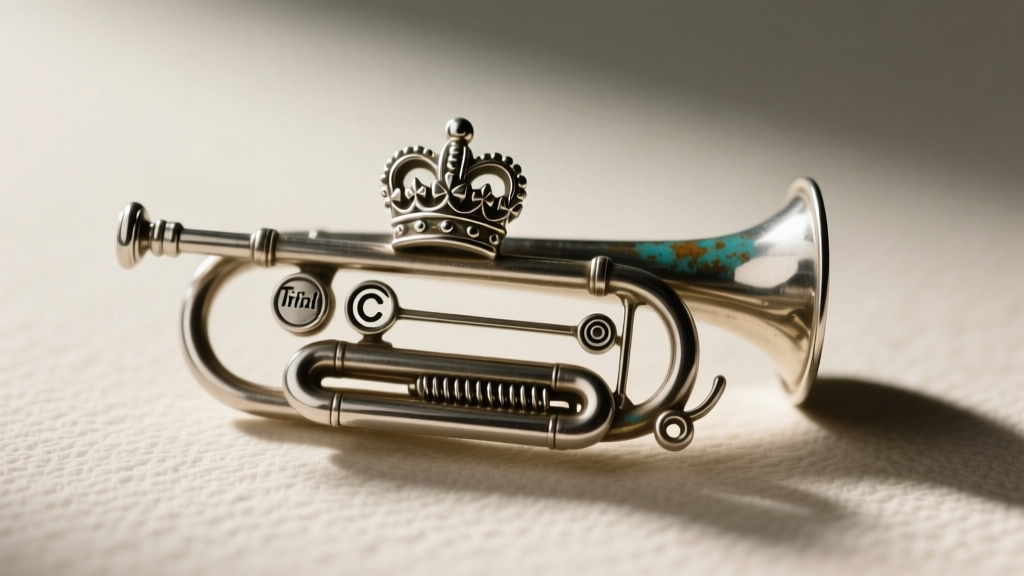
Condition dictates value in the vintage jewelry market. While some wear is expected, specific flaws can drastically reduce a piece's worth. According to archives at the Victoria and Albert Museum, preserving the original integrity of historical adornments is paramount. Avoid pieces with 'verdigris' (a green, crusty corrosion on base metals), as it is contagious and will spread to other pieces in your collection. Furthermore, replaced clasps or re-glued stones should lower the price significantly.
Current Market Value Tiers (2026 Estimates)
| Maker / Style | Condition Tier | Estimated Market Value (USD) |
|---|---|---|
| Standard Trifari / Coro Parure | Excellent (All stones present, minor plating wear) | $120 - $250 |
| Coro 'Jelly Belly' Brooch | Excellent (Clear Lucite, no yellowing) | $800 - $2,500+ |
| Miriam Haskell Hand-Wired Necklace | Very Good (Minor pearl wear, intact wiring) | $400 - $900 |
| Unsigned AB Rhinestone Brooch | Good (Missing 1-2 stones, clasp replaced) | $35 - $60 |
The Ultimate Authentication Checklist
Before purchasing any piece of 50s costume jewelry, run it through this physical inspection checklist using a 10x jeweler's loupe:
- Inspect the Clasp: Look for period-correct hardware. Trombone clasps, fold-over safety clasps, and early box clasps with single safety chains are standard for the 1950s. Modern lobster claws indicate a replacement or a fake.
- Check the Prongs: Ensure all rhinestones are prong-set from the back or front. Avoid pieces where stones appear glued into the setting, as this is a hallmark of cheap 1970s reproductions.
- Examine the Foil Backing: Many 50s rhinestones feature a delicate silver or gold foil backing to increase reflectivity. Use your loupe to check for moisture damage or black spots behind the glass, which indicates the foil has deteriorated.
- Verify the Signature: Look for crisp, clean stamping. Blurry, shallow, or laser-etched signatures are immediate red flags for modern counterfeits.
- Assess the Weight: High-end mid-century costume jewelry was cast in heavy base metals or brass. If a large, ornate brooch feels surprisingly light or hollow, it is likely a modern reproduction made from cheap alloys or plastic.
Collecting authentic 50s costume jewelry is an exercise in historical appreciation. By focusing on the innovative materials, precise construction techniques, and distinct maker's marks of the era, you can curate a collection that not only holds its financial value but also preserves the unparalleled glamour of the mid-century.


