Nick's Fine Jewelry NYC Reviews: 2026 Custom Trend Analysis
We analyze Nick's Fine Jewelry NYC reviews to uncover 2026 bespoke trends, CAD precision standards, and diamond sourcing benchmarks.

The Shift in Manhattan's Bespoke Jewelry Landscape
The New York City Diamond District has historically been a labyrinth of wholesale transactions, but the modern consumer demands a radically different experience. In 2026, the line between traditional bench jewelry and high-end bespoke design has completely blurred. Clients are no longer satisfied with simply picking a center stone and a pre-cast setting; they want architectural input, metallurgical transparency, and flawless CAD execution. When analyzing the surge in custom commissions, a specific pattern emerges regarding how buyers vet their artisans. By closely examining Nick's Fine Jewelry NYC reviews, we can decode the exact benchmarks that today's discerning buyers use to evaluate custom jewelers, from diamond sourcing ethics to structural ring integrity.
The modern fine jewelry landscape is defined by informed consumers. Buyers arrive at 47th Street armed with GIA grading reports, Vickers hardness charts, and a deep understanding of lab-grown versus natural diamond pricing. The jewelers who thrive in this environment are those who treat the client as a collaborative design partner rather than a passive purchaser. This shift is precisely what drives the conversation in contemporary jewelry forums and review platforms.
Decoding Nick's Fine Jewelry NYC Reviews: What Clients Actually Value
A deep dive into Nick's Fine Jewelry NYC reviews reveals that clients are prioritizing structural longevity and design precision over mere carat weight. In previous decades, a review might have focused solely on the sparkle of the diamond or the politeness of the sales staff. Today, the most highly rated custom experiences highlight specific technical achievements: the absence of casting porosity, the exact millimeter thickness of gallery wires, and the precision of pave setting alignment.
Clients in 2026 are actively scrutinizing the underside of their rings. A clean, well-polished gallery with precise milgrain detailing is no longer a luxury; it is the baseline expectation for fine jewelry.
Furthermore, the reviews frequently mention the transparency of the CAD (Computer-Aided Design) approval process. Customers value jewelers who provide multi-angle 3D renders and explicitly point out potential wear-and-tear vulnerabilities before the piece is ever cast. This proactive approach to failure prevention—such as thickening a delicate prong base from 0.8mm to a safer 1.2mm—is a recurring theme in positive client testimonials.
Material Grades & Sourcing: The Fine Jewelry Benchmark
The foundation of any heirloom-quality piece lies in its metallurgy and gemological sourcing. According to GIA's diamond grading standards, the market has seen a massive pivot toward highly specific clarity and color combinations, particularly in the lab-grown sector where buyers can afford higher specs for their budget. When evaluating custom benchmarks, the choice of alloy is just as critical as the center stone.
For instance, 950 Platinum alloyed with ruthenium (Pt950/Ru) has become the gold standard for custom engagement rings due to its superior Vickers hardness compared to traditional iridium-platinum alloys. This specific alloy resists scratching better and holds pave stones more securely over decades of wear. Below is a breakdown of the material and pricing matrix dominating the 2026 custom market.
| Component | Material/Specification | 2026 Avg. Custom Cost | Durability & Sourcing Notes |
|---|---|---|---|
| Setting Base | 950 Platinum (Ruthenium Alloy) | $1,800 - $2,800 | High density; prongs resist thinning and stone loss. |
| Setting Base | 18k Yellow Gold (75% Au) | $1,200 - $1,900 | Softer metal; requires annual prong re-tipping checks. |
| Accent Stones | Melee (F/VS, 1.2mm Single-Cut) | $400 - $850 | Single-cut melee offers superior brilliance in small sizes. |
| Center Stone | 1.5ct Lab-Grown (G/VS1, IGI) | $1,500 - $2,200 | Identical physical properties to mined; massive value shift. |
As noted in recent JCK Online industry reports, the normalization of lab-grown diamonds has allowed custom buyers to reallocate their budgets. Instead of spending $12,000 on a 1.5-carat natural diamond, buyers are spending $2,000 on an equivalent lab stone and investing the remaining $10,000 into intricate custom metalwork, hidden halos, and premium platinum casting.
Trending Silhouettes in Custom NYC Commissions
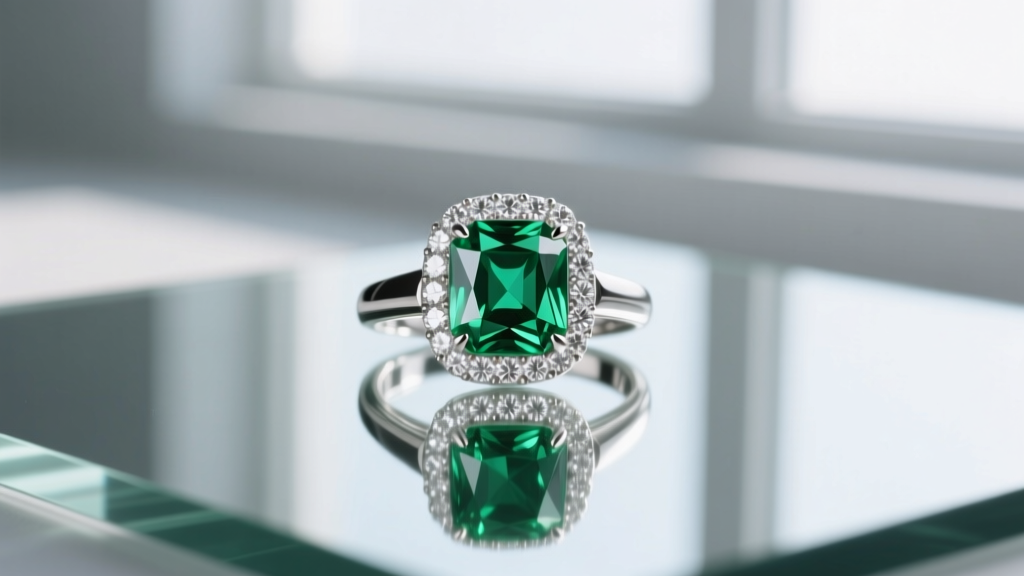 The aesthetic preferences documented in bespoke commissions reflect a broader cultural shift toward personalized, non-traditional silhouettes. The classic round brilliant solitaire has been largely superseded by designs that maximize finger coverage and offer unique optical geometry.
- The East-West Setting: Placing elongated stones (emerald, oval, or marquise cuts) horizontally across the finger. This requires a custom CAD basket to ensure the stone's culet does not catch on clothing, typically requiring a gallery height clearance of at least 2.5mm.
- Toi et Moi (You and Me): Two-stone rings featuring contrasting shapes, such as a pear and an emerald cut. The structural challenge here is balancing the visual weight and ensuring the shared prong architecture does not compromise the girdle of either stone.
- Hidden Halos and Under-Galleries: Instead of traditional top-down halos, designers are placing micro-pave diamond halos on the vertical interior walls of the basket. This requires master-level setting, as the stones are often set at a 90-degree angle to the main diamond.
- Tension-Style Bezels: While true tension settings are structurally risky for daily wear, the 2026 trend favors 'tension-style' bezels where a partial bezel wraps tightly around the stone's girdle, leaving the north and south poles completely exposed to light.
Navigating the CAD Approval Process
The most critical phase of any custom jewelry commission is the CAD approval. This is where the digital blueprint is finalized before physical casting. A common failure mode in bespoke jewelry occurs when clients approve a render based purely on aesthetics, ignoring structural engineering. When reviewing 3D models, you must request the exact millimeter dimensions of the structural elements.
Pay close attention to the prong bases. A prong that looks elegant and delicate in a digital render might be only 0.7mm thick at the base. Once cast, polished, and subjected to daily impacts, a 0.7mm prong will fatigue and snap within a few years. Always insist on a minimum base thickness of 1.1mm to 1.3mm for center stones over one carat. Additionally, check the scaling of any milgrain detailing. Digital renders often show perfectly crisp milgrain, but if the beads are designed smaller than 0.2mm, they will blur into a solid ridge during the casting and polishing process.
Final Verdict: Is the Hype Justified?
 The consensus derived from analyzing Nick's Fine Jewelry NYC reviews and broader Diamond District trends is clear: the modern consumer demands a hybrid of old-world craftsmanship and new-world technology. The hype surrounding top-tier custom jewelers in NYC is entirely justified, provided the artisan can demonstrate metallurgical expertise, transparent sourcing, and rigorous CAD engineering.
For buyers entering the custom market in 2026, the key takeaway is to look beyond the 4Cs of the center stone. True fine jewelry is defined by the 950 platinum alloy chosen for the basket, the single-cut melee used in the hidden halo, and the structural foresight applied during the digital design phase. By demanding these specifics, you ensure your bespoke commission is not just beautiful on the day of proposal, but structurally sound for generations to come.