Geraci Fine Jewelry Care: Troubleshooting Prong and Alloy Wear
Learn how to troubleshoot common wear issues in Geraci Fine Jewelry. Expert guide on diagnosing prong fatigue, alloy tarnish, and resizing.

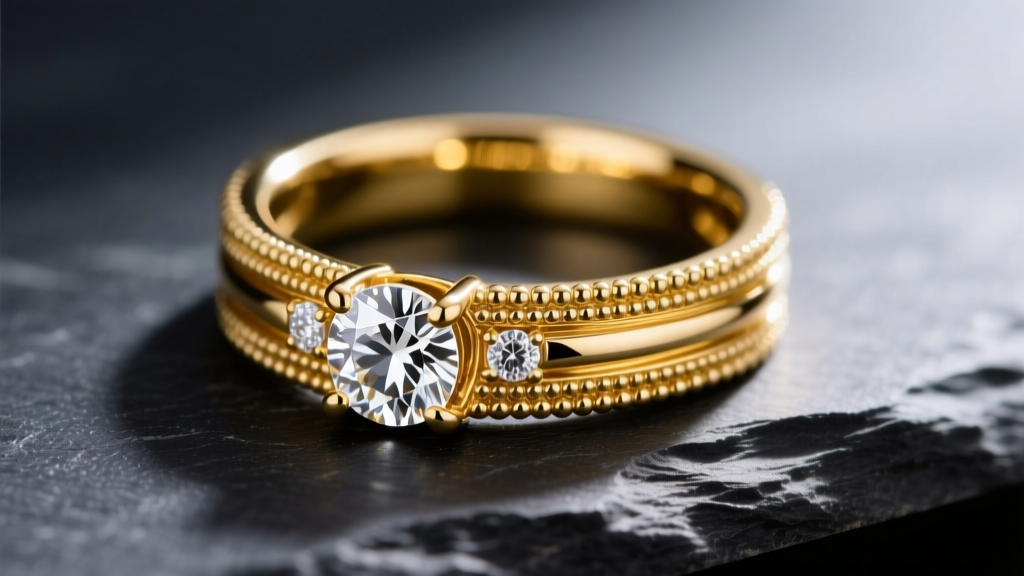
Owning a piece from a prestigious bespoke house like Geraci Fine Jewelry is an investment in master-level craftsmanship, metallurgical integrity, and timeless design. However, even the most meticulously hand-fabricated fine jewelry is subject to the relentless laws of physics and chemistry. As we navigate the secondary and vintage markets in 2026, collectors and daily wearers alike frequently encounter structural and cosmetic anomalies that require expert troubleshooting. Unlike mass-produced cast jewelry, designer pieces feature complex gallery architectures, proprietary alloy blends, and hand-cut stone seats that demand specialized diagnostic approaches. This guide provides a master bench jeweler’s perspective on diagnosing and resolving the most common wear-and-tear issues found in high-end designer collections.
Diagnosing Micro-Fractures in Custom Cast and Fabricated Prongs
One of the most alarming issues a collector can face is a rattling gemstone. In high-end bespoke pieces, prongs are rarely simple cast-in-place nubs; they are often hand-drawn wire, shaped and work-hardened to exact tolerances. When a center stone in a Geraci Fine Jewelry ring begins to shift, the instinct is to simply push the prong back over the crown. This is a critical error that can lead to catastrophic stone loss.
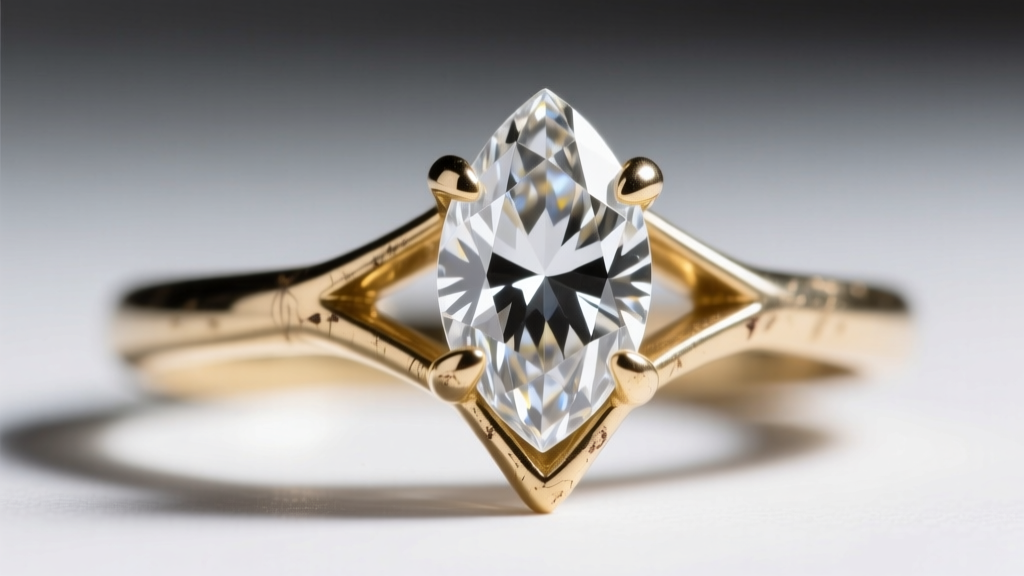
To properly troubleshoot prong fatigue, you must employ a 10x triplet loupe and examine the bearing cut—the small notch inside the prong where the diamond's girdle rests. Over years of wear, the metal at the bearing point thins. If the prong is pushed without first re-cutting the bearing or adding laser-welded metal to the interior, the prong will snap under tension. Furthermore, V-prongs, commonly used to protect the sharp points of marquise and pear cuts, are highly susceptible to stress fractures at the apex of the 'V'. According to the Gemological Institute of America (GIA), regular inspection of these specific stress points is non-negotiable for maintaining stone security in custom settings.
The 10x Loupe Diagnostic Framework
- Step 1: The Tap Test. Gently tap the side of the ring with a brass tweezers. A dull click indicates the stone is seated but the prong tips are worn flat. A high-pitched rattle indicates a broken bearing or a completely detached prong tip.
- Step 2: Gallery Wire Inspection. Look beneath the stone. Hand-fabricated galleries (usually 0.9mm to 1.2mm thick) can warp if the ring is squeezed. A warped gallery changes the angle of the prongs, pulling them away from the stone.
- Step 3: Check for Rhodium Bleed. If the piece is white gold, heavy wear on the rhodium plating can mask micro-abrasions on the prong tips. Never attempt to re-plate a ring with loose stones, as the ultrasonic cleaning required beforehand will vibrate the stone out of its compromised setting.
The Patina vs. Tarnish Dilemma in High-Karat Alloys
Designer jewelers frequently utilize proprietary 18k and 22k gold alloys to achieve specific hues—such as the warm, peach-toned rose gold or the deep, greenish-yellow of vintage-style alloys. Troubleshooting discoloration requires understanding the difference between intentional patina and chemical corrosion.
| Alloy Type | Composition (Approx) | Vickers Hardness (HV) | Common Wear Issue |
|---|---|---|---|
| 18k Yellow Gold | 75% Au, 12.5% Cu, 12.5% Ag | 120-140 HV | Copper oxidation causing dark spotting |
| 18k Rose Gold | 75% Au, 22.25% Cu, 2.75% Ag | 130-150 HV | Surface scratching, loss of 'bloom' finish |
| 14k White Gold | 58.3% Au, Nickel/Palladium mix | 135-160 HV | Yellowing as rhodium plating wears off |
| 950 Platinum | 95% Pt, 5% Ruthenium/Iridium | 130-150 HV | Patina development (metal displacement, not loss) |
If your Geraci Fine Jewelry piece features a matte or satin finish, standard polishing cloths will ruin the texture by burnishing the high points. Instead, tarnish on high-copper alloys should be addressed with a mild, non-abrasive surfactant and a soft horsehair brush. For platinum pieces, the 'patina' that develops over time is actually displaced metal, not oxidation. According to Jewelers of America, platinum's density means it merely shifts upon impact. Restoring it requires high-speed polishing with specialized rouge, a task strictly reserved for the master bench.
Resizing Complex Shank Architectures
Sizing a ring seems like a elementary repair, but designer shanks often feature complex geometries that defy traditional torch soldering. Many bespoke signet rings, eternity bands, and tension-style shanks cannot be cut and stretched without destroying the structural integrity or the intricate shoulder engraving.
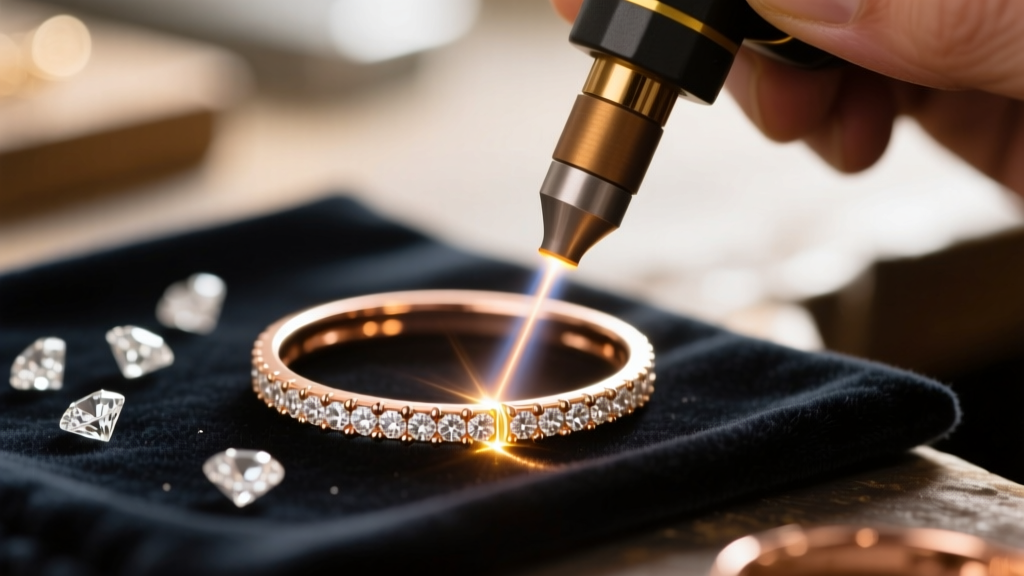
When troubleshooting a sizing issue on a heavy, hand-engraved Geraci Fine Jewelry signet ring, traditional soldering will melt the engraving near the sizing joint due to the high thermal conductivity of gold. The solution is laser welding. Laser welders allow a jeweler to add 18k gold filler wire to the shank with pinpoint accuracy, keeping the heat-affected zone to less than a millimeter. This preserves the hand-florentine or bright-cut engravings on the shoulders.
When Sizing is Impossible
Troubleshooting isn't always about finding a way to fix a problem; sometimes it's about recognizing the limits of metallurgy. If you possess a full eternity band featuring precision-set French-cut diamonds, sizing it is virtually impossible without compromising the continuous channel. In these scenarios, the correct troubleshooting step is to consult the original atelier about adding internal sizing beads (speed bumps) or a spring insert to reduce the effective inner diameter by up to a half-size without altering the exterior architecture.
Ultrasonic and Steam Cleaning Hazards
A common mistake collectors make is attempting to deep-clean designer pieces using commercial ultrasonic cleaners. While high-frequency sound waves are excellent for removing sebum and lotion from diamond pavé, they are notoriously destructive to certain gemstones and setting styles often found in bespoke fine jewelry.
If your piece features emeralds, opals, or fracture-filled rubies, ultrasonic vibrations can shatter the stones or strip the cedar oil and resin fillings used to enhance their clarity. Furthermore, if the jewelry utilizes a 'tension' or 'invisible' setting, the microscopic vibrations can loosen the precise grooves holding the stones. The safest troubleshooting protocol for at-home maintenance of high-end designer jewelry is a soak in warm distilled water with a single drop of pH-neutral dish soap, followed by gentle agitation with an extra-soft baby toothbrush. Always dry with a lint-free microfiber cloth to prevent water spots on high-polish gold alloys.
Knowing When to Seek a Master Bench Jeweler
Troubleshooting fine jewelry requires knowing your limits. While a local mall kiosk can handle basic chain soldering or simple rhodium plating, a piece from Geraci Fine Jewelry requires a certified master bench jeweler. When seeking a professional, look for jewelers who possess in-house laser welders, microscope setting capabilities, and a deep understanding of metallurgical annealing. Ask to see their portfolio of complex restorations. True expertise is demonstrated not just in making a piece look new, but in preserving the original maker's mark, the integrity of the hand-fabricated gallery, and the precise optical alignment of the center stone. By approaching maintenance with a diagnostic, problem-solving mindset, you ensure that your bespoke jewelry survives for generations without losing its artisanal soul.


