How to Commission Bespoke Rings at Duncan & Co Fine Jewelry
Learn the step-by-step process of commissioning a custom engagement ring or heirloom piece at Duncan & Co Fine Jewelry, from gem selection to final casting.

The Bespoke Standard: Why Duncan & Co Fine Jewelry Stands Apart
Commissioning a custom piece of fine jewelry is an exercise in both art and metallurgical science. When you choose to work with an elite atelier like Duncan & Co Fine Jewelry, you are stepping beyond the constraints of mass-produced retail and entering a world where micrometer tolerances, alloy compositions, and light performance are meticulously calibrated. This guide provides a comprehensive, step-by-step blueprint on how to navigate the bespoke commissioning process, ensuring your final heirloom is structurally sound, gemologically superior, and perfectly aligned with your vision.
Step 1: The Gemological Consultation and Stone Selection
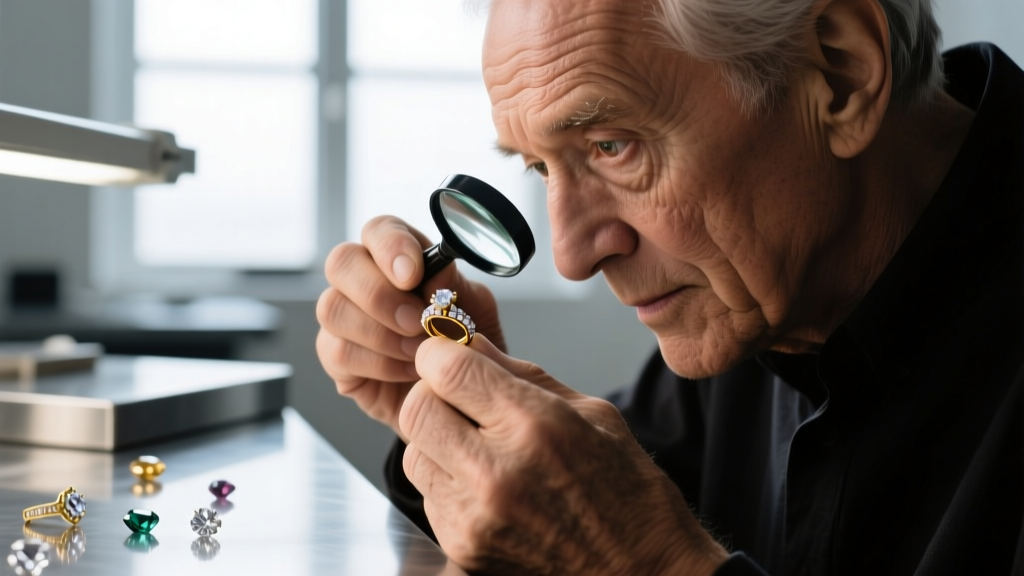
The foundation of any bespoke ring is its center stone. At Duncan & Co Fine Jewelry, the initial consultation focuses heavily on education rather than immediate sales. Understanding how a diamond interacts with light is critical. While many consumers fixate on color and clarity, the GIA emphasizes that cut quality is the primary driver of a diamond's brilliance and fire.
Decoding the Grading Reports
When reviewing stones, insist on seeing the complete grading dossier. Look for a GIA Triple Excellent or an AGS Ideal cut grade. However, a grading report does not tell the whole story. Ask your jeweler to pull a Sarine Light Performance report, which measures the actual light return, contrast, and scintillation of the specific stone. Furthermore, be wary of strong fluorescence in D-F color diamonds, as it can sometimes cause a milky or hazy appearance in direct sunlight, though it can actually improve the perceived color of lower-grade (I-M) stones.
Step 2: Architectural Design and CAD Tolerances
Once the stone is secured, the design phase begins. Modern bespoke jewelry relies on MatrixGold or Rhino 3D CAD (Computer-Aided Design) software to map out the ring's architecture. This stage is where you must advocate for the structural longevity of the piece.

The CAD Review Checklist
When reviewing your 3D render, do not just look at the aesthetic profile. Evaluate the engineering:
- Gallery Height: Ensure there is adequate clearance beneath the center stone's culet. If you plan to wear a flush wedding band, the gallery must be raised (often called a 'cathedral' or 'high-basket' setting) to prevent the band from grinding against the diamond's pavilion.
- Prong Thickness: Prongs should be no thinner than 1.2mm at the base to withstand decades of tensile stress.
- Shank Profile: A comfort-fit (domed interior) shank requires more metal but significantly reduces friction and moisture trapping against the skin.
Step 3: Metallurgical Selection for Longevity
The choice of metal dictates the ring's weight, patina, and maintenance requirements over a 50-year lifespan. Duncan & Co Fine Jewelry offers a curated selection of precious alloys, each with distinct metallurgical properties.
| Metal Alloy | Composition | Vickers Hardness (HV) | Best Application |
|---|---|---|---|
| Platinum 950 (Ru) | 95% Pt, 5% Ruthenium | 135 HV | Intricate pavé, heirloom durability, hypoallergenic needs |
| Platinum 950 (Ir) | 95% Pt, 5% Iridium | 80 HV | Hand-forged designs requiring high malleability |
| 18k Yellow Gold | 75% Au, 12.5% Ag, 12.5% Cu | 125 HV | Classic warmth, deep engraving, vintage aesthetics |
| 14k White Gold | 58.5% Au, Ni/Pd alloy | 140 HV | Budget-conscious buyers, requires periodic rhodium plating |
Expert Insight: If choosing Platinum, specify a Ruthenium alloy over Iridium. Ruthenium increases the Vickers hardness, making it far superior for holding small melee diamonds in pavé settings without the prongs wearing down prematurely.
Step 4: Lost-Wax Casting and Hand-Setting
After the CAD file is approved, a high-resolution 3D printer creates a castable wax resin model. This model is encased in investment plaster and subjected to a burnout cycle in a kiln, leaving a hollow cavity. Molten metal is then injected via a centrifugal or vacuum casting machine.
The Art of the Set
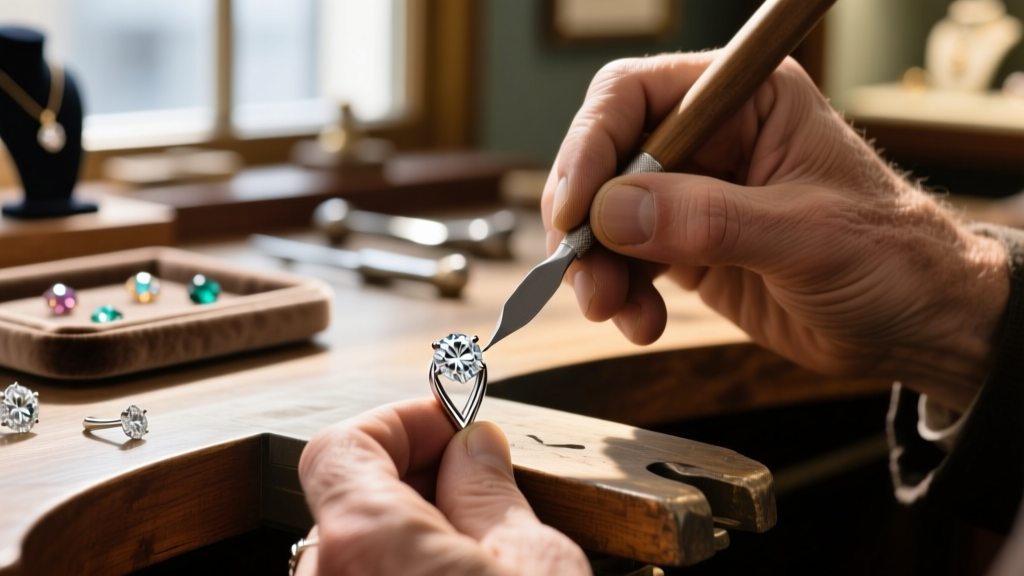
Casting is only the beginning. The true mark of Duncan & Co Fine Jewelry is the hand-setting phase. Mass-market jewelers often use 'cast-in-place' techniques or basic bead-setting. A master setter will use a pneumatic graver to carve precise seats (bearings) into the metal for each stone. For fancy shapes like pears or marquise, a V-prong is mandatory. A standard rounded prong will leave the sharp cleft of the diamond exposed, creating a high risk of chipping upon impact. The setter will push the metal over the girdle of the stone and burnish it to a mirror finish, ensuring no snagging on textiles.
Step 5: Final Polish, Rhodium Plating, and Appraisal
The final steps involve pre-polishing with tripoli compound to remove scratches, followed by a high-luster finish using rouge. If you selected white gold, the piece will undergo ultrasonic cleaning and electroplating in a rhodium bath to achieve a bright, chromium-white finish. Platinum, conversely, requires no plating; it is simply polished to a natural, bright white luster that will eventually develop a desirable satin patina over years of wear.
Securing Your Investment
Before leaving the boutique, ensure you receive a detailed insurance appraisal. According to Jewelers of America, a proper appraisal must list the exact carat weight, color, clarity, and cut grades of all stones, alongside the specific metal weight and purity. This document is your safeguard for securing a comprehensive jewelry rider on your homeowner's or renter's insurance policy, guaranteeing that your bespoke masterpiece is protected for generations to come.


