Uptown Exchange and Fine Jewelry: Technical Valuation Guide
Discover how the uptown exchange and fine jewelry markets evaluate pieces. A technical deep dive into hallmarks, XRF testing, and diamond grading.

The Mechanics of the Uptown Exchange and Fine Jewelry Valuation
When navigating the secondary market for luxury accessories, understanding the intersection of the uptown exchange and fine jewelry authentication is critical for both buyers and sellers. Unlike retail environments where brand storytelling and aesthetic appeal drive pricing, high-end jewelry exchanges operate on strict metallurgical and gemological metrics. The valuation process strips away marketing premiums to reveal the intrinsic material value, the precision of the lapidary work, and the verifiable provenance of the piece.
For a piece to be classified as true fine jewelry in an exchange setting, it must meet rigorous standards defined by organizations like the Federal Trade Commission (FTC) and the Gemological Institute of America (GIA). This means solid karat gold (minimum 10k in the US, though 14k and 18k dominate premium exchanges), platinum group metals, and natural or certified lab-grown gemstones. Demi-fine and costume pieces, regardless of their visual appeal, are typically rejected or valued solely for their scrap metal and salvageable melee diamonds.
Metallurgical Verification: Beyond the Hallmark
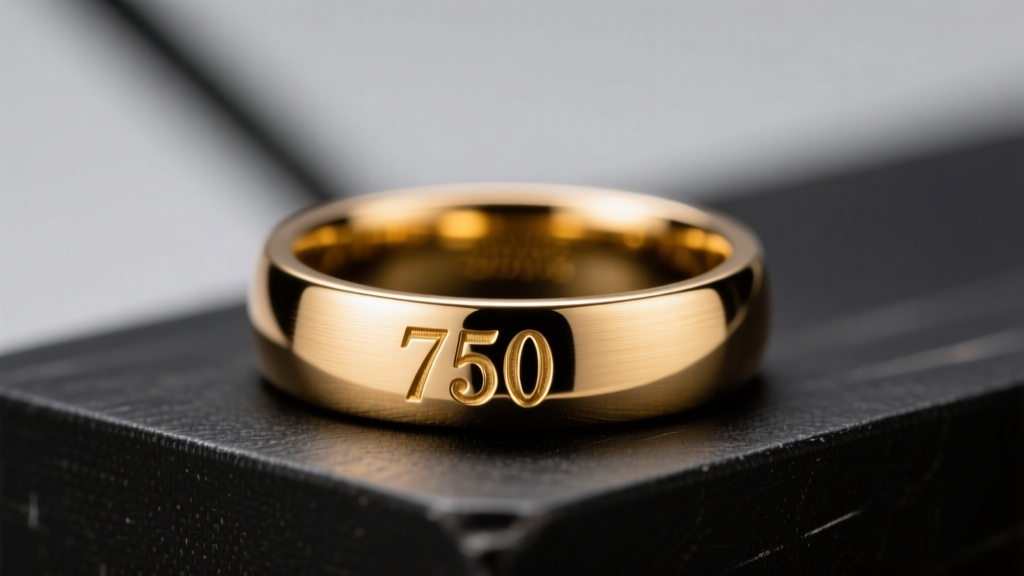
The first step in any professional exchange evaluation is metallurgical verification. While a stamped hallmark (such as '750' or '18K') provides an initial clue, high-end exchanges never rely on stamps alone due to the prevalence of counterfeit hallmarks on base metals. Instead, technicians employ a two-tier testing protocol.
X-Ray Fluorescence (XRF) Spectrometry
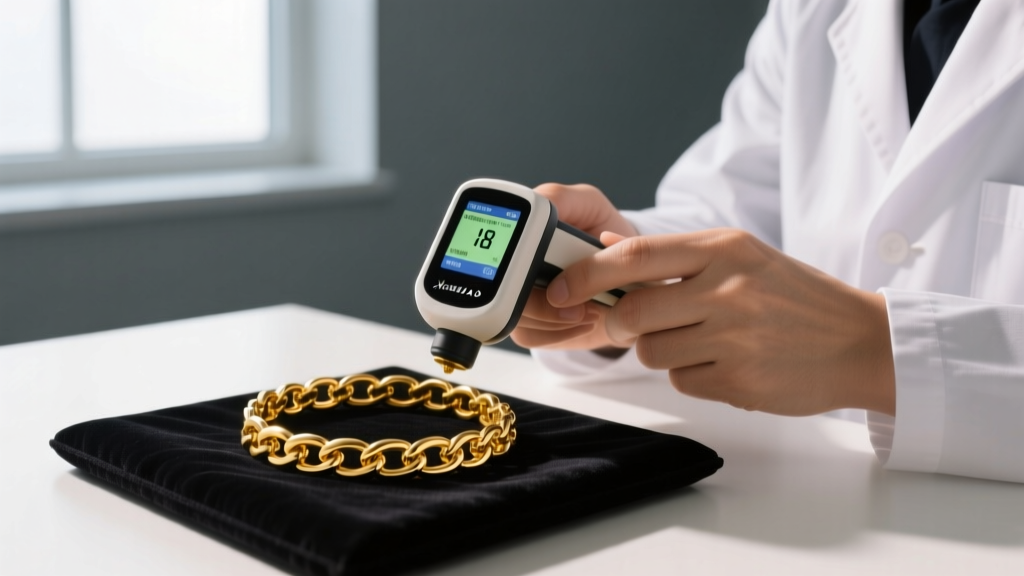
Premier exchanges utilize handheld XRF analyzers to determine the exact elemental composition of a piece without causing surface damage. XRF technology bombards the metal with X-rays, causing the atoms to emit secondary fluorescent X-rays that are unique to each element. This allows the appraiser to see not just the gold content, but the exact alloy breakdown (e.g., copper, silver, zinc, or palladium). However, XRF has a known limitation: it only reads the surface layer. A thick gold electroplate over a tungsten or lead core can fool an XRF scanner.
Specific Gravity and Acid Testing
To counter XRF limitations, exchanges use specific gravity testing (water displacement) to measure the density of the piece. Since 18k yellow gold has a specific gravity of roughly 15.6 g/cm³, a piece that deviates significantly from this metric indicates internal anomalies or heavy plating. Only after passing non-destructive tests will an appraiser use a discreet acid test on a deep file notch to verify the core metal.
Common Hallmarks and Their Exchange Premiums
| Hallmark | Metal & Purity | Exchange Valuation Metric | Liquidity Factor |
|---|---|---|---|
| PT950 | Platinum (95%) | Spot melt + 15% fabrication premium | High (Industrial demand) |
| 750 / 18K | Gold (75%) | Spot melt + 5-10% alloy premium | Very High (Global standard) |
| 585 / 14K | Gold (58.5%) | Strict spot melt value | High (US market standard) |
| 925 | Sterling Silver | Melt value (Often negligible in fine exchange) | Low (Unless signed/designer) |
Gemological Triage: How Exchanges Grade Diamonds
Diamond valuation in an exchange environment is brutally objective. Appraisers do not use the inflated 'replacement value' figures found on retail insurance appraisals. Instead, they calculate the wholesale Rapaport price based on the 4Cs, heavily discounting for fluorescence, poor symmetry, and visible inclusions.
Synthetic and Simulant Detection
The proliferation of moissanite and lab-grown diamonds (CVD and HPHT) has forced exchanges to upgrade their gemological triage. Standard thermal testers are no longer sufficient, as moissanite conducts heat similarly to diamond. Exchanges now use dual thermal/electrical conductivity testers (like the Presidium Duo Tester) to separate moissanite, which conducts electricity, from natural diamonds. For lab-grown diamonds, which share the exact physical properties of mined diamonds, exchanges require advanced FTIR (Fourier Transform Infrared) spectroscopy. Stones over 1.00 carat are frequently sent to a GIA laboratory for definitive origin reports before a final trade-in offer is made.
The 'Signed' vs. 'Unsigned' Multiplier
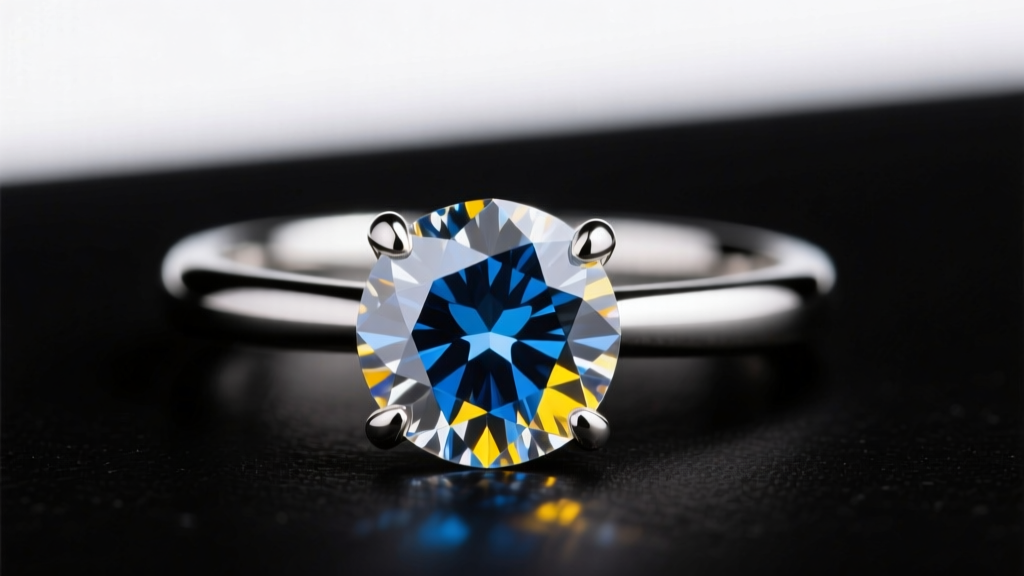
A critical technical distinction in the uptown exchange and fine jewelry market is the 'signed' multiplier. An unsigned 18k gold solitaire ring with a 1-carat VS1 diamond will be valued strictly at its intrinsic melt and wholesale gem value. However, if that exact same ring bears a verified Cartier, Tiffany & Co., or Van Cleef & Arpels hallmark, and is accompanied by its original box and papers, the exchange applies a brand premium. Signed pieces from heritage houses can command 60% to 85% of their original retail price, whereas unsigned pieces rarely exceed 30% to 40% of retail.
Demi-Fine vs. Fine: Where Trade-Ins Fail
Consumers frequently attempt to trade in demi-fine jewelry at premium exchanges, only to face rejection. Understanding the technical failure modes of demi-fine materials explains why this happens:
- Gold Vermeil Degradation: Vermeil consists of a sterling silver base plated with a minimum of 2.5 microns of gold. Over time, the gold layer wears away. Exchanges cannot melt vermeil efficiently because the silver base contaminates the gold yield, making the refining cost higher than the recovered gold value.
- Gold-Filled Limitations: Gold-filled items (marked 1/20 14K GF) contain only 5% gold by weight. The mechanical bonding process makes it impossible to separate the gold from the brass core without hazardous chemical refining, rendering them worthless to a standard jewelry exchange.
- Cubic Zirconia and Spinel: While visually similar to diamonds to the untrained eye, CZ and white spinel have entirely different refractive indices and specific gravities. They hold zero secondary market value and are typically discarded during the refining process.
Actionable Framework for Pre-Exchange Preparation
If you are preparing to bring items to a high-end exchange, follow this technical checklist to maximize your valuation and ensure a smooth authentication process:
- Gather Provenance: Locate all original receipts, GIA or AGS grading reports, and brand authenticity cards. A missing GIA report for a 2-carat diamond can reduce the exchange offer by 15% due to the cost and time required to re-certify the stone.
- Clean Safely: Use a mild ultrasonic cleaner or warm soapy water to remove oils and lotions. Do not use harsh chemicals on porous stones like pearls, opals, or emeralds, as this can cause micro-fractures and drastically lower the gem value.
- Document Hallmarks: Use a macro lens on your smartphone to photograph all hallmarks and maker's marks before handing the piece over. This creates a timestamped record of the item's condition and markings.
- Understand Spot Pricing: Check the daily London Bullion Market Association (LBMA) spot prices for gold and platinum. Exchanges typically offer 70% to 90% of the spot melt value for scrap gold, keeping the margin to cover their overhead and refining costs.
By approaching the secondary market with a technical mindset, you bridge the gap between emotional attachment and objective valuation, ensuring you receive fair market compensation for your luxury assets.


