Alloy Secrets Every Women Fine Jewelry Designer Masters
Discover the metallurgy and material science secrets that every top women fine jewelry designer uses to ensure lifelong durability and luxury.

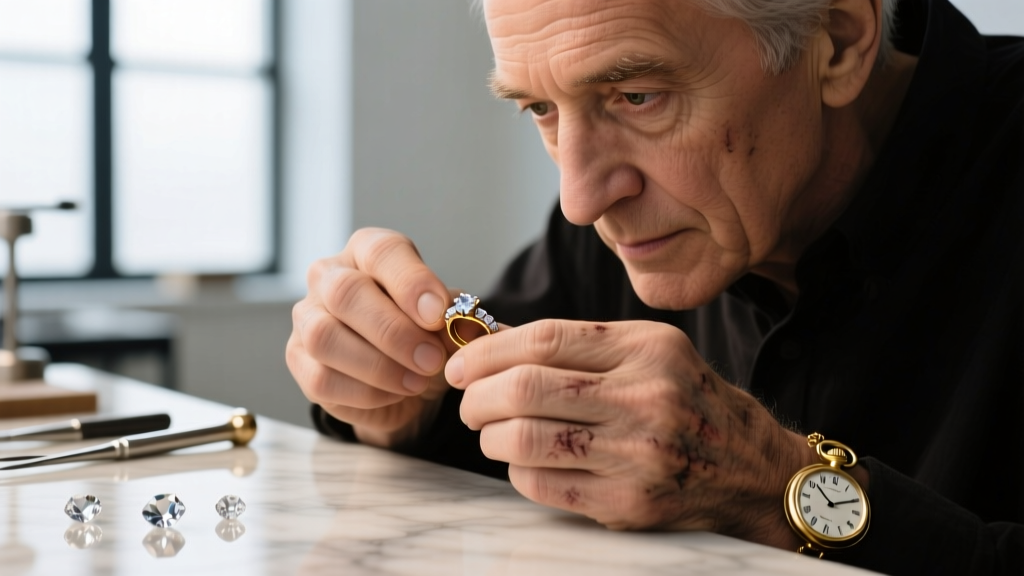
The Metallurgy of Luxury: Beyond the Karat Stamp
When consumers browse high-end collections, they often fixate on carat weight and brand prestige. However, the true hallmark of an elite women fine jewelry designer lies in their mastery of material science and metallurgy. In 2026, as lab-grown diamonds and advanced demi-fine alloys flood the market, the distinction between mass-produced fashion jewelry and heirloom-quality fine jewelry is defined by exact alloy compositions, work-hardening techniques, and structural integrity. Understanding these material properties is essential for anyone looking to invest in pieces that will survive generations of daily wear.
18k Gold Alloys: The Copper and Silver Balancing Act
Pure 24k gold is too soft for structural jewelry, measuring a mere 25 on the Vickers Hardness (HV) scale. To achieve the durability required for prong settings and clasps, a top-tier designer relies on 18k gold, which contains exactly 75% pure gold. The remaining 25% is a carefully calibrated alloy mix. For 18k yellow gold, the standard formulation is 12.5% copper and 12.5% silver. This specific ratio not only provides a warm, rich hue but also elevates the hardness to approximately 125 HV. If a designer shifts this ratio—adding more copper for a rose gold finish—the metal becomes harder but significantly more prone to oxidation and skin reactivity due to the copper content.
Platinum 950: Ruthenium vs. Iridium Alloying
Platinum is the undisputed king of fine jewelry metals, but not all Platinum 950 (95% pure platinum) is created equal. The 5% alloying element drastically changes the metal's behavior on the jeweler's bench and on the wearer's hand.
- Pt950/Ruthenium: This is the preferred alloy for modern designer casting. Ruthenium increases the Vickers hardness to roughly 135 HV and improves the fluidity of the molten metal, allowing for intricate, micro-pavé settings. However, it requires precise temperature control during cooling to prevent internal crystalline cracking.
- Pt950/Iridium: Softer (around 90 HV) and more malleable, iridium-alloyed platinum is favored by bench jewelers for hand-forging and carving. It develops a beautiful, soft patina over time but is less ideal for securing microscopic melee diamonds in high-impact rings.
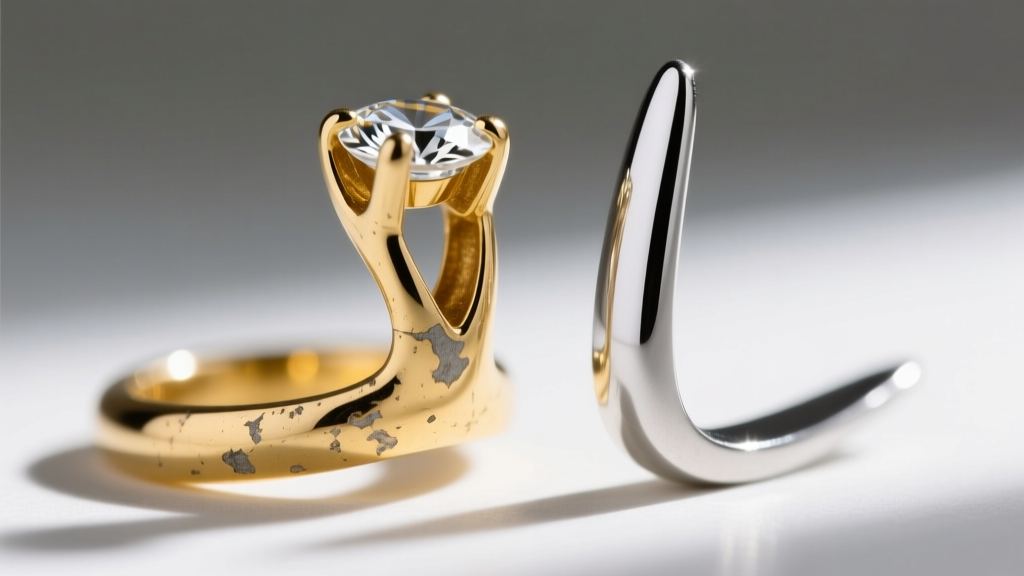
Prong Failure Modes: White Gold vs. Platinum
The most critical point of failure in any ring is the prong. How a metal responds to abrasion and impact dictates its longevity. This is where the material divergence between white gold and platinum becomes starkly apparent.
18k white gold is inherently yellowish-gray. To achieve a bright white finish, it is alloyed with nickel or palladium and then electroplated with rhodium. Standard commercial jewelry features a rhodium layer of just 0.1 to 0.2 microns, which wears off in months. An elite designer will either use a high-palladium white gold alloy that requires no plating, or apply a heavy 0.5 to 1.0-micron rhodium flash. More importantly, when white gold is scratched or abraded against a hard surface, microscopic particles of the metal are literally lost. Over a decade, a white gold prong will thin and eventually snap.
Platinum, conversely, exhibits a property known as galling. When scratched, the metal is displaced rather than lost. It develops a soft, frosted patina, but the structural mass of the prong remains entirely intact. According to the Gemological Institute of America (GIA), platinum's density and displacement properties make it the safest metal for securing high-value center stones over a 50-year lifespan.
Metal Hardness and Prong Wear Rates
| Metal Alloy | Vickers Hardness (HV) | Density (g/cm³) | Prong Wear Behavior | Maintenance Cycle |
|---|---|---|---|---|
| 18k Yellow Gold | 125 HV | 15.6 | Metal loss via abrasion | Polishing every 2-3 years |
| 18k Palladium White Gold | 130 HV | 15.9 | Metal loss, no plating needed | Rhodium dip every 5+ years |
| Pt950 / Ruthenium | 135 HV | 21.1 | Displacement (Patina) | Polishing optional |
| Pt950 / Iridium | 90 HV | 21.5 | Displacement (Deep scratches) | Burnishing every 3-5 years |
Gemstone Toughness vs. Hardness in Designer Settings
A common misconception among consumers is equating the Mohs scale of mineral hardness with overall durability. A master women fine jewelry designer knows that hardness (resistance to scratching) is entirely different from toughness (resistance to chipping and breaking).
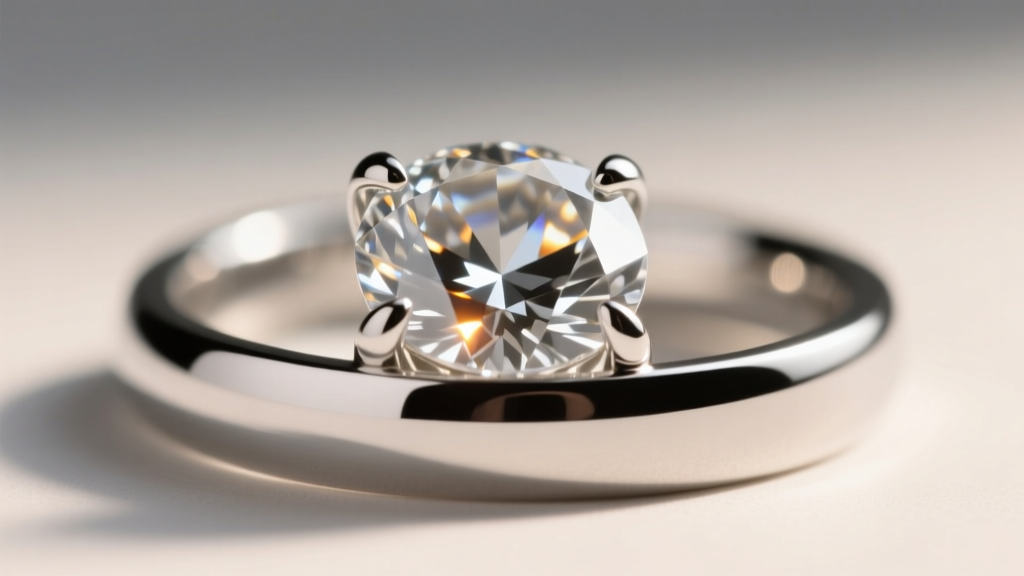
Diamond sits at a 10 on the Mohs scale, making it virtually scratch-proof. However, diamond possesses perfect octahedral cleavage planes. A sharp, direct blow to the girdle or a pointed culet can cause the stone to split cleanly along these planes. This material vulnerability dictates setting architecture. For active clients, a designer will avoid delicate four-prong cathedral settings for elongated shapes like pears or marquises, opting instead for V-tip prongs or specialized bezels that shield the cleavage-prone points.
The Jade and Moonstone Paradigm
Conversely, consider jadeite. It measures a mere 6.5 to 7 on the Mohs scale, meaning it can be easily scratched by quartz dust in the air. Yet, jade possesses exceptional structural toughness due to its interlocking fibrous crystal habit. It can survive drops and impacts that would shatter a diamond or an emerald. Understanding these material paradoxes allows designers to pair the correct metal housing with the correct gemstone geometry, ensuring the piece survives the rigors of modern life.
Sourcing, Hallmarking, and the FTC Standard
Material integrity extends beyond the physical properties of the alloy; it encompasses legal and ethical transparency. In the United States, the Federal Trade Commission (FTC) Jewelry Guides strictly regulate how metals and gemstones must be disclosed. A reputable designer does not merely stamp '18k' on a piece; they ensure the alloy falls within the legal tolerance of 750 parts per thousand, and they stamp their registered trademark alongside the purity mark to guarantee accountability.
"True luxury in fine jewelry is invisible to the naked eye. It is found in the microscopic grain structure of the gold, the precise micron thickness of the rhodium, and the architectural geometry of a prong designed to absorb kinetic shock."
Furthermore, the World Gold Council mandates rigorous chain-of-custody protocols for responsibly sourced gold. Elite designers in 2026 are increasingly utilizing blockchain-tracked bullion and 100% recycled precious metals, ensuring that the material's origin is as unimpeachable as its physical properties.
Conclusion: Investing in Material Mastery
When you purchase from a distinguished women fine jewelry designer, you are not just paying for a logo or a aesthetic silhouette. You are investing in decades of metallurgical expertise. You are paying for the Ruthenium in the platinum, the palladium in the white gold, and the precise V-tip prongs protecting your diamond's cleavage planes. By understanding the material science behind your jewelry, you transition from a passive consumer to an informed collector, equipped to curate a wardrobe of pieces engineered to outlast time itself.


