Understanding Marks on Costume Jewelry: A Starter Guide
Learn to decode marks on costume jewelry. Discover how to read maker's stamps, copyright symbols, and patent dates to identify vintage pieces.

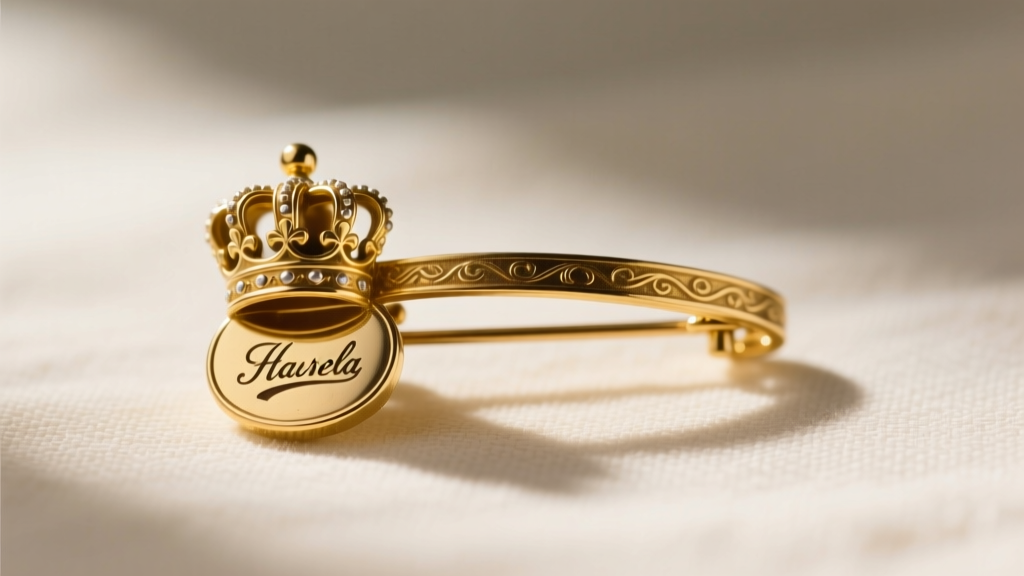
When you first start exploring the world of vintage and designer accessories, the sheer volume of information can be overwhelming. Unlike fine jewelry, where stamps primarily indicate the precious metal content (like 14K or 925), the marks on costume jewelry tell a completely different story. They are historical breadcrumbs that reveal the manufacturer, the era of production, and the legal protections the brand sought for their designs.
For beginners, learning to read these tiny, often faded stamps is the single most valuable skill you can develop. It is the difference between buying a generic, mass-produced trinket and securing a highly collectible piece of mid-century design history. In this guide, we will break down exactly what these marks mean, how to date them, and how to avoid common pitfalls.
The Core Difference: Purity Stamps vs. Maker's Marks
To understand costume jewelry marks, you must first unlearn the rules of fine jewelry. In the fine jewelry sector, hallmarks are strictly regulated by governments to guarantee metal purity. A "750" stamp means 18-karat gold; a "925" means sterling silver.
Costume jewelry, by definition, is crafted from base metals (brass, pewter, white metal, or pot metal) and plated with a thin layer of gold or silver. Therefore, you will almost never see a traditional purity hallmark on a genuine vintage costume piece. Instead, the marks on costume jewelry focus on provenance and intellectual property. According to the experts at Lang Antiques University, identifying the maker's mark is the primary method for authenticating and dating fashion jewelry, as the brand name carries the value, not the raw materials.
The Big Three: Types of Marks You Will Encounter
When examining a piece under a loupe, you will generally encounter three distinct categories of stamps. Each serves a specific legal or branding purpose.
1. Maker's Marks and Signatures
The maker's mark is the brand's signature. However, these marks evolved over time, which helps pinpoint the exact decade a piece was manufactured. For example, the legendary brand Trifari used a simple block "K" in the 1920s. By the late 1930s, they transitioned to the famous "Crown Trifari" mark (a crown over the word Trifari) to signify their premium line. In the 1950s, they shifted to a script font, often accompanied by a copyright symbol. Recognizing these subtle font and logo shifts is crucial for accurate dating.
2. Patent and Copyright Marks
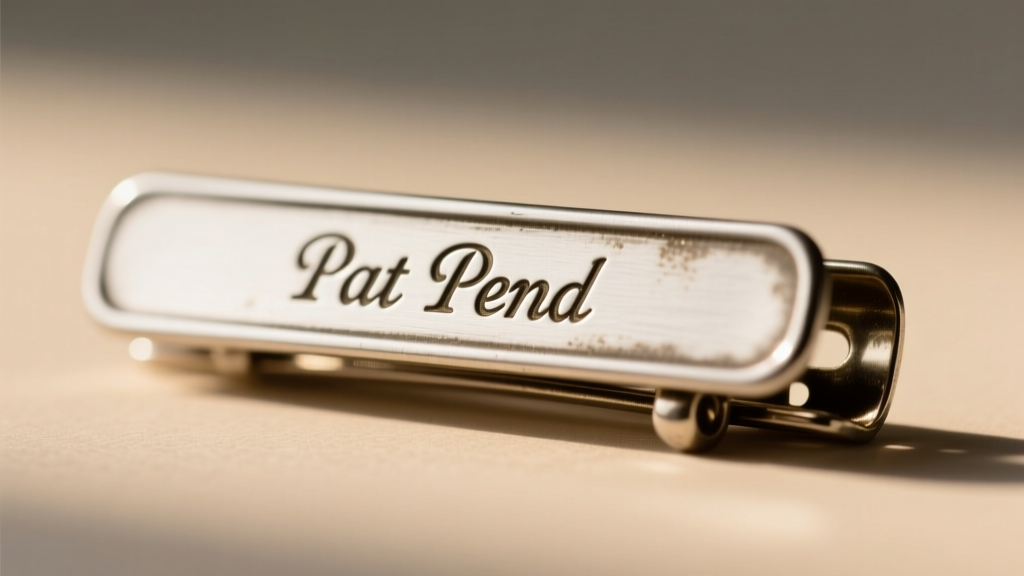
This is where the history of jewelry law becomes fascinating. Before the mid-1950s, jewelry designs could not be copyrighted in the United States; they could only be protected by design patents. If you see "Pat. Pend." (Patent Pending) or "Des. Pat. No." (Design Patent Number) stamped on a piece, you are likely holding an item from the 1930s or 1940s.
The watershed moment occurred following the 1955 court case Trifari, Krussman & Fishel, Inc. v. Charel Co., which legally established that jewelry designs could be classified as "works of art" and thus protected under copyright law. Almost immediately after this ruling, brands began stamping the © (copyright) symbol alongside their maker's marks. If you see a © symbol, the piece was almost certainly produced in 1955 or later.
3. Material and Origin Marks
While you won't find "14K" on base metal, you will find descriptive material marks. Stamps like "Gold Tone," "Silver Tone," or "Base Metal" were used to inform consumers that the piece was plated, not solid. Additionally, country of origin marks like "Japan," "Germany," or "Made in USA" can help narrow down the era. For instance, pieces marked "Occupied Japan" date strictly between 1947 and 1952, providing a highly specific window of manufacture.
Quick Reference: Famous Costume Jewelry Marks & Eras
To help you start your identification journey, here is a breakdown of some of the most highly sought-after vintage brands and their signature mark evolutions. Resources like Collectors Weekly emphasize that knowing these variations is key to spotting valuable pieces in thrift stores or estate sales.
| Brand | Mark Variation | Approximate Era | Key Identifier |
|---|---|---|---|
| Trifari | Block 'K' | 1920s | Simple, stamped K, often on the pin stem. |
| Trifari | Crown Trifari | 1937 - 1950s | A distinct crown hovering over the word Trifari. |
| Coro | Script Coro | 1930s - 1940s | Flowing script, sometimes with a Pegasus symbol for premium lines. |
| Miriam Haskell | Oval Plaque | 1950s - Present | Early pieces were unmarked; later pieces feature an oval soldered tag. |
| Eisenberg | Block 'E' | 1940s | A single capital E, used before they switched to the full name stamp. |
Red Flags: Misleading Marks and Modern Fakes
As a beginner, you must be wary of marks that mimic fine jewelry or attempt to deceive the buyer. One of the most common points of confusion is the "HGE" or "HGP" stamp. HGE stands for Heavy Gold Electroplate. While it sounds impressive, it is a hallmark of costume jewelry, not solid gold. The base metal is usually brass, coated with a layer of gold that is thicker than standard flash plating but still holds virtually no scrap melt value.
Another red flag is finding a "925" stamp on a piece that features glue-set rhinestones, lightweight casting, and magnetic properties. In the modern era, some overseas manufacturers stamp "925" on white metal or silver-plated brass to artificially inflate the perceived value of a piece. Always carry a small rare-earth magnet in your bag; if a piece marked "925" or "14K" sticks strongly to the magnet, it is a base metal fake.

Essential Tools for Inspecting Jewelry Marks
You cannot rely on the naked eye to read the marks on costume jewelry. Decades of wear, polishing, and skin oils can obscure stamps to the point of invisibility. To build a proper inspection kit, you need:
- A 20x Jeweler's Loupe: A 10x loupe is standard for diamonds, but costume jewelry stamps are often shallower and require 20x magnification to read clearly.
- Directional LED Lighting: Raking light (light shining from a sharp side angle) creates micro-shadows in shallow stamps, making faded letters pop out.
- A Digital Microscope: For advanced collectors, a cheap USB digital microscope connects to your laptop, allowing you to photograph marks and compare them against archival databases.
- Cotton Swabs and Mild Soap: Sometimes, a mark is simply clogged with decades of hand lotion and dust. Gently cleaning the clasp or backplate can reveal a hidden signature.
Final Thoughts on Building Your Eye
Decoding the marks on costume jewelry is a blend of historical research and physical investigation. By understanding the transition from design patents in the 1930s to the copyright symbols of the late 1950s, you can date pieces with remarkable accuracy without needing a gemology degree. The next time you pick up a vintage brooch or a heavy gold-tone bracelet, flip it over, pull out your loupe, and let the maker's mark tell you its story.