Buying Guide: Costa's Fine Jewelry & Coins Investment Pieces
Discover what to look for when shopping at Costa's Fine Jewelry & Coins. Learn to evaluate coin jewelry, bullion purity, and numismatic grading.

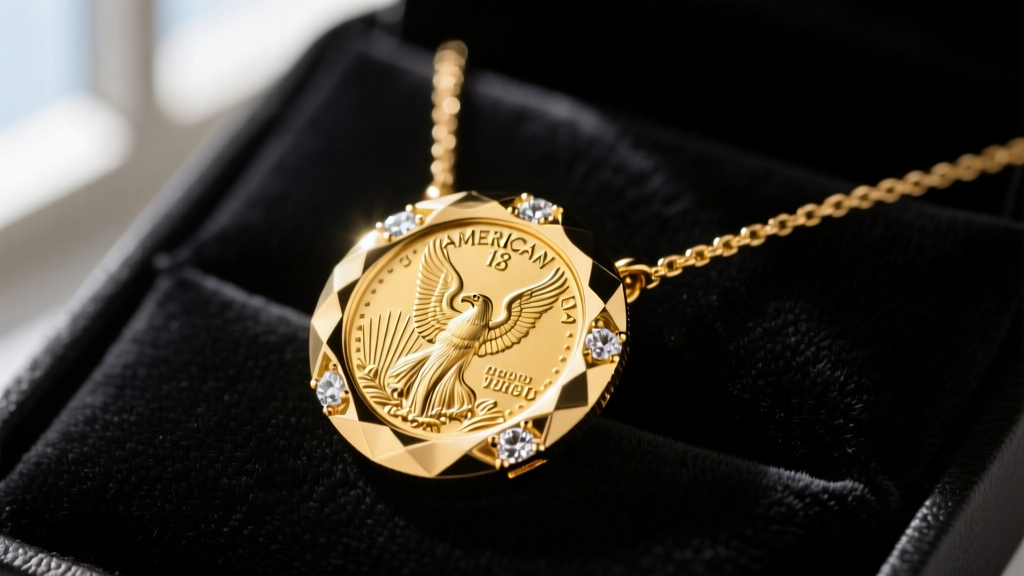
The Intersection of Numismatics and Fine Jewelry
When you step into a hybrid retailer like Costa's Fine Jewelry & Coins, you are navigating two distinct but overlapping worlds: gemological craftsmanship and numismatic investment. Unlike standard fashion jewelry, pieces that incorporate historical or bullion coins carry intrinsic melt value, historical premiums, and unique structural requirements. Whether you are looking for a vintage Morgan dollar pendant or a modern 1-ounce gold bullion necklace, understanding the dual nature of these pieces is critical to making a sound financial and aesthetic purchase.
Shopping for coin-infused fine jewelry requires a buyer to evaluate both the setting (the karat gold, chain strength, and craftsmanship) and the centerpiece (the coin's grade, mintage, and precious metal content). This guide breaks down exactly what to look for, what to avoid, and how to calculate the true value of your investment.
Evaluating Coin Jewelry: Bezel vs. Soldered Settings
The most critical mistake amateur buyers make when purchasing coin jewelry is ignoring how the coin is mounted. The setting method directly dictates whether the coin retains its numismatic (collector) value or is reduced strictly to its melt value.
The Dangers of Soldered Coin Jewelry
In cheaper or vintage costume-tier pieces, coins are often soldered directly to a bail or a metal backing. Soldering requires extreme heat, which permanently alters the coin's surface, destroys its original mint luster, and ruins its numismatic premium. If you are buying a rare or graded coin, never accept a soldered setting. Solder is only acceptable for generic, common-date bullion rounds where the sole value is the raw silver or gold content.
The Standard: Custom Bezel Settings
High-end hybrid jewelers utilize custom bezel settings. A proper bezel wraps around the coin's rim, securing it via pressure or tiny prongs without applying heat or adhesive to the coin itself. When inspecting a piece at Costa's Fine Jewelry & Coins, look for:
- Friction-Fit Bezels: The coin should sit flush without rattling, held by the precise tension of the metal rim.
- Reeded Edge Visibility: A quality bezel will often leave the reeded (ridged) edge of the coin partially visible, which is a key anti-counterfeiting feature for bullion.
- Protective Lips: The bezel should have a slight inner lip that sits just above the coin's face to protect the high-relief areas from scratching against tables or clothing.
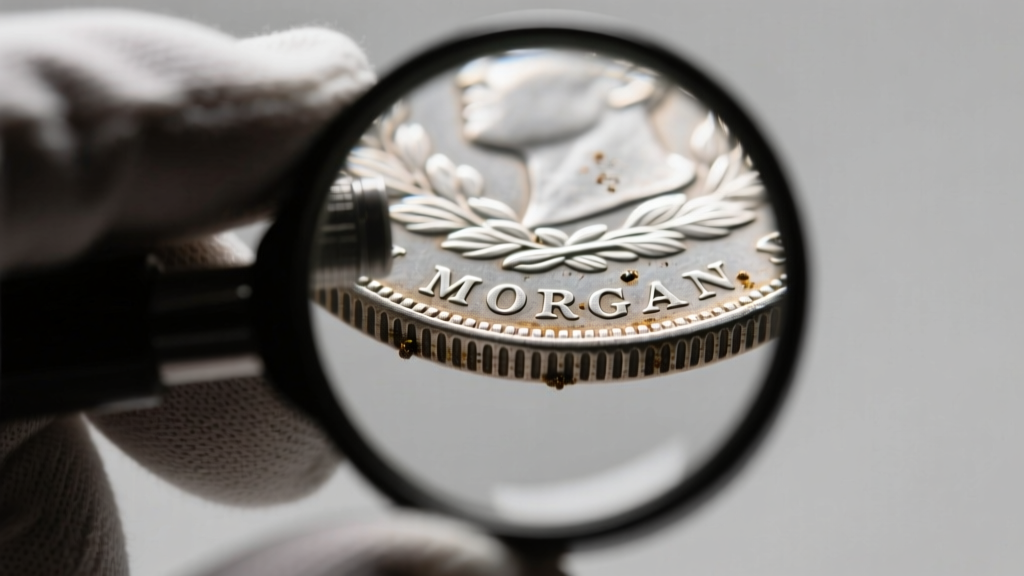
Understanding Precious Metal Purity and Durability
When buying gold coin jewelry, you must reconcile the purity of the coin with the purity of the chain and bezel. Interestingly, the purest coins are not always the best for daily-wear jewelry. According to the American Numismatic Association, understanding alloy compositions is vital for longevity.
| Coin / Metal Type | Purity (Karat / %) | Durability for Jewelry | Best Use Case |
|---|---|---|---|
| Canadian Maple Leaf | 24k (99.99%) | Poor (Scratches/Dents easily) | Safe-keeping, occasional wear |
| American Gold Eagle | 22k (91.67%) | Excellent (Copper/Silver alloy) | Daily wear pendants & rings |
| South African Krugerrand | 22k (91.67%) | Excellent (Copper alloy) | Heavy, durable statement pieces |
| Standard US Jewelry Chain | 14k (58.3%) | Superior (High tensile strength) | Supporting heavy 1oz+ pendants |
If you plan to wear a 1-ounce gold coin pendant daily, an American Gold Eagle (22k) is vastly superior to a 24k Maple Leaf. The 24k gold is so soft that the friction from a gold chain can actually wear away the coin's design over a decade of use. Furthermore, ensure your chain is at least 14k gold with a robust link style (like a 2.5mm Wheat or Rope chain) to support the 33.9-gram weight of a standard 1oz coin without stretching.
Numismatic Grading: Slabbed vs. Raw Coins
When a jeweler offers historical coins (like Saint-Gaudens Double Eagles or Walking Liberty Half Dollars) set in fine jewelry, you must verify the coin's authenticity and grade. The gold standard for third-party grading includes the Professional Coin Grading Service (PCGS) and the Numismatic Guaranty Company (NGC).
The 'Slabbing' Dilemma in Jewelry
Graded coins are encased in tamper-evident plastic 'slabs.' While excellent for investment storage, you cannot easily set a slabbed coin into a traditional fine jewelry bezel. Therefore, jewelers often use 'raw' (unslabbed) coins for pendants. When buying raw historical coins set in jewelry, you must rely on the dealer's reputation and request a written guarantee of the coin's grade and authenticity. Look for coins that exhibit original 'cartwheel' luster and lack harsh cleaning marks, as cleaned coins lose up to 50% of their collector value.
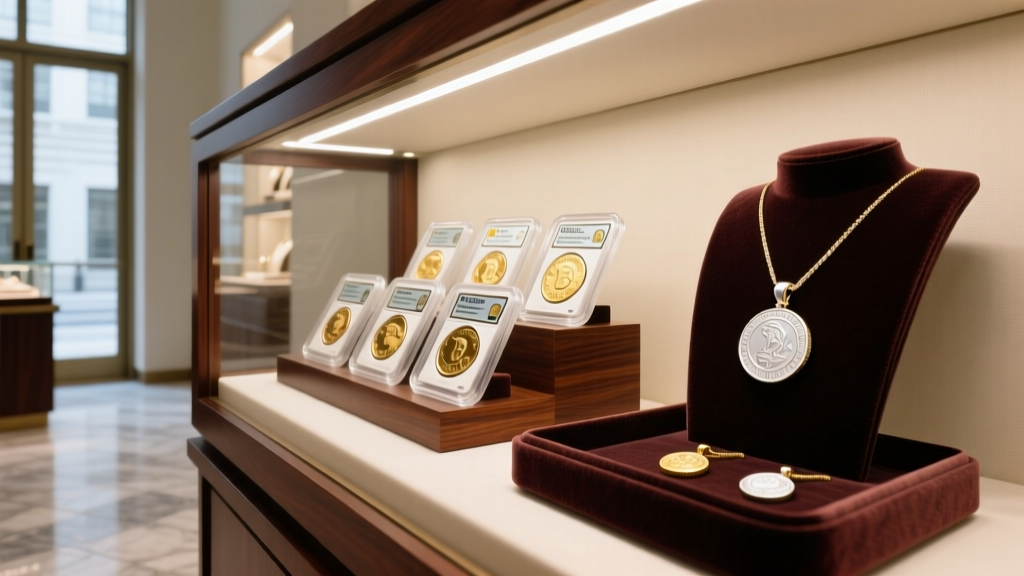
Decoding the Pricing Formula: Spot vs. Premium
To ensure you are getting a fair deal at a hybrid jeweler, you must deconstruct the retail price. Unlike standard fashion jewelry, which is marked up 300% to 1000% over manufacturing costs, coin jewelry is anchored to the live commodities market. Use this formula to evaluate the price tag:
- Base Melt Value: (Coin Weight in Troy Oz) × (Purity) × (Current Spot Price via Kitco or similar).
- Numismatic Premium: Added only if the coin is a rare date, low mintage, or high grade (e.g., MS65 or higher).
- Jewelry Fabrication Markup: The cost of the gold bezel, chain, and labor. A fair retail markup for the jewelry components and labor is typically 20% to 40% above the melt value of the jewelry materials.
If a dealer is charging a massive 'numismatic premium' for a common-date 1oz silver round set in a bezel, walk away. You should only pay numismatic premiums for genuinely rare historical pieces.
Final Checklist Before Purchasing
Before finalizing your transaction at Costa's Fine Jewelry & Coins or any similar establishment, run through this quick verification checklist:
- Check the Hallmarks: Ensure the bezel and chain are stamped with a valid karat mark (e.g., 14K, 18K, 750) and a maker's mark.
- Verify the Coin Weight: Ask the jeweler to weigh the entire piece on a calibrated gram scale, then subtract the known weight of the coin to verify the gold weight of the setting.
- Inspect the Bail: The bail (the loop connecting the pendant to the chain) should be soldered securely and be large enough to accommodate thicker chains without pinching.
- Request Documentation: For any coin claimed to be rare or historical, require an itemized receipt stating the coin's year, mint mark, and guaranteed grade.
By approaching your purchase with a dual understanding of metallurgy and numismatics, you transform a simple jewelry buy into a wearable, historically significant asset that retains intrinsic value far beyond the fluctuating trends of the fashion industry.


