How to Commission Custom Pieces at Lisa's Fine Jewelry
Master the bespoke design process at Lisa's Fine Jewelry. Learn step-by-step how to select stones, choose metal alloys, and review CAD prototypes.

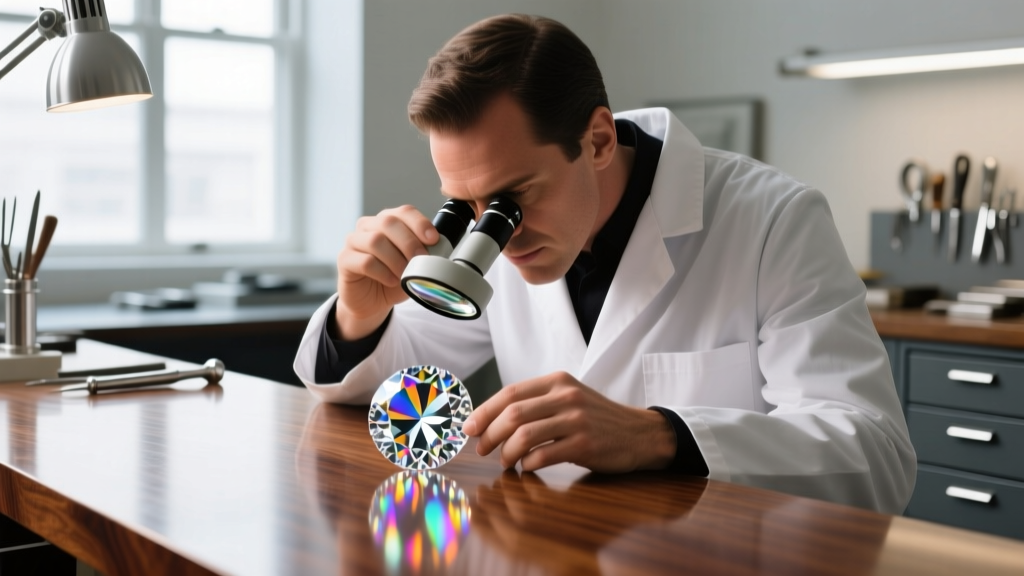
The Renaissance of Independent Bespoke Jewelry
In the landscape of 2026, discerning collectors are moving away from mass-produced luxury and gravitating toward hyper-personalized, independently crafted pieces. Commissioning a custom piece is no longer just about getting a unique design; it is an exercise in material science, gemology, and structural engineering. Navigating this process at a premier independent atelier like Lisa's Fine Jewelry requires a blend of aesthetic vision and technical literacy. This step-by-step guide will walk you through the exact methodology master jewelers use to transform a conceptual sketch into a structurally sound, heirloom-quality fine jewelry piece.
Step 1: The Lifestyle and Durability Consultation
The first step at Lisa's Fine Jewelry is not picking out diamonds; it is a rigorous lifestyle assessment. A beautiful ring that cannot withstand your daily routine is a failed design. The master jeweler will evaluate your profession, hobbies, and wearing habits to determine the appropriate Mohs hardness scale requirements for your center stone.
- Active Lifestyles (Gym, Gardening, Manual Work): Requires stones with a Mohs hardness of 9 or above (Diamond, Ruby, Sapphire) and bezel or semi-bezel settings to protect the girdle.
- Office/Indoor Lifestyles: Can accommodate slightly softer stones like Tsavorite Garnet (7.5) or Spinel (8), provided the setting includes protective V-prongs at the corners.
- Stones to Avoid for Everyday Rings: Opal (5.5-6.5), Moonstone (6-6.5), and Emerald (7.5-8, but highly included and brittle). These are strictly reserved for earrings, pendants, or occasional-wear cocktail rings.
"A bespoke jeweler's primary job is not just to make jewelry look beautiful on day one, but to ensure it survives a decade of daily wear without catastrophic structural failure."
Step 2: Sourcing and Grading the Center Stone
Once the gemstone species is selected, the sourcing phase begins. In 2026, the diamond market is distinctly bifurcated between natural earth-mined stones and advanced lab-grown alternatives (CVD and HPHT). Lisa's Fine Jewelry provides full transparency on the origin, thermal conductivity, and precise grading of every stone.
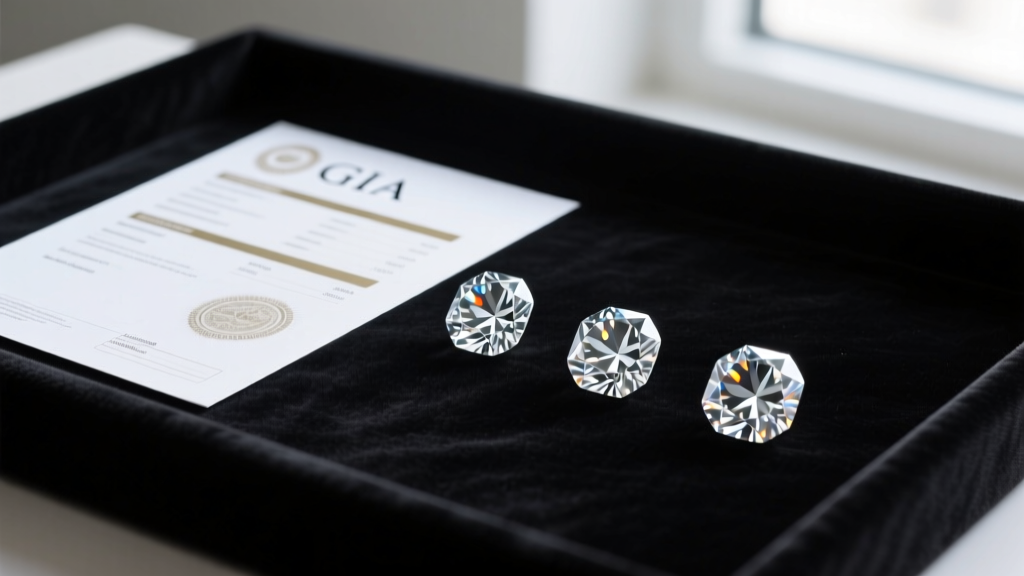
Navigating the 2026 Diamond Market
When reviewing grading reports from authoritative bodies like the Gemological Institute of America (GIA), you must look beyond the basic 4Cs. For natural diamonds, insist on identifying the origin (e.g., CanadaMark or Botswana) to ensure ethical provenance. For lab-grown diamonds, ask the jeweler to identify the growth method. Chemical Vapor Deposition (CVD) diamonds often undergo post-growth HPHT treatment to improve color, which should be explicitly noted on the dossier.
Pricing Benchmarks (2026): A 1.50-carat, G-color, VS1-clarity natural diamond typically ranges from $9,500 to $13,000. The exact same specification in a premium CVD lab-grown diamond currently trades between $1,800 and $2,600. Understanding this spread is critical for allocating your bespoke budget toward the metalwork and accent stones.
Step 3: Choosing the Right Metal Alloy
The structural integrity of your custom piece relies heavily on the metal alloy selected. Pure 24k gold is far too soft for securing gemstones, so it must be alloyed with other metals to increase its Vickers hardness (HV). Lisa's Fine Jewelry offers a curated selection of precision-mixed alloys tailored to specific design requirements.
| Metal Alloy | Purity | Vickers Hardness (HV) | Best Application |
|---|---|---|---|
| Platinum 950 (Ru) | 95% Pt, 5% Ruthenium | 135 HV | Heavy pavé, intricate filigree, secure prongs |
| 18k Yellow Gold | 75% Au, 12.5% Cu, 12.5% Ag | 120 HV | Classic solitaires, rich color, heirloom pieces |
| 14k White Gold | 58.3% Au, Palladium/Nickel | 140 HV | Durable everyday bands, requires rhodium plating |
| 18k Rose Gold | 75% Au, 22.25% Cu, 2.75% Ag | 125 HV | Vintage aesthetics, highly durable due to copper |
For highly detailed micro-pavé settings where dozens of tiny diamonds are held by minuscule beads of metal, Platinum 950 is the undisputed champion. Its density and malleability allow jewelers to push the metal over the stones without the risk of the prongs snapping, a common failure mode in harder, more brittle white gold alloys.
Step 4: CAD Design and Wax Prototyping
Before any metal is melted, your design is translated into a 3D Computer-Aided Design (CAD) model. This is the phase where structural engineering meets art. When reviewing your CAD renderings at Lisa's Fine Jewelry, do not just look at the overall silhouette; scrutinize the structural tolerances.
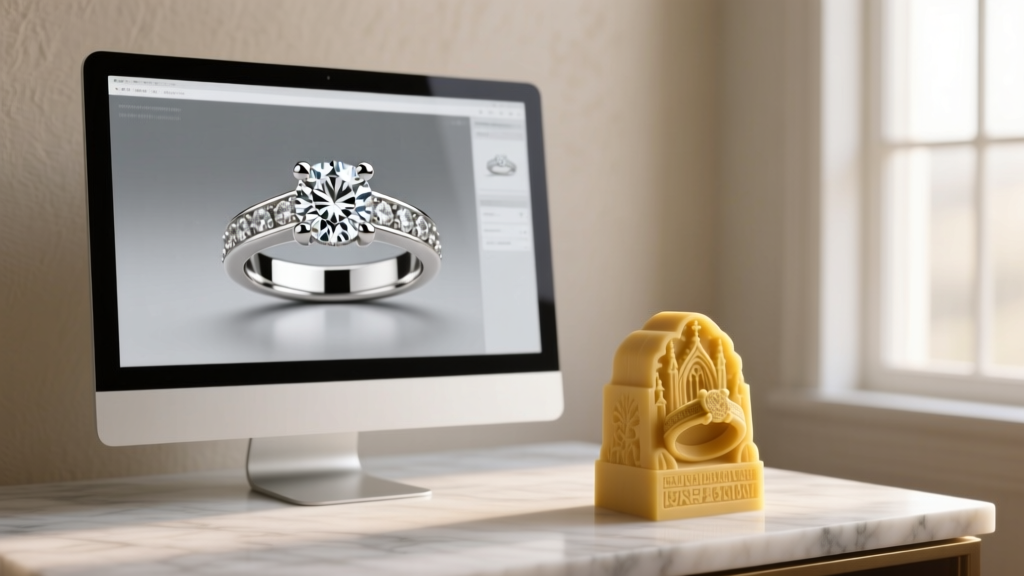
Critical Dimensions to Verify in CAD
- Prong Thickness: For a center stone between 1.00ct and 2.00ct, prongs should be no thinner than 1.2mm at the tip and 1.5mm at the base. Anything thinner will wear down and release the stone within five years.
- Gallery Depth: Ensure there is at least 1.5mm of clearance between the culet (the bottom point of the diamond) and the inside of the ring's gallery wire. This prevents the diamond from scratching the metal and allows light to enter the pavilion.
- Shrinkage Compensation: Gold shrinks by approximately 1.25% to 1.5% during the cooling process after casting. The CAD model must be scaled up by the jeweler to account for this thermal contraction, ensuring the final ring matches your exact finger size.
Once the CAD is approved, a 3D printer creates a high-resolution resin or wax model. This prototype is cast in a plaster-like investment, burned out in a kiln at 1,350°F, and replaced with molten metal via centrifugal or vacuum casting.
Step 5: Setting, Polishing, and Final Appraisal
The final stage is where the piece truly comes to life. The master setter uses a microscope to carve the seats for the gemstones, ensuring the girdle rests perfectly level. At Lisa's Fine Jewelry, the polishing process involves multiple stages: a coarse tripoli compound to remove casting lines, followed by a fine rouge polish to achieve a mirror finish. If you have chosen white gold, the piece will undergo an electrolytic rhodium plating bath to achieve a brilliant, stark white finish.
Before you take possession of the jewelry, you will receive a comprehensive insurance appraisal. According to the Jewelers of America, a proper appraisal must include the exact metal weight, the specific grading report numbers of all center stones, and high-resolution macro photography. This document is your baseline for insuring the piece against loss or damage.
Post-Purchase Maintenance Protocol
A bespoke fine jewelry piece is a living object that interacts with its environment. To maintain the structural integrity and optical brilliance of your custom piece, adhere to this strict maintenance schedule:
- Bi-Annual Prong Checks: Have the jeweler inspect the prongs under 10x magnification every six months to check for lifting or thinning.
- Ultrasonic Cleaning Caution: Never put fracture-filled diamonds, emeralds, or opals in an ultrasonic cleaner. The high-frequency vibrations can shatter included stones or strip protective oils.
- Rhodium Re-plating: If your piece is crafted in 14k or 18k white gold, expect to have it re-dipped in rhodium every 12 to 18 months as the plating naturally wears away to reveal the warm, yellowish undertone of the raw gold alloy beneath.
By understanding these technical milestones, you transition from a passive consumer to an active collaborator. Commissioning a piece at Lisa's Fine Jewelry is an investment in horological-level craftsmanship, ensuring your jewelry will not only captivate today but endure as a flawless heirloom for generations to come.


