Decoding High End Costume Jewelry Brands: A Technical Guide
Explore the metallurgy, plating thickness, and base alloys that define high end costume jewelry brands in this expert technical deep dive.

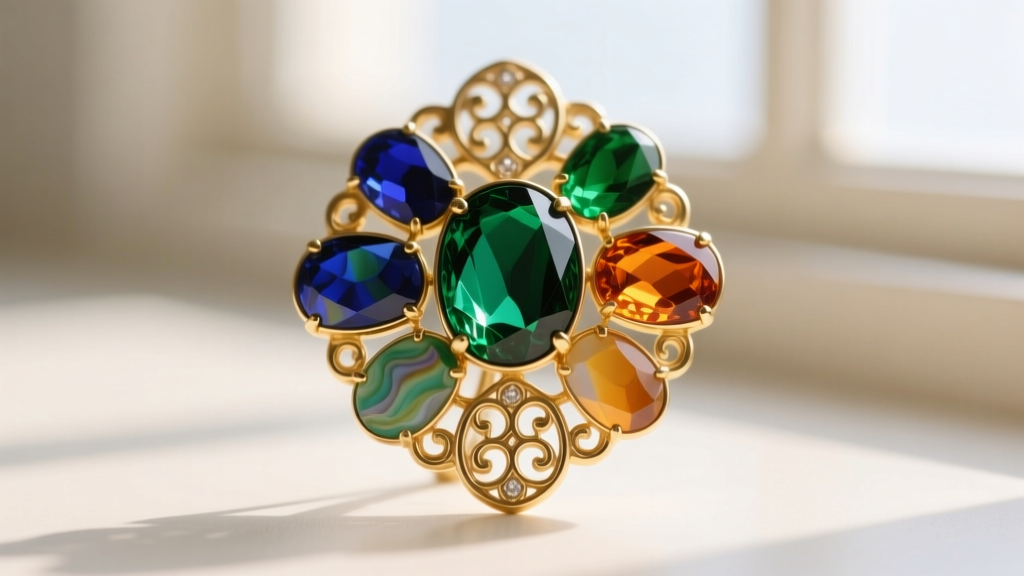
When collectors, archivists, and stylists discuss high end costume jewelry brands, the conversation often defaults to aesthetic heritage and runway prestige. However, as we navigate the 2026 luxury market, the true distinction between elite fashion jewelry and mass-market fast fashion lies in material science, metallurgical engineering, and lapidary precision. Brands like Chanel, Schiaparelli, and Dior do not merely rely on their logos to command $1,500 to $4,000 price points for non-precious pieces; they utilize master-level manufacturing techniques that rival fine jewelry houses. This technical deep dive explores the exact base alloys, plating micron thicknesses, and stone-setting methodologies that define the upper echelon of costume jewelry.
The Metallurgy of Luxury: Base Alloys Explained
The structural integrity of any costume piece begins with its base metal. Mass-market brands typically rely on Zamak, a zinc alloy (zinc, aluminum, magnesium, and copper) favored for its low melting point and cheap die-casting properties. However, Zamak is highly porous and prone to 'zinc pest'—a destructive intergranular corrosion that causes the metal to expand, crack, and crumble over time when exposed to humidity.
In contrast, high end costume jewelry brands utilize superior base alloys. Jeweler's brass (specifically CuZn15, containing 85% copper and 15% zinc) is the industry standard for luxury fashion houses. It offers a dense, non-porous grain structure that can be polished to a mirror finish before plating, ensuring the gold layer sits on a flawless surface. For highly sculptural, organic shapes—such as Schiaparelli's surrealist botanical cuffs—foundries use bismuth-tin (Bi-Sn) alloys. Often referred to as lead-free pewter, Bi-Sn alloys have a lower melting point than brass, allowing for intricate centrifugal casting that captures microscopic textures without the brittleness of traditional zinc.
Plating Standards: Micron Thickness and E-Coating
The most common failure mode in fashion jewelry is brass migration, a chemical process where copper atoms from the base metal migrate through the gold plating layer, resulting in dark spotting and rapid tarnishing. To prevent this, luxury brands employ heavy gold electroplating combined with advanced barrier layers.
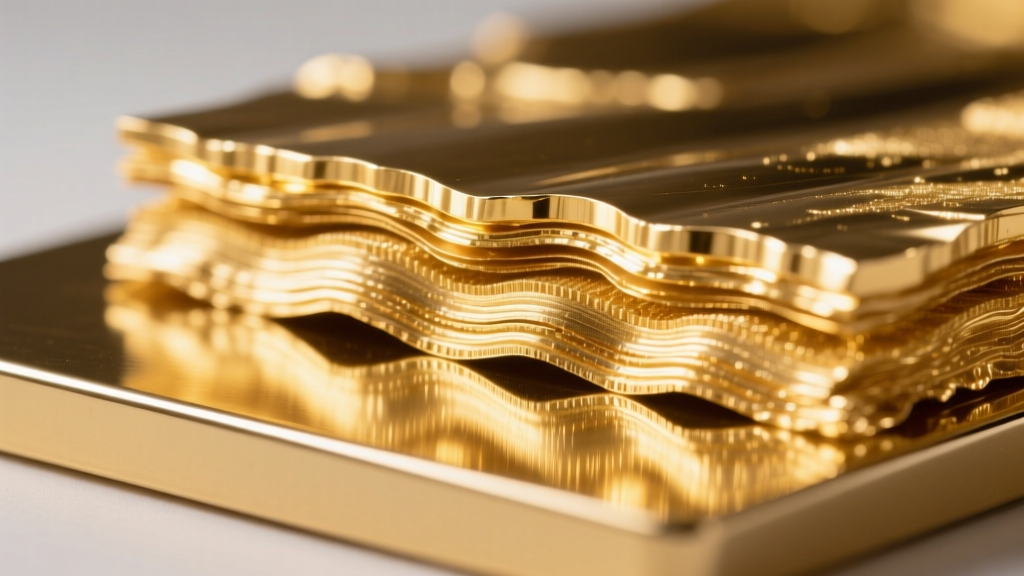
According to the Federal Trade Commission Jewelry Guides, a piece must have a minimum of 0.175 microns of gold to be legally termed 'gold electroplate.' Fast fashion brands utilize 'flash plating,' depositing a mere 0.1 to 0.2 microns of gold, which wears through to the base metal within months of friction. High end costume jewelry brands, however, routinely deposit 2.5 to 5.0 microns of 18k or 24k gold. Following the gold bath, luxury pieces are often sealed with an electrophoretic lacquer (e-coat). This microscopic polymer layer is applied via an electrical charge, ensuring it wraps evenly around complex pavé settings and prongs, locking out oxygen and sulfur to prevent oxidation.
| Plating Classification | Thickness (Microns) | Durability & Failure Mode | Typical Base Metal |
|---|---|---|---|
| Flash Plate | 0.10 - 0.25 | Poor (months); rapid wear-through and brass migration | Zamak / Zinc Alloy |
| Gold Electroplate | 0.50 - 1.00 | Moderate (1-3 years); eventual spotting at friction points | Jeweler's Brass |
| Heavy Gold Plate | 2.50 - 5.00+ | High (decades); requires deliberate abrasion to breach | Bronze / Bismuth-Tin |
Stone Setting and Enameling Techniques
The lapidary arts in high end costume jewelry brands extend far beyond glued-in acrylic rhinestones. Elite houses utilize techniques that require specialized thermal and chemical engineering.
- Pâte de Verre (Gripoix Glass): Pioneered in the 1920s and still utilized by Chanel and Schiaparelli, this technique involves hand-pouring molten glass directly into the metal setting. The thermal expansion coefficient of the glass must be perfectly calibrated to match the brass base; otherwise, the glass will shatter during the cooling process. This results in stones with no visible glue lines and a deep, internal luminescence.
- Advanced Crystal Simulants: While standard glass has a refractive index (RI) of roughly 1.5, luxury brands utilize advanced lead-free crystals (such as Swarovski Advanced Crystal, which replaced lead oxide with barium oxide and other proprietary elements). These maintain an RI of over 1.7, mimicking the light return of fine diamonds without the environmental and health hazards of traditional leaded crystal.
- Vitreous vs. Cold Enamel: Mass-market brands use 'cold enamel' (essentially tinted epoxy resin), which yellows and chips over time. High-end brands utilize vitreous enamel—a powdered glass fused to the metal base in a kiln at temperatures exceeding 1,400°F (760°C). As noted by the Victoria and Albert Museum Conservation Department, vitreous enamel is remarkably stable, retaining its color and structural integrity for centuries if protected from blunt force impacts.
The Engineering of Pavé and Prong Settings
In luxury costume pieces, stones are rarely glued. Instead, they are hand-set using traditional fine jewelry prong and bead-setting techniques. The brass or silver prongs are pushed over the girdle of the crystal using a graver tool. This mechanical setting allows light to enter the stone from the sides and bottom, maximizing brilliance. Glued stones, by contrast, have a flat foil back that reflects light uniformly, lacking the dynamic scintillation of a mechanically set faceted stone.
Evaluating Hardware and Clasp Engineering
The hardware of a piece is the ultimate tell of its quality tier. High end costume jewelry brands engineer their clasps and structural links to withstand significant tensile stress.
For brooches, pin stems are rarely made of soft brass. Instead, they are forged from 18-gauge (1.02mm) or 16-gauge (1.29mm) beryllium copper or surgical stainless steel, providing the necessary spring tension to secure the piece through heavy wool or tweed fabrics without bending. Furthermore, luxury brands utilize soldered jump rings rather than open jump rings. An open jump ring is simply a cut wire loop that can be pulled apart under tension, dropping a heavy pendant or charm. A soldered jump ring is fused shut with a laser or torch, creating a continuous, unbreakable circle.
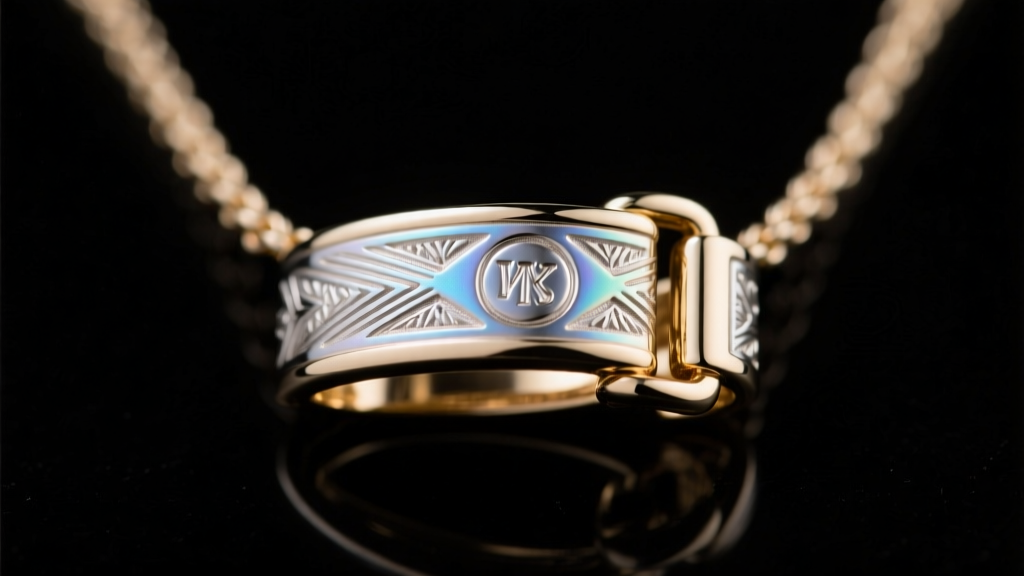
Necklaces from houses like Dior frequently feature custom-cast box clasps with dual safety catches and internal tension springs, ensuring the clasp remains locked even if the primary release lever is accidentally depressed. The weight and acoustic resonance of the clasp—a solid, muted 'click' rather than a hollow snap—is a hallmark of precision CNC machining and dense base alloys.
The true value of high-end costume jewelry is not found in the melt value of its metals, but in the hundreds of hours of specialized labor, chemical engineering, and lapidary mastery required to elevate alternative materials into wearable art.
Conclusion: The Investment Value of Technical Mastery
Understanding the technical specifications of high end costume jewelry brands shifts the paradigm of how we evaluate fashion accessories. When you invest in a piece featuring 3.0-micron gold plating over a CuZn15 brass base, hand-poured pâte de verre, and soldered structural hardware, you are acquiring an object engineered for generational longevity. As sustainability mandates in 2026 continue to push the industry toward lead-free, cadmium-free alloys and eco-conscious electroplating baths, the technical sophistication of luxury costume jewelry will only continue to rival that of the fine jewelry sector. For the discerning collector, examining the clasp engineering, checking for e-coating consistency, and identifying the base alloy are just as critical as appreciating the brand's aesthetic vision.


