Ultimate Care Guide for R H Macy and Co Fine Jewelry Pieces
Discover expert cleaning and maintenance tips for R H Macy and Co fine jewelry. Learn how to safely care for vintage and modern Macy's pieces.

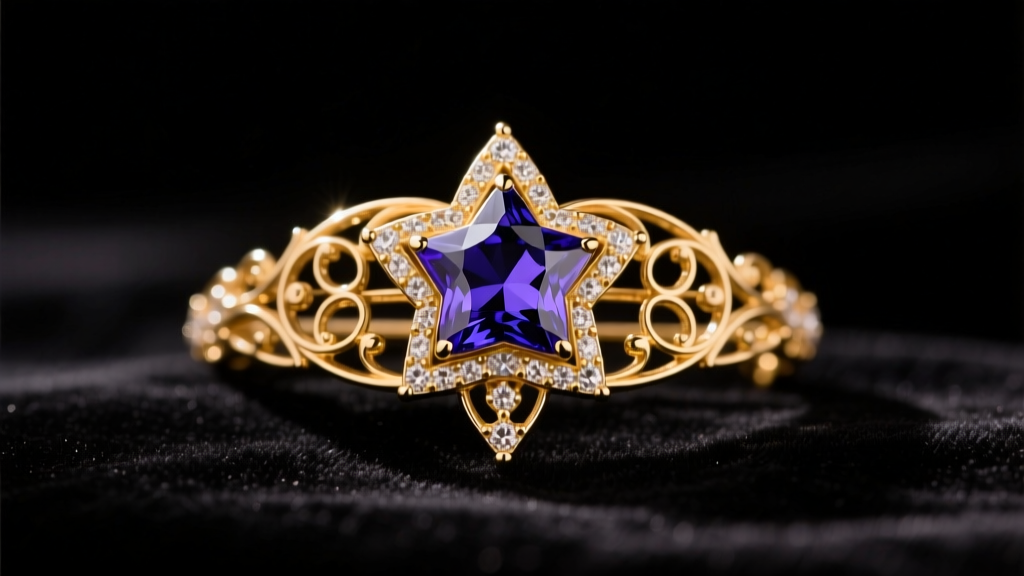
The Legacy and Liability of Department Store Heirlooms
Since its inception in 1858, Macy's has been a cornerstone of American retail, and its fine jewelry departments have historically offered accessible luxury to millions. As of 2026, the secondary market for vintage department store jewelry has surged, with collectors and inheritors eagerly seeking out pieces stamped with the iconic Macy's star. However, owning R H Macy and Co fine jewelry comes with unique maintenance responsibilities. Unlike contemporary boutique pieces, vintage department store jewelry often features specific mid-century gemstone treatments, commercial-grade alloys, and era-specific manufacturing techniques that dictate how they must be cleaned and preserved.
Whether you are holding an Art Deco platinum filigree ring from the 1920s or a 14k yellow gold star sapphire brooch from the 1960s, applying modern, aggressive cleaning methods can cause irreversible damage. This comprehensive guide explores the metallurgical and gemological nuances of Macy's fine jewelry, providing a scientifically backed framework for safe home maintenance and professional care.
Decoding R H Macy and Co Fine Jewelry Hallmarks
Before applying any cleaning solution, you must accurately identify the metal purity and era of your piece. The Federal Trade Commission (FTC) strictly regulates precious metal hallmarking in the United States, requiring that any piece stamped with a purity mark must also bear a registered maker's mark or trademark (FTC Jewelry Guidelines).
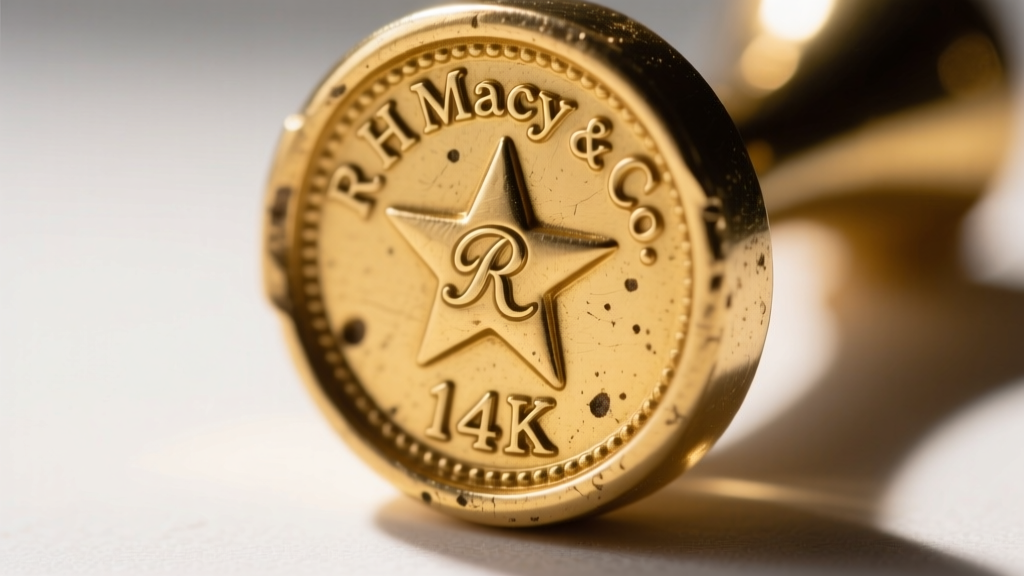
Historically, Macy's utilized several distinct hallmarks. The most recognizable is the five-point or six-point star, often enclosed in a circle, shield, or simple geometric border. You will frequently find this stamped alongside '14k', '18k', or 'Plat'. Understanding the alloy composition is critical for cleaning:
- 14k Yellow Gold (58.5% Gold): Alloyed with copper and silver. Highly durable but prone to surface tarnish if exposed to sulfur or harsh cosmetics.
- 14k White Gold: Alloyed with nickel, zinc, or palladium to achieve a silver hue. It requires periodic rhodium plating, and harsh chemicals can strip this microscopic layer prematurely.
- Platinum (90-95% Pure): Common in vintage Macy's pieces from the 1920s and 30s. It develops a natural patina over time and is highly resistant to chemical corrosion.
Era-Specific Vulnerabilities and Gemstone Treatments
The most common mistake inheritors make is treating all gemstones equally. Department stores in the mid-to-late 20th century heavily featured stones that underwent specific treatments to enhance their commercial appeal. These treatments drastically alter the cleaning protocol.
Mid-Century Star Sapphires and Treated Stones (1940s–1970s)
Macy's jewelry counters in the mid-century era were famous for selling star sapphires and star rubies. While some were natural, many were synthetic (such as the famous Linde stars) or natural stones subjected to diffusion treatments and heavy oiling to mask surface-reaching fractures. According to the Gemological Institute of America (GIA), ultrasonic cleaners and steamers are strictly prohibited for these stones. The high-frequency vibrations can cause thermal shock, shattering the stone along oiled fracture lines, while the heat can melt synthetic flux or evaporate clarity-enhancing oils, leaving the gem looking cloudy and fractured.
Late-Century Fracture-Filled Diamonds (1980s–1990s)
In the 1980s and 90s, department stores began selling 'clarity-enhanced' diamonds to offer larger carat weights at accessible price points. These diamonds were fracture-filled with a glass-like substance (often the Yehuda process). If your R H Macy and Co fine jewelry features a large diamond with a slight iridescent flash under magnification, it is likely filled. Ammonia-based cleaners, ultrasonic waves, and the heat from a jeweler's torch will melt or cloud the filler, effectively ruining the stone's transparency. These pieces must only be cleaned with lukewarm water and pH-neutral soap.
The Safe Home Cleaning Matrix
To eliminate the guesswork, refer to this matrix before attempting to clean any R H Macy and Co fine jewelry piece. This table categorizes common materials found in Macy's historical inventory and outlines the safest maintenance approach.
| Material / Era | Recommended Cleaning Agent | Tools to Use | Strictly Avoid |
|---|---|---|---|
| 14k/18k Yellow Gold (No Stones) | Warm water + mild dish soap | Soft baby toothbrush, microfiber cloth | Bleach, chlorine, abrasive pastes |
| Platinum & Natural Diamonds (Pre-1980) | Ammonia-based glass cleaner (diluted) | Soft brush, ultrasonic (if prongs are tight) | Steamers on included emeralds/opals |
| Star Sapphires / Rubies (Mid-Century) | Damp microfiber cloth only | Lint-free cotton swabs for settings | Ultrasonics, steamers, soaking in water |
| Fracture-Filled Diamonds (1980s+) | Lukewarm distilled water + pH-neutral soap | Extra-soft makeup brush | Ammonia, ultrasonics, heat, acids |
| Opals and Emeralds (All Eras) | Dry polishing cloth | Soft camel-hair brush for dust | Any liquid immersion, ultrasonics |
Step-by-Step Cleaning Protocol for Standard Macy's Gold Pieces
For standard, untreated gemstone and solid gold pieces (such as a classic 14k gold wedding band or a sapphire halo ring with no fracture filling), follow this meticulous, non-destructive cleaning protocol.
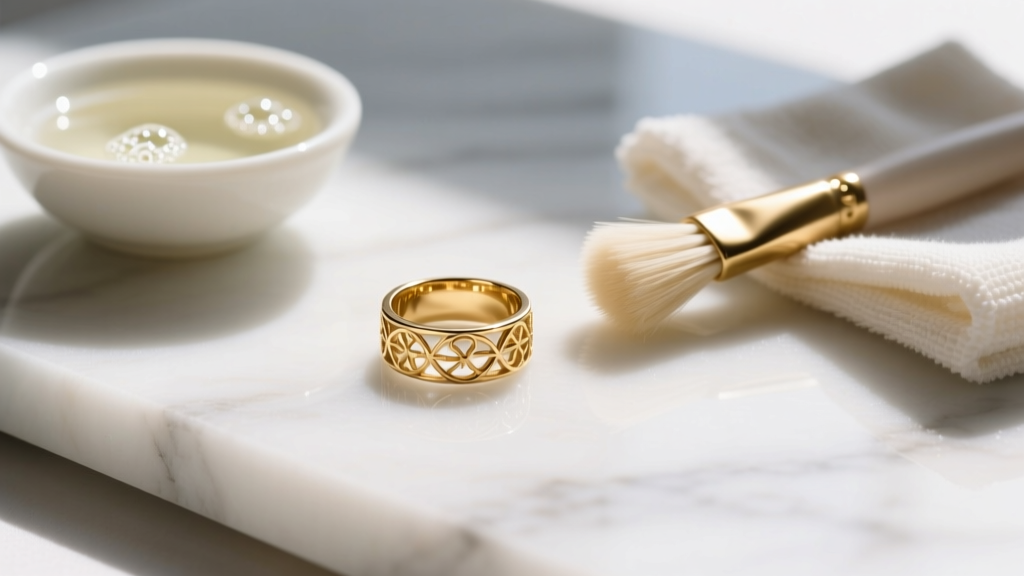
- Preparation: Line a small glass bowl with a soft towel. This prevents damage if you accidentally drop the piece while your hands are wet and slippery.
- The Solution: Mix three parts lukewarm distilled water with one part pH-neutral, lotion-free dish soap. Avoid tap water, as heavy minerals and chlorine can leave micro-deposits on the gold alloy.
- Soaking: Submerge the jewelry for exactly 10 to 15 minutes. This loosens sebum, dead skin cells, and cosmetic buildup trapped beneath the gallery wire and prongs.
- Agitation: Using an extra-soft baby toothbrush, gently sweep the bristles across the back of the gemstone (the pavilion). Do not scrub the top of the stone aggressively, especially if it is a softer gem like a vintage garnet or amethyst.
- Rinsing and Drying: Rinse under a gentle stream of lukewarm distilled water. Pat dry with a dedicated, lint-free jewelry cloth. Never use paper towels, as the wood fibers will inflict microscopic scratches on polished gold surfaces.
Professional Maintenance and Structural Integrity
Home cleaning only addresses surface hygiene; it does not protect the structural integrity of vintage R H Macy and Co fine jewelry. Because 14k gold is an alloy, decades of wear cause friction-based thinning of the prongs and shanks.
You must schedule a professional inspection every 12 to 18 months. A bench jeweler will use a loupe to check for 'prong lift'—a common failure mode where the metal pulls away from the gemstone's girdle. Furthermore, if your piece is white gold, the rhodium plating will inevitably wear thin, exposing the slightly yellowish underlying alloy. Professional replating every two to three years will restore the brilliant, icy white finish originally intended by the Macy's jewelers of the past. By combining gentle, era-appropriate home care with rigorous professional oversight, you ensure that these historical American retail artifacts survive for another century of wear.


