Earrings Skull Styles: Comparing Metals for Dark Aesthetics
Discover the best metals for earrings skull designs. Compare titanium, black zirconium, and oxidized silver for durability, detail, and skin safety.

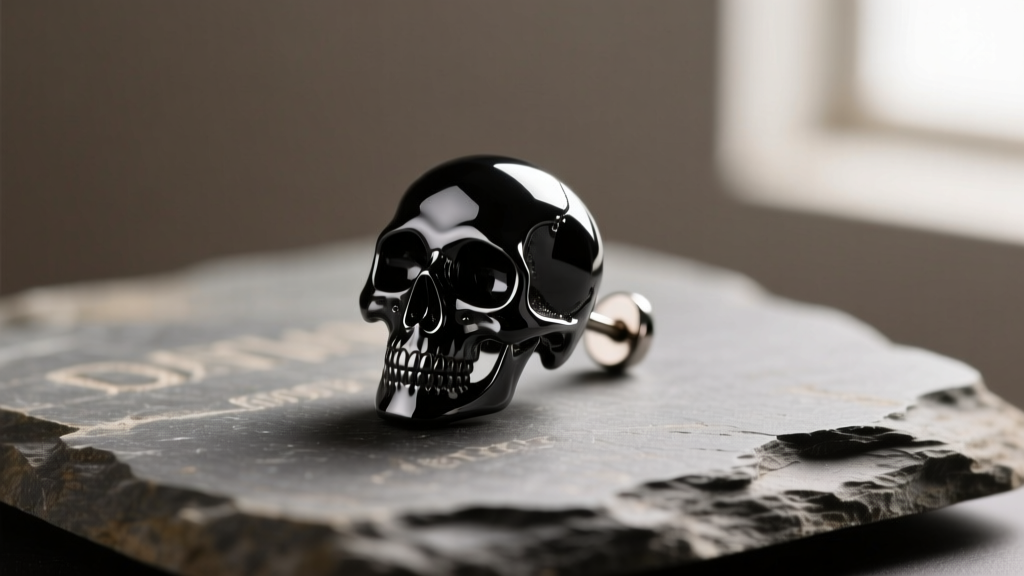
When curating a dark aesthetic or gothic wardrobe, the metallurgy of your jewelry is just as critical as the motif itself. Finding the perfect earrings skull designs requires looking beyond the macabre surface to understand how different alloys handle intricate carving, oxidation, and long-term wear. A skull is not a simple geometric shape; it features deep recesses, fragile teeth structures, and complex curvature that demand specific material properties to survive daily wear without losing detail or causing skin irritation.
In this comprehensive guide, we break down the material science behind skull earrings, comparing traditional precious metals with modern alternative alloys to help you choose pieces that offer both striking aesthetics and structural integrity.
The Anatomy of Skull Earrings: Why Material Dictates Detail
The production of high-quality skull jewelry typically relies on lost-wax casting or, increasingly in 2026, direct CNC machining and 3D metal printing. The level of micro-detail—such as the fissures in the cranium or the individual incisors—depends heavily on the metal’s shrinkage rate and hardness.
Metals with high fluidity and low shrinkage, like sterling silver, capture the finest details of the original wax model. Conversely, extremely hard metals like tungsten carbide cannot be cast traditionally; they must be sintered and ground, making intricate, under-cut skull features nearly impossible to achieve without brittle failure points. Understanding this manufacturing reality helps explain why certain metals dominate specific earring styles, from heavy dangles to minimalist cartilage studs.
Metal Comparison Chart for Dark Aesthetics
Not all dark metals are created equal. Below is a technical comparison of the most common materials used for skull earrings, evaluating their physical properties and suitability for intricate designs.
| Metal / Alloy | Hardness (Vickers) | Detail Retention | Hypoallergenic | Avg. Price Range |
|---|---|---|---|---|
| .925 Sterling Silver | ~70 HV | Excellent (Casts beautifully) | No (Contains Copper) | $35 - $150 |
| Implant-Grade Titanium (ASTM F-136) | ~350 HV | Good (Requires CNC/Machining) | Yes | $50 - $220 |
| Black Zirconium | ~1200 HV (Surface) | Moderate (Brittle, hard to carve) | Yes | $70 - $250 |
| Tungsten Carbide | ~1500 HV | Poor (Too brittle for micro-teeth) | Varies (Check binder) | $25 - $90 |
Oxidation and Antiquing: The Secret to Bone Texture
The visual impact of a skull earring relies heavily on contrast. A polished, uniform skull looks like a cartoon; a realistic skull requires deep shadows in the eye sockets, nasal cavity, and cranial sutures. This is achieved through chemical oxidation.
According to the Gemological Institute of America (GIA), sterling silver is an alloy containing 92.5% silver and 7.5% copper. When exposed to Liver of Sulfur (potassium sulfide), the copper reacts to form black copper sulfide. Artisans apply this chemical to the entire piece, then polish the high points, leaving the recessed areas pitch black. This antiquing process is permanent under normal wear conditions and is the gold standard for silver skull earrings.
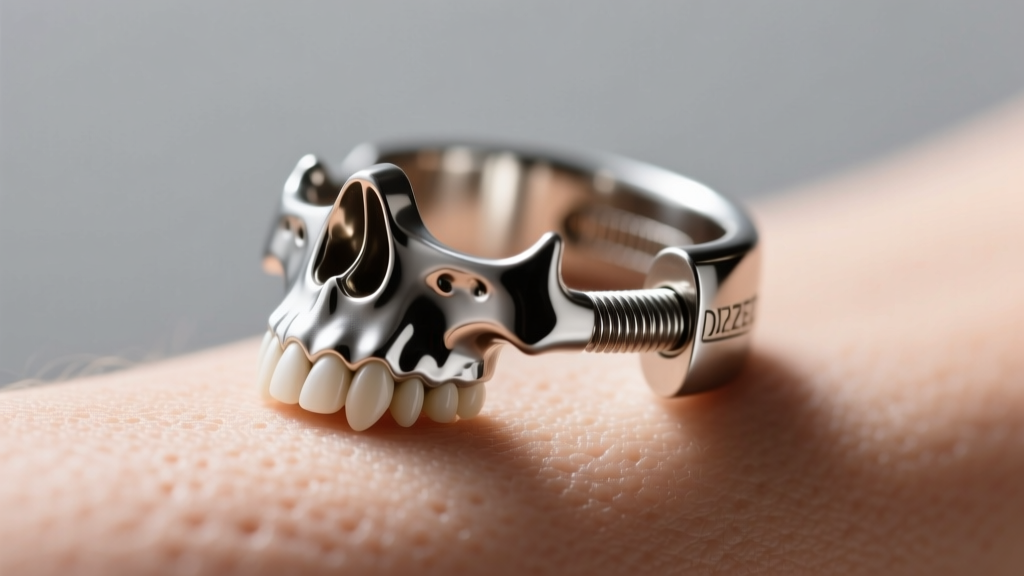
Titanium, however, does not react to Liver of Sulfur. To achieve dark titanium skull earrings, jewelers must use Physical Vapor Deposition (PVD) coating or anodizing. While PVD offers a scratch-resistant black finish, it can wear thin on the high-friction ridges of the skull over years of use, revealing the bright silver-grey titanium beneath.
Weight vs. Gauge: Sizing Skull Dangles and Cartilage Pieces
One of the most frequent failure modes in alternative jewelry is the "cheese-cutter effect," where a heavy earring slowly slices through the earlobe due to a wire that is too thin. Skull motifs, especially those cast in solid silver or brass, are inherently dense and heavy.
The Lobe Weight Rule
- Under 5 grams: Safe for standard 20g (0.8mm) or 18g (1.0mm) lobe piercings.
- 5 to 12 grams: Requires a minimum of 16g (1.2mm) wire to distribute weight and prevent lobe migration.
- Over 12 grams: Must be worn on 14g (1.6mm) or thicker wires, or ideally designed for stretched lobes (gauges 8g and above) using specialized hangers rather than standard fishhook wires.
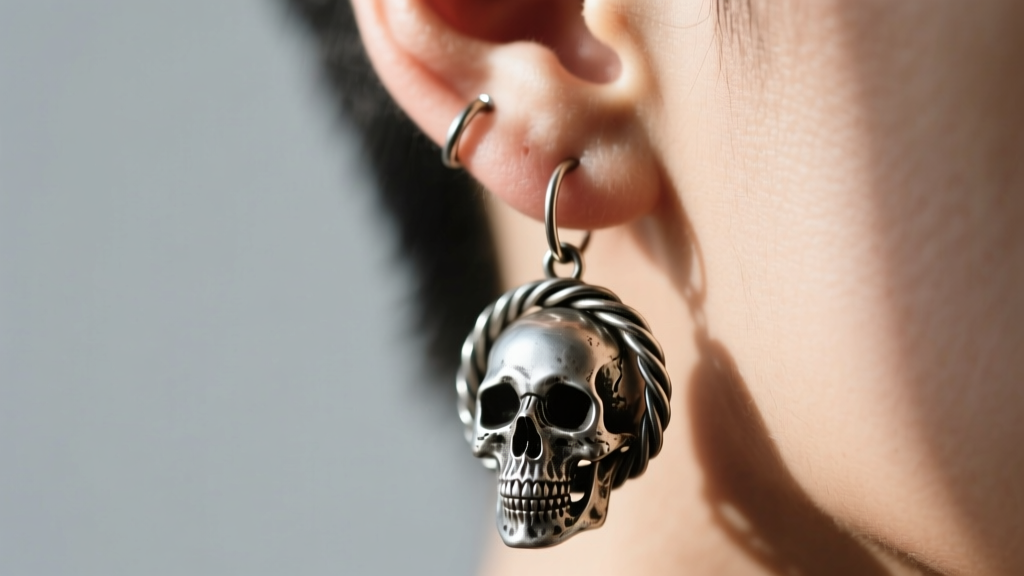
For cartilage piercings like the helix or snug, weight is equally critical. A solid tungsten skull huggie can cause cartilage fatigue and rejection due to its extreme density. For cartilage, always opt for hollowed-back 3D-printed titanium or thin-gauge silver to keep the overall mass under 3 grams.
Hypoallergenic Realities: Nickel Allergies in Cast Alloys
When shopping for white gold or cheap "Tibetan silver" skull earrings, nickel allergies are a severe risk. The Association of Professional Piercers (APP) strictly advises against any jewelry containing nickel for prolonged skin contact. Many mass-produced white gold skull studs use nickel as a whitening agent. As the rhodium plating wears off inside the intricate crevices of the skull design, the nickel is exposed to sweat, triggering contact dermatitis.
Expert Tip: If you require hypoallergenic jewelry but prefer the look of white gold, seek out skull earrings cast in palladium-white gold or stick strictly to ASTM F-136 implant-grade titanium, which is entirely nickel-free and biocompatible.
Care and Maintenance for Patinated Metals
Maintaining the dark, brooding aesthetic of oxidized skull earrings requires a departure from standard jewelry cleaning routines. Ultrasonic cleaners and harsh chemical dips (like silver polish) will strip the Liver of Sulfur patina from the eye sockets and teeth, leaving you with a flat, brightly polished skull that lacks depth.
To clean antiqued skull earrings, use a mild, phosphate-free dish soap and warm water. Gently agitate the water around the piece, and use an extra-soft baby toothbrush to clear out sebum and dead skin cells that accumulate in the cranial fissures. Never use abrasive polishing cloths on the recessed areas; reserve the cloth only for the high-polish ridges of the cheekbones and brow line to maintain the vital light-and-shadow contrast.


