2026 Gift Guide: Navigating Fine Jewelry Auction Houses
Discover our 2026 gift guide to buying at fine jewelry auction houses. Learn bidding strategies, buyer premiums, and occasion matching for vintage gems.

The Allure of Auction Gifting in 2026
Gifting fine jewelry is an exercise in emotional resonance and material permanence. However, the traditional retail markup—often ranging from 100% to 300% over wholesale—can dilute the intrinsic value of your gesture. In 2026, discerning gifters are increasingly turning to fine jewelry auction houses to source pieces with unparalleled provenance, historical weight, and favorable pricing. Buying at auction bypasses the retail premium, allowing you to gift a signed Cartier cocktail ring or an unheated Burmese ruby for what it might cost to buy a mass-produced, lower-tier equivalent in a boutique. Yet, the auction environment requires a distinct strategic approach, particularly when factoring in buyer’s premiums, authentication, and occasion matching.
Understanding the Hierarchy of Fine Jewelry Auction Houses
Not all auction houses operate with the same fee structures, inventory curation, or minimum lot values. Matching the recipient’s style to the right auction tier is the first step in your gifting strategy.
The Global Titans: Christie’s, Sotheby’s, and Phillips
These houses dominate the high-end market, specializing in signed pieces (e.g., Van Cleef & Arpels, Boucheron, Tiffany & Co.) and investment-grade gemstones. Their catalogs are heavily vetted, meaning the risk of purchasing a misattributed piece is exceptionally low. However, their buyer's premiums are steep, and minimum estimates often start in the five-figure range.
Mid-Tier and Regional Powerhouses
Houses like Bonhams, Heritage Auctions, and Leslie Hindman (now part of Freeman's) offer exceptional value for mid-range budgets ($2,000 to $20,000). They are ideal for sourcing high-quality unsigned estate jewelry, Victorian mourning pieces, and mid-century modernist designs. The competition is often less fierce than at the global titans, providing savvy gifters with a higher win rate.
| Auction House Tier | Typical Buyer’s Premium | Best Suited For | Inventory Focus |
|---|---|---|---|
| Global Titans (Sotheby's, Christie's) | 25% on first $400k | Milestone Anniversaries, Investment Gifting | Signed heritage brands, rare colored diamonds, SSEF/Gübelin certified stones |
| Mid-Tier (Bonhams, Heritage) | 20% - 25% | Graduations, 10th/25th Anniversaries | Unsigned Art Deco, Victorian, Mid-Century studio jewelry |
| Regional / Online-First (LiveAuctioneers) | 25% - 30% | Birthdays, "Just Because" Gifts | Antique lockets, silver jewelry, semi-precious estate lots |

Occasion Matching: What to Bid on and When
An auction-sourced gift should align with the historical era and material significance of the occasion. Here is a framework for matching auction categories to specific gifting milestones.
Milestone Anniversaries (25th and 50th)
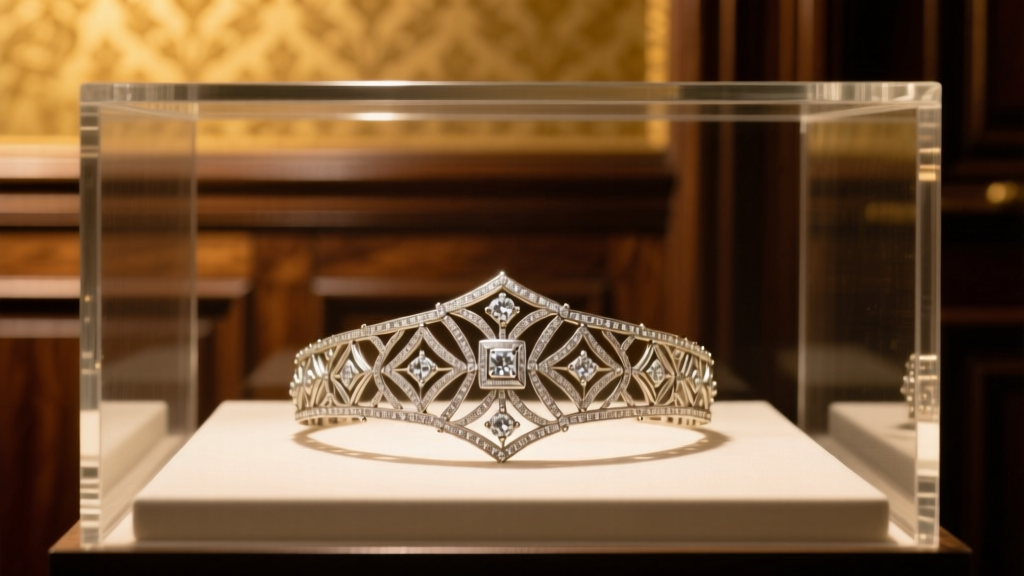
For a 25th (Silver) anniversary, bypass modern white gold and target Art Deco platinum pieces (circa 1920-1935). Look for geometric filigree, calibre-cut sapphires, and European-cut diamonds. Platinum from this era is incredibly durable and carries a distinct historical romance. For a 50th (Gold) anniversary, focus on Retro period jewelry (1939-1950). Due to WWII platinum restrictions, jewelers used massive amounts of 14k and 18k rose and yellow gold, often paired with large cabochon citrines, amethysts, or aquamarines. A Retro gold mesh bracelet or a bold cocktail ring makes a monumental 50th-anniversary statement.
Graduations and Career Milestones
Celebrate a new career chapter with signed, recognizable designer pieces from the 1980s and 1990s. This era of bold, structural jewelry is highly collectible in 2026. Target early iterations of the Bulgari Parentesi collection, Cartier Trinity rings, or David Yurman cable bracelets. These pieces hold their value well and offer immediate brand recognition without the modern boutique waitlists.
Engagements and Proposals
If sourcing an engagement ring at auction, prioritize stones accompanied by a modern GIA Diamond Grading Report. Avoid relying solely on vintage appraisals, as color and clarity grading standards have tightened significantly over the last three decades. Look for the Tiffany Setting (six-prong) from the mid-20th century, which offers the iconic silhouette at a fraction of the current retail price.
The Hidden Costs: Decoding the Buyer’s Premium
The most common mistake novice auction buyers make is equating the "hammer price" with the final cost. When budgeting for an auction gift, you must calculate the landed cost. According to Sotheby's buyer guidelines, the buyer's premium is a sliding scale fee charged on top of the winning bid.
- Buyer’s Premium: Typically 25% on the first $400,000 of the hammer price, 20% on the next $3.6 million, and roughly 13.9% on any amount exceeding $4 million.
- VAT / Sales Tax: Depending on the auction location and your shipping destination, local taxes (ranging from 8% to 20%) are applied to the combined total of the hammer price plus the buyer's premium.
- Shipping and Insurance: Auction houses rarely include insured shipping in the lot price. Expect to pay an additional 1% to 2% of the declared value for secure, insured transit via specialized carriers like Ferrari or Brinks.
- Overhead Premium: Many houses now add a 1% to 2% "overhead" or "technology" fee to cover digital cataloging and online bidding infrastructure.
Gifting Rule of Thumb: Always multiply your maximum hammer bid by 1.35 to estimate your true out-of-pocket cost before raising your paddle.
Authentication and Provenance: Protecting Your Investment
When gifting fine jewelry, the authenticity of the materials and the ethical sourcing of the gems are paramount. The Federal Trade Commission (FTC) Jewelry Guides mandate strict disclosure regarding gemstone treatments, but auction houses operate on the principle of caveat emptor (buyer beware). You must know how to read the catalog notes.
Decoding Hallmarks
Never rely solely on a catalog description of metal purity; verify the hallmarks. In French jewelry, the poinçon system is strictly regulated. An eagle's head guarantees a minimum of 18k (750/1000) gold, while a dog's head indicates 950 platinum. In the UK, look for the Assay Office town marks (e.g., an anchor for Birmingham, a leopard's head for London) alongside the fineness mark.
Gemstone Treatments and Lab Reports
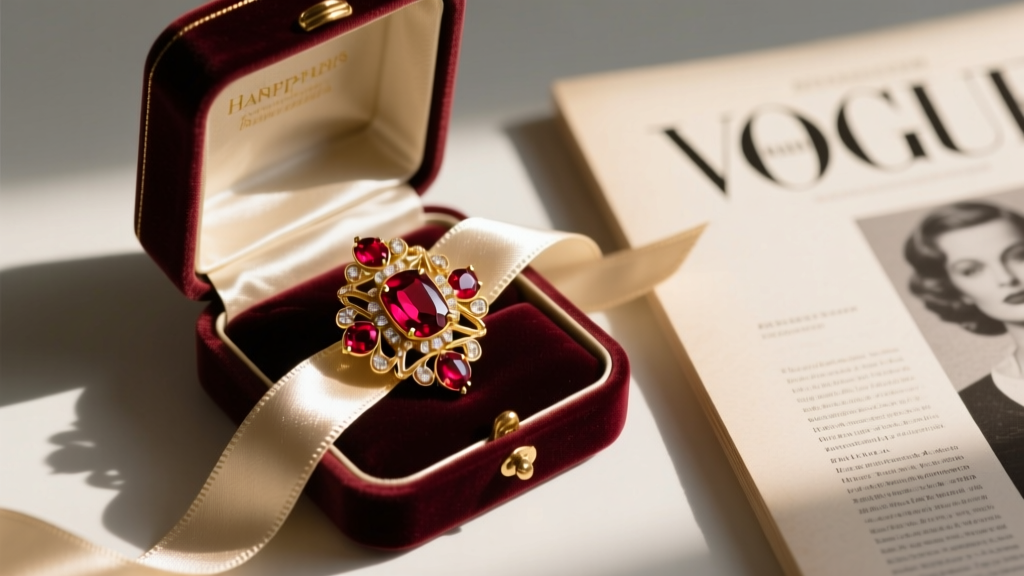
The GIA Gem Encyclopedia notes that treatments drastically affect a stone's value. When bidding on colored stones, read the fine print for terms like "heat-treated," "fracture-filled," or "beryllium-diffused." An unheated Burmese ruby certified by the SSEF or Gübelin laboratories commands a massive premium over a glass-filled Mozambique ruby. If the auction catalog states "accompanied by a gemological report," ensure the lab is a tier-one institution (GIA, SSEF, Gübelin, or AGL) rather than an in-house or unrecognized commercial lab.
Bidding Strategies for the Holiday Gifter
Timing your bids is crucial when sourcing gifts for specific dates. Live, in-room auctions offer the thrill of the chase but require split-second decision-making. For gifters, timed online auctions are often superior. They allow you to set a strict maximum bid (factoring in the 35% premium buffer) and walk away without getting caught in the emotional heat of a live bidding war. Always check the "closing date" of a timed lot; many platforms use "staggered lot closing" or "popcorn bidding," where the timer extends by two minutes if a bid is placed in the final seconds. Submit your maximum proxy bid early, and let the system defend your limit while you focus on wrapping the perfect vintage treasure.


