How to Inspect and Authenticate Luxury Jewelry: A Step-by-Step Guide
Learn how to inspect and authenticate luxury jewelry with our step-by-step guide. Master hallmark verification, loupe techniques, and gemstone grading.


The secondary market for luxury jewelry has exploded, with iconic pieces from houses like Cartier, Van Cleef & Arpels, and Bvlgari holding immense value. However, this high demand has birthed a sophisticated industry of 'super-fakes' that can easily deceive the untrained eye. While demi-fine and fashion jewelry serve their purpose in a trend-driven wardrobe, true luxury jewelry is an investment in heritage, precise metallurgy, and exceptional gemology. Transitioning from buying costume pieces to acquiring fine luxury jewelry requires a shift in how you evaluate quality. This step-by-step guide will teach you how to inspect, authenticate, and verify luxury jewelry like a seasoned gemologist, ensuring your investment is genuine.
Step 1: Mastering Hallmark and Stamp Verification
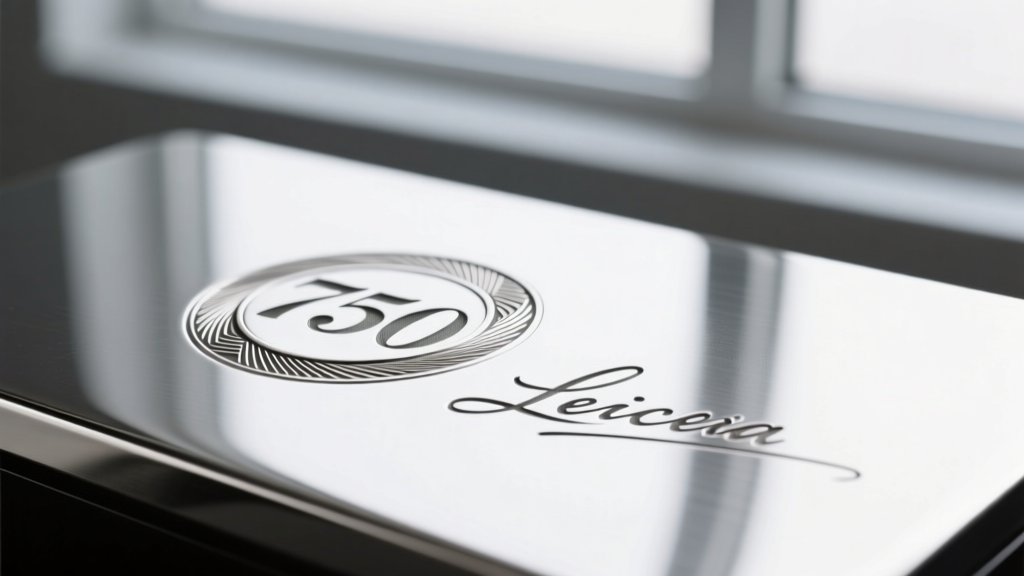
The first point of inspection is the metal hallmark. According to the Federal Trade Commission (FTC) Jewelry Guides, precious metals must be accurately stamped, but counterfeiters easily replicate simple '18k' or '750' stamps. To authenticate luxury jewelry, you must look beyond the basic karat mark and search for the maker's mark and government assay stamps.
Identifying Regional Assay Marks
- French Eagle’s Head (Tête d'Aigle): Mandatory for 18k gold sold in France. If you are inspecting a vintage Cartier or Boucheron piece originating from Paris, this stamp should be present on the exterior or interior of the band.
- Dog’s Head (Tête de Chien): The French hallmark for platinum (minimum 950 purity).
- Italian Maker’s Marks: Look for a number and province code (e.g., '750 VI' for Vicenza) enclosed in a geometric shape, indicating the specific manufacturing house.
Pro Tip: Use a 10x loupe to check the edges of the stamp. Genuine luxury houses use crisp, laser-sharp or deeply struck dies. Fakes often show blurred edges, shallow stamping, or 'bleeding' metal around the numbers.
Step 2: The 10x Loupe Inspection Technique
A jeweler's loupe is your most critical tool. You must use a 10x magnification triplet lens with a black housing to eliminate glare and color distortion. When inspecting luxury jewelry, you are looking for the absence of manufacturing flaws that plague mass-produced fashion jewelry and careless counterfeits.
What to Look For Under Magnification
- Casting Porosity: Super-fakes are often cast rather than forged. Look for tiny pits, bubbles, or an 'orange peel' texture on the metal surface. Genuine luxury pieces are meticulously polished to a mirror finish, even in hidden crevices.
- Tool Marks: Run your eye along the prongs and bezels. High-end jewelers leave zero file marks or scratches near the gemstone settings.
- Solder Joints: Inspect chain links and clasp connections. Luxury houses use laser welding or high-karat solder that perfectly matches the surrounding metal. Fakes often show dark, oxidized, or messy solder joints at the jump rings.
'Authentication is not just about what is there, but what is missing. A genuine Van Cleef & Arpels Alhambra necklace will have perfectly flush bezels with zero glue residue, whereas a replica will often show microscopic epoxy seepage under 10x magnification.' — Senior Gemologist Appraiser
Step 3: Evaluating Gemstone Setting and Quality
Luxury jewelry is defined by its lapidary and setting techniques. Brands like Cartier and Harry Winston employ master setters who use techniques that are nearly impossible to replicate at a counterfeit scale. Below is a comparison framework to help you differentiate between luxury, demi-fine, and fashion jewelry settings.
| Feature | Luxury Fine Jewelry | Demi-Fine Jewelry | Fashion / Costume Jewelry |
|---|---|---|---|
| Gemstone Material | Natural, untreated or minimally treated diamonds/sapphires (VVS-VS clarity) | Lab-grown diamonds, semi-precious stones (topaz, amethyst), lower-clarity naturals | Cubic zirconia, glass, acrylic, synthetic spinel |
| Setting Technique | Hand-set pave, mystery setting, precise bezel; no glue | Cast-in-place prongs, simple bezels, occasional micro-pave | Glued-in stones, foil-backed settings, tension-fit claws |
| Chain Gauge (e.g., 18") | 1.5mm - 2.5mm solid gold links, individually soldered | 0.8mm - 1.2mm delicate chains, often hollow or vermeil | Base metal alloys, prone to snapping under 2lbs of tension |
| Pave Diamond Count | Exact, uniform sizing; each stone held by 3-4 hand-raised beads | Variable sizing; stones may be held by shared prongs or minimal metal | Simulated pave (metal stamped to look like stones) or glued CZ |
When inspecting a piece like a Bvlgari Serpenti ring, check the pavé diamonds. In genuine pieces, the metal beads holding the stones are perfectly spherical and uniform. In fakes, the beads are often misshapen, flattened, or entirely absent, with stones held in by microscopic rims of pushed metal.
Step 4: Verifying Serial Numbers and Certificates
Every modern luxury jewelry piece features a unique serial number, but the format of these numbers evolves, which is a key authentication vector. Counterfeiters frequently use outdated serial formats on newly manufactured fakes.
The Cartier Serial Number Evolution
According to archival data referenced by institutions like the Gemological Institute of America (GIA) and major auction houses, Cartier's serialization has shifted. Older Love bracelets featured a 6-digit numeric serial (e.g., 123456). Post-2015, Cartier transitioned to a format consisting of two letters followed by six digits (e.g., DO1234). If you are presented with a brand-new, unworn Love bracelet bearing a purely numeric, 6-digit serial, it is highly likely to be a counterfeit utilizing an obsolete template.
Cross-Referencing GIA Reports
For luxury pieces centering on a large diamond (1.00 carat or above), always demand the GIA Diamond Grading Report. Do not simply trust the paper certificate, as these are easily forged. Instead, use the loupe to find the laser-inscribed GIA report number on the diamond's girdle. Cross-reference this number directly on the GIA Report Check database. If the inscription is missing, or the stone's inclusions do not match the plotting diagram on the report, walk away.
Step 5: Weight, Density, and Acoustic Testing
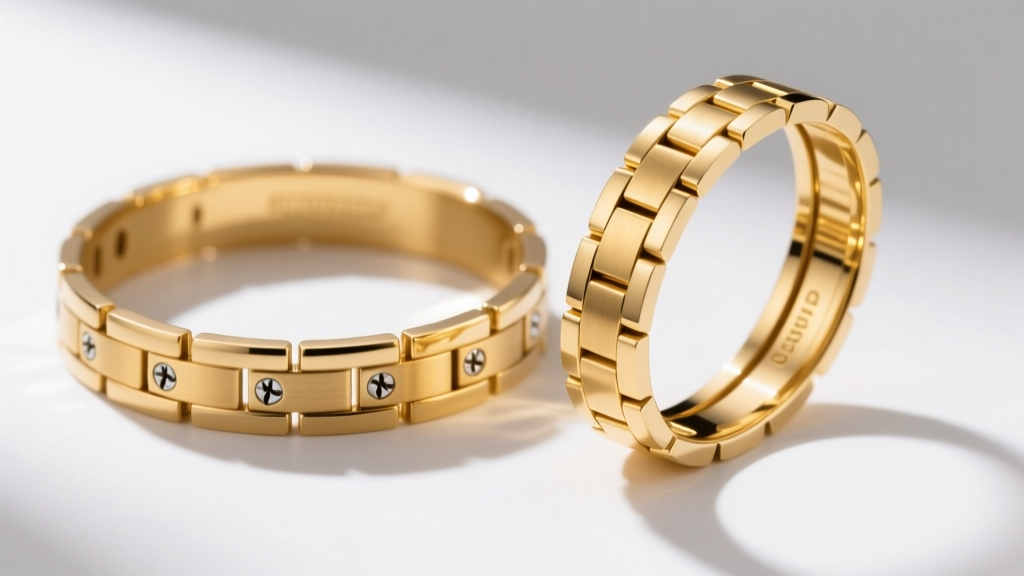
Gold and platinum are incredibly dense metals. A genuine 18k gold Cartier Love bracelet (size 16) weighs approximately 30 to 32 grams. Counterfeiters often use brass or stainless steel cores plated in thick gold. While a steel fake might feel heavy, it will not match the exact specific gravity of 18k gold (15.6 g/cm³). If you have access to a digital jewelry scale, always weigh the piece and compare it to the manufacturer's published specifications for that exact model and size.
The Acoustic 'Ping' Test
For solid gold and platinum bands, the acoustic resonance is a dead giveaway. When gently tapped with a metal tool or another gold ring, genuine high-karat gold emits a low, dull, and brief 'thud' or 'ping' because gold is a soft, dense metal that absorbs sound. Brass, copper, and steel alloys—which form the core of most fashion and fake jewelry—will emit a high-pitched, ringing 'ting' that sustains for several seconds. This non-destructive test is highly effective for identifying gold-plated tungsten or brass fakes.
Summary Checklist for the Luxury Buyer
Acquiring luxury jewelry is about more than just the logo; it is about the uncompromising dedication to material science and artisanal craftsmanship. By systematically verifying government assay marks, utilizing a 10x triplet loupe to inspect for casting porosity, analyzing the precision of the gemstone settings, and cross-referencing evolving serial number formats, you can confidently navigate the primary and secondary markets. Always prioritize pieces that come with verifiable GIA documentation and purchase from reputable dealers who offer unconditional authenticity guarantees.


