Hong Duc 1 Diamonds & Fine Jewelry: 2026 Value Guide
Assess the true value of Hong Duc 1 Diamonds & Fine Jewelry. We break down pricing, diamond grades, and craftsmanship for smart 2026 buyers.

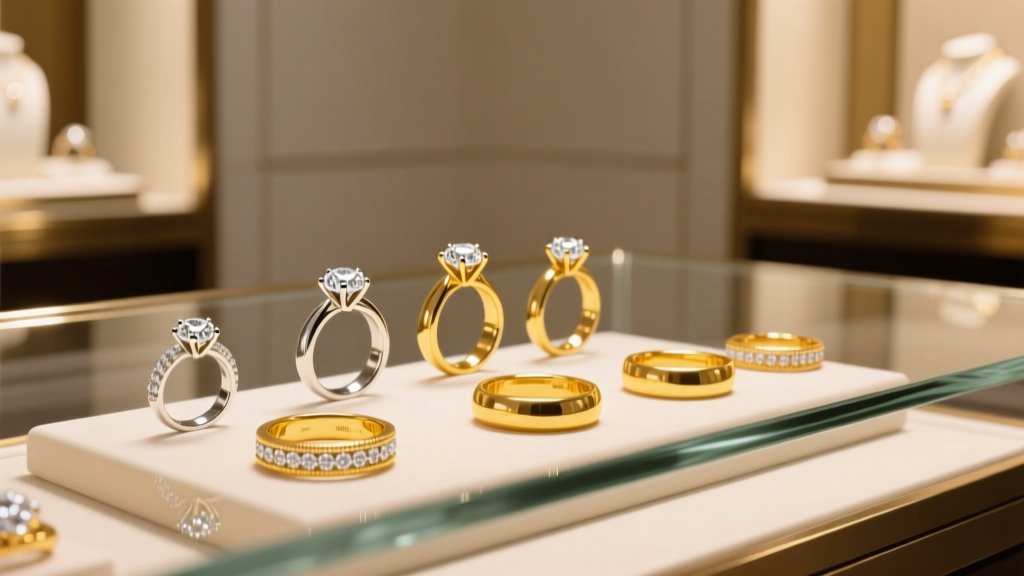
As the fine jewelry market continues to evolve in 2026, discerning buyers are increasingly bypassing high-overhead luxury mall brands in favor of independent and regional experts. When conducting a comprehensive budget and value assessment, many shoppers find themselves researching establishments like Hong Duc 1 Diamonds & Fine Jewelry to determine if their pricing aligns with true market value. Evaluating a boutique jeweler requires more than just comparing the final price tag; it demands a deep understanding of diamond grading, metallurgical purity, and craftsmanship benchmarks.
The Anatomy of a Fair Price: Understanding Retail Markups
To accurately assess the value proposition of any independent jeweler, you must first understand how diamonds are priced at the wholesale level. The global diamond trade relies heavily on the Rapaport Diamond Report, which establishes baseline wholesale prices based on the 4Cs (Cut, Color, Clarity, and Carat). When you shop at a brick-and-mortar boutique, you are paying for the stone, the setting, the overhead, and the expertise.
Typically, independent jewelers apply a retail markup of 2.0x to 3.0x over the wholesale baseline. In contrast, heavily marketed luxury mall brands often apply markups ranging from 4.0x to over 6.0x. Therefore, if Hong Duc 1 Diamonds & Fine Jewelry is pricing a 1.00-carat, G-color, VS1-clarity natural diamond within that 2.5x range, they are offering a highly competitive, fair-market value. Always ask to see the exact specifications of the stone and compare them against current online wholesale benchmarks to gauge the retailer's margin.
Diamond Certification: The Ultimate Dealbreaker
No budget assessment is complete without verifying the gemological pedigree of the stones on offer. When evaluating inventory at Hong Duc 1 Diamonds & Fine Jewelry, the presence of a reputable, third-party grading report is non-negotiable for any center stone over 0.50 carats.
GIA vs. In-House Appraisals
The Gemological Institute of America (GIA) remains the gold standard for natural diamond grading in 2026. Their strict, consistent parameters ensure that a 'G' color grade actually represents near-colorless quality. Beware of 'in-house' certificates or lesser-known labs, which are notorious for grade inflation. A stone graded as 'F' (colorless) by an in-house appraiser might only merit an 'H' or 'I' (near-colorless to faint) under GIA scrutiny, meaning you could be overpaying by 20% to 40% for inferior quality.
Expert Insight: If a jeweler cannot provide a GIA or AGS report for a natural diamond, or an IGI/GCAL report for a lab-grown diamond, walk away. Verbal guarantees of 'eye-clean' or 'near-colorless' hold zero weight in the secondary resale market.
Metallurgical Purity: 14k vs. 18k vs. Platinum
The metal used in your setting drastically impacts both the upfront budget and the long-term maintenance costs. Fine jewelry boutiques typically offer settings in 14-karat gold, 18-karat gold, or platinum. Understanding the exact alloy composition is critical for making an informed financial decision.
| Metal Type | Purity | Durability & Maintenance | Estimated Cost Premium |
|---|---|---|---|
| 14k Yellow/White Gold | 58.5% Pure | Highly durable, prone to scratching. White gold requires rhodium plating every 12-18 months ($50-$120). | Baseline |
| 18k Yellow/White Gold | 75.0% Pure | Rich color, softer, more prone to bending. Hypoallergenic. White gold still requires rhodium. | +20% to +35% |
| Platinum (950) | 95.0% Pure | Extremely dense, develops a patina rather than losing metal. Naturally white, no rhodium needed. | +50% to +80% |
When assessing the value at Hong Duc 1 Diamonds & Fine Jewelry, ensure that the weight of the metal is factored into the price. A heavy, solid 18k gold setting will inherently cost more than a hollowed-out 14k cast, but it will offer vastly superior longevity and prong security.
Evaluating Craftsmanship and Setting Security
A diamond is only as secure as the prongs holding it. Mass-produced mall jewelry often utilizes thin, machine-cast prongs that wear down rapidly, increasing the risk of losing your center stone. True fine jewelry prioritizes structural integrity.
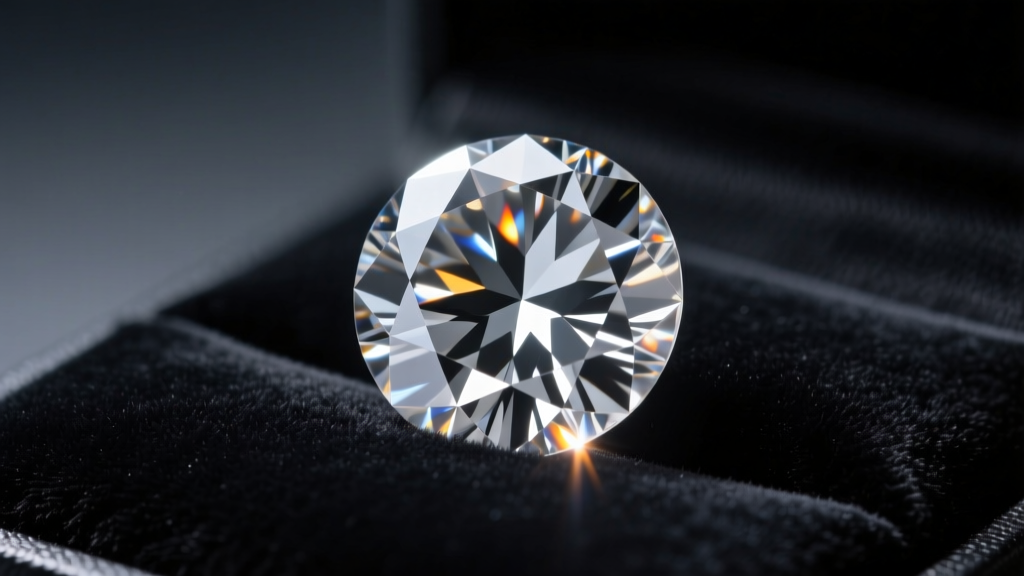
What to Inspect Under the Loupe
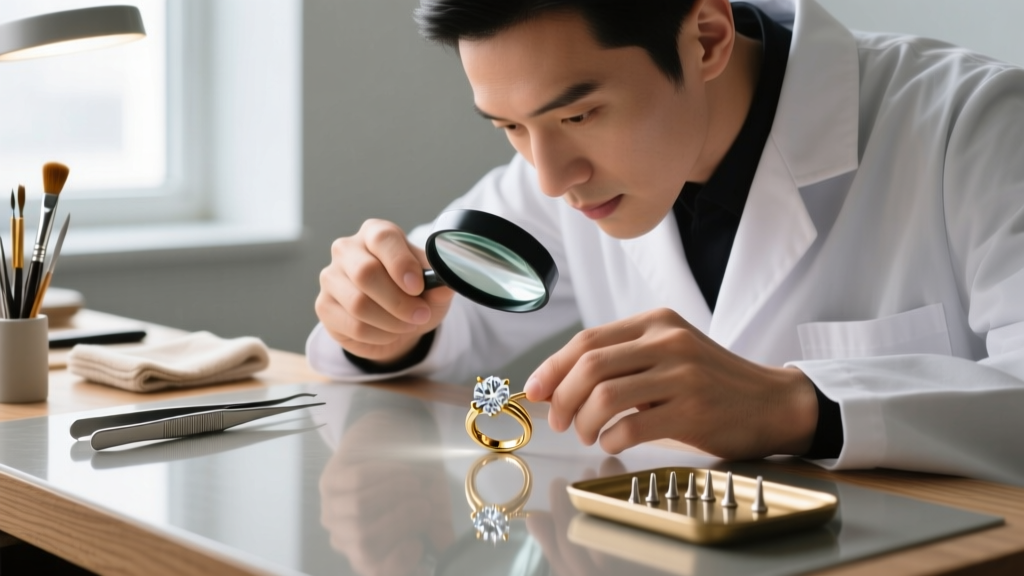
Ask the jeweler for a 10x magnification loupe and inspect the setting closely. Look for the following indicators of high-end craftsmanship:
- Prong Thickness: Prongs should be robust and smoothly rounded at the tips, not sharp or flattened.
- Gallery Wire: The underlying structure supporting the diamond should be solid, not paper-thin.
- Stone Alignment: Melee diamonds (the small accent stones) should be set perfectly level with one another, with no visible glue or uneven bezels.
- Casting Porosity: Look for tiny pits or bubbles in the metal band, which indicate poor casting techniques and structural weakness.
According to the Jewelers of America, regular professional inspection of prongs is vital, but starting with a well-crafted, hand-finished or premium-cast setting reduces the frequency of necessary repairs.
Value-Add Negotiation Strategies
Negotiating at an independent boutique requires tact. Because the price of the diamond itself is closely tied to global market indices, asking for a massive discount on the stone is often unrealistic and may offend the retailer. Instead, focus your negotiation on the setting and post-purchase services.
When finalizing your purchase at Hong Duc 1 Diamonds & Fine Jewelry, consider leveraging the following strategies to maximize your budget:
- Request Complimentary Sizing: Ask for the first two ring sizings to be included in the purchase price, saving you $75 to $150 down the line.
- Secure a Maintenance Package: Negotiate for lifetime professional cleanings, ultrasonic inspections, and one complimentary rhodium plating per year for white gold settings.
- Upgrade the Setting: If the jeweler cannot lower the price of a GIA-certified diamond, ask them to upgrade the setting from 14k to 18k gold, or to add a hidden halo of melee diamonds at no extra labor cost.
Final Verdict: Is the Investment Justified?
Shopping at a dedicated boutique like Hong Duc 1 Diamonds & Fine Jewelry offers distinct advantages over online-only retailers, primarily the ability to physically inspect the stone's light performance and the setting's craftsmanship. As long as the retailer provides verifiable GIA or IGI grading reports, uses properly stamped precious metal alloys, and prices their inventory within a reasonable 2.0x to 3.0x markup over wholesale baselines, the investment is highly justified. By applying these rigorous assessment frameworks, you ensure that your budget translates directly into enduring, heirloom-quality value.


