Victorian Mourning Jewelry: 2026 Neo-Gothic Trends & Style Guide
Discover how Victorian mourning jewelry influences 2026 memorial trends. Explore antique materials, neo-gothic motifs, and modern styling tips.

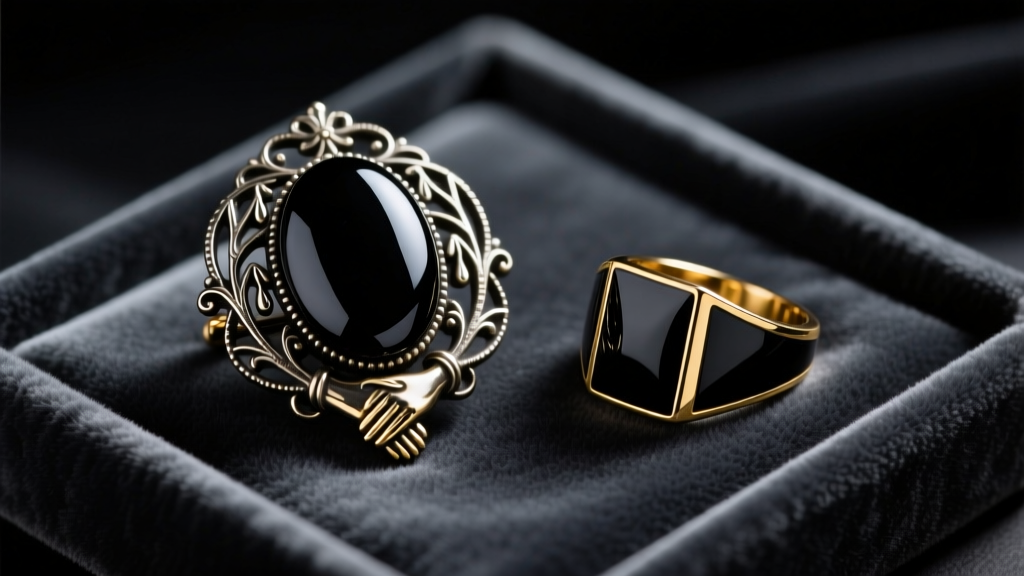
The Enduring Allure of Victorian Mourning Jewelry in 2026
The resurgence of Victorian mourning jewelry in 2026 is far more than a fleeting nod to the past; it represents a profound rebellion against the sterile, ultra-minimalist aesthetics that dominated the memorial market over the last decade. Today’s bereaved individuals and avant-garde collectors are increasingly embracing the "Neo-Gothic" and "Dark Academia" movements, seeking out pieces that carry the heavy, romantic sentimentality of the 19th century. In an era where digital footprints replace physical mementos, the tactile, deeply personal nature of antique mourning pieces offers a grounding connection to those we have lost.
Queen Victoria’s prolonged grief following the death of Prince Albert in 1861 codified the rules of mourning, transforming it into a strict societal mandate that birthed an entire industry of remembrance adornments. According to the Victoria and Albert Museum, this era established a complex visual language of grief, utilizing specific materials, colors, and motifs to communicate the wearer's exact stage of bereavement. Today, contemporary jewelers and antique collectors alike are decoding this language, blending historical reverence with modern wearability.
Decoding Antique Materials: Jet, Vulcanite, and Gutta-Percha
To truly understand the Victorian mourning jewelry market, one must master the materials. The strict rules of "First Mourning" (or deep mourning) dictated that jewelry must be entirely black and devoid of shine. This led to the exploitation of unique, naturally dark materials, each with distinct physical properties and modern identification challenges.
Whitby Jet, the undisputed king of mourning materials, is a fossilized wood from the Araucaria tree. Mined primarily in Whitby, England, it is prized for its deep, velvety black hue and lightweight nature. Conversely, French Jet is a misnomer; it is actually black glass, often containing lead to increase its refractive index. It is significantly heavier and colder to the touch than true jet. Vulcanite (hardened rubber) and Gutta-Percha (a natural latex derived from Southeast Asian trees) were molded into intricate cameos and beads, offering affordable alternatives to the middle class.
| Material | Composition | Weight & Temperature | Identifying Test | 2026 Market Value Range |
|---|---|---|---|---|
| Whitby Jet | Fossilized Araucaria Wood | Very light; warm to touch | Leaves a chocolate brown streak on unglazed porcelain | $150 - $2,500+ |
| French Jet | Black Glass (Bog Oak glass) | Heavy; cold to touch | No streak on porcelain; produces a glassy 'clink' sound | $40 - $300 |
| Vulcanite | Vulcanized India Rubber | Lightweight; warm | Smells faintly of burning rubber when vigorously rubbed | $75 - $450 |
| Gutta-Percha | Natural Tree Latex | Lightweight; slightly flexible | Often features visible mold lines; dark brown-black hue | $50 - $250 |
| Bog Oak | Fossilized Oak Wood | Lightweight; matte finish | Visible wood grain under magnification; brown streak test | $60 - $400 |
The Intricate Art of Hairwork: Palette vs. Woven
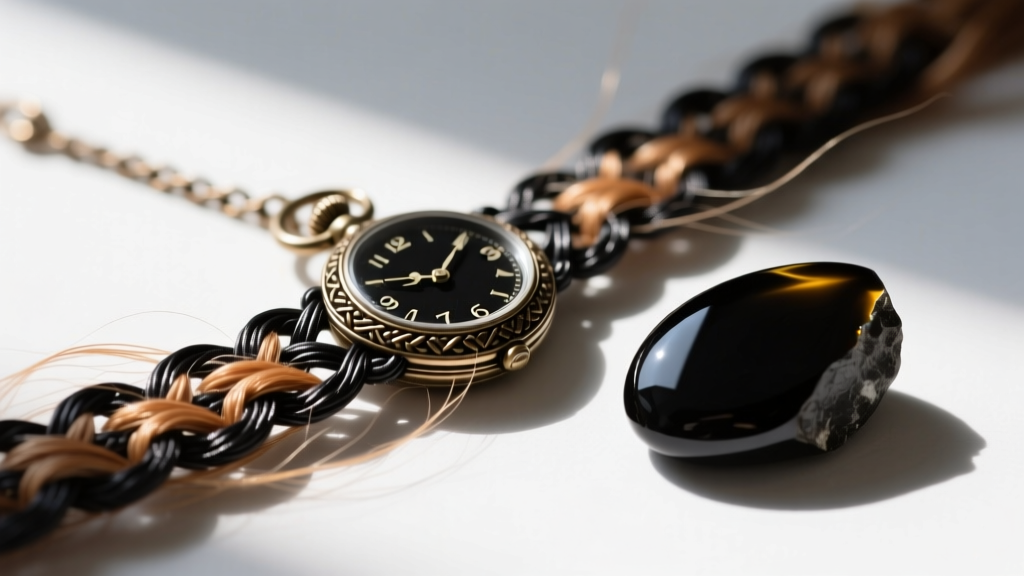
No exploration of Victorian mourning jewelry is complete without examining hairwork—the literal incorporation of a loved one's hair into a wearable keepsake. As noted by jewelry historians at Lang Antiques University, hair was considered an immortal material, immune to the decay that claimed the physical body. There are two primary categories of hairwork that collectors and modern designers study:
Palette Work
Palette work involves arranging chopped or finely woven hair into flat, pictorial scenes beneath a glass bezel. Using a sticky adhesive like gum arabic, artisans created intricate landscapes featuring weeping willows, broken columns, and urns. Because the hair is glued and exposed to moisture-sensitive adhesives, palette work is incredibly fragile. Water exposure will instantly dissolve the gum arabic, destroying the piece.
Woven Hairwork
Woven hair was created on specialized braiding tables using bobbins and lead weights to maintain tension. Long strands of hair were boiled, sorted, and woven into complex tubular chains, watch fobs, and bracelets. These pieces were often sent away to specialized factories, resulting in highly durable, uniform patterns like the "double flat braid" or the "square chain." Woven hair is far more resilient to environmental factors than palette work, making it a safer investment for daily wear.
Neo-Victorian Trends: How 2026 Designers Are Adapting the Aesthetic
The 2026 memorial jewelry landscape does not merely replicate the past; it synthesizes historical motifs with advanced metallurgy and modern cremation practices. Contemporary designers are answering the demand for "heirloom-quality grief" by adapting Victorian codes for the modern wearer. Here are the defining Neo-Victorian trends shaping the market this year:
- Black Vitreous Enamel on High-Karat Gold: Moving away from the fragility of antique jet, modern artisans are utilizing kiln-fired black vitreous enamel over 14k and 18k solid gold. This provides the deep, matte black required for traditional mourning but with the durability needed for everyday wear.
- Cremation Ash-Infused Resin: To mimic the opaque, dark aesthetic of gutta-percha and vulcanite, designers are suspending finely sifted cremation ashes in black-tinted, UV-stabilized epoxy resins. This creates a modern "faux-jet" that holds a deeply personal, physical connection to the deceased.
- Oxidized Sterling Silver Findings: Instead of bright, polished metals, Neo-Gothic memorial pieces heavily feature oxidized (blackened) sterling silver. This technique highlights the deep relief of carved memento mori motifs, such as skulls, clasped hands, and forget-me-not flowers.
- Laser-Engraved Hair Motifs: For those who wish to honor the aesthetic of hairwork without using physical remains, 2026 has seen a spike in laser-engraving microscopic, high-resolution scans of a loved one's hair into the interior of signet rings and locket interiors.
Styling and Caring for Your Memorial Pieces
Whether you are wearing an authentic 1870s vulcanite cameo or a contemporary black enamel cremation ring, proper care is non-negotiable. Antique mourning jewelry is notoriously susceptible to environmental degradation.
"The greatest enemy of Victorian mourning jewelry is the ultrasonic cleaner. The high-frequency vibrations will shatter fragile jet, crack black glass, and instantly disintegrate the gum arabic holding palette hairwork together."
For Antique Jet and Bog Oak: These organic materials can dry out and crack over time. Once a year, gently wipe them with a soft cloth lightly dampened with mineral oil to restore their luster and prevent desiccation. Never use chemical solvents or alcohol.
For Vulcanite: Vulcanite is highly reactive to ultraviolet light. Prolonged exposure to sunlight will cause the black rubber to oxidize and turn a permanent, unappealing bronze-brown. Always store vulcanite pieces in a dark, climate-controlled drawer, wrapped in acid-free tissue paper.
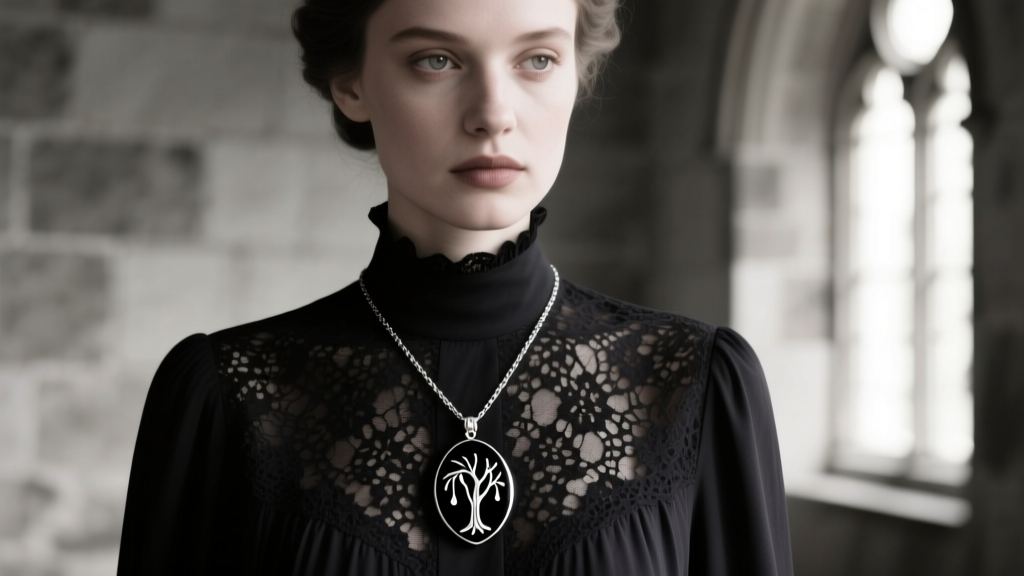
Styling for 2026: The modern approach to styling mourning jewelry leans into juxtaposition. Rather than head-to-toe black crepe, contemporary stylists pair heavy, oxidized silver mourning lockets and matte black enamel rings with crisp white linens, structured tailoring, or the aforementioned dark academia lace. This contrast allows the intricate, somber details of the jewelry to command attention without appearing costumey.
Final Thoughts on the Neo-Gothic Revival
The revival of Victorian mourning jewelry in 2026 is a testament to the human need for tangible remembrance. In a fast-paced, disposable world, the heavy, deliberate, and deeply symbolic nature of these pieces offers a profound anchor. Whether you are hunting for an authentic Whitby jet brooch at an estate sale or commissioning a modern black enamel ring infused with a loved one's ashes, understanding the rich history and material science behind these artifacts ensures that the legacy of the departed is honored with the utmost respect and expertise.


