Nick's Fine Jewelry Brooklyn: Material Quality Guide
Explore the metallurgical standards of Nick's Fine Jewelry Brooklyn. Compare platinum, 18k gold, and 14k alloys for durability and bench repair.

The Brooklyn Bench Standard: Why Material Choice Dictates Longevity
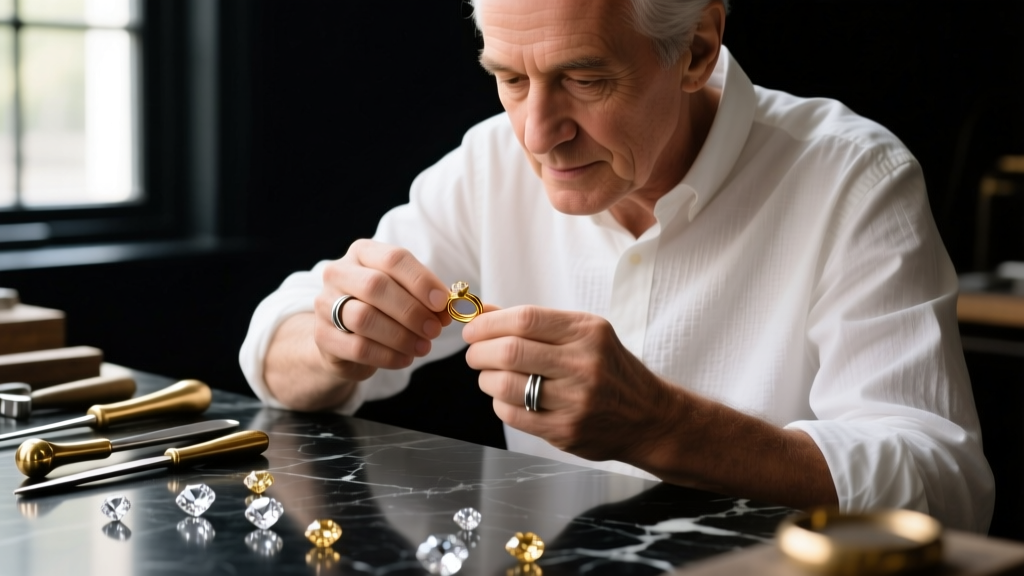
When discerning collectors and locals search for Nick's Fine Jewelry Brooklyn, they are rarely looking for mass-produced, mall-tier accessories. They are seeking heirloom-quality craftsmanship, bespoke casting, and master-level bench repairs. In 2026, the jewelry landscape has shifted dramatically; with the mainstream adoption of lab-grown diamonds and high-clarity gemstones, consumers are reallocating their budgets toward superior metal settings. Understanding the metallurgical properties of fine jewelry is no longer just for goldsmiths—it is essential for anyone investing in pieces meant to survive generations.
The difference between a piece that survives a century and one that degrades in a decade lies in the alloy composition, the Vickers hardness of the metal, and the specific gravity of the casting. Master jewelers evaluate metals not just by their spot price, but by how they behave under the torch, how they hold a microscopic laser weld, and how they resist abrasive wear against modern ceramics and carbides.
Platinum vs. Gold Alloys: A Metallurgical Breakdown
To understand the quality tier of established Brooklyn bench jewelers, we must dissect the primary metals used in fine jewelry. The choice between platinum and gold is not merely aesthetic; it is a fundamental decision regarding structural integrity and long-term maintenance.
Platinum 950: Ruthenium vs. Iridium Alloys
Pure platinum is too soft for daily wear, so it is alloyed to 95% purity (Pt950). However, the remaining 5% drastically alters the metal's behavior on the jeweler's bench. Historically, Platinum Guild International notes that Iridium was the standard alloying agent. Pt950/Iridium is exceptionally malleable, making it ideal for hand-forging and intricate milgrain work. However, it has a lower Vickers hardness (approx. 110 HV) and is prone to casting porosity.
Today, top-tier custom houses prefer Pt950/Ruthenium. Ruthenium increases the Vickers hardness to roughly 135 HV and yields a much denser, porosity-free cast. When a platinum prong is struck against a hard surface, it does not lose metal; it displaces it, forming a patina. This 'galling' effect means a platinum setting will securely hold a diamond for decades without the prong thinning out, a critical factor for high-value center stones.
18k vs. 14k Gold: The Copper-Silver Balancing Act
Gold purity is measured in karats, but the alloying metals dictate the durability. 18k yellow gold is 75% pure gold, typically alloyed with 12.5% copper and 12.5% silver. This yields a rich, buttery yellow hue and a Vickers hardness of about 125 HV. While beautiful, 18k gold is relatively soft. Over a 10-year period of daily wear, the prongs on an 18k gold solitaire will experience measurable abrasive wear, requiring periodic re-tipping by a master goldsmith.
Conversely, 14k gold (58.5% pure gold) is alloyed with higher percentages of copper, silver, and zinc. This increases the hardness to roughly 140 HV, making it highly resistant to scratching and bending. According to the Gemological Institute of America (GIA), 14k gold remains the standard for durable, everyday fine jewelry in the United States, offering an optimal balance of gold content and structural resilience.
Comparative Data: Hardness, Density, and Prong Failure Rates
The table below illustrates the precise metallurgical data that bench jewelers use when advising clients on material selection for engagement rings and heirloom pieces.
| Metal Alloy | Composition | Vickers Hardness (HV) | Specific Gravity | 10-Year Prong Wear |
|---|---|---|---|---|
| Pt950 / Ru | 95% Pt, 5% Ru | 135 | 21.06 | < 5% (Displaces) |
| 18k Yellow | 75% Au, 25% Cu/Ag | 125 | 15.58 | 15% - 20% |
| 14k White | 58.5% Au, Ni/Pd/Zn | 140 | 13.07 | 10% - 15% |
| Pd950 | 95% Pd, 5% Ru | 120 | 12.02 | 10% (Brittle risk) |
Note: Specific gravity dictates the weight of the ring. A platinum band will feel nearly 60% heavier than an identically sized 14k white gold band, which significantly impacts the final pricing regardless of the daily spot market fluctuations.
The Rhodium Reality: White Gold Maintenance Cycles
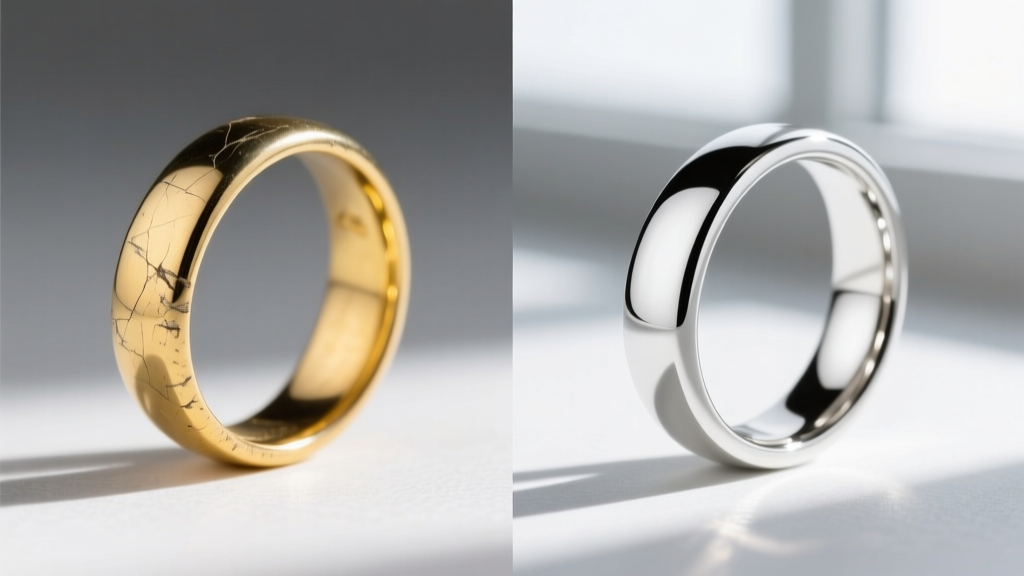
A common point of confusion in fine jewelry is the nature of white gold. Pure gold is yellow; therefore, 'white' gold is actually a mixture of yellow gold and white metals like nickel, palladium, or manganese. Even the best 18k white gold alloys retain a faint yellowish-gray undertone.
To achieve the brilliant, mirror-like white finish seen in showroom displays, the metal is electroplated with rhodium, a member of the platinum group metals. The longevity of this plating depends entirely on the thickness applied. Mass-market jewelers often use a 'flash' plating of 0.1 to 0.25 microns, which wears off in a matter of months, exposing the yellowish alloy beneath. Master jewelers, however, apply a heavy bench plating of 0.75 to 1.0 microns. This thicker layer can withstand 1 to 3 years of daily wear before requiring a re-plate. When evaluating a piece of white gold, always inquire about the rhodium thickness; it is a primary indicator of the manufacturer's quality tier.
Sizing and Repair: How Metals React to the Torch
The true test of any fine jewelry material is how it survives the repair bench. Sizing a ring or rebuilding a worn prong requires intense heat, and different metals react drastically differently to thermal shock and soldering.
'A master jeweler doesn't just fix a ring; they manage the thermal dynamics of the alloy. Platinum demands respect; it pulls heat away from the solder joint so quickly that you need an oxygen-gas torch or a laser welder to avoid melting the surrounding shank.' — Senior Bench Jeweler, Brooklyn.
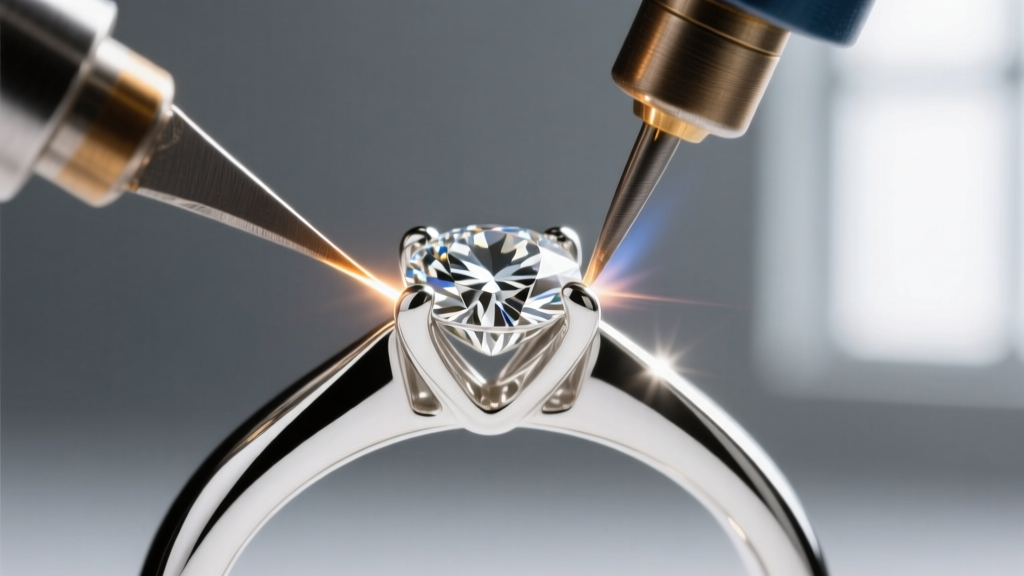
- Platinum Sizing: Requires temperatures exceeding 1768°C. Because platinum is an excellent heat conductor, the entire ring can become dangerously hot during traditional soldering. Modern Brooklyn workshops utilize laser welders to fuse platinum locally without heating the surrounding stones or metal.
- 14k/18k Gold Sizing: Melts around 850°C to 950°C. Gold is highly forgiving on the bench, allowing for easy sizing, shank replacement, and traditional soldering. However, repeated heating can cause 'fire scale' (copper oxidation) which must be polished out.
- Palladium Sizing: While lighter and cheaper than platinum, Pd950 is notoriously difficult to cast and repair. It is highly reactive to oxygen when molten and can become brittle if not handled with specialized argon-gas environments. Many local jewelers refuse to size palladium due to the high risk of catastrophic shattering.
Final Verdict: Matching Metal to Lifestyle
The standards upheld by established artisans prove that there is no single 'best' metal—only the right metal for the specific application. For intricate, hand-engraved heirloom pieces that will be worn daily and subjected to heavy impact, Pt950/Ruthenium is the undisputed champion due to its displacement properties and structural memory. For those who prioritize a warmer aesthetic, lower maintenance cycles, and a lighter feel on the hand, 18k yellow gold remains the pinnacle of traditional luxury. Meanwhile, 14k white gold offers the most pragmatic balance of high tensile strength and accessible pricing for complex, multi-stone pavé settings. By understanding these metallurgical realities, you ensure that your fine jewelry investment is built to endure.