Permanent Jewelry Lincoln NE: Expert Care & Cleaning
Discover expert care, cleaning, and DIY repair tips for permanent jewelry in Lincoln, NE. Tackle hard water buildup and maintain your welded chains.

The Rise of Permanent Jewelry in Lincoln, NE
Over the past few years, permanent jewelry has transformed from a niche boutique offering into a mainstream staple across the Midwest. If you have attended a pop-up welding event in Lincoln’s historic Haymarket district or visited a local artisan studio, you likely left with a seamless, clasp-free chain welded snugly around your wrist or ankle. While the initial application is a professional process, the long-term maintenance, cleaning, and minor DIY repairs fall squarely into your hands. As we navigate 2026, understanding how to care for these delicate, continuously worn pieces is essential for preserving their luster and structural integrity.
Unlike traditional jewelry that you take off at night, permanent bracelets and anklets endure constant exposure to your body chemistry, local environmental factors, and daily wear and tear. For DIY jewelry enthusiasts and local wearers alike, mastering at-home care protocols ensures your investment remains as brilliant as the day it was welded.
Midwest Environmental Factors: What Lincoln Wearers Must Know
Caring for permanent jewelry in Lincoln, Nebraska, requires an understanding of our specific regional climate and water profile. The Midwest presents unique challenges that coastal or southern residents simply do not face.
Hard Water and Mineral Buildup
Lincoln’s municipal water is sourced from the Platte River and deep aquifers, resulting in a hardness level that frequently exceeds 15 grains per gallon. This high concentration of calcium and magnesium is the enemy of jewelry brilliance. When you shower with a permanent gold-filled or sterling silver chain, the water evaporates and leaves behind microscopic mineral deposits. Over time, these deposits trap soap scum and dead skin cells inside the tiny links of cable or rope chains, creating a dull, grayish film that mimics tarnish but is actually calcification.
Winter Dryness and Lotion Traps
Nebraska winters are harsh, and indoor heating systems strip humidity from the air. To combat dry, itchy skin, most of us apply heavy body lotions and oils daily. These emollients easily work their way into the crevices of permanent anklets and bracelets. Because you cannot easily remove the chain to wipe it down, the lotion acts as an adhesive, binding dust, lint from winter sweaters, and skin flakes directly to the metal.
DIY Cleaning Protocols for Welded Chains
To combat the specific environmental factors of the Lincoln area, you need a targeted, DIY-friendly cleaning routine. According to the Gemological Institute of America (GIA), gentle, consistent cleaning is far superior to aggressive, infrequent polishing. Here is the step-by-step protocol for maintaining permanent chains without damaging the weld points or the base metals.
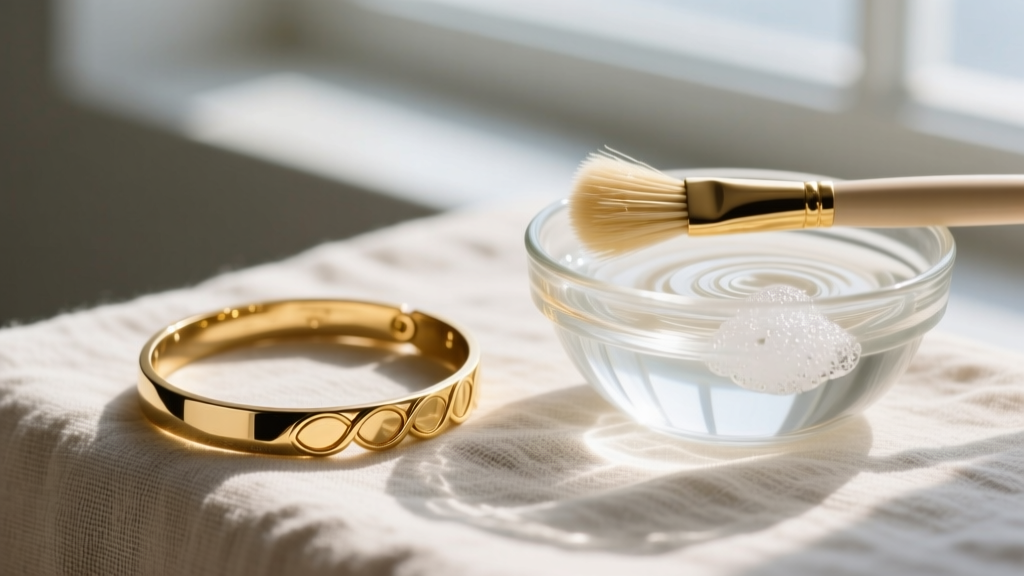
- The Pre-Soak: Fill a small glass bowl with warm (not hot) distilled water. Using distilled water is a critical pro-tip for Lincoln residents, as it contains zero minerals and will not add new hard water spots during the cleaning process.
- The Surfactant: Add three drops of a mild, phosphate-free dish soap (original blue Dawn is the industry standard). Avoid harsh degreasers or soaps with added moisturizers, which leave a residue.
- The Agitation: Submerge your wrist or ankle into the bowl. Using an extra-soft baby toothbrush, gently brush along the length of the chain. Pay special attention to the underside of the wrist and the area immediately adjacent to the welded jump ring, where debris accumulates most heavily.
- The Rinse and Dry: Rinse the chain under a gentle stream of distilled water. Pat dry with a lint-free microfiber cloth. Never use paper towels, as the wood pulp fibers can snag on micro-soldered joints or textured chain links.
Material-Specific Care Matrix
Not all permanent jewelry is created equal. Local Lincoln studios typically offer 14k solid gold, 14k gold-filled, and Argentium sterling silver. Each material reacts differently to deep-cleaning methods. Use the matrix below to determine the safest approach for your specific chain.
| Material Grade | Routine Cleaner | Deep Clean Method | Critical Warnings |
|---|---|---|---|
| 14k Solid Gold | Mild Dish Soap | Ultrasonic Cleaner (3 mins) | Avoid chlorine (pools/hot tubs) which causes irreversible stress corrosion cracking. |
| 14k Gold-Filled (1/20 GF) | Mild Dish Soap | Ionic Cleaner (30 seconds) | Never use ultrasonic cleaners; high-frequency vibrations can delaminate the gold layer from the brass core. |
| Argentium Sterling Silver | Silver Polish Cloth | Baking Soda + Aluminum Bath | Avoid contact with rubber bands and sulfur-rich environments, which accelerate silver sulfide tarnish. |
| Titanium (Grade 23) | Isopropyl Alcohol | Ultrasonic Cleaner (5 mins) | Highly durable, but anodized color layers can be scratched by abrasive polishing compounds. |
At-Home Repairs: Fixing Snaps and Breaks
While permanent jewelry is designed to last, it is not indestructible. Snagging a delicate 16-gauge cable chain on a heavy winter sweater or catching an anklet on a bicycle pedal can result in a broken link or a fractured weld. As a DIY jewelry maker, you do not necessarily need to book an expensive studio appointment to fix a minor break.
Using Locking Jump Rings for DIY Repairs
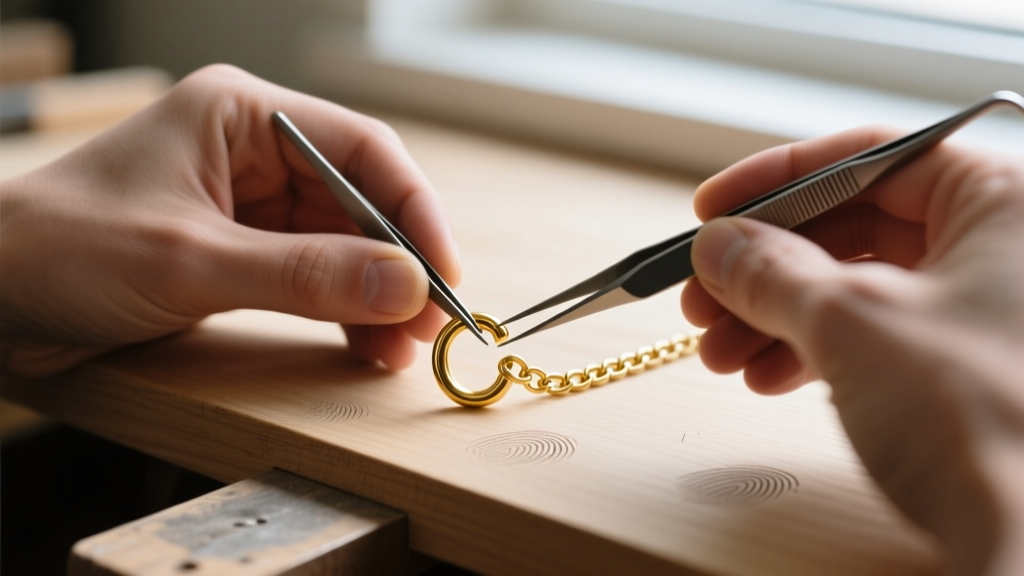
If your chain snaps near the clasp-less weld point, you can repair it at home using specialized locking jump rings. Unlike standard split rings, locking jump rings feature a milled groove that allows the ends to snap tightly together, creating a seamless look that mimics a weld. For most delicate permanent chains (ranging from 1.2mm to 2.5mm in width), you will need 3mm or 4mm locking jump rings in 18-gauge or 20-gauge thickness.
Using high-quality chain-nose pliers (brands like Wubbers or Lindstrom are recommended by Jewelers of America to prevent marring the metal), gently twist the ring open laterally—never pull it apart outward, which distorts the perfect circle. Thread the two broken ends of your permanent chain into the ring, and twist it closed until you hear and feel a distinct 'click' as the locking mechanism engages.
When to Invest in a DIY Micro-Welder
For serious DIY enthusiasts in the Lincoln area who frequently make and repair jewelry for friends, purchasing a desktop micro-welder (such as the Orion mPulse or a Sunstone welder) is a viable, albeit expensive, investment. These machines use capacitive discharge to fuse metals without solder, preserving the exact color and karat of the chain. However, for the average wearer, mastering the locking jump ring technique is the most cost-effective and immediate solution for chain failures.
Knowing When to Seek Professional Help
While DIY maintenance covers 90% of your care needs, there are scenarios where you must return to a professional Lincoln studio. If the chain has suffered severe stretching, if a gemstone charm has become loose in its bezel, or if the metal has developed deep, structural kinks (common in herringbone or snake chains), at-home repairs will likely cause further damage. Furthermore, if you need the jewelry removed for an MRI or surgery, a professional will use specialized flush cutters to snip the chain at the exact weld point, ensuring it can be seamlessly re-welded later without losing any links.
Final Thoughts on Longevity
Permanent jewelry is a beautiful, low-maintenance accessory, but 'low-maintenance' does not mean 'no-maintenance.' By understanding the impact of Lincoln’s hard water, adapting your cleaning routine to your specific metal grade, and keeping a small DIY repair kit on hand, you can ensure your welded chains remain a permanent fixture in your wardrobe for years to come. Treat your jewelry with the same care you would any fine investment, and it will continue to shine through every Midwestern season.


