Is Vintage Costume Jewelry Worth It? An Expert Appraisal Guide
Find out what makes vintage costume jewelry worth collecting. Spot valuable hallmarks, rare materials, and top designers like Trifari, Coro, and Dior.

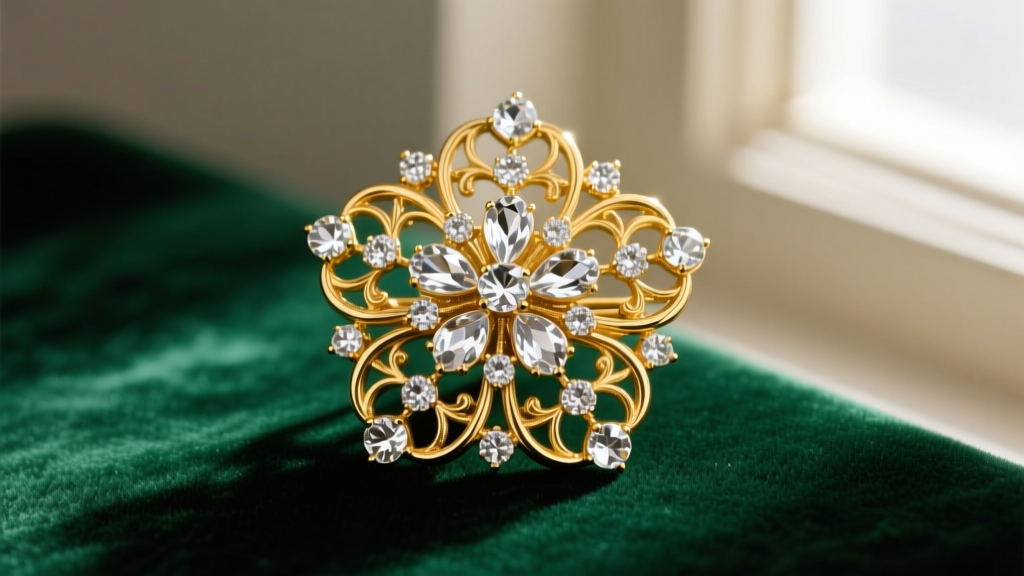
When browsing estate sales, online auctions, or antique malls in 2026, it is easy to dismiss a tray of tarnished brooches and cloudy necklaces as mere trinkets. Yet, the secondary market for high-end vintage fashion accessories has surged, with rare pieces routinely commanding thousands of dollars at auction. This begs the question for both novice collectors and seasoned resellers: is vintage costume jewelry worth the time, effort, and capital required to authenticate and acquire it?
Unlike fine jewelry, which derives its baseline value from the melt weight of precious metals and the carat grading of gemstones, costume jewelry relies entirely on design pedigree, historical context, material innovation, and brand hallmarks. A piece of stamped brass and glass can outvalue a modest 14k gold ring if it bears the right signature and exemplifies a specific era of manufacturing excellence. This comprehensive appraisal guide will teach you exactly what to look for when determining if a piece of vintage costume jewelry is a valuable collectible or simply costume clutter.
The Allure of the Fake: Why Costume Jewelry Holds Value
The concept of 'bijoux de fantaisie' was popularized by Coco Chanel in the 1920s, deliberately mixing faux pearls with real diamonds to shock the Parisian elite. However, the true golden age of American costume jewelry occurred between the 1930s and 1960s. During this period, European-trained artisans fled to the United States, bringing advanced metallurgical and stone-setting techniques to companies like Trifari, Coro, and Miriam Haskell.
According to the Victoria & Albert Museum, the mid-century explosion of costume jewelry was driven by Hollywood glamour and wartime rationing. Because base metals were restricted during World War II, top manufacturers pivoted to using sterling silver, often heavily plated with rhodium to prevent tarnishing. These 'Retro' era pieces (1942–1945) are now among the most fiercely contested items in the 2026 collector market, proving that historical scarcity often trumps intrinsic material value.
Decoding the Hallmarks: Signatures That Drive Up Price
The single most critical factor in determining if your vintage costume jewelry is worth appraising is the maker's mark. However, simply seeing a famous name is not enough; you must understand the evolution of their hallmarks to date the piece accurately and spot counterfeits.
The Big Three: Trifari, Coro, and Miriam Haskell
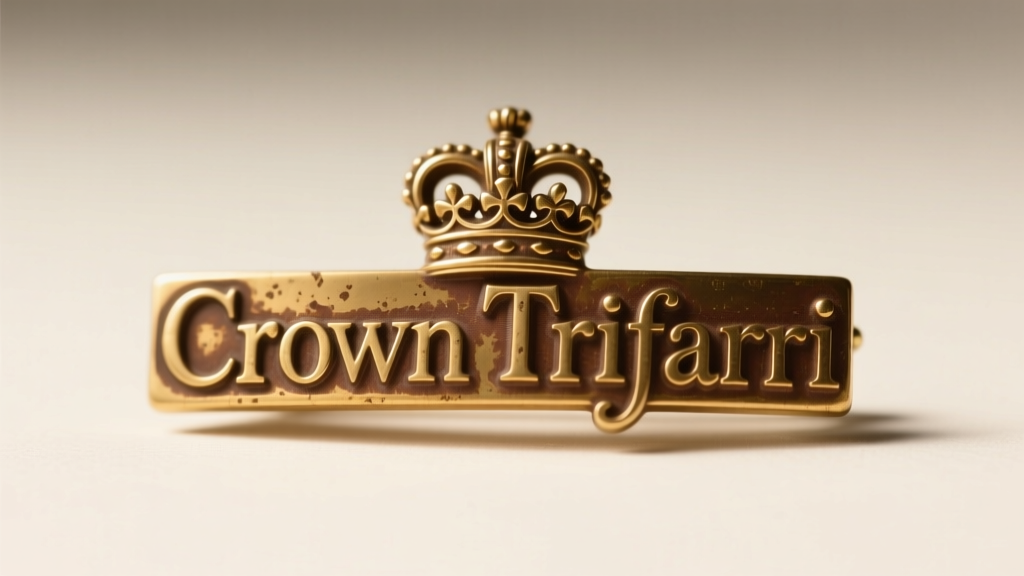
Trifari: Founded by Gustavo Trifari, this brand is the undisputed king of mid-century costume jewelry. The most valuable pieces bear the 'Crown Trifari' mark (a crown over the word Trifari), introduced in the late 1930s after the company won a landmark copyright infringement lawsuit. If you find a piece marked simply 'Trifari' without the crown, it likely dates to the 1920s or early 1930s and can be exceptionally rare, though the Crown mark remains the most recognized by buyers.
Coro: Coro was the largest manufacturer in the US, producing everything from budget-friendly lines to high-end luxury. Look for the 'Corocraft' or 'Vendome' marks, which denote their premium tiers. Pieces marked with 'DES. PAT.' or specific patent numbers (e.g., 119,404) indicate a registered design, significantly boosting the value for specialized collectors.
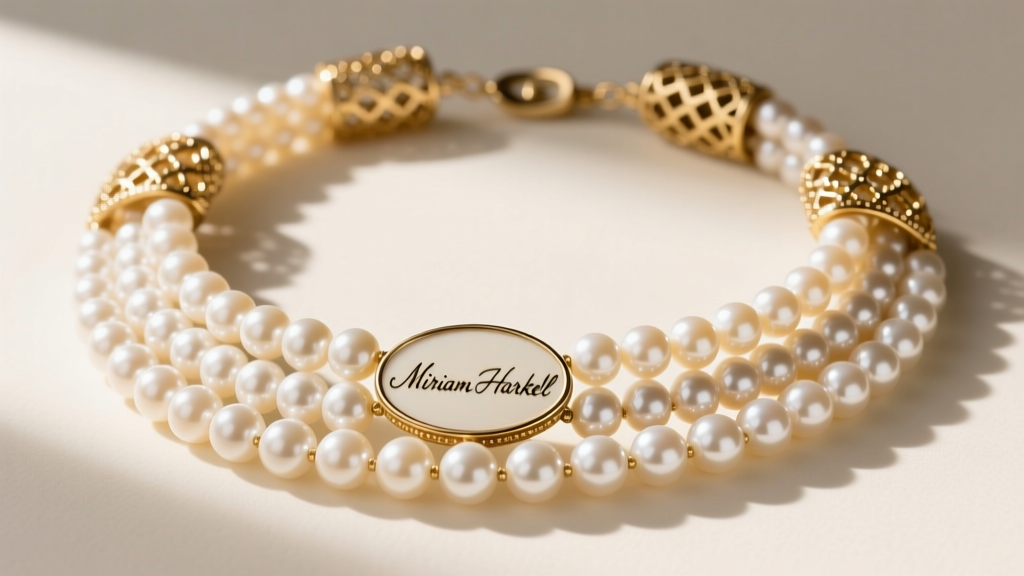
Miriam Haskell: Haskell's pieces are renowned for their intricate, hand-wired filigree and use of Russian gold plating. Early pieces (1920s–1940s) were often unmarked or featured a tiny horseshoe-shaped pin plate. The iconic oval 'Miriam Haskell' plaque was not introduced until 1950. Therefore, an unmarked, highly complex hand-wired piece is often older and more valuable than a later, clearly marked one.
European Powerhouses: Dior and Schiaparelli
Christian Dior's costume jewelry was manufactured by various licensed houses, including Kramer and Henkel & Grosse. Look for the 'Chr. Dior' mark alongside the manufacturer's stamp. Elsa Schiaparelli's pieces, particularly those featuring aurora borealis stones or surrealist motifs like insects and anatomical hearts, are highly prized. However, Schiaparelli marks are heavily faked; always verify the clasp type and stone quality against known authentic examples on databases like WorthPoint.
Material Matters: Spotting High-End Components
While costume jewelry lacks precious gems, the quality of its alternative materials varies wildly. Understanding these nuances is essential for accurate appraisal.
| Material Component | Era of Prominence | Value Indicator & Appraisal Notes |
|---|---|---|
| Pot Metal (Zinc Alloy) | 1930s - 1940s | High risk of 'zinc pest' (intergranular corrosion). Pristine pot metal pieces from the 1930s are rare and valuable, but flaking or cracking destroys value instantly. |
| Rhinestone (Foil-Backed) | 1920s - Present | Early Czech and Austrian glass stones with intact silver foil backs command premium prices. Moisture turns the foil black, killing the stone's brilliance and the piece's value. |
| Aurora Borealis (AB) | 1955 - Present | Invented by Swarovski for Dior in 1955. If a piece features AB stones but claims to be from the 1930s, it is a 'franken-piece' or an outright fake. |
| Faux Pearls (Glass Dipped) | 1930s - 1960s | High-end makers like Haskell used glass beads dipped in pearl essence (derived from fish scales). These have a heavy, cool feel. Modern plastic pearls are lightweight and worthless. |
| Vermeil (Gold over Silver) | 1940s (WWII) | Heavy gold wash over sterling silver. Look for 'Sterling' stamped beneath the gold. High-value wartime necessity pieces. |
The Clasp Tells the Tale
Appraisers never look at just the front of a brooch; the hardware on the back is a built-in lie detector. The evolution of the clasp provides a reliable timeline for dating vintage pieces.
- C-Clasp (No Safety Catch): The pin simply rests in a 'C' shaped hook. This indicates a piece from the late 1800s to the 1920s. Highly valuable if the design matches the era.
- Trombone Clasp: A push-pull tube mechanism, predominantly used by European manufacturers (especially French and German) from the 1890s through the 1940s.
- Roll-Over Safety Clasp: The modern standard, featuring a locking lever that rolls over the pin. Patented in the late 1940s and widely adopted by the 1950s. If a piece claimed to be from the 1920s has a roll-over safety clasp, it has likely been repaired or is a modern reproduction.
Condition and Flaws: What Kills the Resale Value
In the 2026 market, condition is paramount. Serious collectors on platforms like Ruby Lane will pay top dollar for mint condition, but will aggressively discount pieces with specific flaws.
Replaced Stones and Glue Residue: Rhinestones are glued into metal cups. If a stone falls out and a well-meaning owner replaces it with a modern acrylic stone or uses cyanoacrylate (Super Glue), the chemical reaction can melt the vintage foil backing of adjacent stones. Always inspect the piece under a jeweler's loupe for cloudy glue residue or mismatched stone facets.
"The presence of cyanoacrylate glue on a vintage rhinestone setting is an immediate red flag. The chemical fumes alone can permanently cloud the foil backing of surrounding stones, causing irreversible damage." — Vintage Jewelry Conservation Guidelines
Vermeil and Plating Wear: 'Brassing' occurs when the gold or silver plating wears away to reveal the yellow brass or copper base metal underneath. While slight wear on high-contact areas (like the back of a ring) is acceptable, severe brassing on the focal point of a brooch or necklace reduces the value by up to 70%.
Pearling and Flaking: Faux pearls are incredibly fragile. If the pearl coating is peeling, flaking, or rubbing off to reveal the white glass or plastic bead beneath, the piece is considered 'damaged' in the appraisal world. There is no way to restore flaking faux pearls authentically.
A Practical Buying Framework for 2026 Collectors
When evaluating a potential purchase, run through this rapid diagnostic checklist to determine if the costume jewelry is worth your money:
- Weight and Temperature Test: Pick up the piece. Does it feel substantial? High-end vintage pieces used heavy brass, bronze, or glass beads. If it feels exceptionally light, it may be a post-1980s reproduction using injected molded plastic or hollow base metals.
- Loupe the Stones: Examine the edges of the rhinestones. Vintage glass stones have sharp, crisp facets. Modern mass-produced acrylic or resin stones will have rounded, soft edges and mold lines.
- Check the Back: Look for smooth, finished metalwork. High-quality manufacturers like Trifari finished the backs of their brooches almost as beautifully as the fronts. Rough, porous, or unfinished backs indicate lower-tier manufacturing or modern knock-offs.
- Verify the Mark: Cross-reference the hallmark font and placement. Counterfeiters often laser-engrave modern marks onto vintage blanks. A stamped, slightly worn mark that follows the curvature of the metal is a sign of authenticity.
Final Verdict: Is It Worth the Investment?
So, is vintage costume jewelry worth the investment? The answer is a resounding yes, provided you approach the market as a historian and a material scientist rather than a gold prospector. The intrinsic value of the materials is irrelevant; you are investing in mid-century industrial design, Hollywood history, and the artisanal craftsmanship of a bygone era.
By mastering the nuances of hallmarks, understanding the chronological timeline of clasp mechanisms, and learning to identify the devastating effects of zinc pest and foil degradation, you can confidently navigate estate sales and online auctions. The next time you spot a tarnished, heavy brooch with a 'Crown Trifari' stamp and intact aurora borealis stones, you will know exactly what it is worth—and why it deserves a prime spot in your collection.


