The Ultimate RH Macy's and Co Fine Jewelry Care Guide
Discover expert cleaning, maintenance, and storage tips for your RH Macy's and Co fine jewelry, including how to handle clarity-enhanced diamonds safely.

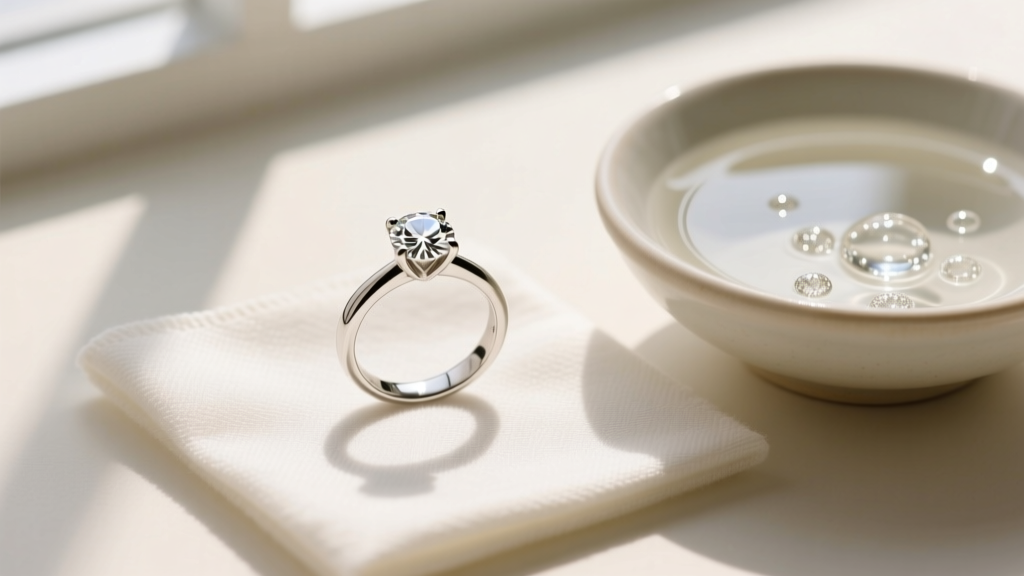
When you invest in pieces from the historic R.H. Macy & Co. lineage or purchase modern fine jewelry from Macy's department stores, you are acquiring accessories that blend accessible luxury with commercial durability. However, department store fine jewelry possesses a unique material DNA. From 10-karat gold alloys engineered for hardness to clarity-enhanced diamonds and cast settings, these pieces require a highly specific maintenance protocol. Using the wrong cleaning method—such as an ultrasonic bath on a treated stone—can cause irreversible, catastrophic damage. This comprehensive 2026 guide details the exact care, maintenance, and cleaning strategies required to preserve the brilliance and structural integrity of your RH Macy's and Co fine jewelry portfolio.
Understanding the Material DNA of Department Store Fine Jewelry
Before applying any cleaning solution, you must understand the metallurgical and gemological profile of your jewelry. RH Macy's and Co fine jewelry typically utilizes 10K or 14K gold. While 14K gold contains 58.3% pure gold, 10K gold contains only 41.7% pure gold, alloyed heavily with copper, zinc, and silver. This makes 10K gold exceptionally hard and resistant to scratching, but significantly more prone to oxidation and surface tarnish due to the reactive base metals.
Furthermore, the majority of department store settings are created through investment casting rather than hand-forging or die-striking. Cast gold is inherently more porous at a microscopic level. If you use harsh chemical dips or abrasive pastes, residue can become trapped in these micro-pores, leading to long-term discoloration and skin irritation. Understanding this baseline allows you to pivot away from aggressive commercial jewelry cleaners and toward gentle, targeted maintenance.
The Hidden Danger: Identifying Clarity-Enhanced Diamonds
The most critical E-E-A-T warning for owners of RH Macy's and Co fine jewelry involves clarity-enhanced diamonds. To offer larger carat weights at accessible price points, major retailers frequently sell diamonds that have undergone fracture-filling (often via the Yehuda process). This involves injecting a microscopic, glass-like resin into the natural fissures of a diamond to improve its apparent clarity.
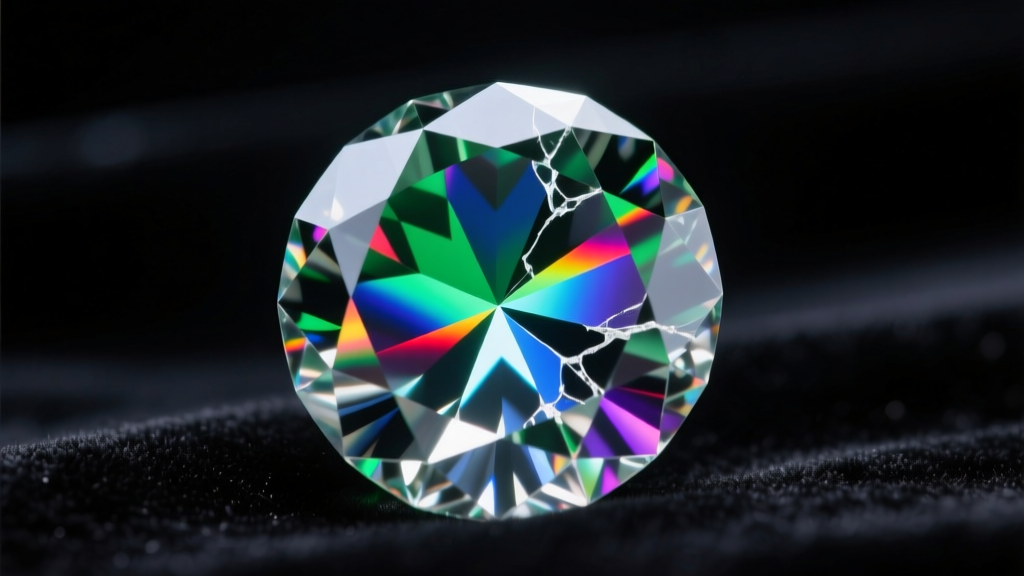
According to the Gemological Institute of America (GIA), while these diamonds look stunning to the naked eye, they are highly volatile when exposed to standard jewelry cleaning environments. You can identify a fracture-filled diamond by tilting it under a bright LED light and looking for a 'flash effect'—subtle rainbow or purple hues reflecting from inside the stone's fissures.
Critical Warning: Never place a clarity-enhanced diamond in an ultrasonic cleaner. The 40,000 Hz vibrations will shatter the glass filler or cause it to cloud permanently. Similarly, steam cleaners operate at temperatures exceeding 212°F (100°C), which is hot enough to melt the resin, leaving your diamond looking fractured and opaque.
Step-by-Step Safe Cleaning Protocol
For standard 14K gold and natural, untreated diamonds, a meticulous at-home cleaning routine will maintain maximum light return. Avoid commercial 'dip' cleaners, which often contain thiourea—a chemical that can strip rhodium plating and pit cast gold over time.
The 2026 Expert Cleaning Recipe
- Base: 1 cup of warm distilled water (tap water contains minerals that leave hard water spots).
- Surfactant: 3 drops of ammonia-free, dye-free dish soap (e.g., Dawn Free & Clear). Dyes can stain the porous crevices of cast settings.
- Drying Agent: 1 teaspoon of 70% isopropyl alcohol to break water tension and prevent spotting.
Soak your jewelry for exactly 15 minutes. Do not exceed this, as prolonged soaking can weaken the adhesives used in certain gemstone settings (like pearl or onyx accents). Gently agitate the piece using an extra-soft baby toothbrush, focusing on the underside of the diamond (the pavilion), where sebum and dead skin cells accumulate and block light refraction. Rinse under lukewarm running water and pat dry with a lint-free microfiber cloth.
| Material Profile | Safe Cleaning Method | Avoid At All Costs | Maintenance Cycle |
|---|---|---|---|
| 14K Yellow Gold & Natural Diamonds | Mild dish soap, baby toothbrush, distilled water | Abrasive polishing cloths, chlorine bleach | Every 2 weeks |
| Clarity-Enhanced Diamonds | Damp microfiber cloth only; mild soap if necessary | Ultrasonic cleaners, steamers, acid dips | Weekly surface wipe |
| 10K Gold (High Copper Alloy) | Ammonia-free soap, immediate thorough drying | Prolonged soaking, commercial silver dips | Weekly to prevent tarnish |
| Pearls or Opals (Accent Stones) | Dry, soft-bristle brush only | Water immersion, ultrasonic, steam, alcohols | After every wear |
Maintaining Rhodium Plating on White Gold Pieces
If your RH Macy's and Co fine jewelry features white gold, it is likely 14K white gold, which is naturally a pale, yellowish-gray alloy. To achieve the brilliant, mirror-like chrome finish seen in display cases, it is electroplated with rhodium, a platinum-group metal. Department store jewelry typically features a rhodium layer between 0.1 and 0.5 microns thick—thinner than bespoke luxury pieces, which often exceed 1.0 microns.
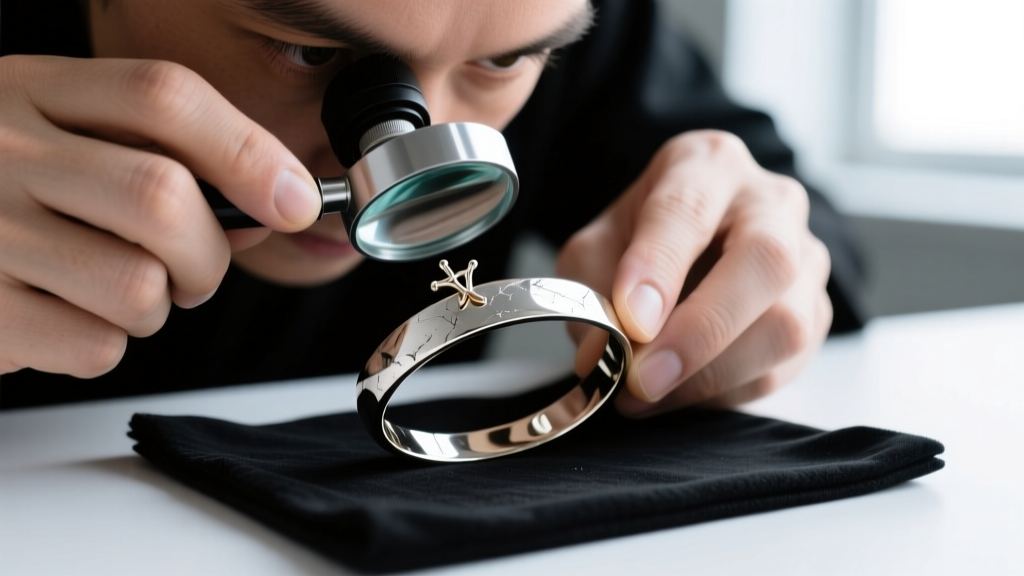
Friction, acidic skin pH, and exposure to lotions will wear this plating down, revealing the yellowish alloy beneath, particularly on the high-contact areas of rings and bracelets. According to Jewelers of America, once the rhodium wears off, the underlying alloy can cause green or black discoloration on the skin due to copper oxidation. In 2026, professional rhodium re-plating at a local bench jeweler typically costs between $55 and $85. To extend the life of your plating, always remove white gold jewelry before applying hand sanitizers or acidic skincare products like vitamin C serums and glycolic acid.
Prong Integrity and the 'Sweater Test'
The structural Achilles' heel of cast department store jewelry is the prong. Unlike hand-forged prongs, which compress the metal and align its crystalline structure for maximum tensile strength, cast prongs are formed from liquid metal, making them slightly more brittle and porous. Over time, micro-fissures can develop at the base of the prong where it meets the gallery wire.
To check for prong failure, perform the 'Sweater Test.' Run the top of your ring or pendant lightly across a tightly woven knit fabric, such as a sweater or silk scarf. If the prongs catch or 'fish-hook' into the fabric, they have lifted away from the diamond's girdle. This is an immediate red flag. Do not attempt to push the prongs down yourself with pliers; cast metal can snap if bent at the wrong angle. Take the piece to a professional jeweler to have the prongs re-tipped or laser-welded, a service that usually costs $15 to $30 per prong.
Long-Term Storage and Anti-Tarnish Strategies
Proper storage is the final pillar of RH Macy's and Co fine jewelry maintenance. The original velvet or cardboard boxes provided by the retailer are often treated with acidic sizing agents and glues that can actually accelerate tarnishing and degrade pearl nacre over time.
Instead, invest in a high-quality, untreated wooden jewelry box lined with tarnish-resistant Pacific cloth. For 10K gold pieces and sterling silver accents, place a 3M anti-tarnish strip inside each storage compartment. These strips utilize copper sulfate technology to absorb hydrogen sulfide and sulfur dioxide gases from the air—the primary culprits behind silver and copper oxidation. Replace these strips every six months. Finally, never store diamond jewelry loosely in a drawer or travel pouch alongside softer gemstones like emeralds, turquoise, or opals; diamonds possess a 10 on the Mohs hardness scale and will effortlessly scratch and degrade softer stones upon contact. Individual soft flannel pouches are mandatory for preserving the polished finish of your entire collection.


