Secrète Fine Jewelry: Metal Properties for Hidden Designs
Discover the best metals for secrète fine jewelry. Compare 18k gold, platinum, and titanium for hidden compartments, micro-hinges, and secret enamel.

The Engineering Behind Secrète Fine Jewelry
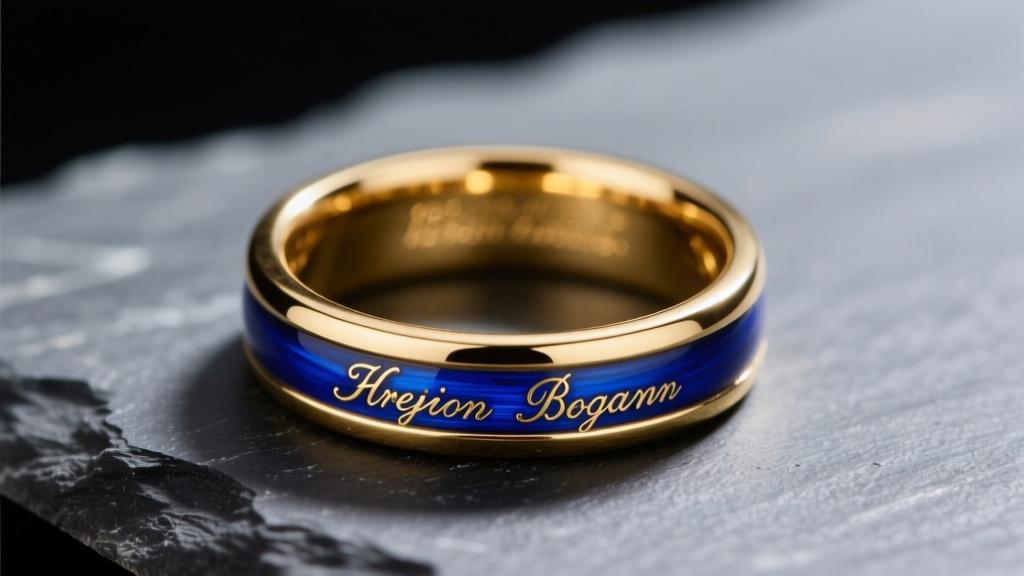
Secrète fine jewelry represents the ultimate intersection of metallurgy, micro-engineering, and romantic sentiment. From antique poesy rings harboring hidden enamel messages beneath the bezel to modern puzzle rings and locket compartments designed to hold ashes or micro-photographs, these pieces demand far more from their materials than standard solid-band jewelry. When commissioning or designing secrète fine jewelry, the structural integrity of hidden hinges, the thermal limits of secret cavities, and the friction coefficients of interlocking puzzle pieces become paramount.
Unlike standard fashion jewelry, which relies on static casting, secrète pieces feature moving parts, micro-mechanisms, and concealed chambers. As of 2026, advancements in femtosecond laser welding and 5-axis CNC milling have expanded what is possible, but the foundational rules of metal physics remain unchanged. Choosing the wrong alloy for a hidden compartment can result in seized hinges, cracked enamel, or warped puzzle threads. Understanding the specific material properties required for these hidden designs is essential for both collectors and bespoke jewelers.
Material Comparison: Metals for Micro-Mechanisms
The success of a hidden compartment or puzzle mechanism relies heavily on the metal's Vickers hardness (HV), its resistance to galling (cold welding under friction), and its thermal expansion rate. Below is a technical comparison of the most common alloys used in high-end secrète designs.
| Metal Alloy | Vickers Hardness (HV) | Melting Point (°C) | Hinge Suitability | Enamel Compatibility |
|---|---|---|---|---|
| 18k Yellow Gold (75% Au) | 125 - 150 | 880 - 910 | Moderate (Prone to wear) | Excellent (CTE Match) |
| 14k White Gold (Ni/Pd) | 130 - 160 | 950 - 1000 | Poor (Brittle, Plating issues) | Good |
| 950 Platinum (Ru/Ir) | 110 - 135 | 1730 - 1770 | Exceptional (Gall Resistant) | Poor (High Firing Temp) |
| Grade 5 Titanium (Ti-6Al-4V) | 330 - 350 | 1600 - 1660 | Excellent (CNC Milled) | N/A (Requires Cold Enamel) |
18k Gold vs. Platinum for Hidden Enamel and Cavities
One of the most iconic forms of secrète fine jewelry is the champlevé enamel locket or the hidden-message poesy ring. These designs require firing vitreous glass powder into carved metal cavities at temperatures exceeding 800°C. According to research presented at the Santa Fe Symposium, the coefficient of thermal expansion (CTE) between the metal substrate and the glass enamel must be perfectly matched. If the metal expands and contracts at a different rate than the glass during the cooling phase, the enamel will craze or pop out of the hidden cavity.
18k yellow gold is the undisputed champion for traditional vitreous enamel work. Its specific alloy of copper and silver allows it to expand and contract in near-perfect harmony with lead-free enamel glasses. Platinum, conversely, has a much lower CTE and requires specialized, highly expensive enamel formulations to prevent cracking. Furthermore, platinum's high melting point makes the casting of intricate, thin-walled hidden cavities significantly more difficult, often requiring specialized induction casting equipment that many boutique jewelers lack.

The Vickers Hardness Factor and Hinge Longevity
While 18k gold wins for enamel, it falls short when engineering the micro-hinges required to open these secret compartments. A standard 18k gold hinge pin, subjected to the repetitive friction of opening a locket ring, will eventually wear down, leading to a wobbly lid or a snapped pin. This is where 950 Platinum shines. As noted by the Gemological Institute of America (GIA), platinum is a dense, malleable metal that displaces rather than wears away when scratched.
More importantly, platinum alloyed with 5% Ruthenium (Pt950/Ru) exhibits exceptional resistance to galling. Galling is a form of wear caused by adhesion between sliding surfaces—essentially, the microscopic cold-welding of the hinge pin to the hinge barrel. In 14k white gold or lower-karat golds, friction can cause the hinge to seize entirely. Platinum's natural lubricity and work-hardening properties mean that a platinum micro-hinge in a secrète ring will outlast a gold one by decades, maintaining a crisp, satisfying "snap" when the hidden compartment is closed.
Titanium and Alternative Alloys in Modern Secrète Designs
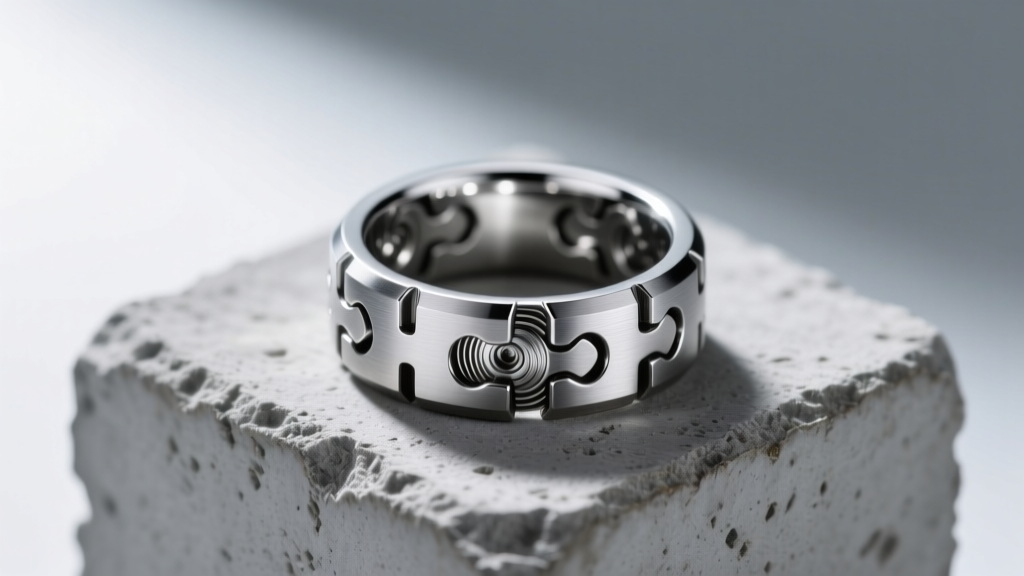
For contemporary puzzle rings and mechanically complex secrète jewelry featuring hidden screw-thread compartments, Grade 5 Titanium (Ti-6Al-4V) has emerged as a revolutionary material. Unlike cast gold or platinum, Grade 5 Titanium is almost exclusively shaped via 5-axis CNC milling. This allows for the creation of microscopic internal threads and interlocking puzzle gears with tolerances as tight as 0.02mm—something impossible to achieve through traditional lost-wax casting.
However, titanium presents unique challenges for aesthetic finishing. Because it cannot withstand the 800°C firing temperatures of vitreous enamel, jewelers must rely on anodization or cold epoxies to add color to hidden messages. Anodization uses electricity to thicken the titanium's natural oxide layer, creating vibrant, permanent colors without dyes. While it lacks the historical romance of gold and glass, a CNC-milled titanium puzzle ring offers unparalleled mechanical precision for modern secrète enthusiasts.
Sourcing and Pricing Tiers for Custom Hidden Jewelry
Commissioning custom secrète fine jewelry requires a budget that reflects the intense labor and engineering involved. Pricing is rarely based on the melt value of the metal; instead, it is driven by CAD engineering, micro-machining time, and specialized assembly. Expect the following pricing tiers in the current market:
- Entry-Level Cast Puzzles ($800 - $1,500): Mass-produced puzzle rings or simple slide-lock pendants cast in 14k gold. Hinges are often friction-fit without specialized pins.
- Bespoke Enamel Lockets ($3,500 - $7,000): Hand-carved 18k gold cavities with vitreous champlevé enamel, featuring platinum hinge pins and laser-welded catches.
- High-Complication CNC Puzzles ($8,000 - $15,000+): Grade 5 Titanium or Platinum rings featuring internal screw threads, hidden spring-loaded compartments, and anodized or pavé-set hidden elements.
Maintenance of Micro-Hinges and Secret Catches
The maintenance of secrète fine jewelry differs vastly from standard rings and necklaces. The Victoria and Albert Museum strongly advises against using ultrasonic cleaners on any jewelry featuring hinges, moving parts, or hidden enamel. The high-frequency vibrations can easily dislodge microscopic hinge pins, shatter brittle vitreous enamel inside hidden cavities, or force abrasive polishing compounds deep into puzzle mechanisms where they cannot be removed.
"The longevity of a micro-hinge relies not on the metal alone, but on the absence of microscopic debris and the presence of synthetic lubrication."
To maintain a secrète locket ring or puzzle mechanism, owners should use a soft, dry micro-brush to clear dust from the seams. If a hinge becomes stiff, it should never be forced. Instead, a master jeweler will apply a microscopic drop of synthetic watch oil, such as Moebius 9010, to the pin. This specific oil is designed to resist migration and drying, ensuring the hidden compartment operates flawlessly without attracting skin oils or cosmetic residues that could eventually seize the mechanism.