How to Style Bold Statement Jewelry: Step-by-Step Guide
Master the high-low mix with our step-by-step guide to styling bold statement jewelry. Learn proportion rules, gauge sizing, and metal pairing.

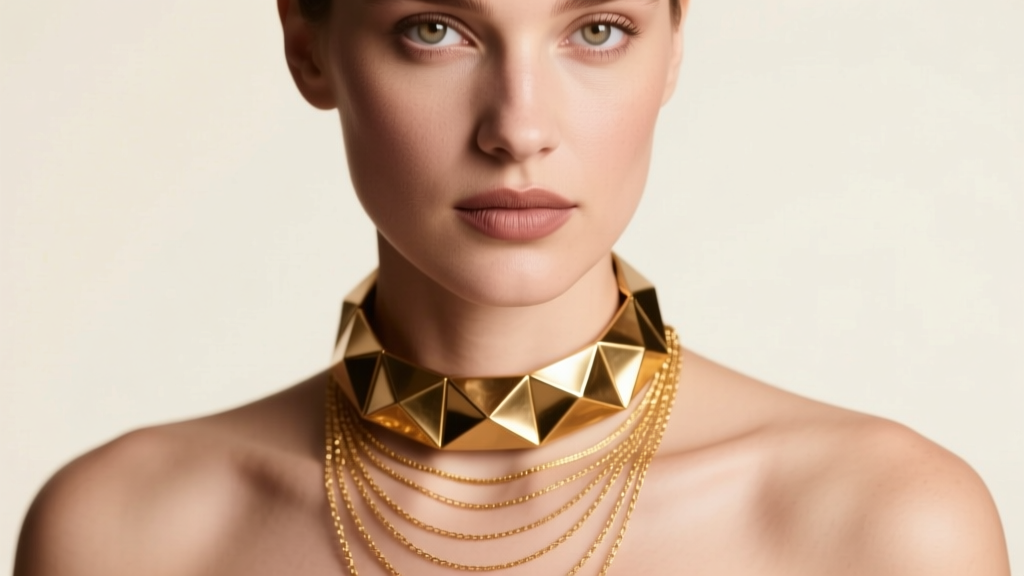
The High-Low Paradigm: Merging Fashion and Fine
Styling bold statement jewelry—think oversized carved acrylics, architectural brass cuffs, or heavy enameled fashion pieces—presents a unique sartorial challenge. When executed poorly, these maximalist items can overwhelm an outfit and cheapen the overall aesthetic. However, when anchored correctly with fine and demi-fine jewelry, they create a sophisticated 'high-low' tension that defines modern luxury.
The secret to pulling off this look in 2026 lies in structural balance, material awareness, and intentional proportion. You cannot simply throw a chunky resin pendant onto a fragile 14k gold cable chain and expect it to work. This step-by-step guide will walk you through the exact frameworks used by editorial stylists to integrate bold fashion pieces with your fine jewelry collection seamlessly.
Step 1: Apply the 60/30/10 Proportion Framework
Borrowed from interior design, the 60/30/10 rule is the ultimate cheat code for jewelry layering. When building a curated neck stack that includes a bold statement piece, you must divide your visual weight accordingly:
- 60% Base (Fine Jewelry): Your foundational layers should consist of delicate, high-quality fine jewelry. Think 14k or 18k solid gold cable or box chains in the 1mm to 1.5mm range, sitting close to the collarbone (14-16 inches).
- 30% Texture (Demi-Fine): Introduce visual interest with demi-fine pieces. A 3mm gold vermeil rope chain or a strand of mixed-cut gemstone beads adds the necessary bridge between delicate and massive.
- 10% Bold Statement Jewelry (Fashion/Costume): The hero piece. This is your oversized sculptural pendant, chunky link chain, or heavy brass collar. Because it occupies only 10% of the physical real estate but draws 90% of the eye's attention, it must be given room to breathe.
Step 2: Match the Drop to the Neckline
A bold statement pendant that hits at the wrong height will ruin the geometry of your outfit. The interaction between your garment's neckline and the jewelry's drop length is non-negotiable. Use the chart below to map your fashion pieces to your wardrobe.
| Neckline Type | Ideal Statement Drop Length | Chain Gauge & Material Recommendation |
|---|---|---|
| Crew Neck | 20 to 24 inches (Matinee) | 4mm-6mm PVD-Coated Stainless Steel or Brass |
| Deep V-Neck | 16 to 18 inches (Y-Drop or Choker) | 3mm Figaro or Cuban Link (Demi-Fine Vermeil) |
| Scoop Neck | 18 to 20 inches (Princess) | 5mm Chunky Acetate or Resin Link Chain |
| Turtleneck | 28 to 32 inches (Opera) | Heavyweight Cast Brass with Enamel Accents |
According to the historical archives at the Victoria and Albert Museum, the relationship between garment architecture and jewelry placement has always dictated social elegance. Modern styling simply updates these historical proportions with contemporary materials like acetate and titanium.
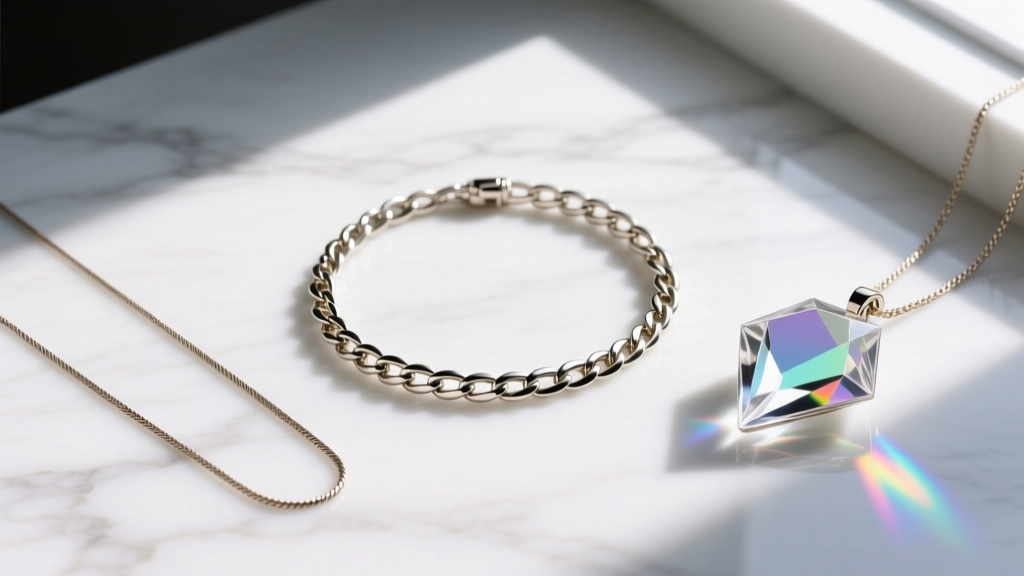
Step 3: The 'Bridge Technique' for Mixing Metals
One of the most common mistakes when styling bold fashion jewelry is clashing undertones. If you are wearing a cool-toned, oxidized silver statement cuff, pairing it directly with warm 18k yellow gold fine rings creates visual dissonance.
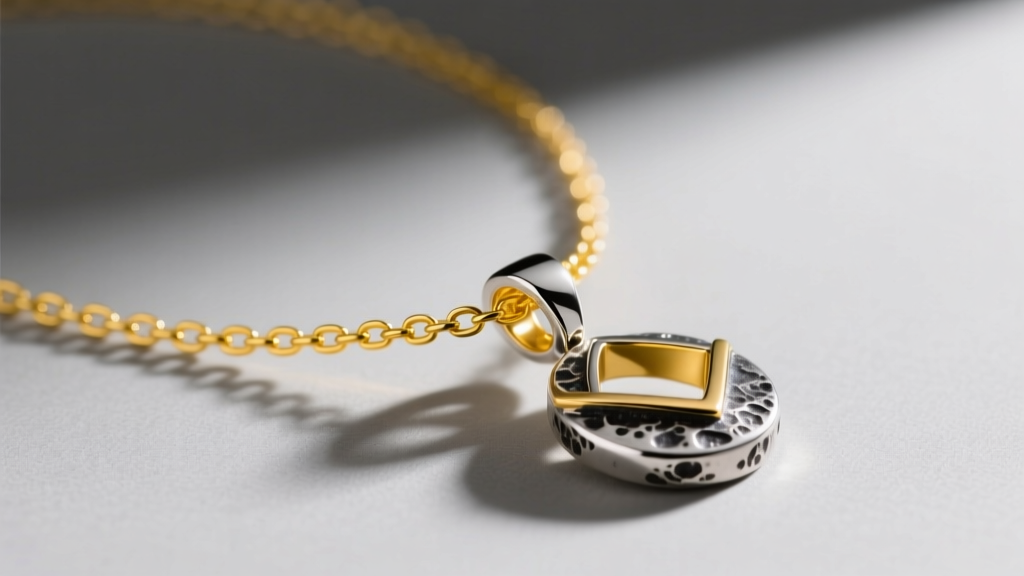
To solve this, use the Bridge Technique. Introduce a transitional piece that contains both metal tones or utilizes a neutral material to connect them. A two-tone demi-fine chain (featuring alternating yellow gold and rhodium-plated silver links) or a statement ring featuring a gemstone with multi-tonal inclusions—like Labradorite, Tourmaline, or Pyrite—acts as a visual hinge. This tricks the eye into accepting the mixed metals as a deliberate, curated choice rather than a styling error.
'The most compelling jewelry stacks tell a story of contrast. Mixing the impermanence of fashion brass with the heirloom nature of solid gold grounds the outfit in reality.' — Editorial Styling Maxim
Step 4: Gauge Sizing and Weight Distribution
This is where most enthusiasts ruin their fine jewelry. Bold statement jewelry is inherently heavy. A solid cast brass fashion pendant or a chunky glass-resin medallion can easily weigh between 30 and 60 grams.
The Failure Mode: Suspending a 50-gram fashion pendant from a 1.2mm 14k gold fine chain will inevitably result in chain stretch, link warping, or a snapped clasp. Fine jewelry chains are engineered for lightweight diamond solitaires, not architectural fashion pieces.
The Solution: Match the chain gauge to the pendant's mass. For any statement piece exceeding 20 grams, you must upgrade to a chain with a minimum gauge of 3.5mm to 5mm. Opt for structural chain styles like the Cuban Link, Figaro, or Wheat chain. Furthermore, swap out fragile spring-ring clasps for heavy-duty lobster clasps or magnetic neodymium clasp converters to ensure the weight is distributed safely across the nape of the neck.
Step 5: The 'One Zone' Restraint Rule
When dealing with bold statement jewelry, the human eye needs a place to rest. The 'One Zone' rule dictates that if you are wearing a massive, attention-grabbing piece in one focal area, the adjacent zones must be severely downgraded.
- Zone 1: The Ears. If you are wearing oversized, shoulder-grazing acrylic chandelier earrings or chunky brass hoops, your neck must be left bare or adorned only with a micro-fine 1mm choker.
- Zone 2: The Neck. If you are wearing a heavy, multi-layered resin and metal bib necklace, skip the earrings entirely and opt for simple fine jewelry studs (like 3mm diamond or sapphire screw-backs).
- Zone 3: The Wrists. A stack of bold, enameled bangles requires bare fingers. If you must wear rings, limit them to a single, flush-fine band.
Troubleshooting Tarnish and Skin Chemistry
Fashion and costume jewelry frequently utilizes copper or brass bases, which react with the sulfur and moisture in human skin, leading to the dreaded 'green skin' effect or rapid tarnishing. The GIA Gem Encyclopedia notes that base metal alloys require specific environmental controls to maintain their finish.
To wear bold brass or copper fashion pieces comfortably against the skin, apply a micro-thin layer of clear nail polish or a specialized jewelry shield spray to the interior contact points. Alternatively, when shopping for new statement pieces in 2026, look for fashion brands utilizing PVD (Physical Vapor Deposition) coating over 316L stainless steel. PVD coating is exponentially more durable than traditional electroplating, offering the bold, chunky aesthetics of fashion jewelry with the tarnish-resistance and hypoallergenic properties of fine materials.
By respecting the physics of weight, the geometry of necklines, and the chemistry of metals, you can seamlessly integrate bold statement jewelry into your daily rotation, elevating your personal style from merely trendy to truly iconic.


