Valerie Madison Fine Jewelry: Technical Design & Material Deep Dive
Explore the technical craftsmanship of Valerie Madison fine jewelry, from salt and pepper diamond inclusions to 14k gold alloy compositions.

The Architecture of Independent Fine Jewelry
The landscape of modern fine jewelry is strictly stratified. At the bottom sits mass-market fashion jewelry, characterized by brass bases and micron-thin gold plating. Above that is commercial fine jewelry—often cast in 10k or 14k gold with standardized, heavily included melee diamonds. However, the independent designer tier occupies a distinct echelon of material science and structural engineering. Valerie Madison Fine Jewelry has carved out a definitive space in this upper tier, specifically through a meticulous approach to alternative diamond cuts, bespoke alloy selections, and micro-architectural setting techniques. This deep dive examines the exact metallurgical and gemological specifications that separate this caliber of designer jewelry from commercial mall-brand counterparts.
Metallurgy and Alloy Selection: The Palladium Advantage
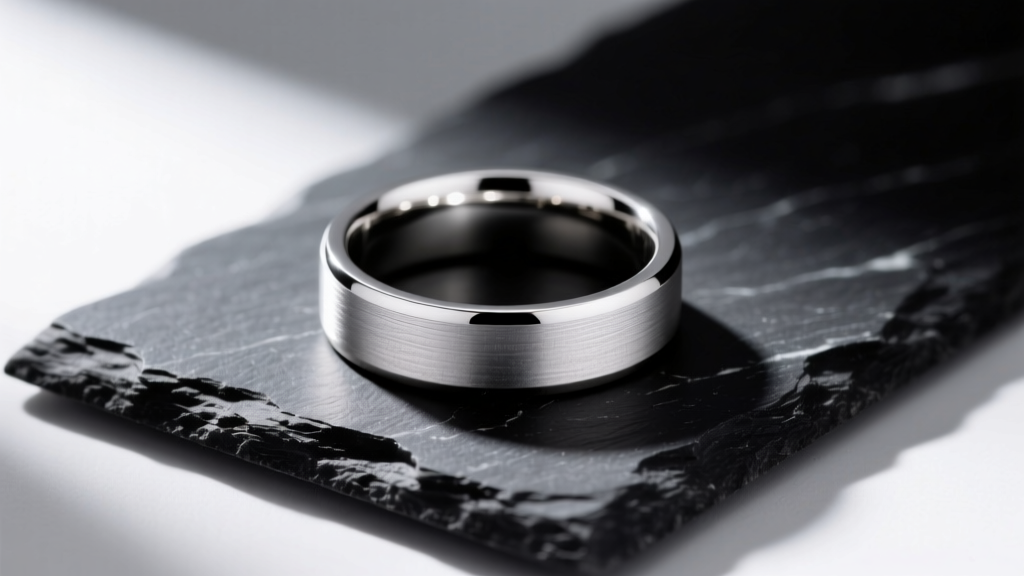
The foundation of any heirloom-grade piece is its metallurgical integrity. While many commercial jewelers rely on standard nickel-based white gold alloys to achieve a silvery hue, high-end independent designers prioritize hypoallergenic, structurally superior alternatives. Valerie Madison frequently utilizes 14k and 18k palladium white gold. According to GIA's comprehensive guide on gold alloys, palladium is a platinum-group metal that effectively 'bleaches' the natural yellow of pure gold without the need for nickel.
Vickers Hardness and Wear Resistance
The choice between 14k and 18k gold is not merely a matter of color saturation; it is a calculation of Vickers Hardness (HV). Pure 24k gold sits at roughly 25 HV, making it entirely unsuitable for daily-wear prongs. By alloying gold with palladium, silver, and copper, the structural integrity shifts dramatically:
- 18k Palladium White Gold: Contains 75% pure gold. It possesses a Vickers hardness of approximately 125-130 HV. It offers a richer, warmer gray undertone and is highly malleable, making it ideal for intricate bezel burnishing.
- 14k Palladium White Gold: Contains 58.5% pure gold. It registers between 135-145 HV. The higher concentration of alloying metals provides superior tensile strength, making it the optimal choice for delicate prong settings holding alternative-cut diamonds.
Furthermore, palladium alloys eliminate the need for rhodium plating. Commercial white gold requires re-plating every 12 to 18 months as the rhodium wears off to reveal the yellowish nickel alloy beneath. Palladium white gold maintains its natural, warm gunmetal-gray hue indefinitely, developing a desirable patina over decades of wear.
Diamond Selection: Beyond the Traditional 4Cs
The traditional GIA 4Cs (Cut, Color, Clarity, Carat) were engineered to grade round brilliant diamonds. They fail entirely when applied to the antique and alternative cuts that define the Valerie Madison aesthetic. Understanding these stones requires a shift from evaluating 'brilliance' (white light return) to evaluating 'scintillation' and internal topography.
The Geometry of the Rose Cut
Unlike modern brilliant cuts that feature a deep pavilion designed to bounce light back through the table, the rose cut is defined by a completely flat base and a domed top covered in triangular facets (typically ranging from 3 to 24 facets). Because there is no pavilion, light passes through the stone rather than reflecting aggressively. This results in a subtle, translucent glow that draws the eye inward. When setting a rose cut, the flat base must sit perfectly flush against the gallery wire or bearing; even a 0.2mm gap can cause the stone to rock and eventually fracture under pressure.
Mapping Salt and Pepper Inclusions
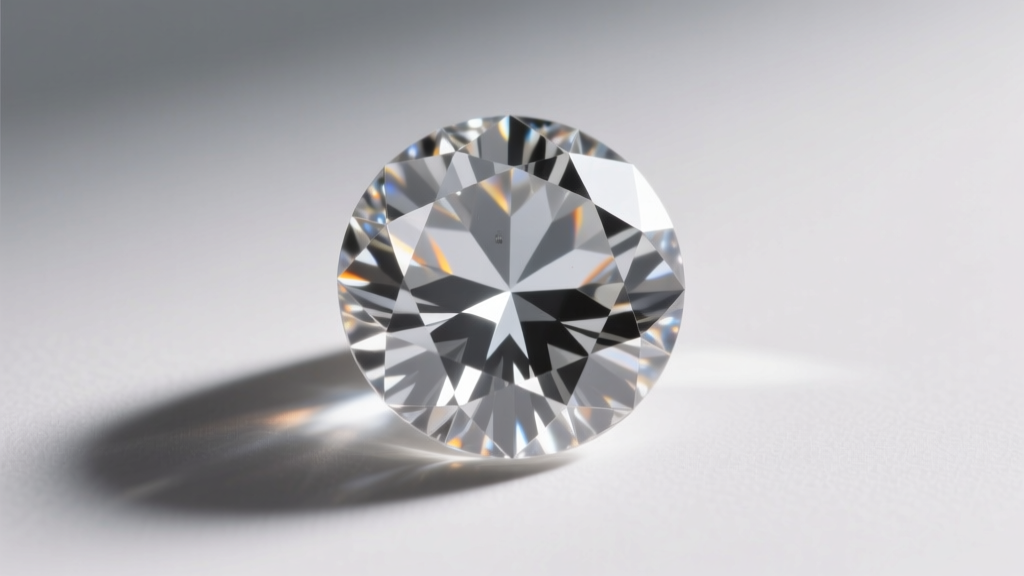
Salt and pepper diamonds are technically classified as I1, I2, or I3 on the GIA Diamond Clarity Scale due to their heavy inclusion content. However, in the context of independent fine jewelry, these inclusions are the primary design feature. The 'pepper' consists of black carbon inclusions (syngenetic, meaning they formed simultaneously with the diamond crystal), while the 'salt' comprises white fractures or metallic mineral deposits. The technical challenge for the jeweler is assessing the structural risk of these inclusions. A carbon spot on the surface is generally stable, but a deep 'feather' (fracture) that reaches the girdle poses a severe cleavage risk during the setting process. Expert setters must map these fracture planes under 10x magnification and position prongs to apply pressure only to structurally sound zones of the stone.
| Feature | Round Brilliant | Rose Cut | Salt & Pepper (Hexagonal) |
|---|---|---|---|
| Facet Count | 57-58 | 3-24 | Variable (often custom) |
| Light Return | High Brilliance | Subtle Scintillation | Diffused / Opaque Zones |
| Setting Risk | Low | Moderate (thin edges) | High (cleavage planes) |
| Price per Carat | $4,000 - $12,000+ | $800 - $2,500 | $400 - $1,200 |
Setting Techniques and Micro-Architecture
The longevity of a fine jewelry piece is dictated by its micro-architecture. Mass-market rings are often cast with stones in place or feature prongs that are merely pushed over the girdle with minimal finishing. Independent designers employ advanced mechanical setting techniques.
The Precision of Milgrain Detailing
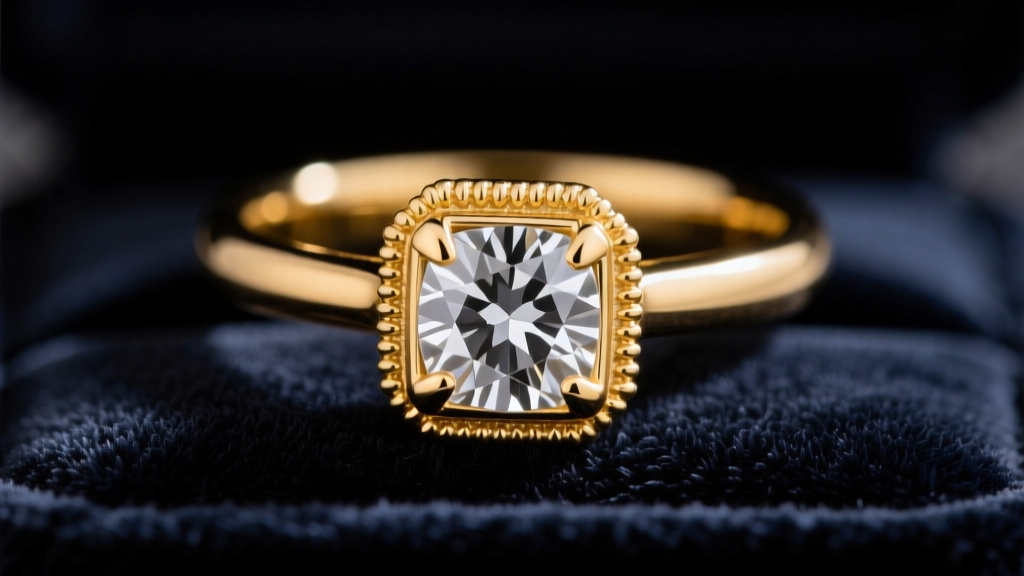
Milgrain (from the French 'mille-grain', meaning thousand grains) is a hallmark of vintage-inspired fine jewelry. While commercial manufacturers often cast milgrain directly into the wax mold—resulting in soft, easily worn-down beads—master jewelers apply it post-casting using a specialized knurling tool. This cold-working process compresses the gold molecules, increasing the surface hardness of the milgrain edge and ensuring the textured beading survives decades of friction.
Bezel and Half-Bezel Burnishing
For fragile alternative cuts like hexagonal salt and pepper diamonds, prongs can concentrate too much point-pressure. Bezel settings encircle the entire girdle with a continuous ribbon of gold. The setter uses a pneumatic hammer or a traditional pusher and burnisher to fold the metal over the stone's edge. The critical metric here is the 'bearing depth'—the ledge upon which the stone sits. A bearing depth of exactly 0.4mm to 0.6mm ensures the metal can be folded over the crown without overshadowing the diamond's table or failing to secure the girdle.
True heirloom jewelry is not defined by the sheer carat weight of its stones, but by the microscopic precision of the metalwork that secures them for generations.
Pricing Tiers and Investment Value
Understanding the pricing structure of independent fine jewelry requires looking past the commodity value of gold and diamonds. You are funding specialized labor, custom CAD engineering, and ethical sourcing protocols. Here is a realistic breakdown of the investment tiers for designer pieces of this caliber:
- Entry-Level Fine ($800 - $1,800): Solid 14k gold bands, signet rings, and solitaire necklaces featuring small (0.10ct - 0.25ct) accent diamonds or uncalibrated gemstones.
- Core Engagement Tier ($2,500 - $5,500): Custom engagement rings featuring 0.75ct to 1.50ct rose cut or salt and pepper center stones, set in 14k palladium white or yellow gold with hand-applied milgrain and tapered baguette accents.
- High-Jewelry / Bespoke ($6,000 - $12,000+): Complex, multi-stone articulated pieces, 18k gold formulations, and rare, unheated colored gemstones (such as Montana sapphires or Australian parti sapphires) requiring custom-cut halos and specialized tension-free settings.
Conclusion: Defining the Modern Heirloom
The technical specifications of Valerie Madison fine jewelry represent a rejection of disposable, mass-produced accessories in favor of enduring material science. By leveraging the superior hardness and hypoallergenic properties of palladium alloys, embracing the complex internal topography of included diamonds, and executing cold-worked finishing techniques, independent designers bridge the gap between historical craftsmanship and modern aesthetic sensibilities. When evaluating fine jewelry, look past the surface sparkle and examine the alloy composition, the setting geometry, and the structural integrity of the micro-architecture. That is where the true value of an heirloom resides.


