Venetzia Fine Jewelry: An Expert Technical & Quality Guide
Explore the metallurgical specs, gold alloys, and structural techniques that define authentic Venetzia fine jewelry in this expert technical deep dive.

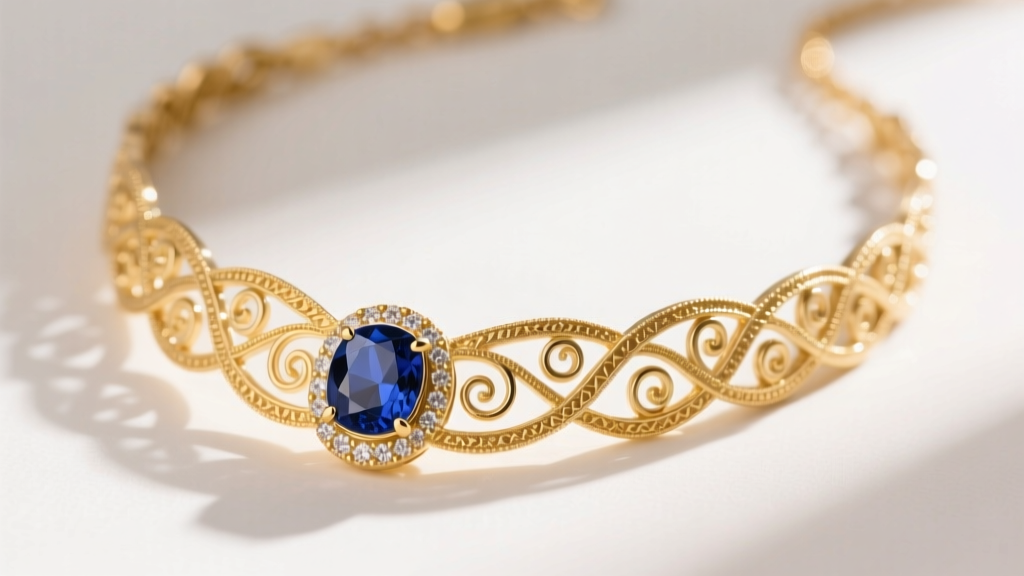
The Metallurgical Foundation of Venetzia Fine Jewelry
When evaluating high-tier artisan pieces, Venetzia fine jewelry represents a masterclass in the intersection of historical Italian metallurgy and modern structural engineering. Unlike mass-produced commercial jewelry that relies on 14k (58.5% gold) alloys for maximum durability and lower cost, authentic Venetzia craftsmanship is anchored in the 18k (750/1000) standard. However, simply using 18k gold is not enough; the specific alloying ratios dictate the success of the intricate techniques these pieces are known for.
According to metallurgical standards outlined by the Gemological Institute of America (GIA), the balance of silver, copper, and trace elements in an 18k alloy fundamentally alters its Vickers Hardness (HV) and melting point. To achieve the signature warm Venetian hue without compromising the tensile strength needed for structural filigree, master goldsmiths utilize a precise eutectic mix. By adjusting the copper-to-silver ratio, artisans can manipulate the crystalline structure of the gold, ensuring it remains malleable enough for extreme wire drawing but rigid enough to secure heavy, asymmetric gemstones.
Alloy Composition and Hardness Metrics
The table below details the specific alloy formulations frequently employed in Venetzia workshops, highlighting how minor adjustments in trace metals yield vastly different mechanical properties.
| Alloy Designation | Composition (Au/Ag/Cu/Other) | Vickers Hardness (HV) | Primary Venetzia Application |
|---|---|---|---|
| 18K Warm Yellow | 75% Au / 10% Ag / 15% Cu | 135-145 HV | Heavy filigree & structural bezels |
| 18K Deep Rose | 75% Au / 5% Ag / 20% Cu | 150-160 HV | Accent wires & high-tension clasps |
| 18K White (Palladium) | 75% Au / 15% Pd / 10% Ag | 120-130 HV | Prong settings for high-Mohs gems |
Structural Engineering: Filigree and Micro-Fusion
The hallmark of Venetzia fine jewelry is its breathtaking filigrana (filigree) work. This is not merely decorative; it is a rigorous test of a goldsmith's understanding of metallurgical stress points. The technique demands wire drawn down to 30 or 32 AWG (American Wire Gauge), which translates to a mere 0.25mm to 0.20mm in thickness. At this microscopic gauge, the metal undergoes rapid work hardening as it is twisted into spirals and rosettes.
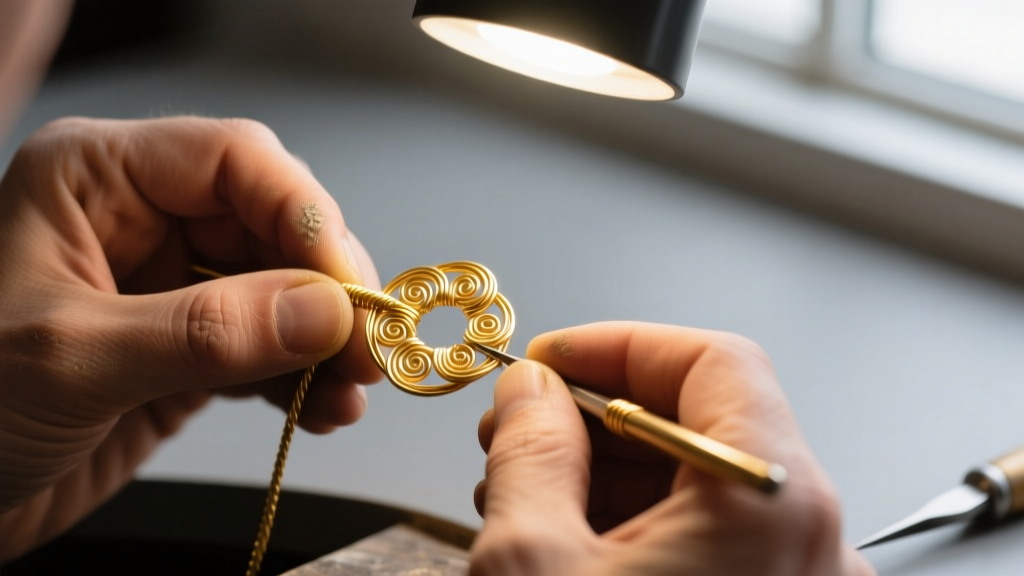
To prevent micro-fractures and catastrophic snapping during the twisting phase, the wire must be repeatedly annealed. Historical context on wire drawing and annealing is well documented by Encyclopedia Britannica, noting that traditional artisans heat the gold to precisely 700°C to 750°C in a reducing atmosphere. This specific temperature range relieves internal crystalline stresses without melting the delicate wire or causing excessive surface oxidation (firescale), which would otherwise require aggressive acid pickling that degrades the wire's gauge.
The 2026 Shift: Laser Welding in Heritage Designs
In the 2026 landscape of high jewelry manufacturing, traditional torch soldering is increasingly being augmented by pulsed Nd:YAG laser welding. For Venetzia fine jewelry, which often features dense, heat-sensitive filigree networks adjacent to gemstone settings, laser welding offers a localized heat-affected zone (HAZ) of less than 0.5mm. This means a master goldsmith can repair a broken 28-gauge wire joint or resize a shank without having to remove temperature-sensitive inclusions like enamel or Murano glass, and without risking the structural annealing of the surrounding lattice. This technological synthesis preserves heritage aesthetics while dramatically improving long-term serviceability.
Gemstone and Glass Integration Mechanics
A critical differentiator between standard fashion jewelry and true Venetzia fine jewelry is the mechanical approach to stone setting, particularly when incorporating softer materials like artisan Murano glass, opals, or turquoise. These materials typically sit between 5.5 and 6.5 on the Mohs hardness scale, making them highly susceptible to localized pressure.
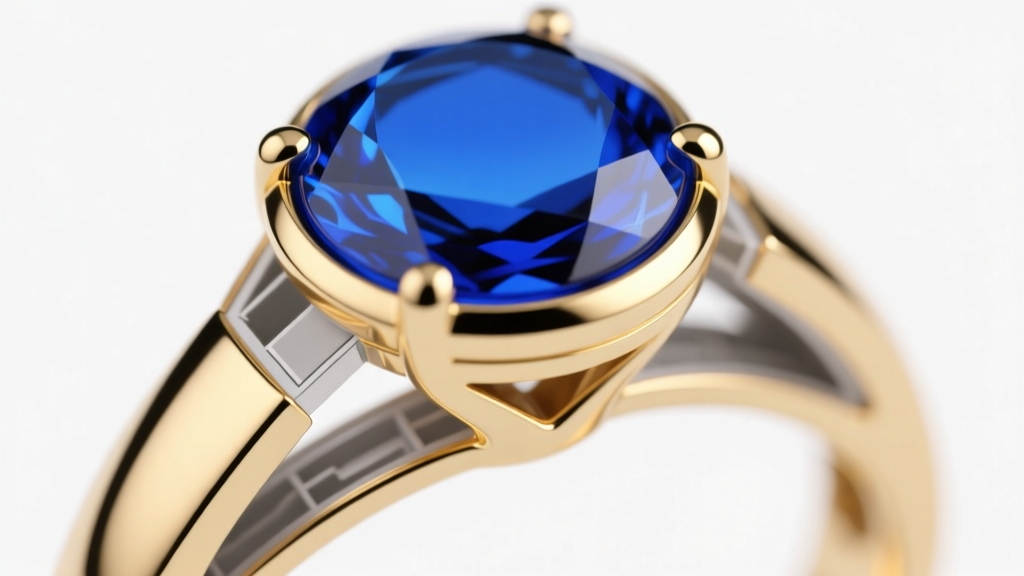
Standard prong settings exert immense localized PSI (pounds per square inch) on the girdle of a stone. While a 9-Mohs sapphire can withstand this clamping force, softer glass and gems will develop internal tension fractures, eventually leading to chipping or catastrophic failure. Therefore, Venetzia artisans rely on precision rub-over (bezel) settings.
- Bezel Lip Thickness: The gold lip securing the stone is milled to exactly 0.3mm to 0.4mm, providing enough surface area to grip the stone without casting heavy shadows over the material's optical properties.
- Seat Cutting: The bearing (the ledge the stone sits on) is cut with a 90-degree burr to ensure absolute flush contact, preventing point-loads that cause glass to crack under thermal expansion.
- Open-Back vs. Closed-Back: For dichroic or iridescent glass, open-back bezels are engineered with structural cross-bars to maintain the ring's torsional rigidity while allowing maximum light transmission.
Authenticity Markers and Hallmarking
Evaluating the authenticity of Venetzia fine jewelry requires looking beyond the aesthetic and examining the legal and metallurgical hallmarks. The Italian hallmarking system is highly regulated. A genuine piece will bear the '750' stamp, indicating 18k gold, alongside the maker's mark—a unique alphanumeric code assigned to the specific workshop (e.g., '123 VI' indicating the 123rd registered goldsmith in the province of Venice).
True Venetzia fine jewelry is not merely defined by its geographic origin, but by its strict adherence to the 750/1000 metallurgical standard and the structural integrity of its micro-fusion techniques.
Market data from the World Gold Council indicates that properly hallmarked, artisan-crafted 18k gold pieces retain significantly higher secondary market value compared to unbranded or mass-cast equivalents. When inspecting a piece, use a 10x jeweler's loupe to examine the hallmark. In authentic Venetzia work, the stamp is deeply and cleanly struck into a flat plane of the metal, rather than shallowly laser-etched or stamped over a curved, polished surface where the die might slip.
Conclusion: Evaluating Investment and Wearability
Venetzia fine jewelry occupies a rare space in the market where historical artistry meets rigorous material science. By understanding the specific 18k alloy compositions, the tensile limits of 32-gauge filigree, and the mechanical necessity of precision bezel settings for softer inclusions, collectors and buyers can accurately assess the quality and longevity of a piece. Whether you are acquiring a statement necklace for its metallurgical brilliance or an intricate ring for its structural ingenuity, the technical depth of Venetzia craftsmanship ensures it remains a premier tier in the fine jewelry hierarchy.


