How to Pick Minimalist Jewelry: Fix Common Capsule Mistakes
Learn how to pick minimalist jewelry by troubleshooting common capsule wardrobe mistakes, from chain tangling to metal clashing and gauge sizing.

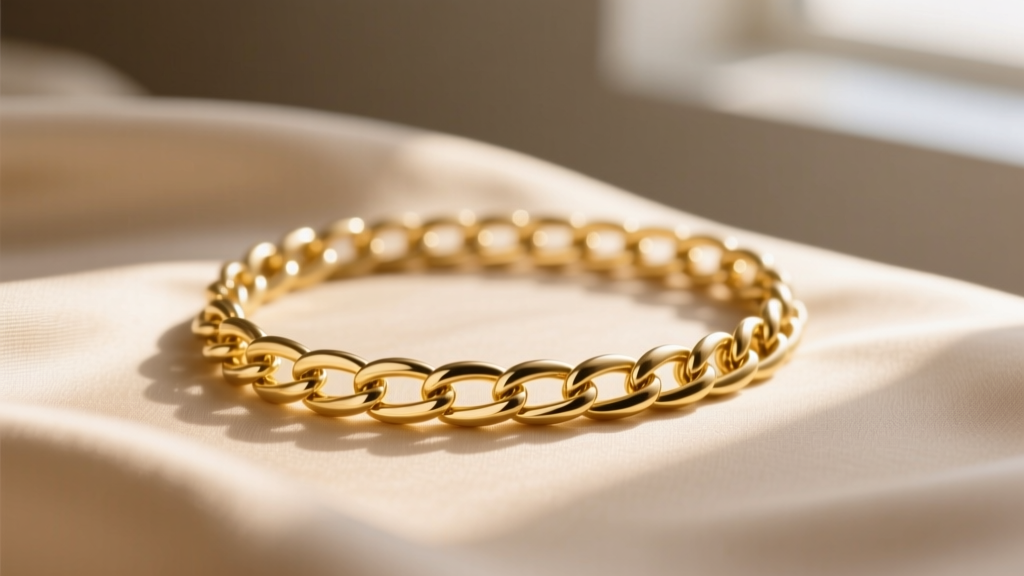
The Reality of the Minimalist Capsule Wardrobe
The promise of a minimalist jewelry capsule is effortless elegance: a curated selection of dainty, interchangeable pieces that elevate any outfit. However, the reality of wearing delicate jewelry daily often involves frustrating tangles, unexpected tarnishing, and pendants that stubbornly flip backward. Understanding how to pick minimalist jewelry requires moving beyond aesthetics and diving into the structural engineering of fine jewelry. If your quiet luxury collection is causing loud headaches, it is time to troubleshoot the mechanical and metallurgical failures in your capsule.
This guide addresses the four most common structural problems in minimalist jewelry and provides actionable, data-driven solutions to fix your collection.
Problem 1: The "Tangled Nest" Syndrome (Chain Geometry)
Nothing ruins a minimalist look faster than a clump of knotted chains. The root cause of tangling is rarely bad luck; it is poor chain geometry and incompatible link structures. When layering dainty necklaces, friction and body movement cause loose links to catch on one another.
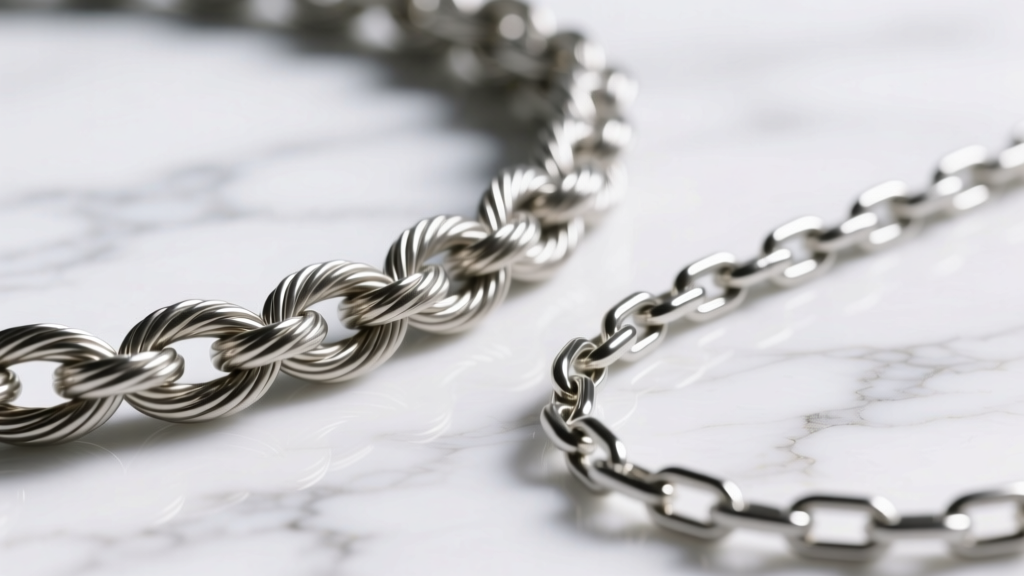
Troubleshooting Chain Link Types
Not all chains are created equal. The standard cable chain (uniform oval links) has a high surface area and loose tolerances, making it the most prone to tangling. To fix this, audit your capsule and replace cable chains with structurally interlocking alternatives:
- Box Chains: Comprised of square, interlocking links that lay flat. Their rigid geometry prevents the links from folding into each other, making them virtually tangle-proof.
- Wheat (Spiga) Chains: Woven in a continuous, directional pattern. The friction between the braided links keeps the chain moving as a single unit rather than individual links.
- Rolo Chains: Thick, interlocking round links. While slightly heavier, a 1.5mm rolo chain will outperform a 1.0mm cable chain in tangle resistance.
The Clasp Failure Point
Dainty chains often come equipped with 4mm spring ring clasps. These are notoriously difficult to operate and prone to snapping under the tension of a caught chain. Upgrade your everyday pieces with 5mm or 6mm lobster clasps, which feature a stronger internal spring and a wider lever for secure closure. For ultra-thin chains (under 0.8mm), consider adding a silicone necklace stopper bead to the back to prevent the clasp from migrating to the front of your neck.
Problem 2: Metal Tarnish and Skin Tone Dissonance
A common mistake when figuring out how to pick minimalist jewelry is prioritizing the color of the gold over the metallurgical composition. Many "dainty gold" pieces are actually brass or copper bases with flash plating, leading to rapid tarnishing and green skin discoloration. Furthermore, mixing undertones incorrectly can make a minimalist stack look chaotic rather than intentional.
Decoding Plating Thickness and Alloys
According to the Gemological Institute of America (GIA), the durability of gold jewelry is directly tied to its alloy composition and plating thickness. If you cannot invest in solid gold, you must understand the micron standards for plated alternatives.
| Metal Grade | Composition / Thickness | Tarnish Resistance | Best Use Case |
|---|---|---|---|
| Solid 14k Gold | 58.5% Pure Gold, 41.5% Alloy | Excellent (Lifetime) | Everyday minimalist staples, rings, hoops |
| Solid 18k Gold | 75% Pure Gold, 25% Alloy | Very Good (Softer, scratches easily) | Special occasion pendants, low-impact pieces |
| Gold Vermeil | Min. 2.5 microns of gold over Sterling Silver | Good (1-3 years with care) | Statement minimalist cuffs, seasonal trends |
| Gold Plated | 0.17 to 0.5 microns over Brass/Copper | Poor (Weeks to Months) | Avoid for daily capsule wardrobes |
Troubleshooting Mixed Metals: If you have neutral undertones and struggle to pick between silver and gold, embrace two-tone minimalist pieces. A 14k yellow gold chain with a white gold or platinum pendant bail creates a deliberate, high-end bridge between metals, allowing you to mix silver and gold rings seamlessly.
Problem 3: Proportional Imbalance and the "Floating" Pendant
Have you ever worn a delicate pendant that constantly flips backward, hiding the design against your skin? This is a failure of proportional engineering, specifically the bail-to-chain weight ratio. In minimalist jewelry, the hardware connecting the pendant to the chain (the bail) is often an afterthought, but it dictates how the piece drapes.
Fixing the Bail and Chain Ratio
A pendant will flip backward if the bail is too tight or if the chain is too heavy relative to the pendant. To troubleshoot this:
- The 3x Weight Rule: The pendant should weigh at least three times as much as the chain per linear inch. If you pair a lightweight 1-gram geometric pendant with a dense, heavy 2.5mm herringbone chain, the chain's rigidity will force the lightweight pendant to flip.
- Bail Clearance: The inner diameter of the pendant bail must be at least 0.5mm larger than the width of the chain. If you thread a 1.2mm box chain through a 1.3mm bail, the friction will cause the pendant to stick and flip. Always measure your chain calipers before buying pendants.
- Soldered vs. Pinch Bails: Avoid pinch bails (which grip the top of a gemstone) for daily minimalist wear. Opt for solid, soldered jump-ring bails that allow the pendant to swing freely on the chain's curve.
Problem 4: The "Cheese Cutter" Effect in Dainty Ear Stacks
Minimalist ear curation relies heavily on delicate studs and micro-hoops. However, prioritizing a "dainty" look often leads buyers to select ultra-thin wire gauges, which can cause severe structural issues in the piercing itself.
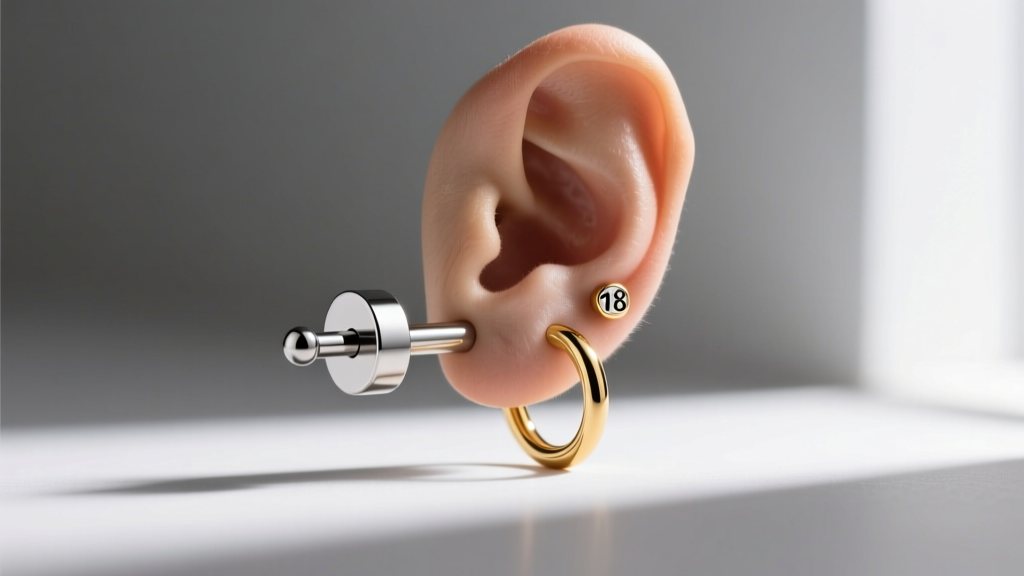
Troubleshooting Gauge Sizes and Tissue Migration
The Association of Professional Piercers (APP) warns against wearing jewelry that is too thin for the piercing channel. The "cheese cutter effect" occurs when a thin wire (like a 22-gauge or 20-gauge hoop) is worn in a standard 16-gauge or 14-gauge piercing. The thin wire acts like a blade, slowly migrating through the tissue under the weight of the jewelry, leading to rejection and tearing.
The Minimalist Ear Stack Framework
- Standard Lobes: Usually pierced at 20G (0.81mm) or 18G (1.0mm). Stick to 18G or 16G (1.2mm) posts for flat-back labrets to provide structural stability without looking bulky.
- Helix and Cartilage: Almost universally pierced at 16G (1.2mm) or 14G (1.6mm). Never wear 20G dainty wires in these piercings. Instead, achieve a minimalist look by choosing a 16G titanium post with a micro 1.5mm bezel-set diamond or opal end.
- Post Length Matters: If your dainty stud is sinking into your earlobe or causing irritation bumps, the post is too short. Standard lobe posts are 6mm, but swollen or thicker lobes require 8mm posts to allow the tissue to breathe.
The 2026 Minimalist Jewelry Decision Matrix
To ensure you never make these capsule mistakes again, run every potential purchase through this quick troubleshooting matrix before checking out:
- Is the chain geometry interlocking? (Opt for box, wheat, or rolo over standard cable).
- Is the plating at least 2.5 microns, or is it solid 14k? (Reject flash-plated brass).
- Does the bail have 0.5mm clearance over the chain width? (Prevents pendant flipping).
- Is the ear wire/post gauge matched to the piercing channel? (Prevents the cheese cutter effect).
Mastering how to pick minimalist jewelry is ultimately about respecting the physics of small-scale design. By prioritizing structural integrity, precise gauge sizing, and high-quality metallurgy, your capsule wardrobe will transition from a source of daily frustration to a true expression of quiet luxury.


