Decoding American Indian Jewelry Hallmarks: An Expert Guide
Master the technical details of American Indian jewelry hallmarks. Learn to authenticate Navajo, Hopi, and Zuni silver stamps and fakes.

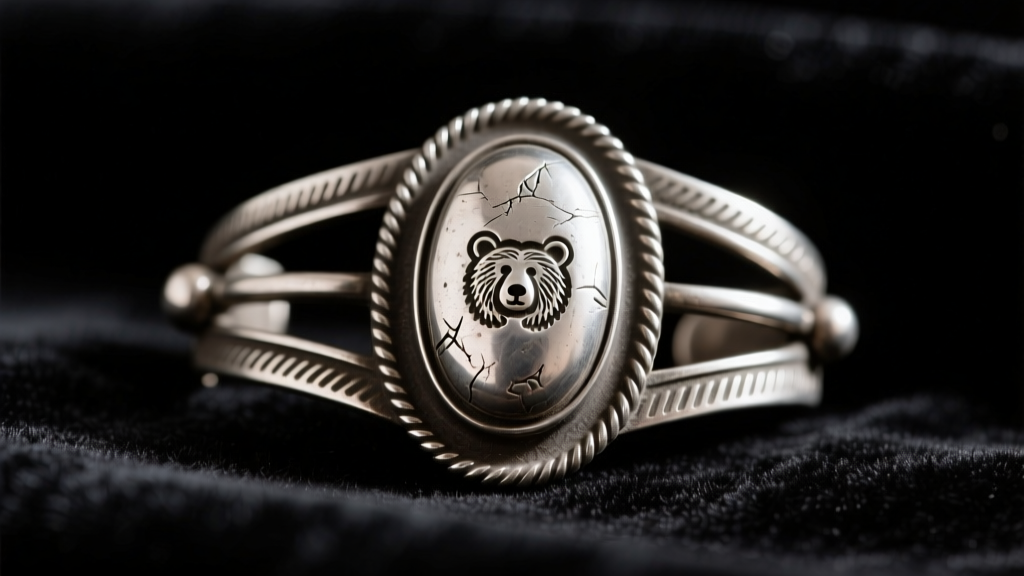
In the highly specialized world of Indigenous silverwork, understanding American Indian jewelry hallmarks is the dividing line between a museum-quality investment and a mass-produced imitation. While casual collectors might only look for the word "Sterling," serious appraisers, curators, and advanced collectors rely on a complex matrix of maker's marks, tribal guild stamps, and metallurgical indicators to verify provenance. This expert deep dive bypasses surface-level advice, focusing instead on the technical mechanics of stamp application, the evolution of tribal identifiers, and the forensic methods used to authenticate vintage and contemporary pieces.
The Metallurgy of the Mark: Coin Silver vs. Sterling
Before analyzing the visual characteristics of a hallmark, an expert must understand the canvas it is struck upon. The metal composition of Native American silver jewelry shifted dramatically in the mid-20th century, and hallmarks often correlate with these metallurgical timelines.
- Pre-1930s (Coin Silver): Early Navajo and Pueblo silversmiths melted down US Morgan and Peace silver dollars. This "coin silver" has a purity of approximately .900 (90% silver, 10% copper). Pieces from this era rarely feature hallmarks, as the practice was not widely adopted until later.
- 1940s–1960s (Transition Era): As commercial sheet silver became available, smiths transitioned to .925 sterling. However, many continued to use scrap coin silver. Hallmarks from this period are often crude, hand-filed, or struck with improvised steel dies.
- Post-1970s (Sterling Standardization): The jewelry boom of the 1970s led to standardized .925 sterling silver. This era also saw the widespread adoption of the "Sterling" or ".925" stamp alongside the artist's personal hallmark, driven by both consumer demand and the establishment of tribal cooperatives.
When examining a hallmark, note the oxidation in the recessed areas. Vintage coin silver tarnishes with a distinct yellowish-brown hue due to its higher copper content, whereas modern .925 sterling tarnishes black. A hallmark stamped into modern, bright-white rhodium-plated silver claiming to be a 1950s artifact is an immediate technical red flag.
Stamp Anatomy: Tool Types, Depth, and Wear Patterns
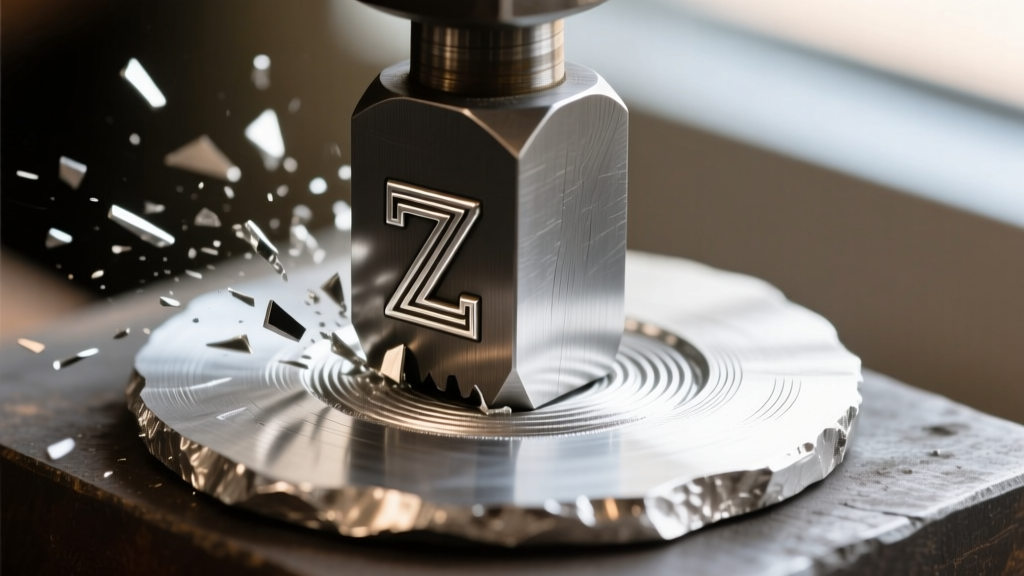
A genuine hand-struck hallmark is a record of physical force. When a silversmith uses a steel die and a rawhide or brass mallet to stamp their mark into a silver shank or bezel, the resulting impression is never perfectly uniform.
Forensic Indicators of Authentic Strikes
Under 10x loupe magnification, an authentic hand-struck hallmark will exhibit specific physical traits:
- Variable Depth: Because the hammer strike is rarely perfectly level, one side of the letter or pictograph will often be slightly deeper than the other.
- Ghosting (Double-Striking): If the die shifted microscopically during the hammer blow, a faint secondary outline (ghost) will appear beside the primary mark.
- Edge Displacement: The pressure of the die displaces the surrounding silver, creating a microscopic raised lip or "burr" around the edges of the stamp.
Conversely, counterfeit hallmarks applied via laser engraving, CNC routing, or hydraulic machine-pressing lack these kinetic imperfections. Laser marks will show micro-striations and lack the displaced burr, while machine-pressed marks will be unnaturally uniform in depth and perfectly level.
Tribal Distinctions: Navajo, Zuni, and Hopi Hallmarking Traditions
While individual artist marks are crucial, the stylistic and structural application of hallmarks often correlates with specific tribal traditions and cooperative guilds.
Navajo: Heavy Silver and the Evolution of the Initial
Navajo jewelry is renowned for its heavy silver gauges (often 16 to 14-gauge for bracelet shanks) and bold turquoise settings. Early Navajo hallmarks were frequently simple initials (e.g., "TK" for Thomas Kinlichinni or "GB" for Gilbert Ortega). In the 1970s, the Navajo Arts and Crafts Guild (now the Navajo Arts and Crafts Enterprise) utilized specific hallmarks, including the iconic Navajo "Yei" figure or a simple "NAVAJO" stamp alongside the maker's mark. Authentic Navajo hallmarks on heavy cuffs are often struck on the flat inner wrist area or near the terminal ends, where the silver is thickest and can withstand the heavy hammer blow without warping.
Zuni: Lapidary Precision and Discreet Marks
Zuni artisans are master lapidaries, famous for petit point, needlepoint, and channel inlay. Because Zuni pieces feature intricate, densely packed silver bezels (often 22 to 24-gauge wire), there is very little flat real estate for stamping. Consequently, Zuni hallmarks are typically much smaller, finer, and placed discreetly on the back of the main setting or along the narrow silver rails between stones. Finding a massive, deeply struck hallmark on the delicate back of a Zuni needlepoint cluster is a structural inconsistency that warrants intense scrutiny.
Hopi: The Overlay Technique and Inner Hallmarks
The Hopi are celebrated for their silver overlay technique, where a top sheet of oxidized, cut-out silver is sweat-soldered onto a solid bottom sheet. The Hopi Silvercraft Cooperative Guild, established in 1947, mandated the use of the Hopi sun symbol alongside the artist's initials. Crucially, legendary Hopi jeweler Charles Loloma revolutionized hallmark placement by stamping the inside of rings and bracelets. This "inner hallmark" protected the maker's mark from the abrasive wear of daily use. When authenticating a vintage Hopi overlay piece, look for the guild mark or artist stamp on the interior curvature; exterior stamps on overlay pieces can sometimes disrupt the oxidized background texture.
"A hallmark is not just a signature; it is a legal and cultural declaration of origin. Under federal law, misrepresenting the maker or the tribal affiliation of Native American jewelry is a serious offense." — Indian Arts and Crafts Board, U.S. Department of the Interior.
Technical Red Flags: Identifying Counterfeit Hallmarks
The market is currently flooded with imported "Native-style" jewelry bearing forged hallmarks. Use the following technical comparison chart to evaluate suspicious pieces.
| Feature | Authentic Native American Hallmark | Counterfeit / Imported Forgery |
|---|---|---|
| Strike Depth | Variable; shows kinetic force and slight unevenness. | Perfectly uniform depth; often shallow or laser-etched. |
| Font / Pictograph | Custom steel dies; unique quirks, serifs, or wear on the tool. | Standardized commercial fonts; generic "feather" or "arrow" clip-art. |
| Metal Displacement | Visible burr or raised lip around the stamp edges under magnification. | Flush with the surface; no displaced metal (common in cast fakes). |
| Placement | Strategic; placed on thick gauge areas to avoid warping thin bezels. | Stamped indiscriminately, sometimes warping thin silver or cracking stones. |
| Accompanying Marks | "Sterling" or ".925" matches the wear pattern and oxidation of the maker's mark. | Maker's mark looks freshly stamped next to a heavily worn, artificially aged "Sterling" stamp. |
Advanced Verification: Acid Testing and XRF Analysis
When visual inspection of American Indian jewelry hallmarks is inconclusive, professional appraisers turn to metallurgical verification. While traditional acid testing (using nitric acid to verify silver purity) can confirm if a piece is .925 sterling, it cannot verify the age or origin of the metal.
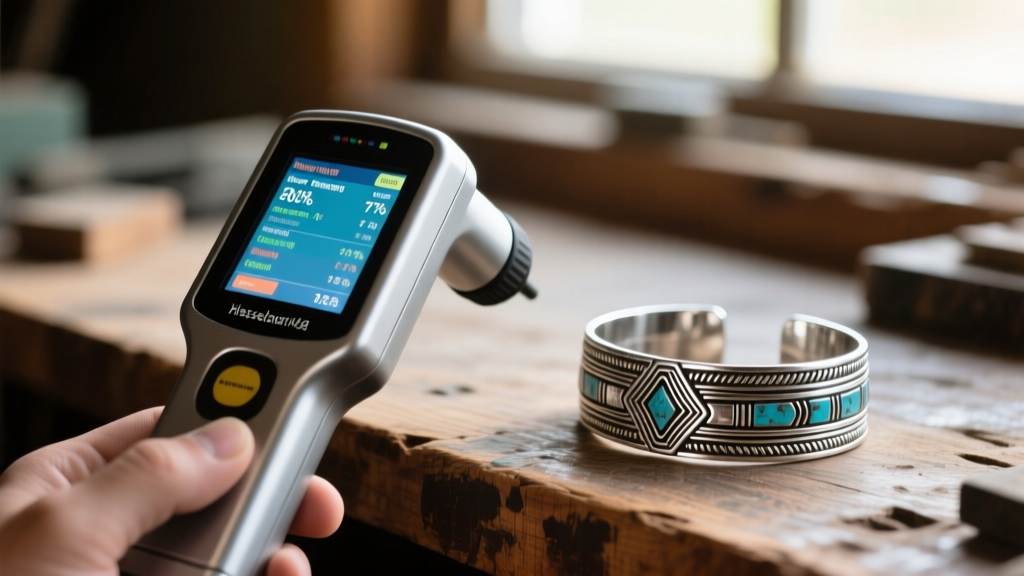
For high-value vintage pieces, X-Ray Fluorescence (XRF) spectrometry is the gold standard. An XRF analyzer provides a non-destructive, exact elemental breakdown of the alloy.
- Trace Elements: Vintage coin silver melted from US coins will often contain trace amounts of elements like zinc or specific copper ratios that differ from modern, commercially refined .925 sterling silver sourced from international bullion suppliers.
- Lead Detection: Modern imported castings (often falsely hallmarked) frequently contain trace lead or cadmium in the solder or base alloy to lower melting points. Authentic vintage Native American solder was typically a mix of silver, copper, and zinc, devoid of lead.
Furthermore, institutions like the Smithsonian National Museum of the American Indian utilize XRF and microscopic photography to document the degradation of hallmarks over time, creating a database of how specific silversmiths' dies wore down over their careers. A hallmark struck in 1985 by a specific Zuni artisan will look microscopically different than one struck by the same die in 1995 due to the degradation of the steel tool's edges.
Conclusion: Building a Verified Collection
Mastering the authentication of American Indian jewelry hallmarks requires moving beyond simple visual matching. It demands an understanding of metallurgy, the physical mechanics of silversmithing, and the historical timelines of tribal cooperatives. By combining loupe-level forensic analysis of the stamp's anatomy with an understanding of tribal-specific structural designs, collectors and appraisers can confidently separate genuine Indigenous masterworks from deceptive imitations. Always prioritize pieces with clear, verifiable provenance, and never hesitate to employ advanced metallurgical testing when evaluating high-value vintage acquisitions.


