Ancient Egyptian Jewelry Museum Artifacts: Technical Deep Dive
Explore the metallurgy, lapidary, and structural engineering of ancient Egyptian jewelry museum artifacts in this expert technical deep dive.

The Metallurgical Foundation: Gold Purity and Alloying in Antiquity
When studying an ancient Egyptian jewelry museum collection, modern metallurgists and bench jewelers are often astounded by the deliberate manipulation of gold alloys. Contrary to popular belief, ancient artisans rarely used pure 24-karat gold for structural jewelry components. Pure gold, with a Vickers Hardness (HV) of roughly 25, is too malleable to hold the tension required for intricate clasps, hinges, or the thin cell walls of cloisonné work.
Instead, New Kingdom and Middle Kingdom goldsmiths relied heavily on electrum—a naturally occurring or deliberately smelted alloy of gold and silver. Spectrographic analysis of artifacts housed in institutions like the Metropolitan Museum of Art reveals electrum compositions typically ranging from 70% to 80% gold and 20% to 30% silver. This specific ratio raises the Vickers Hardness to approximately 70-90 HV, providing the necessary tensile strength for wire drawing and repoussé work without compromising the distinct, pale-yellow luster that the Egyptians associated with the flesh of the gods.
Colloidal Hard Soldering and Granulation
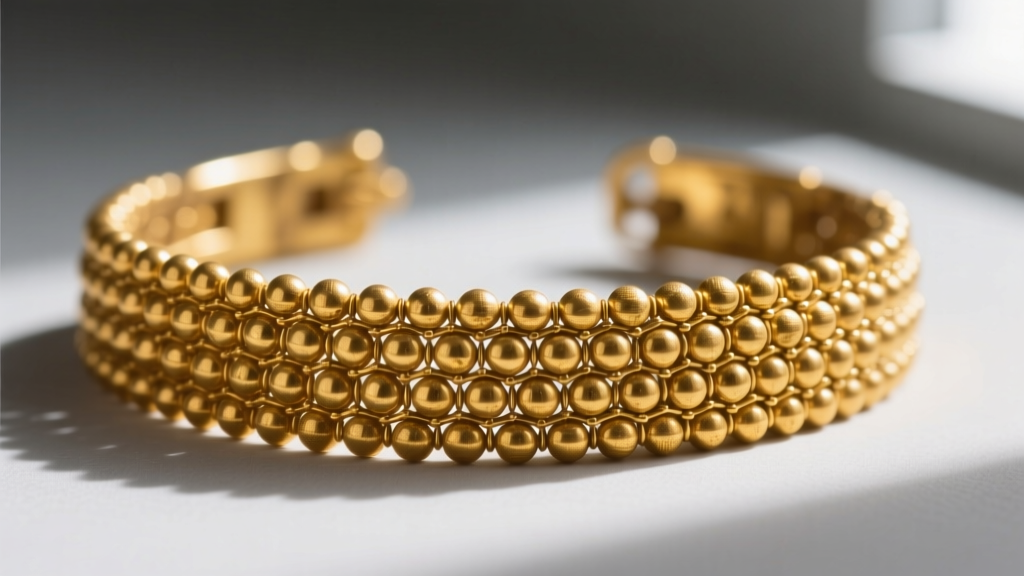
One of the most technically demanding techniques observable in museum archives is granulation. The Egyptians achieved microscopic solder joints without flooding the delicate granules with bulk solder. They utilized a colloidal hard soldering process involving a mixture of copper carbonate (malachite) and an organic binder, such as animal hide glue. Upon heating in a reducing atmosphere to approximately 850°C–900°C, the organic binder carbonizes, reducing the copper oxide to pure copper. This copper then alloys with the surface of the gold spheres, lowering the localized melting point and creating a metallic bond that is virtually invisible under 10x loupe magnification.
Lapidary and Cloisonné: Engineering the Inlay
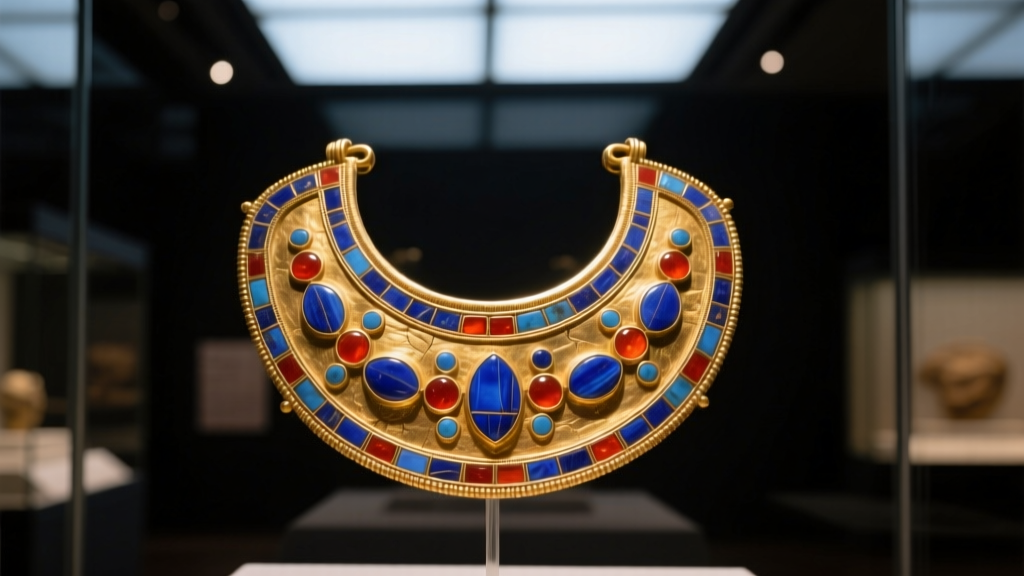
The hallmark of high-status Egyptian jewelry is the cloisonné pectoral, where gold cell walls (cloisons) are filled with precisely cut semi-precious stones. The structural integrity of these pieces relies on the exact calibration of the gold ribbons and the chemical properties of the backing adhesives.
Cell Wall Thickness and Gemstone Selection
Under microscopic examination, the gold ribbons used for cloisonné cell walls in 12th Dynasty masterpieces measure a staggering 0.2mm to 0.4mm in thickness. To secure the inlay, artisans did not use modern epoxies. Instead, they formulated a composite mastic consisting of beeswax, pine resin, and fine silica dust. This mixture provided a shock-absorbing bed that accommodated the varying coefficients of thermal expansion between the gold framework and the gemstones.
| Gemstone Material | Mohs Hardness | Ancient Source Region | Abrasive Cutting Method |
|---|---|---|---|
| Lapis Lazuli | 5.0 - 5.5 | Badakhshan (Afghanistan) | Quartz sand slurry with copper saws |
| Carnelian | 6.5 - 7.0 | Eastern Desert (Egypt) | Emery powder (corundum) with bow drills |
| Turquoise | 5.0 - 6.0 | Sinai Peninsula | Flint micro-blades and quartz abrasives |
| Amethyst | 7.0 | Nubian Desert | Crushed quartz and copper tubular drills |
The precision required to cut a 1.5mm thick slice of lapis lazuli using a copper saw and quartz sand slurry—without shattering the stone or creating excessive kerf loss—demonstrates a mastery of lapidary friction management that rivals modern diamond-saw technology.
Faience and Glass: The Synthetic Marvels of the Nile
While gold and gemstones dominate the visual narrative of Egyptian adornment, the true technological triumph of the era was faience. Often misidentified by laymen as mere glazed clay, true Egyptian faience is a sintered-quartz ceramic that exhibits a brilliant, glass-like surface. Conservators at the Petrie Museum of Egyptian Archaeology frequently analyze faience to understand the complex chemical engineering of the ancient Nile Valley.
The Efflorescence Method
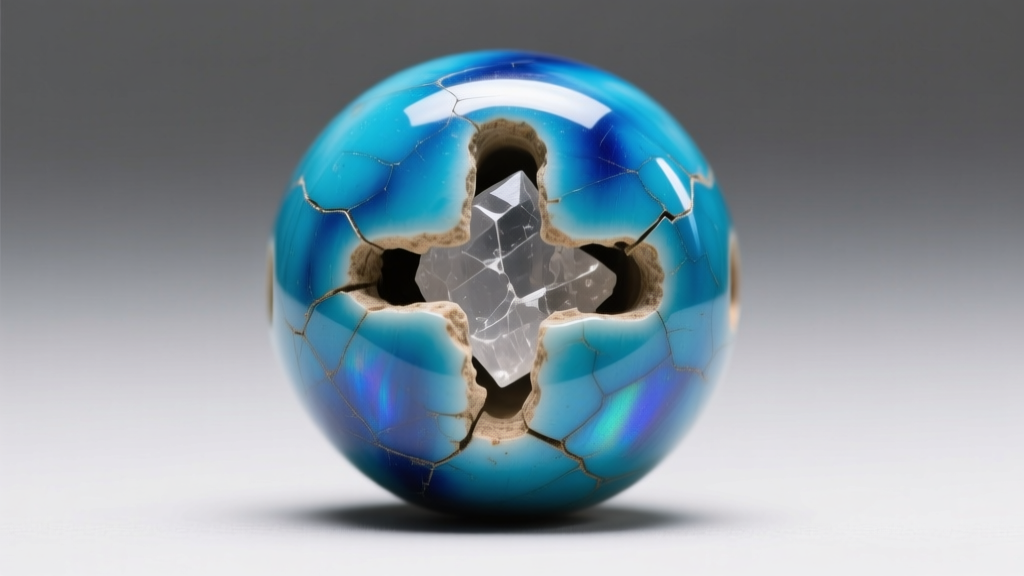
The most common technique for producing museum-grade faience jewelry was the efflorescence method. Artisans mixed crushed quartz (90-95%) with an alkali flux (natron or plant ash) and a copper oxide colorant. As the formed bead or amulet dried in the arid desert air, the soluble alkali and copper salts migrated to the surface via capillary action. When fired in a kiln at 800°C–1000°C, this surface layer melted into a vibrant, continuous blue-green glassy glaze, while the core remained a porous, sintered quartz matrix. This core-and-shell structure gave faience beads enough compressive strength to be strung on heavy linen cords while maintaining a lightweight profile on the wearer's neck.
Structural Integrity: Clasps, Hinges, and Wire Drawing
A critical point of failure in any broad collar or heavy pectoral is the clasp mechanism. Museum artifacts reveal a sophisticated understanding of mechanical engineering to distribute weight and prevent structural fatigue.
- Block-Twisted Wire: Before the widespread use of draw plates, gold wire was created by hammering gold into thin strips, then twisting and rolling them. This work-hardened the metal, increasing its yield strength.
- Sliding T-Clasps: Broad collars often utilized a T-bar and loop mechanism forged from heavy-gauge electrum, allowing the rigid collar to flex with the wearer's clavicle without snapping the linen threading.
- Concealed Hinges: In later periods, rigid bracelets featured interlocking gold hinges secured by tapered linchpins. The tolerances on these pins were often held to within 0.1mm, preventing lateral wobble and minimizing wear on the pivot points.
'The survival of these intricate hinge mechanisms after three millennia is a testament to the Egyptians' understanding of shear stress and their meticulous control over gold alloy hardness.' — Notes on Middle Kingdom Metallurgy, Journal of Archaeological Science
Appraising and Sourcing Museum-Quality Revivals
For collectors and modern jewelers seeking to replicate or acquire pieces that honor these ancient egyptian jewelry museum techniques, distinguishing between mass-produced tourist castings and true artisan revivals requires a discerning eye. Authentic revivals command premium pricing, typically ranging from $1,500 to over $15,000 depending on the karatage of the gold and the origin of the lapis lazuli.
When evaluating a modern cloisonné revival, inspect the reverse side of the piece. Museum-grade ancient pectorals were often finished with a chased or engraved backplate to reduce weight and add structural rigidity. Modern high-end reproductions will replicate this, whereas cheap castings will feature a flat, porous back with visible casting porosity and poorly finished sprue marks. Furthermore, verify the inlay material: true revivals use natural carnelian and lapis, whereas lower-tier pieces will substitute dyed howlite or synthetic sodalite, which lack the distinct UV fluorescence and specific gravity of the ancient originals.


