Budget Japanese Jewelry Brands: 2026 Value Assessment
Discover the best budget Japanese jewelry brands in 2026. We assess K10 gold, Mokume-gane techniques, and Kyoto artisans for maximum craftsmanship value.

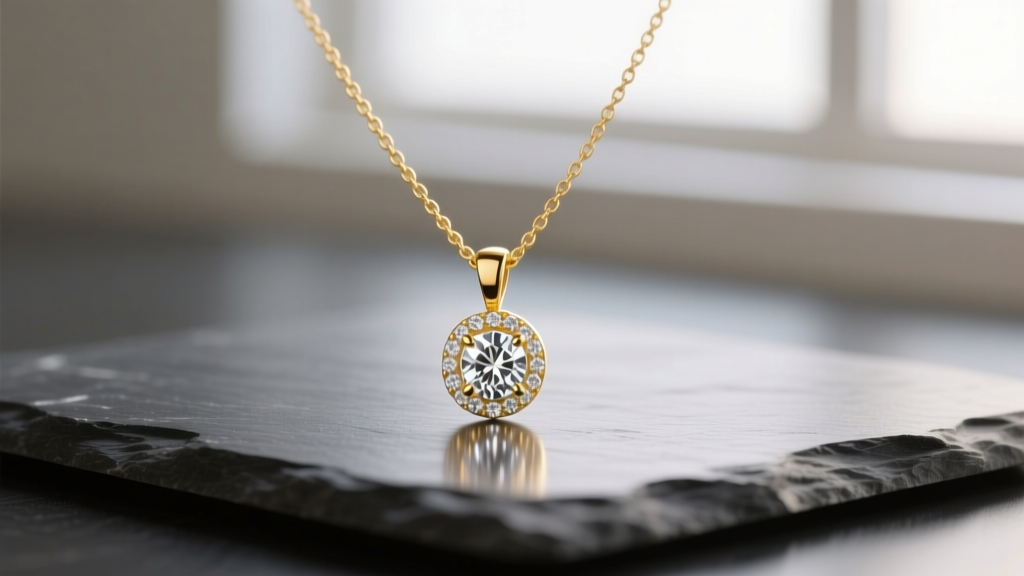
The Allure of Japanese Craftsmanship on a Budget
The global fascination with Japanese jewelry brands has surged over the last decade, driven by a cultural appreciation for minimalist aesthetics, meticulous finishing, and heritage metalworking techniques. However, as luxury conglomerates inflate global prices, savvy collectors and everyday wearers in 2026 are looking toward the domestic Japanese market for genuine value. Assessing the budget tier of Japanese jewelry requires a paradigm shift: Western consumers often equate low karat gold with "cheapness," whereas the Japanese market views specific alloy blends as engineering solutions for delicate, high-tensile designs.
When evaluating budget Japanese jewelry brands, the secret to maximizing value lies in understanding domestic metal preferences, leveraging favorable currency exchange rates, and utilizing proxy purchasing services to bypass international retail markups. This guide breaks down the exact material grades, heritage techniques, and accessible brands that offer unparalleled craftsmanship without the luxury tax.
Decoding Japanese Metal Grades: K10 vs. 18K vs. PT900
To accurately assess value, you must first understand how Japanese jewelers approach metallurgy. In the United States and Europe, 14K and 18K gold are the baseline for "fine" jewelry. In Japan, K10 (10-karat gold) is a dominant force in the accessible luxury sector. Comprising 41.7% pure gold, K10 is significantly harder than K18. This tensile strength allows Japanese artisans to cast incredibly thin, intricate chain links and secure micro-pavé diamonds with smaller, less obtrusive prongs.
Furthermore, Japan has a unique relationship with platinum. While the global standard for platinum jewelry is PT950, Japanese brands overwhelmingly prefer PT900 for diamond settings. The additional 10% alloy (often palladium or ruthenium) provides the necessary rigidity to prevent prong wear in ultra-fine settings. According to the Japan Mint Bureau, which oversees national hallmarks, these specific alloy ratios are strictly regulated to ensure consumer trust.
| Metal Grade | Japanese Stamp | Metal Content | Best Use Case | Avg. Price Premium (vs K10) |
|---|---|---|---|---|
| K10 Gold | K10 / 417 | 41.7% Gold | Delicate chains, everyday minimalist wear | Baseline |
| K18 Gold | K18 / 750 | 75.0% Gold | Heirloom pieces, colored gemstone settings | +65% to 85% |
| PT900 Platinum | Pt900 | 90.0% Platinum | Micro-pavé diamond settings, bridal | +120% to 150% |
By targeting K10 and PT900 pieces from domestic brands, international buyers can acquire structurally superior, finely detailed jewelry at a 40% to 60% discount compared to equivalent Western 18K designs.
Top Budget-Friendly Japanese Jewelry Brands & Artisans
Navigating the domestic market reveals a tier of brands that prioritize design integrity and material honesty over aggressive marketing. Here are three distinct avenues for budget-conscious buyers in 2026.
1. Hum: The Master of K10 Minimalism
Based in Tokyo, Hum has built a cult following for its organic, nature-inspired textures rendered almost exclusively in K10 gold. Their signature hammered finishes and asymmetrical diamond accents typically range from ¥35,000 to ¥60,000 ($230 to $400 USD). Because they utilize K10, their ultra-thin "coin" necklaces and thread-like rings resist bending far better than comparable 18K pieces from European fast-fashion jewelers. The value proposition here is structural longevity combined with avant-garde design.
2. Vendome Aoyama: Commercial Elegance
For those seeking classic, versatile pieces, Vendome Aoyama offers seasonal collections that bridge the gap between costume and fine jewelry. Their silver and K10 lines often hover around the ¥15,000 to ¥25,000 ($100 to $165 USD) mark. The brand excels in precision casting and utilizes high-quality synthetic or small natural melee diamonds to keep costs down without sacrificing the visual sparkle. Their clasp mechanisms are notably robust, a frequent failure point in budget Western brands.
3. Kyoto Artisan Cooperatives: Heritage Mokume-Gane
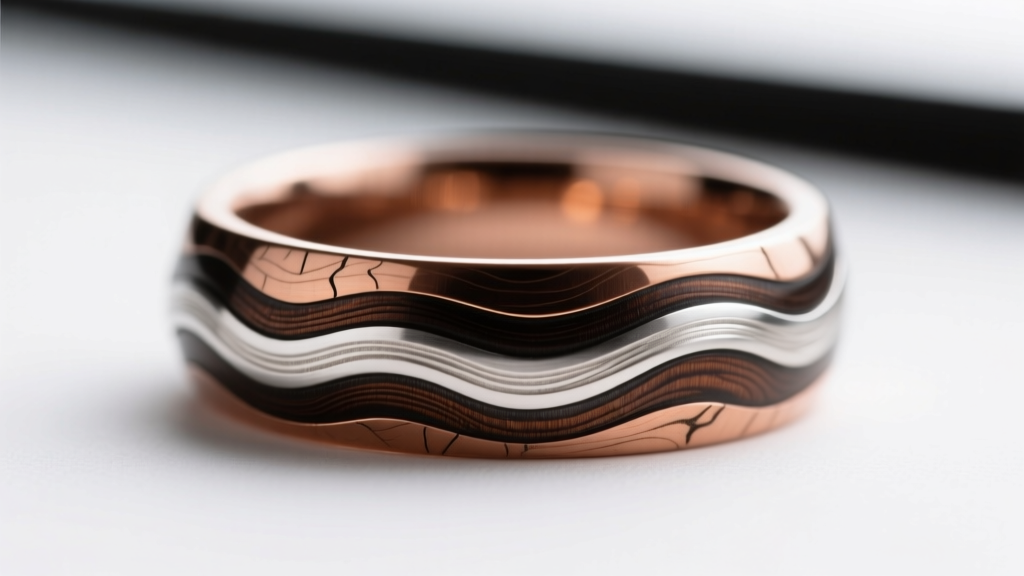
For buyers interested in cultural depth, purchasing directly from Kyoto-based cooperatives offers access to traditional techniques. While master-crafted Mokume-gane (wood-grain metal) can be expensive, many cooperatives offer entry-level silver and copper-alloy bands starting at ¥20,000. The Japanese Traditional Crafts Database highlights how these regional artisans preserve techniques like Shakudo (a copper-gold alloy that develops a rich purplish-black patina) which are virtually impossible to find in Western commercial markets at any price point.
Evaluating Heritage Techniques: Where to Spend vs. Save
When assessing the budget tier, it is crucial to distinguish between mass-produced "Japanese-style" motifs and genuine heritage craftsmanship. True value in Japanese jewelry lies in the execution of specific regional techniques.
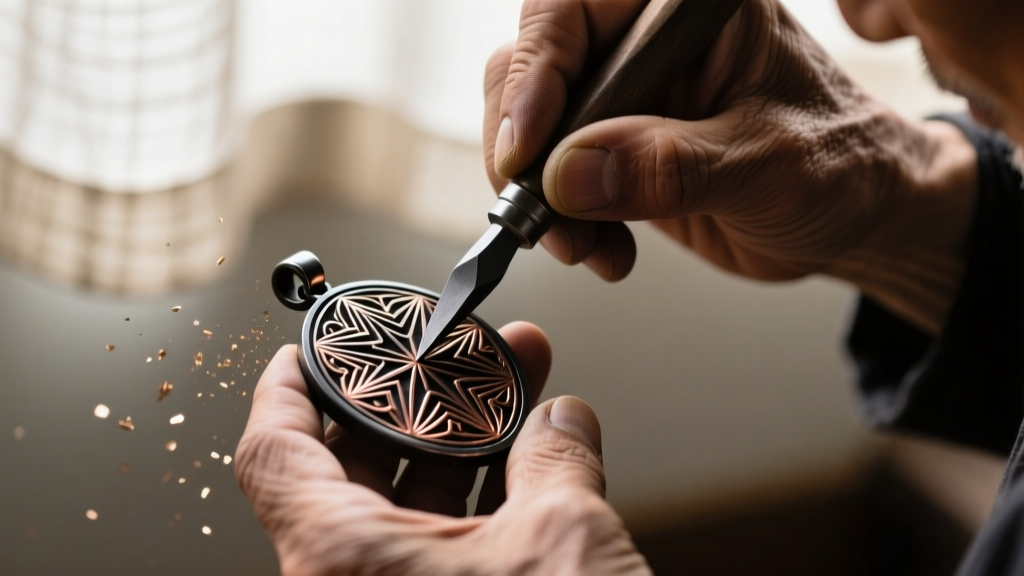
- Damascene (Zogan): Originally used for sword fittings, this technique involves inlaying soft metals like 24K gold or silver into dark, oxidized iron or steel. Budget buyers should look for Kyoto-made Damascene pendants. Genuine pieces feature hand-carved undercuts to lock the inlay, whereas cheap imitations use surface adhesives. Expect to pay $80–$150 for authentic small-scale pendants.
- Shakudo Patination: An alloy of copper with 1-5% gold or silver, Shakudo is boiled in a traditional solution of copper acetate and alum to achieve a striking black-violet hue. It is highly reactive to skin oils, meaning it requires occasional re-patination. This interactive nature makes it a high-value, low-cost material for collectors who enjoy evolving jewelry.
- Mokume-Gane (Budget Tier): True Mokume-gane requires forge-welding multiple metal billets and carving through them to reveal the grain. In the budget sector, look for "Mokume-patterned" silver and brass alloys that are roll-pressed rather than hand-carved. While not heirloom grade, they offer the aesthetic at under $100.
"The true value of Japanese metalwork isn't just in the precious metal content, but in the labor hours dedicated to surface finishing. A hand-filed K10 ring from a Tokyo atelier possesses a light-reflective quality that machine-polished 18K gold simply cannot replicate."
Import Taxes, Shipping, and Authenticity Verification
To truly capitalize on the value offered by Japanese jewelry brands in 2026, international buyers must master the logistics of domestic purchasing. Buying from international-facing storefronts often incurs a 30% to 50% "export markup." Instead, utilize proxy services like Buyee or ZenMarket to purchase directly from Japanese domestic e-commerce sites, Rakuten, or Yahoo! Auctions Japan.
Cost Breakdown for Proxy Purchasing:
- Proxy Fee: Typically a flat ¥500 ($3.30 USD) per item.
- Domestic Shipping: Usually ¥700 to ¥1,000 ($5 to $7 USD) to the proxy warehouse.
- International Shipping: DHL or FedEx from Japan to the US/EU averages ¥2,500 to ¥4,000 ($17 to $27 USD) for small jewelry parcels.
- Import Duties: In the US, jewelry under $800 enters duty-free under Section 321 de minimis laws. EU buyers should factor in local VAT upon arrival.
Verifying Authenticity: Always request close-up photos of the hallmark. The Japan Mint Bureau requires precise stamping. A genuine K10 stamp will be crisp and deeply struck. Furthermore, if a piece claims to feature traditional Kyoto craftsmanship, look for the regional cooperative seal or the artisan's registered stamp (mei), which is often hidden on the interior of the band or the back of the clasp.
Final Verdict: Maximizing Your Yen
The budget tier of Japanese jewelry brands offers a masterclass in material efficiency and design restraint. By shifting your focus from karat purity to structural engineering—embracing K10 gold and PT900 platinum—you gain access to pieces that are physically more durable and intricately detailed than their Western counterparts. Whether you are investing in a minimalist Hum necklace or a heritage Shakudo pendant from a Kyoto cooperative, the domestic Japanese market in 2026 remains one of the most rewarding landscapes for value-driven jewelry collectors. Approach the market with an understanding of their metallurgical philosophy, leverage proxy shipping, and you will secure exceptional craftsmanship that punches far above its price point.


