Troubleshooting the Stone Used in Ancient Greek Jewelry: ID & Care
Learn how to identify, authenticate, and repair the stone used in ancient Greek jewelry. Expert troubleshooting for carnelian, garnet, and agate.

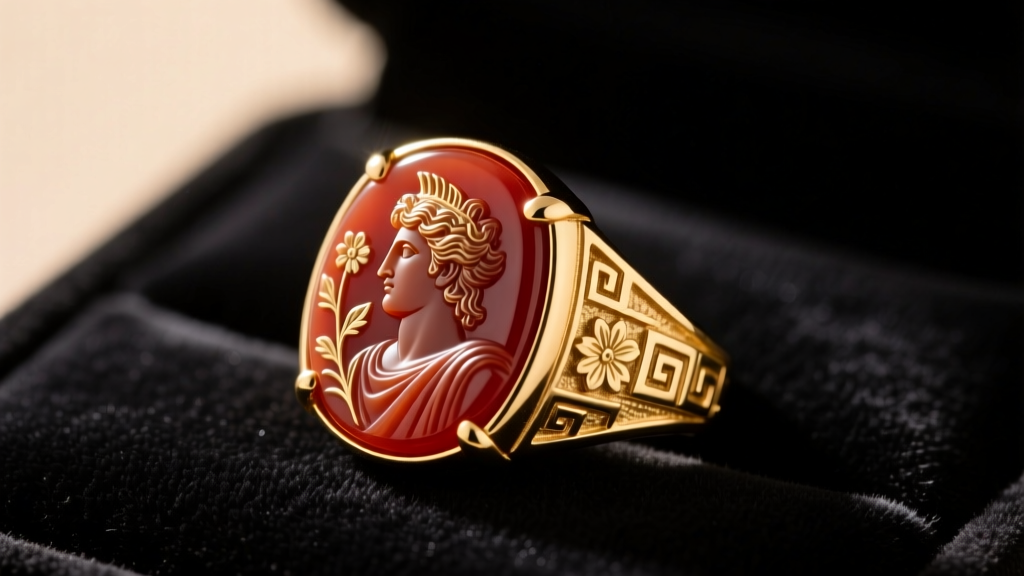
The Core Challenge: Misidentified Hellenistic Gemstones
For collectors, museum curators, and bespoke jewelers, identifying the exact stone used in ancient Greek jewelry presents a unique set of gemological and historical challenges. The Hellenistic period (323–31 BCE) marked a golden age of lapidary art, yet the modern market is saturated with misidentified replicas, dyed substitutes, and poorly executed revival pieces. When troubleshooting a suspected ancient artifact or sourcing materials for a historically accurate 2026 restoration, relying on visual inspection alone is a critical failure point. Modern dyeing techniques and synthetic corundum can easily fool the naked eye, leading to costly authentication errors and improper conservation methods.
The ancient Greeks primarily favored opaque to semi-translucent microcrystalline quartz varieties, alongside specific garnets and imported lapis lazuli. Understanding the precise material grades, specific gravity (SG), and historical carving techniques is essential for accurate identification and structural preservation. This guide provides a deep-dive troubleshooting framework for diagnosing, authenticating, and restoring these historic gemstones.
Diagnostic Table: Authentic vs. Modern Substitute Stones
When a piece fails initial visual inspection, gemological testing is required. The table below outlines the primary stones used in ancient Greek jewelry, their common modern fraudulent substitutes, and the definitive troubleshooting tests to separate antiquity from imitation.
| Historical Stone | Modern Substitute / Fake | Diagnostic Test & Metric | Failure Mode / Red Flag |
|---|---|---|---|
| Carnelian (Sard) | Dyed Agate / Glass | SG: 2.58-2.64; Acetone Swab | Dye concentration in fractures; SG >2.70 indicates glass. |
| Almandine Garnet | Synthetic Corundum / Red Spinel | RI: 1.74-1.76; Spectroscope | Absence of iron absorption bands; RI >1.77 indicates corundum. |
| Lapis Lazuli | Dyed Jasper / Sodalite / Gilson Synthetic | SG: 2.70-2.90; UV Fluorescence | Uniform dye without pyrite inclusions; synthetic lacks calcite. |
| Banded Agate | Dyed Chalcedony / Resin-Impregnated | Chelsea Filter; Magnification (40x) | Flash effect in fractures; unnatural color banding under UV. |
According to the Gemological Institute of America (GIA), the most prevalent issue in the antiquities market is the sale of 19th-century Grand Tour carnelian intaglios misrepresented as Hellenistic originals. The acetone swab test is your first line of defense against modern dyed agate, though it will not detect heat-treated carnelian, a practice that actually dates back to antiquity.
Troubleshooting Intaglio and Cameo Carving Failures
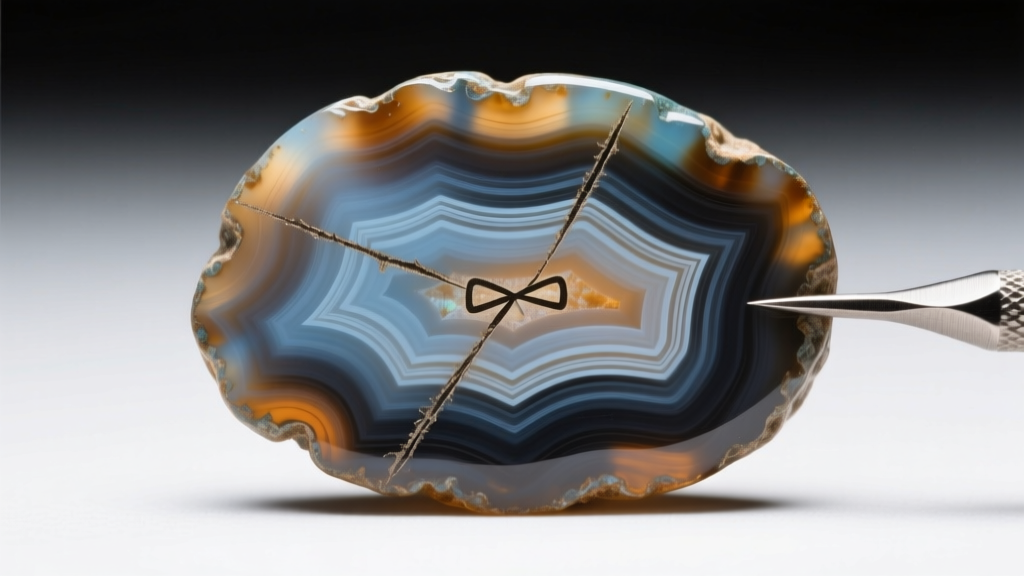
The true value of the stone used in ancient Greek jewelry often lies not just in the material, but in the lapidary execution. Intaglios (carved in negative) and cameos (carved in positive relief) were masterfully crafted using primitive but highly effective tools. When authenticating or attempting to restore a damaged carving, you must analyze the tool marks.
Tool Mark Analysis: Ancient vs. Modern
If you are examining a banded agate cameo under a gemological microscope at 40x magnification, look for the morphology of the carving grooves. Ancient Greek lapidaries used a horizontal bow-drill equipped with copper or bronze bits, fed with emery powder (corundum) as an abrasive. This process leaves overlapping, irregular, and slightly concave grooves with a matte, frosted appearance at the base of the cuts.
The Troubleshooting Red Flag: If you observe parallel, striated lines or perfectly smooth, U-shaped grooves with a high polish, you are looking at the work of a modern Foredom rotary tool equipped with diamond-sintered burs. Modern high-speed carving melts the microscopic surface of quartz varieties, leaving a distinct 'glazed' texture that is impossible to fake with chemical etching.
Re-polishing Without Losing Patina
A common mistake in restoring ancient agate and carnelian jewelry is over-polishing. Collectors often attempt to remove centuries of grime using ultrasonic cleaners or harsh chemical dips. This is a catastrophic failure mode. Ultrasonic vibrations will shatter fracture-filled ancient stones, while acid dips will strip the historical surface patina—the microscopic layer of environmental interaction that proves the stone's age. Instead, use a soft-bristled brush with a mild, non-ionic conservation detergent (like Orvus WA Paste) diluted in distilled water, applied with a wooden skewer to gently lift dirt from the intaglio recesses.
Setting and Mounting: Solving the Bezel Tension Problem
The mounting techniques of the Hellenistic era were fundamentally different from modern prong or tension settings. The Metropolitan Museum of Art notes that ancient Greek jewelers relied heavily on the closed-back collet bezel. The stone was dropped into a gold cup, and the edges were hammered and folded over the girdle of the cabochon to secure it.
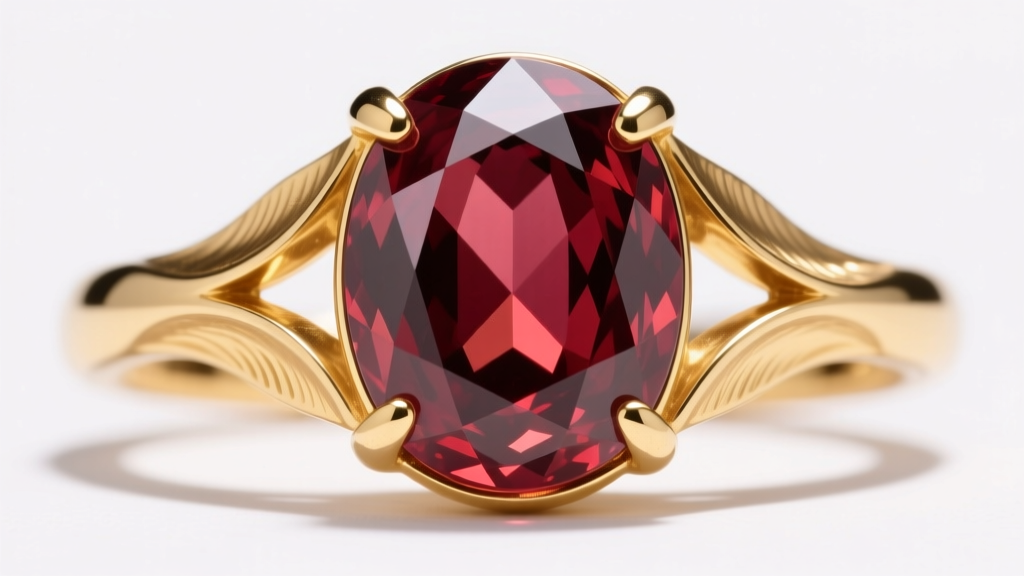
The Problem: In many surviving almandine garnet rings, the stone appears dull, dark, and lifeless. Furthermore, the stones frequently become loose within the bezel.
The Root Cause & Solution: Hellenistic garnets were often backed with a thin sheet of gold or silver foil (a paillon) to reflect light back through the deeply colored stone, as they were cut en cabochon with very high domes. Over 2,000 years, moisture breaches the microscopic gaps in the folded gold bezel, causing the foil to oxidize and turn black, which darkens the stone. If you are a jeweler tasked with stabilizing such a piece, do not attempt to unseat the stone to replace the foil. The ancient gold is heavily work-hardened and will tear. Instead, stabilize the loose stone by injecting a reversible, conservation-grade microcrystalline wax (like Renaissance Wax) into the bezel gap using a fine syringe, then gently burnish the gold lip back over the wax to lock the stone in place without applying destructive downward pressure.
Sourcing Authentic Materials for Restorations
For bespoke jewelers creating historically accurate revival pieces in 2026, sourcing the correct rough material is paramount. Modern commercial carnelian is almost universally heat-treated and dyed in facilities in India or Brazil. To replicate the exact stone used in ancient Greek jewelry, you must source untreated 'Sard'—a brownish-red, highly translucent variety of chalcedony that was historically mined in the Near East and imported to the Mediterranean.
When sourcing almandine garnet for Hellenistic-style collet rings, avoid the bright, faceted rhodolites common in modern jewelry. You need heavily included, deep red almandine cut into high-dome, unconformal cabochons (often with a hollowed-out back to reduce weight and increase light transmission, a technique known as 'scooping'). The Getty Museum's extensive research on ancient gemstones highlights that the imperfections and natural inclusions in these specific rough grades are what give the jewelry its authentic, ancient character.
Expert Verdict: Preserving the Hellenistic Legacy
Troubleshooting the stone used in ancient Greek jewelry requires a paradigm shift from modern gemology. You are not looking for flawless clarity or perfect symmetry; you are analyzing historical tool marks, specific gravity anomalies, and ancient metallurgical mounting techniques. By utilizing microscopic tool-mark analysis, avoiding destructive ultrasonic cleaning, and understanding the mechanics of the closed-back collet setting, you can accurately authenticate artifacts and execute restorations that respect the profound legacy of Hellenistic lapidary art.


